
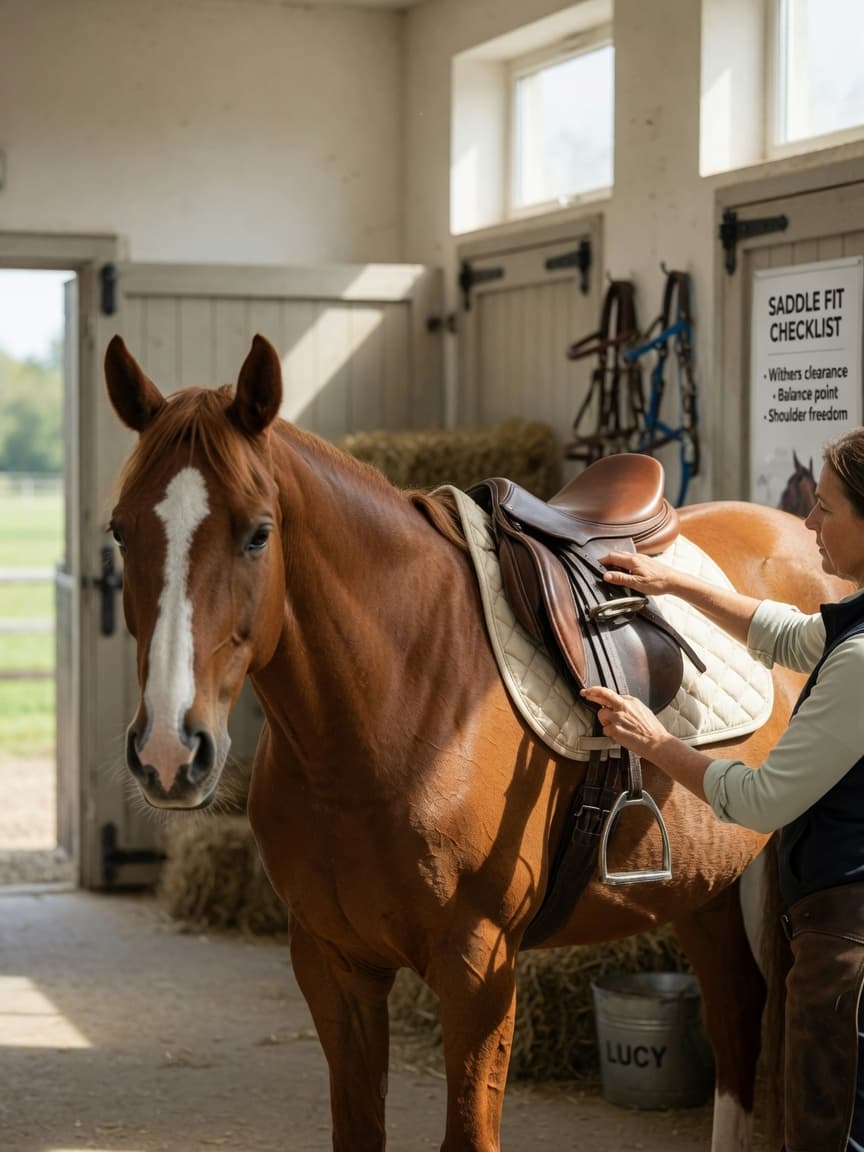
Whether you're a seasoned equestrian or a beginner taking your first steps into horse riding, learning to saddle your horse correctly is one of the most fundamental skills you'll develop. A properly fitted and secured saddle is essential for your horse's comfort, safety, and wellbeing, whilst ensuring a secure and balanced ride for you. In this guide, we'll walk you through the step-by-step process of saddling a horse, covering everything from pre-saddling preparation to final adjustments that make all the difference.
Preparing Your Horse and Equipment
Before you even approach your horse with the saddle, proper preparation sets the foundation for success. Start by ensuring your horse is calm and in a secure location—ideally in a stable or round pen with good lighting. Groom your horse thoroughly, paying special attention to the back and sides where the saddle will sit. Removing dust, dirt, and loose hair prevents irritation and helps you identify any existing injuries or skin issues that might affect saddling.
Inspect your saddle before use. Check that:
- All leather is supple and free from cracks
- Stirrups hang evenly and are secure
- Girths and straps are in good condition
- The saddle pad is clean and properly positioned
Positioning the Saddle Pad
The saddle pad serves as a crucial buffer between the saddle and your horse's back, providing cushioning and distributing pressure evenly. Place the pad on your horse's back, starting slightly higher than where it will finally sit. The pad should sit smoothly without wrinkles, roughly 10-15 centimetres behind the withers. Gently slide it backwards into its final position—this helps the hair underneath lie flat in the correct direction and prevents discomfort.
Ensure the pad covers the entire saddle area without extending too far forward or back. A poorly positioned pad can cause pressure points and lead to sores or behavioural problems during riding.
Placing and Adjusting the Saddle
With the pad correctly positioned, you're ready to place the saddle. With an assistant's help if needed, lift the saddle carefully and place it gently on the pad. Avoid dropping or slamming it onto your horse's back, as this can startle the animal and cause tension. For Western saddles and larger English saddles, use proper lifting technique to protect your own back.
Once the saddle is on, make fine adjustments to its position. It should sit level and secure, with adequate clearance over the spine. Run your hand under the saddle to ensure there are no wrinkles in the pad and that everything sits smoothly. This attention to detail prevents rubbing and ensures your horse's comfort throughout your ride.
Fastening the Girth or Cinch
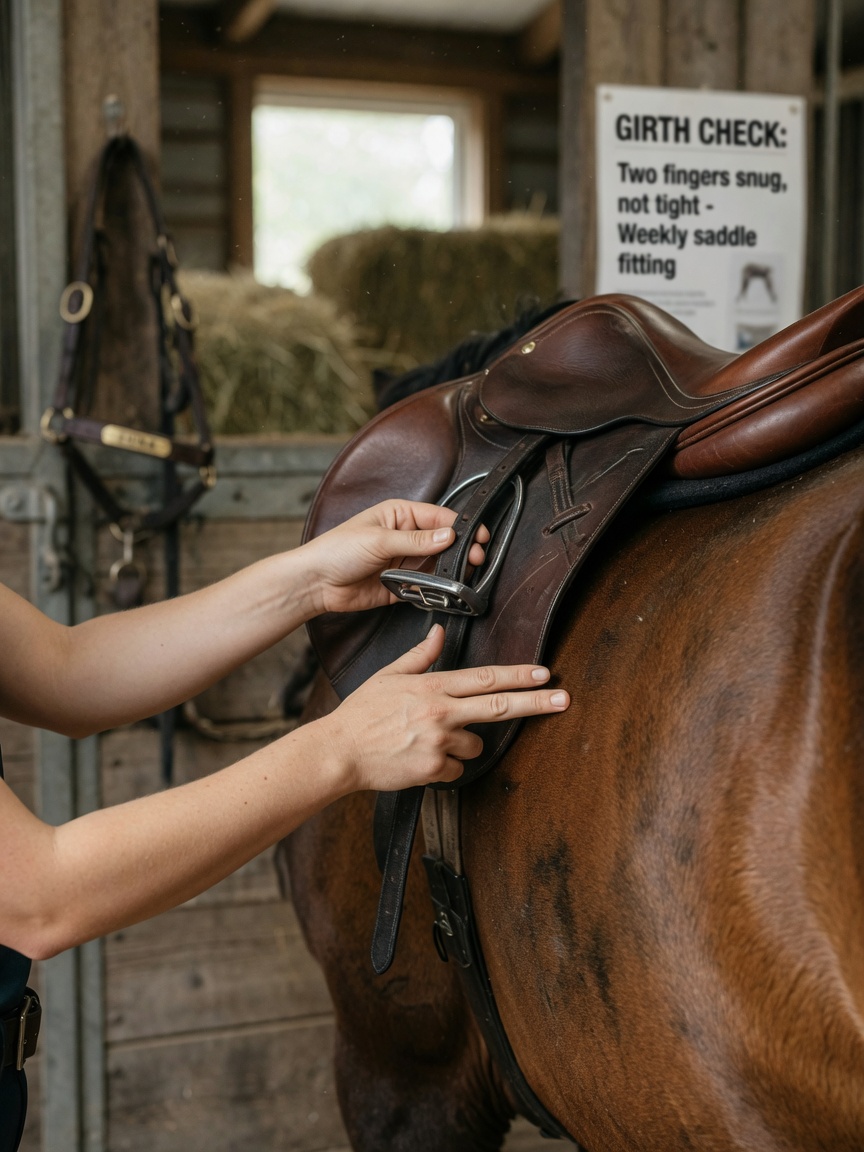
The girth (English saddles) or cinch (Western saddles) holds everything in place and is perhaps the most critical component of saddle security. Start by fastening it loosely on the first hole, then gradually tighten it in stages. Many experienced riders recommend tightening incrementally—never yanking it tight in one motion, which can frighten your horse or cause rib discomfort.
A general guide for tightness is the "two-finger rule": you should be able to slip two fingers under the girth comfortably, but it shouldn't be loose enough to move around. Check the girth again after mounting and before riding, as horses often take a deep breath when first saddled, and the girth may need slight adjustment.
Final Safety Checks
Before you mount, perform a thorough safety inspection:
- Walk around your horse, checking that the saddle sits level and secure from all angles
- Verify that stirrups or fenders hang evenly and at appropriate length
- Ensure all straps, billet keepers, and buckles are fastened and secure
- Check that your horse shows no signs of discomfort or abnormal behaviour
Key Takeaways for Successful Saddling
Saddling your horse properly is a skill that improves with practice and patience. Take your time with each step, remain calm and assertive, and always prioritise your horse's comfort and safety. Regular inspection of your equipment, thorough grooming beforehand, and careful adjustment of every component ensure that both you and your horse have a positive and secure riding experience. Remember: a well-saddled horse is a happy, healthy horse ready for whatever adventure awaits.