
What Is Laminitis?
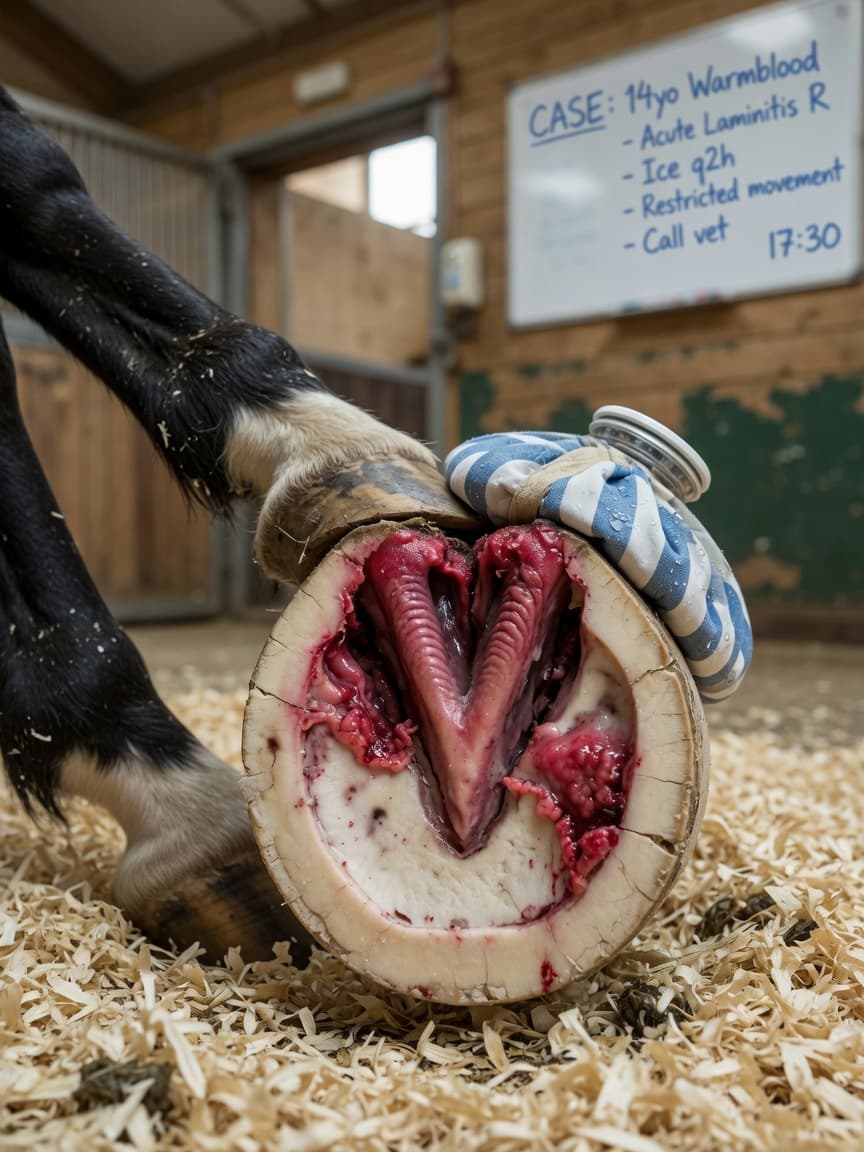
Laminitis is an inflammatory condition of the sensitive laminae — the interlocking tissue layers that connect the pedal bone (coffin bone) to the inner hoof wall. When these laminae become inflamed and break down, they lose their ability to support the weight of the horse. In severe cases, the pedal bone can rotate downwards or sink vertically within the hoof capsule, causing profound pain and potentially irreversible structural damage.
Laminitis can affect any equid — horses, ponies, donkeys, and mules — but native pony breeds and those with certain metabolic conditions are at particularly high risk. It can affect one or more feet, though the forefeet are most commonly involved.
Causes of Laminitis
Grass Sugar and Fructan Overload
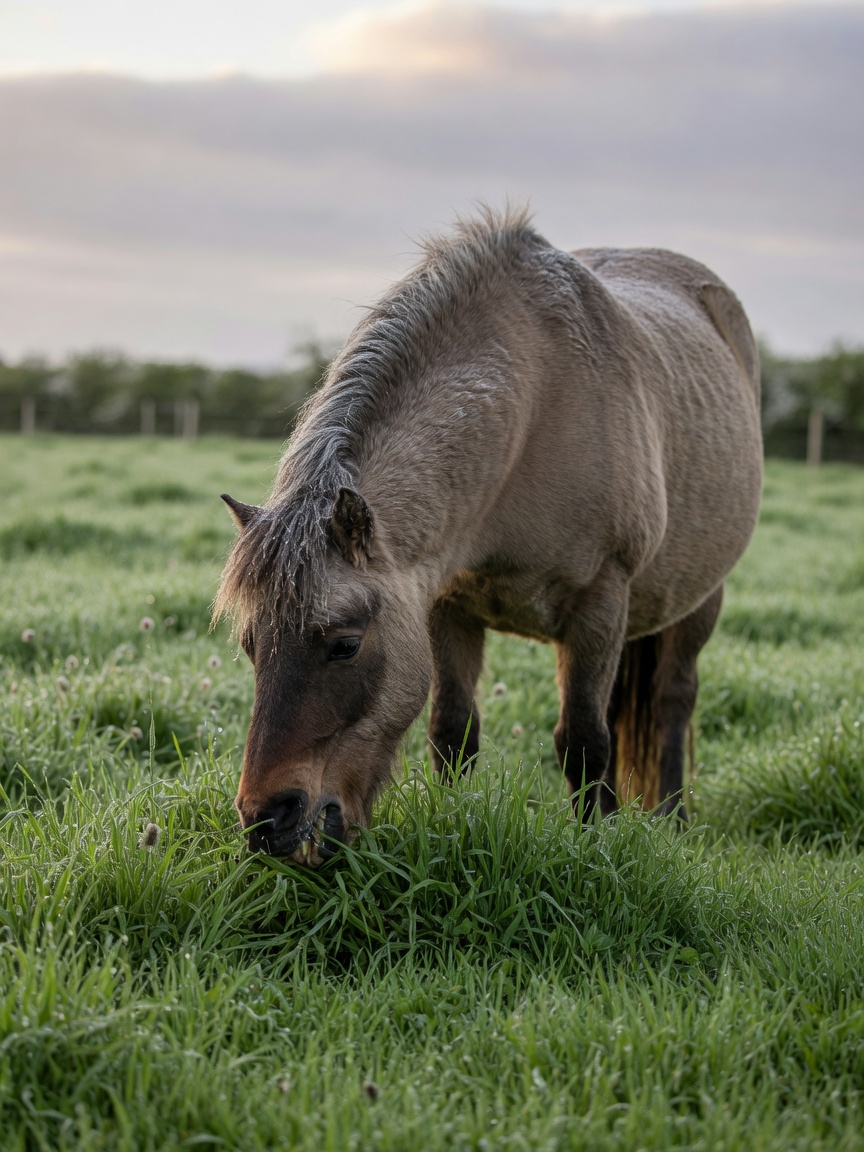
One of the most common triggers is access to lush, rapidly growing grass that is high in non-structural carbohydrates (NSC), particularly fructans. These sugars are fermented rapidly in the hindgut, disrupting the microbial balance and triggering a cascade of events that damages the lamellar tissue. Risk is highest during spring and autumn flushes, on frosty mornings when sugars accumulate in the leaf, and during sunny spells after cold nights.
Overfeeding Grain and Carbohydrate Overload
Feeding excessive quantities of cereal-based concentrates can cause a starch overload in the hindgut, leading to the same fermentation-driven pathway as grass fructans. This is more commonly seen in competition horses receiving high-energy diets without adequate management adjustment.
Retained Placenta in Mares
Mares that fail to pass the placenta within three hours of foaling are at significant risk of developing laminitis as a secondary complication of the resulting endotoxaemia and systemic inflammation. Prompt veterinary management of a retained placenta is essential.
Pituitary Pars Intermedia Dysfunction (PPID)
PPID, commonly known as Cushing's disease, is a hormonal disorder affecting older horses, typically over fifteen years of age. It leads to abnormally high levels of ACTH, which disrupt insulin regulation and predispose the horse to recurrent laminitis. PPID can be managed with the drug pergolide, and annual ACTH testing is recommended in at-risk horses.
Equine Metabolic Syndrome (EMS)
EMS is characterised by abnormal fat deposits, particularly over the crest of the neck, and insulin dysregulation. Horses with EMS have exaggerated insulin responses to dietary sugars, making them highly susceptible to grass-induced laminitis. Weight management and dietary restriction are cornerstones of EMS management.
Obel Grading System
The Obel scale is widely used to grade the severity of laminitis and guide management decisions:
- Grade 1: The horse shifts weight between feet, moves short-strided but can still walk and trot when led
- Grade 2: Movement is noticeably uncomfortable, particularly when turning; the horse resists having a foot lifted
- Grade 3: The horse is very reluctant to move and will resist having any foot picked up; obvious pain at rest
- Grade 4: The horse refuses to move and cannot bear weight without severe pain; recumbency may occur
Even Grade 1 laminitis should be treated as an emergency. Early intervention prevents progression to higher grades and reduces the risk of pedal bone rotation.
Immediate Management Steps
If you suspect laminitis, act immediately:
- Remove the horse from grass without delay — box rest on deep, supportive bedding such as shavings or sand
- Provide deep bedding that supports the frog and relieves pressure on the toe
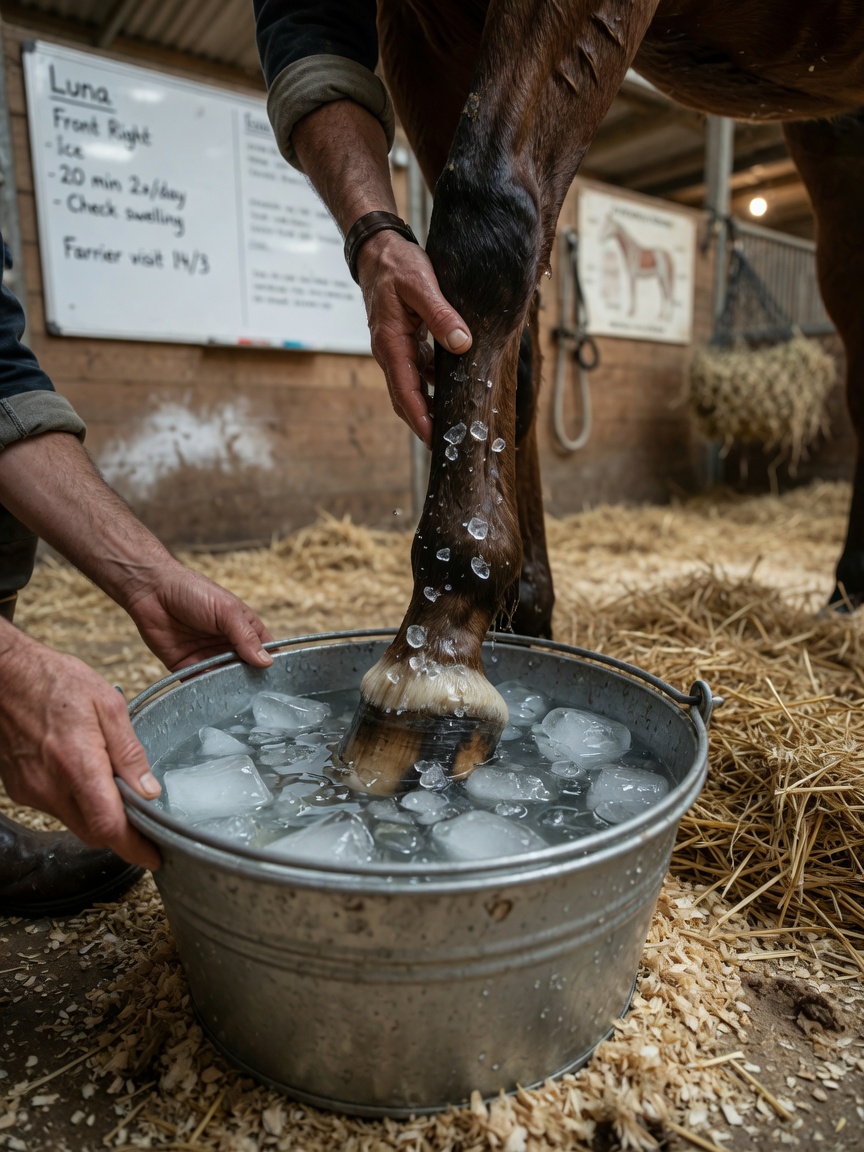
- Apply ice or cold-water therapy to the feet continuously for the first 72 hours — cryotherapy has been shown to reduce lamellar inflammation significantly when started early
- Call your vet immediately — do not wait for morning if signs appear in the evening
- The vet will likely administer NSAIDs such as phenylbutazone (bute) to manage pain and reduce inflammation
- Do not force the horse to walk unless the vet specifically advises it
- Remove any hard feed, treats, or access to hay with high sugar content
Long-Term Diet Management
Dietary management is the foundation of laminitis prevention in susceptible horses. Key principles include restricting access to rich pasture, using a grazing muzzle, or strip grazing. Low-sugar hay (soaked for at least an hour to leach out soluble carbohydrates) should replace lush grazing. Balancers or low-calorie vitamin and mineral supplements rather than high-energy feeds are appropriate for horses at rest or in light work.
Graduated Return to Exercise
Exercise must not be reintroduced until the horse is comfortable at rest, the acute inflammation has resolved, and the vet or farrier confirms it is appropriate. Overloading damaged laminae before they have healed can cause irreversible rotation. Exercise is gradually reintroduced in hand before ridden work resumes.
X-Ray Monitoring
Radiographs of the hoof are an essential tool for monitoring pedal bone position in horses that have had a laminitis episode. Your vet or a specialist may recommend foot X-rays to assess the degree of rotation or sinking, and to guide remedial farriery. Corrective shoeing with wide-webbed, egg-bar, or heart-bar shoes can mechanically support the pedal bone and redistribute weight away from the damaged toe. Regular radiographic review allows adjustments to the farriery plan as healing progresses.