
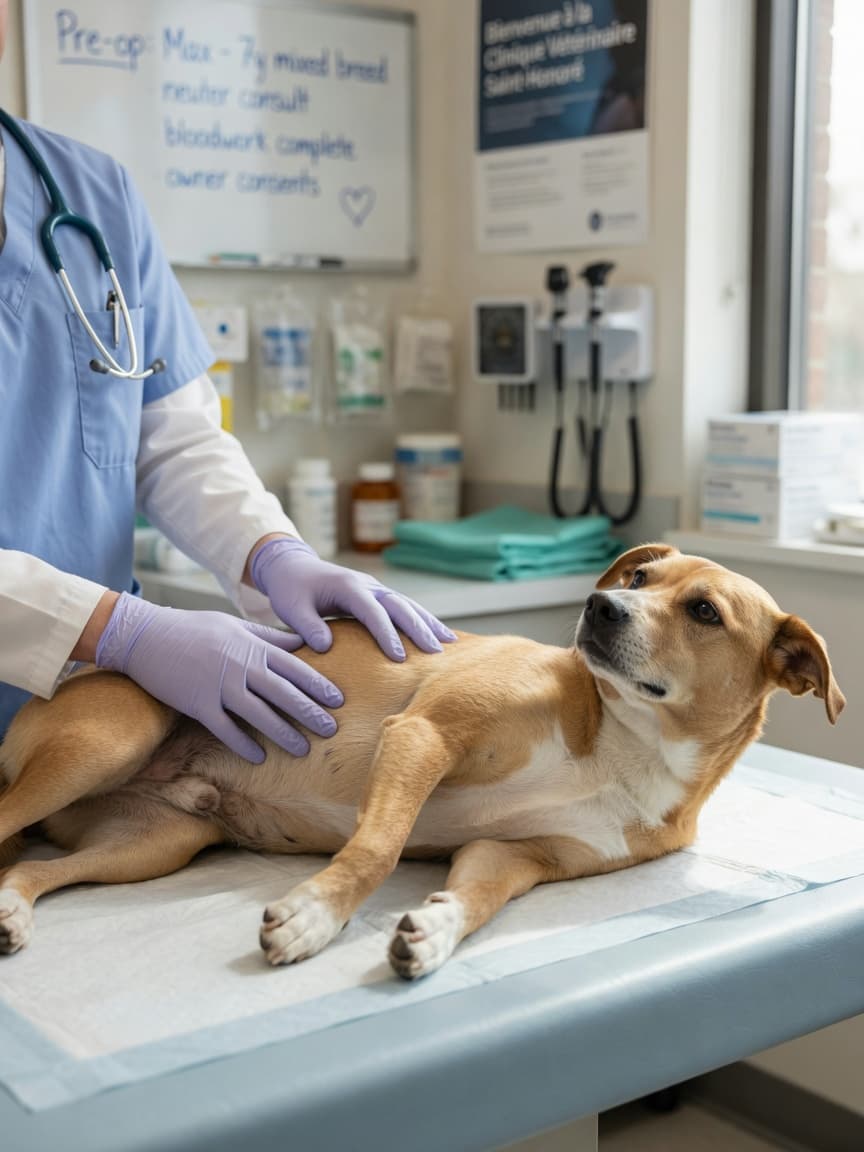
Dog Neuter Cost: Price Guide & Low-Cost Options
By Julia Wrenfield, Pet Wellness Researcher | Updated June 2026
- Private veterinary clinic: $150–$400
- Low-cost or high-volume clinic: $50–$120
- Subsidized / humane society programs: free–$75
- Generally less expensive than spaying due to simpler procedure
Neutering (castration) is a routine surgical procedure for male dogs that removes the testicles, preventing reproduction and reducing testosterone-driven behaviors. It's one of the most common veterinary procedures performed in the US, and one of the most cost-effective health decisions you can make for your male dog. Still, costs vary widely — this guide gives you an honest, up-to-date breakdown of what you'll actually pay.
What Does Neutering Involve?
A neuter is generally a simpler, shorter procedure than a spay (which is abdominal surgery). For a routine castration, the vet makes a small incision near the scrotum and removes both testicles. Most dogs are under anesthesia for 20–45 minutes and go home the same day. Recovery is typically 7–10 days of limited activity.
Cryptorchid neuters — where one or both testicles are retained inside the abdomen — are more complex and cost significantly more, often $300–$700 or higher, as they require abdominal surgery.
Cost at a Private Veterinary Clinic

At a standard private clinic, a routine dog neuter costs between $150 and $400. As with spays, the base surgical quote rarely tells the whole story. Expect these add-ons:
- Pre-anesthetic bloodwork: $80–$180 (recommended for dogs 5+ years old)
- IV catheter and fluids: $40–$90
- Take-home pain medication: $15–$50
- E-collar: $10–$20
Total all-in cost at a private clinic commonly runs $280–$600. In high-cost cities, the ceiling can push past $700.
What Affects the Price
Dog Size and Weight
Larger dogs need more anesthesia and may take longer in surgery. A Chihuahua neuter at $150–$200 and a Great Dane neuter at $300–$450 reflect this difference at the same clinic.
Age
The optimal age for neutering has been a subject of evolving research. While some small breeds can safely be neutered around 6 months, current guidelines for large and giant breeds often recommend waiting until 12–24 months. Older dogs may need more thorough pre-surgical screening, which adds to cost. Discuss timing with your vet, as evidence now suggests breed and size matter significantly.
Cryptorchidism
If one or both testicles haven't descended into the scrotum, your vet must locate and remove them surgically from the abdomen or inguinal canal. This is a more complex operation billed at $300–$700+, and it's medically important because retained testicles have a high cancer risk.
Geographic Location
Urban and coastal markets routinely charge 40–70% more than rural clinics for identical procedures. If you're near a state border, it's worth calling clinics in neighboring lower-cost areas.
Low-Cost Neuter Options
Affordable neutering is available in almost every part of the country:
- High-volume spay/neuter clinics: Licensed vets in a streamlined setting. Cost is $50–$120 for routine neuters. Quality is generally excellent.
- ASPCA and local humane societies: Many offer heavily subsidized or free neuters, especially for shelter adopters or income-qualifying owners.
- SpayUSA (1-800-248-SPAY): National referral network to low-cost providers by ZIP code.
- PetSmart Charities: Funds low-cost clinics nationwide; check their clinic locator tool online.
- Veterinary school clinics: Supervised student-performed procedures at significant discounts.
Payment Plans and Financial Help
If the cost of a private clinic is necessary (perhaps your dog has health complications that require specialist monitoring), payment plans can help:
- CareCredit: Apply online or at the clinic; 0% APR for 6–24 months depending on offer
- Scratchpay: Multiple plan options, fast approval, no prepayment penalties
- RedRover Relief: Emergency grants for pet owners in financial need
- The Pet Fund: Non-profit financial assistance for non-basic veterinary care
Health Benefits That Justify the Cost
Neutering reduces or eliminates the risk of testicular cancer, significantly reduces the risk of prostate problems, and can diminish roaming, marking, and aggression behaviors. Over the course of a dog's life, the one-time cost of neutering is dwarfed by the potential savings from avoided health issues.
- Routine dog neuter: $150–$400 at private clinics; $50–$120 at low-cost clinics
- Total all-in cost with bloodwork and medications: $280–$600
- Cryptorchid neuters cost significantly more ($300–$700+) due to abdominal surgery
- Size, age, location, and clinic type all drive price variation
- Subsidized options exist in nearly every region; use SpayUSA or ASPCA to locate them
- CareCredit and Scratchpay offer 0% financing for qualified applicants
References
- Hart BL, et al. "Long-term health effects of neutering dogs: comparison of Labrador Retrievers with Golden Retrievers." PLOS ONE. 2014;9(7):e102241. PMID: 25020045
- Spain CV, Scarlett JM, Houpt KA. "Long-term risks and benefits of early-age gonadectomy in dogs." Journal of the American Veterinary Medical Association. 2004;224(3):380-7. PMID: 14765797