
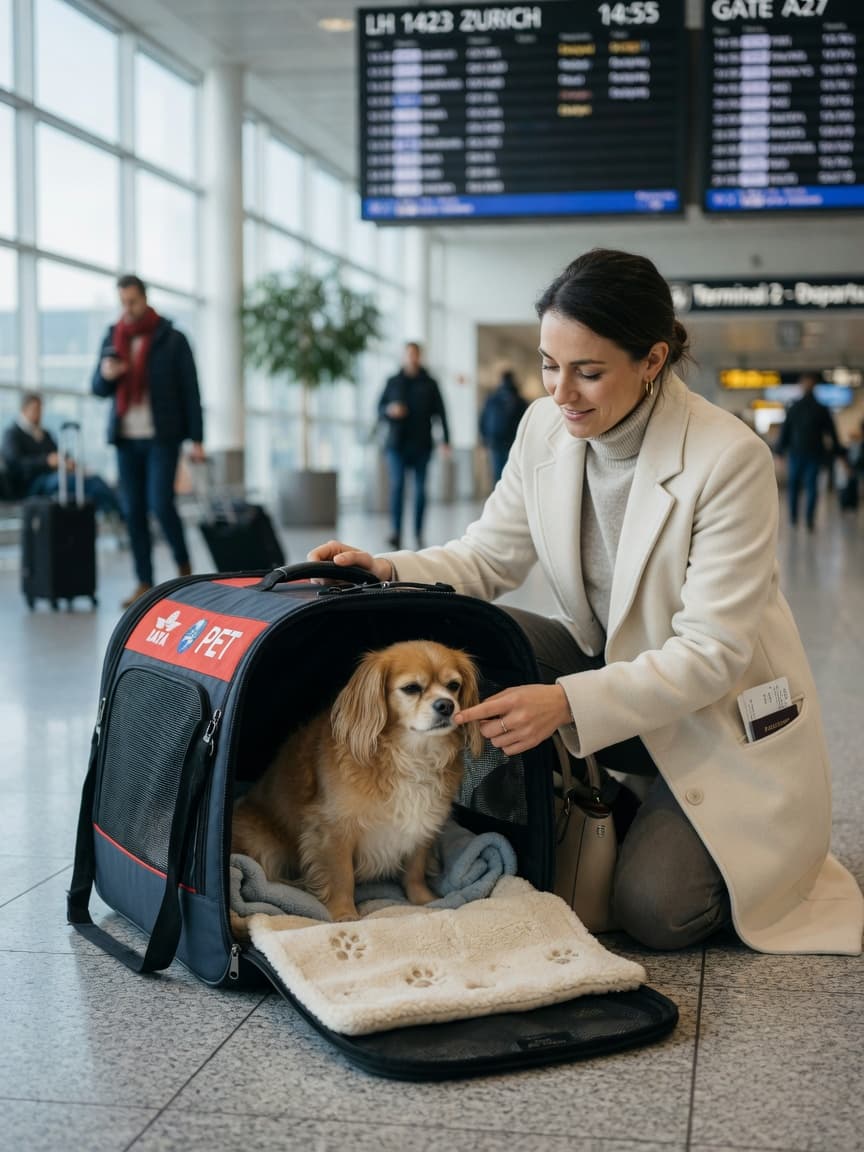
Flying with Pets in the Cabin: Airline Rules and Stress Reduction
Taking your pet on a flight can feel like navigating a maze of policies, paperwork, and practicalities. Whether you are planning a holiday or relocating entirely, understanding the rules around cabin travel for pets — and knowing how to keep your animal calm throughout — makes the experience considerably smoother for both of you.
Which Animals Can Fly in the Cabin?
Most airlines that permit in-cabin pets restrict the privilege to small dogs and cats. The combined weight of the animal and its carrier typically must not exceed five to eight kilograms, depending on the airline. Rabbits, birds, and exotic animals are usually excluded from the cabin entirely and may require specialist cargo arrangements or be banned outright on certain routes.
It is worth noting that the rules vary significantly between carriers. Budget airlines in Europe often prohibit cabin pets altogether, whilst some transatlantic carriers allow them on select routes. Always check the specific policy of each airline you are considering — never assume a rule transfers from one carrier to another.
Documentation and Booking Requirements
Airline pet policies are not just about what your animal weighs. You will typically need to provide:
- Proof of up-to-date vaccinations, particularly rabies
- A health certificate issued by a licensed veterinarian, usually within ten days of travel
- A microchip number if travelling internationally within the EU or to the UK
- An EU Pet Passport or equivalent travel document for cross-border journeys
Booking your pet's place in the cabin is almost always a separate process from your own ticket. Most airlines limit the number of pets per flight, so contact the airline directly after booking your seat to reserve your pet's spot. Do not leave this until the last minute — spots fill quickly, especially on popular routes.
Choosing the Right Carrier
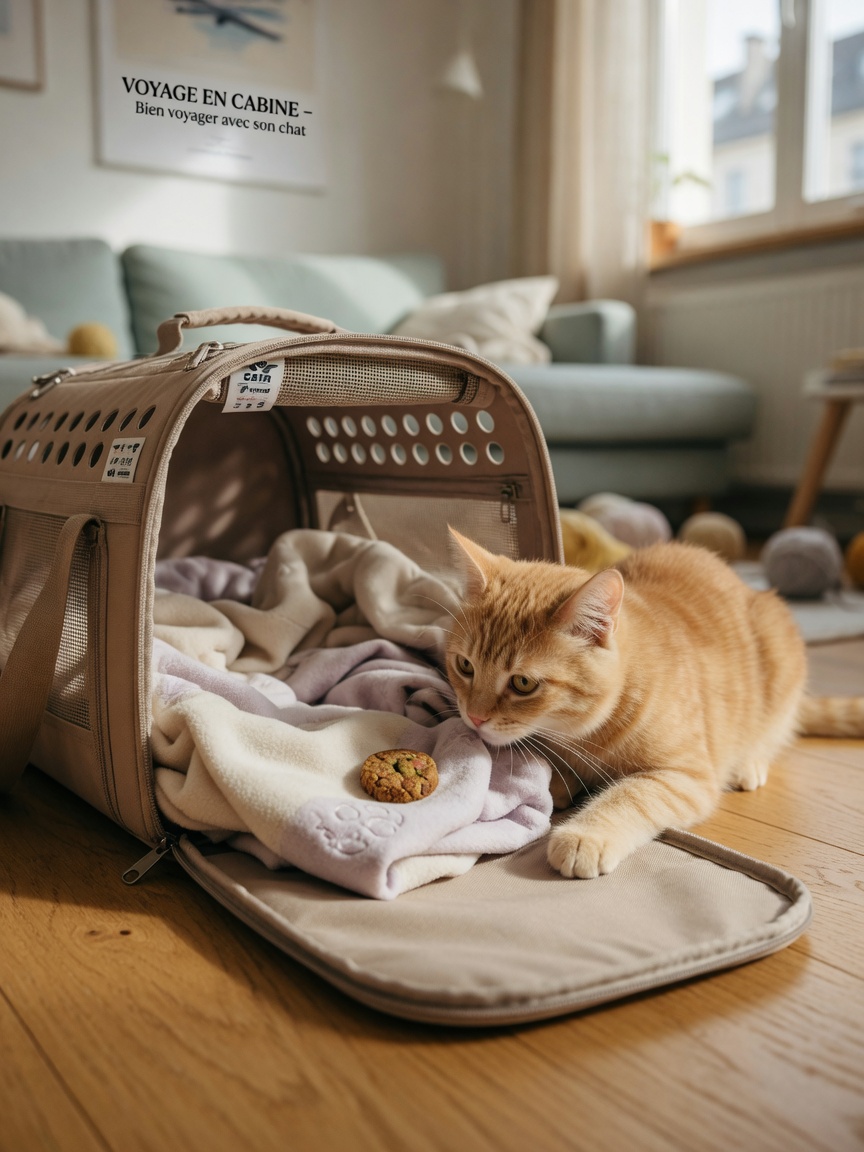
The carrier your pet travels in must fit under the seat in front of you and comply with the airline's specific dimensions — these vary by aircraft type, so confirm measurements before purchasing. The carrier should be well-ventilated, leak-proof, and large enough for your pet to stand, turn around, and lie down comfortably.
Introduce the carrier weeks before the journey. Leave it open in a familiar room with bedding that smells of home, and encourage your pet to explore it voluntarily. Feeding meals inside the carrier or hiding treats within it builds a positive association that pays dividends on travel day.
Reducing Stress Before and During the Flight
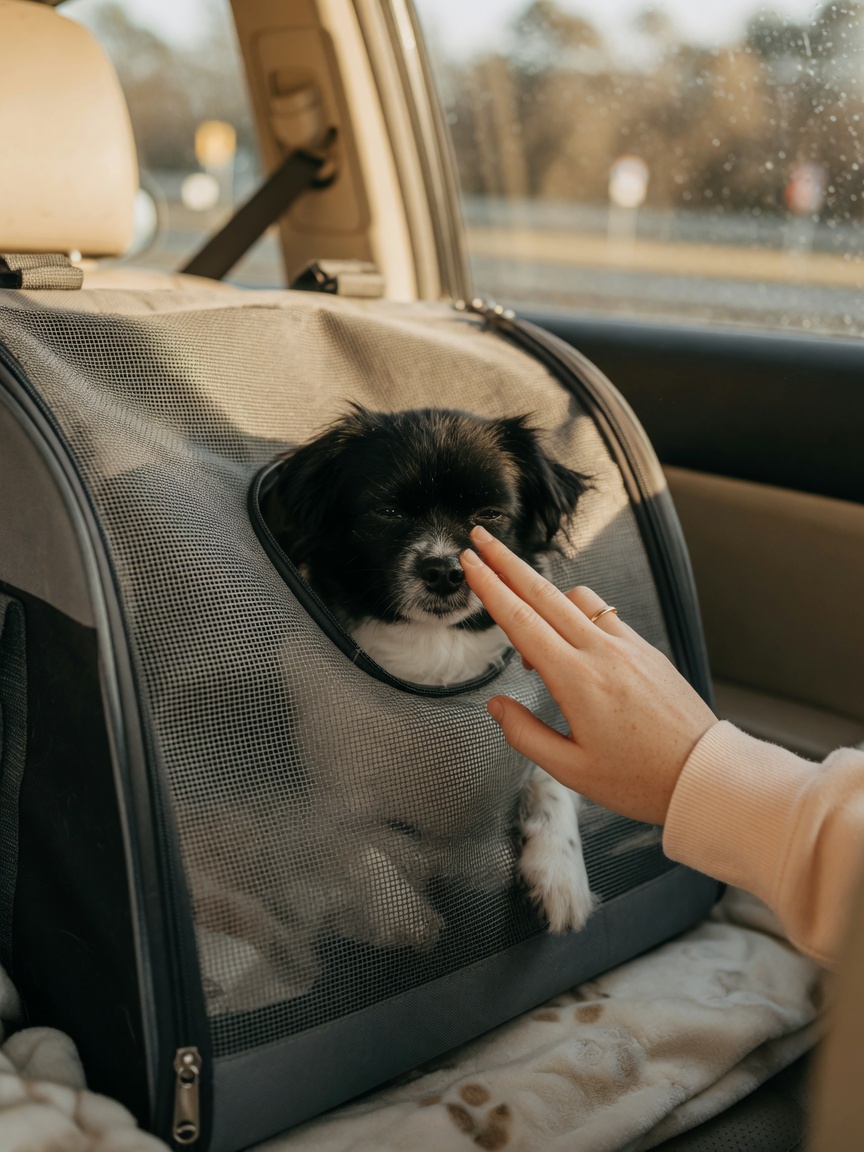
Anxiety in pets during flights is common, and the environment — unfamiliar smells, noise, pressure changes, and confined space — provides good reason for it. There are several evidence-informed approaches to minimise distress.
Pheromone Products
Synthetic pheromone sprays, such as those mimicking the feline facial pheromone or the canine appeasing pheromone, have been shown in peer-reviewed studies to reduce travel-related anxiety in cats and dogs respectively. Spray the inside of the carrier around thirty minutes before placing your pet inside to allow the alcohol carrier to dissipate.
Familiarisation with Travel
If your pet has never flown before, shorter car journeys and even trips to the vet in the carrier help acclimatise them to movement and confinement. Animals that have practised being in their carrier in varied environments tend to cope better with the novelty of an airport.
Timing and Feeding
Avoid feeding your pet a large meal in the two to four hours before the flight. An empty stomach reduces the likelihood of nausea and makes the journey more comfortable. Offer a small amount of water before boarding, but avoid excessive fluid intake if your pet tends towards anxiety-related urination.
Veterinary Support
For animals with significant travel anxiety, speak with your veterinarian well in advance of travel. Options include short-acting anxiolytics prescribed for the journey, or natural supplements such as L-theanine or certain herbal formulations that some pets respond well to. Sedation is generally discouraged by veterinary bodies due to the risks of respiratory depression at altitude, but your vet can advise on what is appropriate for your individual animal.
At the Airport and Onboard
Arrive with extra time so you are not rushing through security. You will likely be asked to remove your pet from the carrier whilst the bag goes through the X-ray machine — practise this at home so the moment is not a complete shock. Keep your composure; animals are highly attuned to owner anxiety and your calm demeanour genuinely does help.
Once onboard, place the carrier under the seat and leave the zip partially open if the airline permits it and your pet is contained safely. Speaking softly and letting your pet sniff your fingers periodically offers reassurance. Avoid opening the carrier fully — the noise and movement of a flight cabin can startle even the most placid animal into a bid for escape.
Arriving at Your Destination
Upon landing, find a quiet area before opening the carrier to allow your pet to reorient. Offer water and a small meal once you have cleared the airport. If crossing an international border, be prepared for your documents to be checked and your pet to be briefly inspected by a border official.
Allow a few days at your destination for your pet to settle. Familiar items — their bed, a favourite toy, or a blanket from home — help re-establish a sense of security in an unfamiliar environment. Most animals adapt well within a week, provided their routine is kept as consistent as possible.