
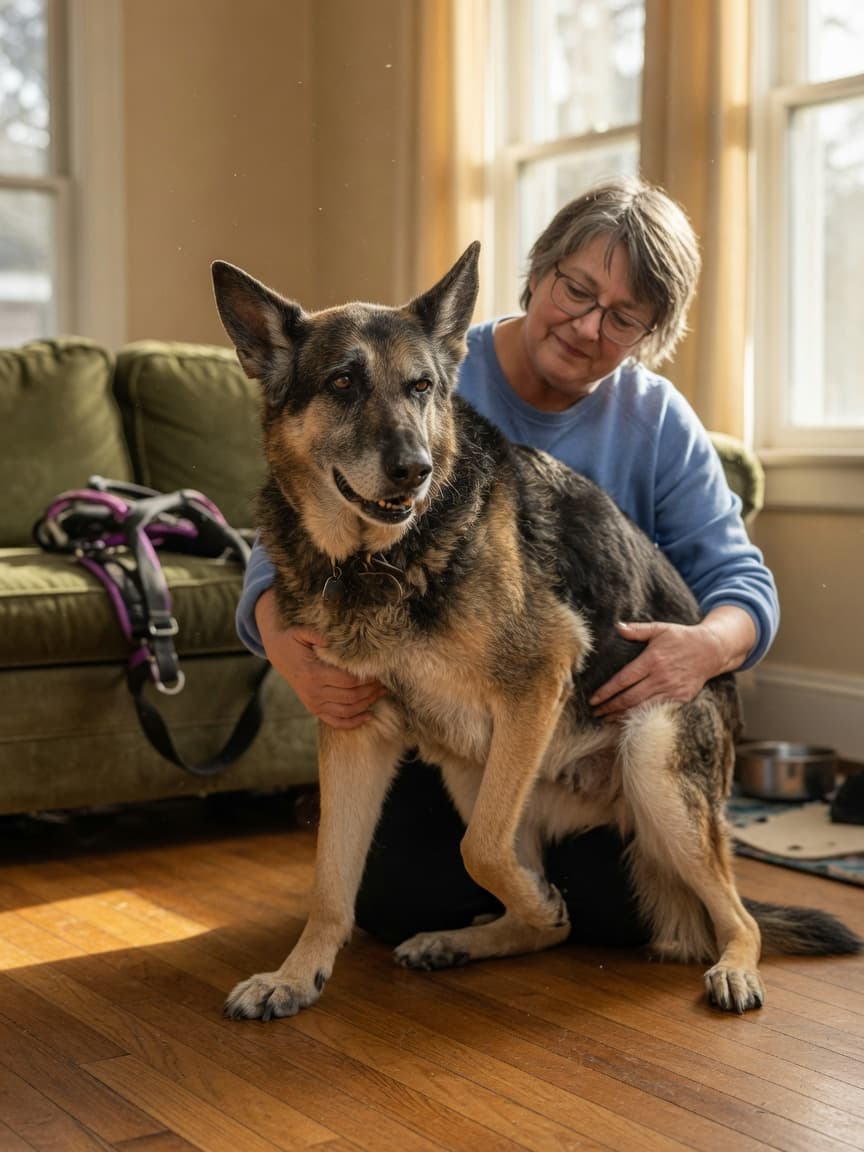
Understanding Degenerative Myelopathy
Degenerative myelopathy, commonly referred to as DM, is a progressive and ultimately fatal neurological disease affecting the spinal cord of dogs. It is a slowly advancing condition that typically begins with subtle hindlimb weakness and co-ordination problems before progressing to complete paralysis. There is currently no cure, and the disease follows a predictable course, though its speed of progression varies between individual dogs.
Whilst a diagnosis of degenerative myelopathy is undeniably difficult news, many dogs with this condition continue to experience a good quality of life for a considerable period, particularly when supported by attentive owners and a robust rehabilitation programme.
What Causes Degenerative Myelopathy?
Degenerative myelopathy is caused by a mutation in the SOD1 gene, which encodes the enzyme superoxide dismutase 1. This enzyme plays a role in protecting cells from oxidative damage. When the mutation is present in two copies — that is, when a dog is homozygous for the mutation — the risk of developing DM is substantially increased. Research has demonstrated a close parallel between this mutation and the SOD1 mutation associated with a form of human amyotrophic lateral sclerosis (ALS), making DM a relevant model for studying the human disease.
It is important to note that not all dogs carrying two copies of the mutation will develop clinical disease, suggesting that other genetic or environmental modifiers play a role.
Breeds Most Commonly Affected
Whilst degenerative myelopathy has been identified in over 100 dog breeds, certain breeds carry a markedly higher prevalence of the SOD1 mutation and a correspondingly elevated disease risk. These include:
- German Shepherds, in whom DM was first described and most extensively studied
- Pembroke Welsh Corgis
- Boxers
- Rhodesian Ridgebacks
- Chesapeake Bay Retrievers
- Bernese Mountain Dogs
- Standard Poodles
The condition is most commonly diagnosed in dogs over eight years of age, though some breeds develop it earlier.
The Progression of the Disease
Degenerative myelopathy is characterised by gradual, ascending degeneration of the white matter of the spinal cord. The process typically begins in the thoracic region and moves both upward and downward over time. The disease follows several recognisable stages:
Early Stage
Owners may notice subtle changes including mild ataxia or wobbliness in the hindlimbs, occasional stumbling, and difficulty negotiating stairs or rising from rest. The dog may scuff its rear paws, wearing the nails unevenly. These signs are often initially attributed to arthritis or general ageing.
Intermediate Stage
Hindlimb weakness becomes more pronounced. The dog may begin to cross its rear legs when walking or collapse at the hindquarters when attempting to stand for extended periods. Muscle wasting of the hindquarters becomes visible.
Advanced Stage
Complete hindlimb paralysis develops. The dog loses bladder and bowel control. Without ongoing care and mobility support, pressure sores and urinary tract infections become significant concerns. In the final stages, the disease may progress to affect the forelimbs and respiratory muscles, though most owners elect euthanasia before this point.
Diagnosis
There is no single test that definitively diagnoses degenerative myelopathy in a living dog. A presumptive diagnosis is made by combining the clinical picture, breed predisposition, neurological examination findings, and the exclusion of other spinal conditions. MRI and cerebrospinal fluid analysis are used to rule out compressive lesions, inflammatory disease, or other causes of hindlimb dysfunction that may be treatable. Genetic testing for the SOD1 mutation is available and can support the diagnosis in a dog with compatible signs, though a positive test in isolation does not confirm the disease.
Definitive diagnosis currently requires post-mortem histopathological examination of the spinal cord.
Management and Supportive Care
Whilst there is no disease-modifying treatment for degenerative myelopathy, there is strong evidence that intensive physical rehabilitation slows the progression of clinical signs and extends the period of mobility. A study published in the Journal of Veterinary Internal Medicine demonstrated that dogs receiving intensive physiotherapy maintained ambulatory function significantly longer than those receiving minimal or no therapy.
Supportive measures for dogs with DM include:
- Regular physiotherapy and hydrotherapy to maintain muscle mass and spinal cord function
- Canine wheelchairs or carts, which allow paraplegic dogs to remain mobile and engaged
- Non-slip flooring throughout the home to reduce falls and facilitate movement
- Orthopaedic bedding to prevent pressure sores
- Bladder management, including manual expression or catheterisation when incontinence develops
- Meticulous hygiene care to prevent scalding and skin breakdown
- Harnesses and lifting aids to assist owners in supporting the dog's hindquarters
Quality of Life and End-of-Life Decisions
Assessing quality of life in a dog with degenerative myelopathy is complex because the disease affects mobility but not cognition or the experience of pain. Dogs with DM typically remain bright, alert, and engaged with their environment even when they can no longer walk. This makes the condition emotionally difficult for owners, who may struggle to reconcile a dog's apparent contentment with the physical decline they are witnessing.
Most veterinary professionals recommend discussing quality of life with your vet regularly as the disease progresses, using structured assessment tools to evaluate appetite, engagement, hygiene, and mobility. The decision to consider euthanasia is ultimately personal, but should factor in the dog's overall experience, the capacity of the owner to provide the intensive care required, and the stage of disease progression.
Genetic counselling and testing of breeding stock is an important preventative step in breeds with high mutation prevalence, and responsible breeders increasingly screen for the SOD1 mutation before making breeding decisions.