

Dog Heatstroke: Signs, Emergency Cooling & When It's Fatal
Heatstroke kills 50% of dogs who develop it — even with treatment. A dog's body temperature can hit fatal levels in under 15 minutes in a hot car or on a summer walk. If your dog is showing signs right now, begin cooling immediately and call your vet on the way.
By Julia Wrenfield, Pet Wellness Researcher
Every summer, thousands of dogs die from heatstroke — and the heartbreaking truth is that almost every one of those deaths was preventable. Owners see the warning signs and think their dog just needs water or shade. But by the time a dog collapses from heatstroke, internal organ damage is already underway. Here is exactly what to look for, what to do, and what never to do when your dog is overheating.
Why Dogs Overheat So Dangerously Fast
Dogs do not sweat through their skin. Their only significant cooling mechanism is panting — exhaling hot air and inhaling cooler air. In high humidity, this system fails almost completely. A dog's core temperature can rise from normal (38–39°C / 100–102°F) to fatal levels (above 41°C / 106°F) in under 15 minutes in the wrong conditions.
Highest-risk situations:
- Being left in a parked car (interior can reach 60°C/140°F in 20 minutes)
- Exercise in hot, humid weather
- Being left outside without shade or water
- Brachycephalic breeds (Bulldogs, Pugs, Boxers) in any heat
- Overweight, elderly, or very young dogs
Early Warning Signs — Catch It Before It Becomes Fatal
Do not wait for the dog to collapse. Act at the first signs:
- Excessive, frantic panting — louder and more labored than usual
- Thick, ropey saliva
- Bright red gums and tongue
- Glassy, unfocused eyes
- Weakness, stumbling, or reluctance to move
- Vomiting or diarrhea (sometimes bloody)
Advanced Signs — Organ Failure Is Beginning
- Pale, grey, or purple gums
- Muscle tremors or seizures
- Loss of consciousness or collapse
- Rectal temperature above 40.5°C (105°F)
At this stage, survival without immediate veterinary intervention drops to below 50%. Internal organs — including the kidneys, liver, and brain — are already sustaining damage.
Emergency Cooling: Do This Right Now
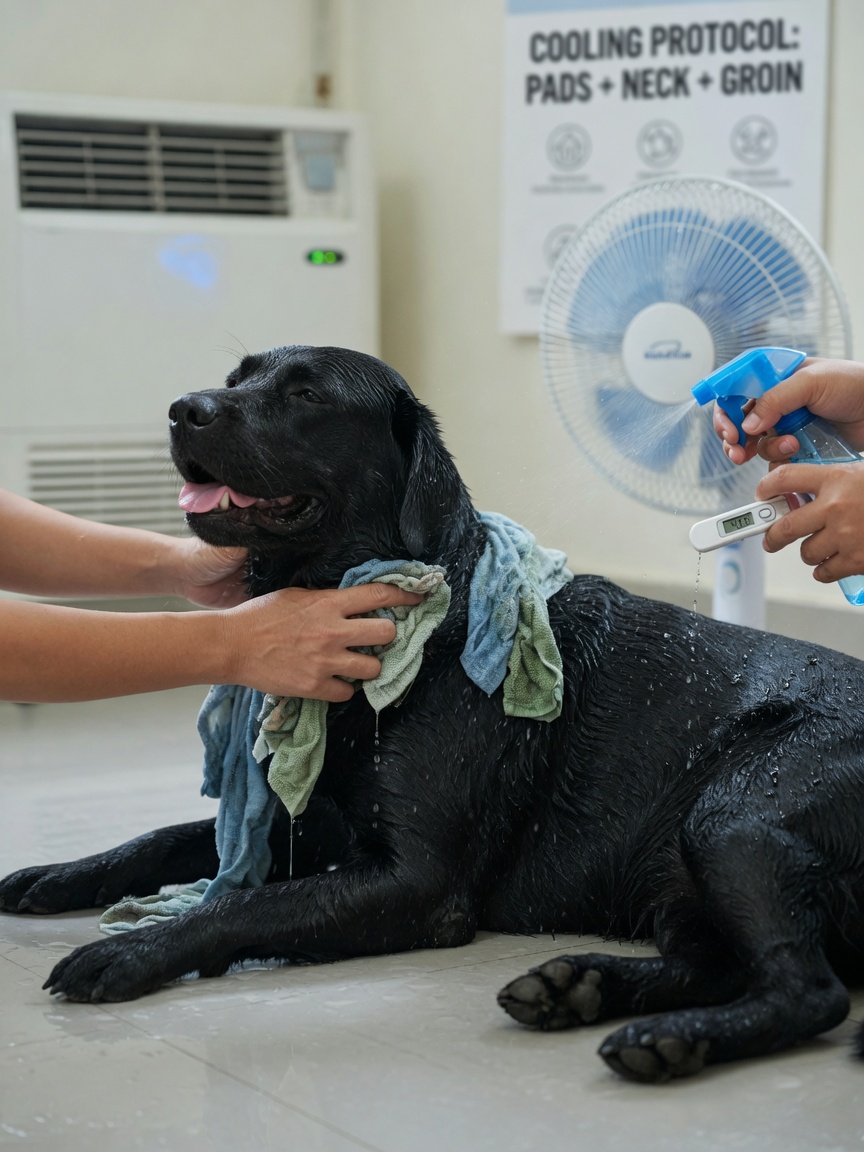
- Move the dog to a cool area immediately — indoors with air conditioning, shade, or in front of a fan
- Apply cool (not cold or ice) water to the body — focus on the neck, armpits, groin, and paw pads. Use a wet cloth or spray bottle
- Fan the dog actively — moving air dramatically accelerates cooling
- Offer small amounts of cool water to drink — do not force it; do not give ice water
- Take rectal temperature every 5 minutes — stop active cooling when temperature reaches 39.4°C (103°F) to avoid overcooling
- Keep the dog calm and still — movement generates more heat
Heatstroke causes hidden internal damage that may not be visible for 24–48 hours after the event. Kidney failure, blood clotting disorders, and brain damage can develop even in dogs that "seem fine" after cooling. Every heatstroke dog needs emergency veterinary evaluation today. Call now while you are cooling the dog — do not wait until you "see how it goes."
What NOT to Do — These Mistakes Kill Dogs
- Do NOT use ice or ice water — causes blood vessels to constrict, trapping heat inside the body
- Do NOT immerse the dog in cold water — same reason as above, plus shock risk
- Do NOT cover the dog with wet towels — traps heat; keep air circulating over wet skin
- Do NOT wait at home to see if they improve — internal damage progresses silently
- Do NOT give aspirin or any human fever medication — toxic to dogs
At the Vet: What Emergency Treatment Looks Like
Once at the clinic, the vet will:
- Continue controlled cooling with IV fluids at a specific temperature
- Monitor and support blood pressure
- Check for and treat kidney damage
- Run blood panels to assess organ function and clotting factors
- Monitor for DIC (disseminated intravascular coagulation) — a potentially fatal blood-clotting emergency that can develop within hours
Prevention: Never Let It Get This Far
The only responsible approach to heatstroke is prevention:
- Never leave your dog in a parked car — not even for 5 minutes
- Walk dogs in early morning or evening during summer
- Carry water on every walk
- Know your dog's breed-specific heat risks
Cooling mats, portable water bowls, and breathable harnesses reduce overheating risk dramatically. Shop vet-recommended summer safety gear at Zooplus.es — browse cooling vests, travel bowls, and shade solutions for dogs.
Key Takeaways
- Heatstroke kills 50% of affected dogs — even with treatment
- A car interior can reach lethal temperatures in 20 minutes
- Use cool water, not ice — ice makes it worse by constricting blood vessels
- Stop cooling at 39.4°C / 103°F to prevent overcooling
- Hidden organ damage can develop 24–48 hours later — always see a vet
- Brachycephalic breeds (Bulldogs, Pugs) are at highest risk and should never be left in heat
Citations
- Bruchim Y, et al. "Heat stroke in dogs: a retrospective study of 54 cases (1999–2004) and analysis of risk factors for death." Journal of Veterinary Internal Medicine. 2006;20(1):38–46. PMID: 16496924
- Johnson SI, et al. "Heatstroke in small animal medicine: a clinical practice review." Journal of Veterinary Emergency and Critical Care. 2006;16(2):112–119. PMID: 29513328
Written by Julia Wrenfield, Pet Wellness Researcher. This article is for informational purposes only and does not replace professional veterinary advice. In any emergency, contact your vet immediately.