

Working Dogs Are Athletes — Feed Them Like It
There's a common mistake made by people who first take on a working dog: they assume that because it's a dog, it eats like a dog. Standard pet food, fed at the recommended amount on the bag, and job done.
The reality is very different. A working dog — whether that's a police patrol dog covering ten kilometres a day, a Border Collie running for miles on a hill farm, or a Pointer hunting across rough moorland — has caloric needs that can be two to five times higher than a similarly sized pet dog doing moderate exercise. Get the nutrition wrong, and the dog will underperform, lose condition, struggle to recover between sessions, and potentially suffer health consequences down the line.
This guide covers the key principles of working dog nutrition, with practical guidance applicable to different working contexts across the UK and EU.
Caloric Needs: The Numbers Behind the Work
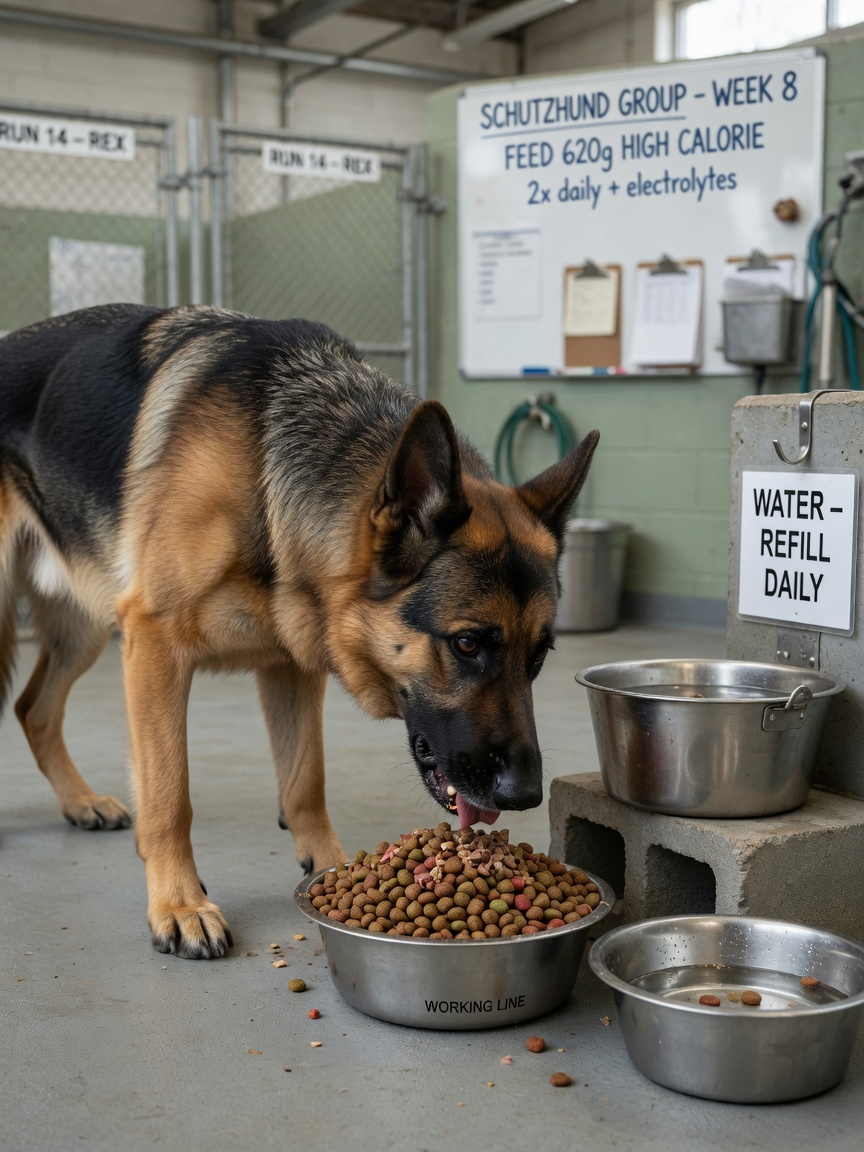
The caloric requirement for a dog depends on its resting energy requirement (RER) multiplied by an activity factor. For a typical pet dog doing light exercise, that multiplier sits around 1.6. For a working dog at moderate intensity — a daily patrol dog, a sheepdog working several hours a day — the multiplier rises to 3.0 or more. For extreme-endurance working dogs such as sled dogs in competition, the multiplier can reach 5.0 or beyond.
In practical terms, a 30kg German Shepherd working as a police patrol dog might need 2,000–2,500 kcal per day, compared with around 1,400 kcal for a pet dog of the same weight doing a couple of walks. If you're feeding a working dog the same food in the same quantity as a pet dog, the animal is almost certainly underfuelled.
Macronutrients for Working Dogs
Protein
Protein is essential for muscle maintenance and repair. Working dogs experience more muscular stress than pets and need adequate protein to recover and remain strong. Performance diets for working dogs typically contain 28–35% crude protein on a dry matter basis — significantly higher than the 18–22% found in many standard maintenance foods. Animal-based proteins (chicken, beef, lamb, fish) offer a superior amino acid profile to plant proteins and should dominate the ingredient list.
Fat
Fat is the primary fuel source for sustained aerobic work — exactly the kind of endurance activity most working dogs perform. High-fat diets (18–25% on a dry matter basis) are appropriate for dogs doing extended work. Fat is calorie-dense, meaning working dogs can meet their energy needs without having to eat an impractical volume of food. This matters for dogs that need to work shortly after eating.
Carbohydrates
Carbohydrates provide quick-release energy and have a role in sprint-intensive or high-intensity short-duration work. For endurance working dogs — sled dogs, sheepdogs, patrol dogs — fat is a more efficient fuel, and carbohydrates play a supporting rather than primary role. That said, moderate carbohydrate inclusion in a commercial performance kibble is perfectly appropriate and helps with palatability and gut health.
Meal Timing and Bloat Risk
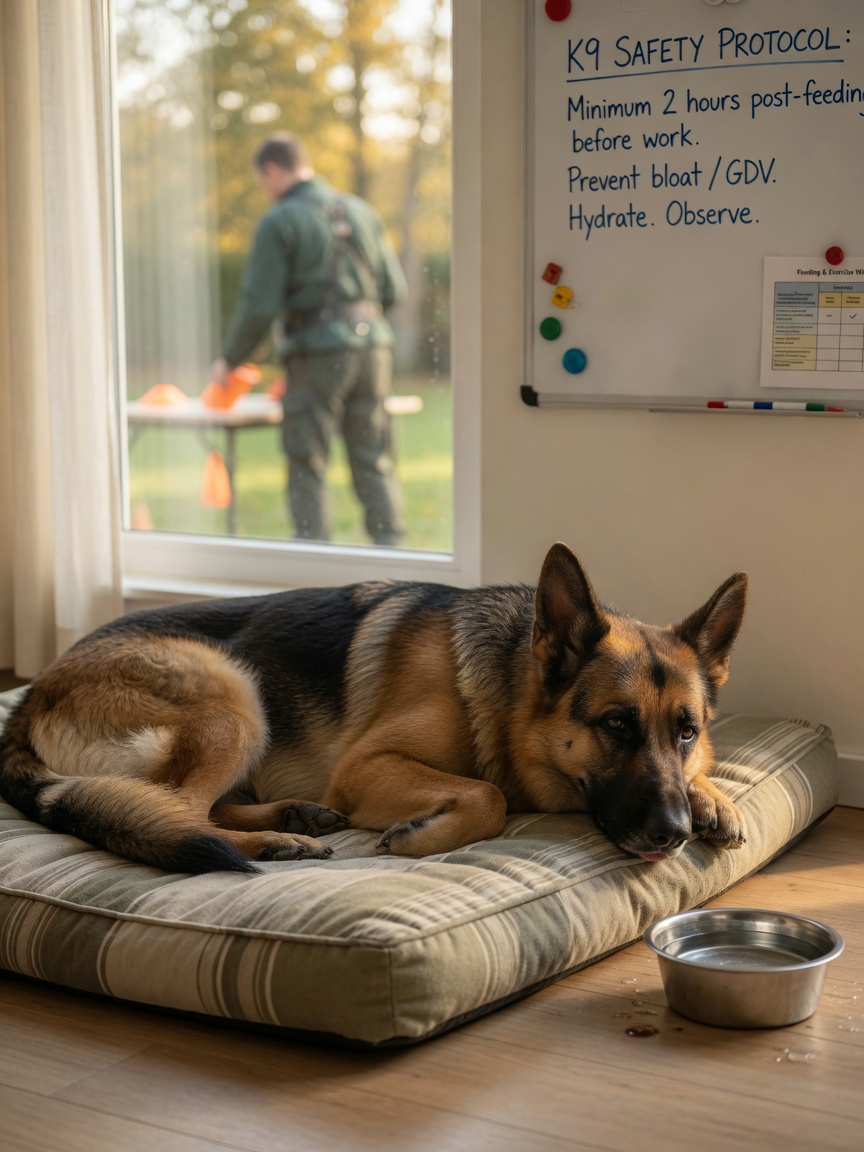
This cannot be stressed enough: do not feed a working dog immediately before it works. Gastric dilatation-volvulus (GDV), commonly known as bloat, is a life-threatening emergency that occurs when the stomach fills with gas and twists on itself. Deep-chested breeds — German Shepherds, Labradors, Dobermanns, Weimeraners — are at higher risk. Vigorous exercise on a full stomach dramatically increases the likelihood of GDV.
The general recommendation is to allow at least two hours before exercise after a main meal, and to avoid large single meals in favour of two smaller ones. Many working dog handlers feed their dog's main meal in the evening, after work has finished, and offer only a light meal or nothing in the morning before a working day begins.
Hydration on the Job
Water access during work is non-negotiable. A working dog can lose significant fluid through panting and physical exertion, and dehydration impairs both physical performance and cognitive function — a problem when you're asking a dog to make decisions while tracking a suspect or locating a missing person.
Handlers should carry water and offer it at regular intervals during work, particularly in warm weather. For dogs performing extreme endurance work in heat — marathon running dogs, dogs working in summer search and rescue operations — electrolyte supplementation may be appropriate. Products designed for dogs, rather than human sports drinks, should always be used.
Different Dogs, Different Needs
Police and Security Dogs
Police patrol dogs typically do sustained moderate-intensity work with occasional bursts of high-intensity activity (pursuit, apprehension). They need consistent, high-quality protein and fat intake to maintain muscle mass and support recovery. Detection dogs — doing lots of sniffing and relatively little physical exertion — have more modest caloric needs and should not be overfed, as maintaining a lean bodyweight is important for joint health over a long career.
Herding Dogs
Border Collies and other herding breeds working on farms can cover enormous distances — well in excess of 30 kilometres on a busy day. Their caloric needs during peak work periods are very high, and handlers often find they need to increase rations significantly during lambing or other intensive periods. Conversely, in quieter periods, rations should be adjusted downward to prevent weight gain.
Sled Dogs
Sled dogs represent the extreme end of canine energy demands. During endurance racing, sled dogs consume up to 10,000 kcal per day and are typically fed very high-fat diets supplemented with fresh meat. This is a highly specialised nutritional context, and sled dog handlers work closely with veterinary nutritionists to optimise performance diets.
Detection Dogs
Search and detection dogs — narcotics dogs, explosives dogs, cadaver search dogs — are often working at moderate physical intensity. Their key nutritional requirement is reliable energy for mental focus, combined with careful weight management to protect joints from the cumulative impact of daily work.
BARF vs Commercial Performance Kibble
The debate between raw feeding (Biologically Appropriate Raw Food, or BARF) and commercial high-performance kibble is ongoing in working dog communities. BARF proponents argue that raw diets offer superior protein bioavailability and digestibility. Kibble advocates point to convenience, consistent nutrient profiles, and the practical ease of feeding a patrol dog from a bag rather than managing raw meat on duty.
Both approaches can work well if executed correctly. The critical point with BARF is that it must be nutritionally complete — raw meat alone without appropriate bone, organ, and supplementation leaves significant gaps. If you're considering a raw diet for a working dog, veterinary nutritionist input is strongly recommended.
For most handlers, a high-quality performance kibble is the most practical and reliable option. Zooplus stocks a wide range of high-performance working dog foods, including options from brands specifically formulated for dogs in demanding roles — worth comparing if you're not already on a performance-specific diet.
Signs of Underfeeding and Overfeeding
Condition scoring is the most reliable way to monitor whether a working dog is receiving appropriate nutrition. A dog in ideal working condition should have ribs easily felt but not prominently visible, a visible waist when viewed from above, and a slight abdominal tuck. Dogs that are too thin lack muscle coverage over the spine and hips; dogs that are too fat carry visible fat deposits over the ribs and tail base.
Underfed working dogs may show reduced enthusiasm, slow recovery between work sessions, coat deterioration, and gradual loss of muscle mass. Overfed working dogs are at higher risk of joint problems, heat intolerance, and reduced stamina.
Parasite Prevention for Working Dogs
Working dogs — particularly those in rural, farm, or outdoor environments — face significantly elevated parasite exposure compared with urban pets. ESCCAP guidelines recommend consistent year-round parasite control for working dogs, covering ticks, fleas, intestinal worms, and lungworm. Dogs working on farms or around livestock may be exposed to specific tapeworm species not commonly encountered by pet dogs. Discuss a parasite prevention protocol tailored to your dog's working environment with your vet.