
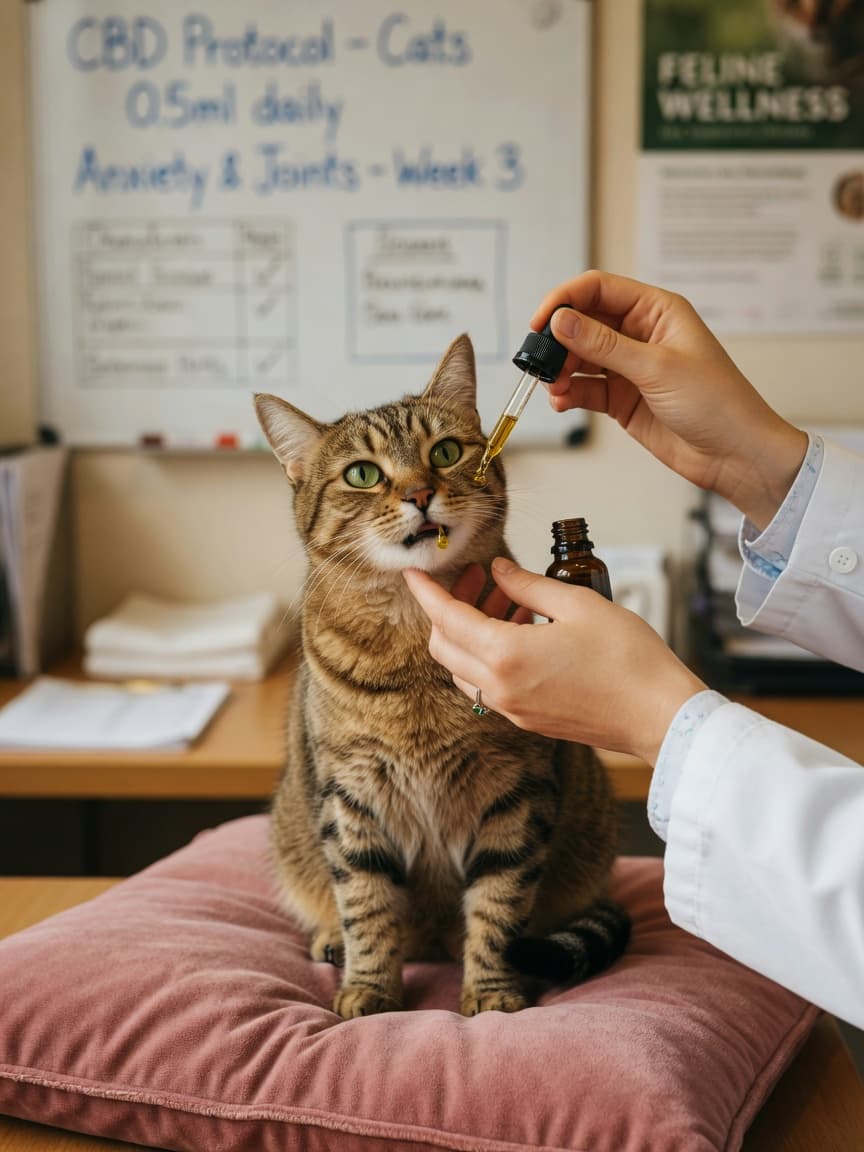
Key Takeaways
- Cats have an endocannabinoid system (ECS) and respond to CBD, but their unique liver metabolism makes dosing precision critical.
- THC is significantly more toxic to cats than to dogs or humans — any CBD product for cats must be THC-free (broad-spectrum or isolate).
- Emerging evidence supports CBD for feline anxiety and chronic pain; seizure data is more limited than in dogs but promising.
- Start at 0.1–0.2 mg/kg twice daily and titrate slowly — cats are more sensitive to cannabinoids than dogs.
- Always choose a product with a third-party Certificate of Analysis (CoA) confirming zero detectable THC.
- Consult your veterinarian before starting CBD, especially if your cat is on any medication — CBD inhibits key liver enzymes.
Why Cat Owners Are Turning to CBD Oil
Search interest in "CBD oil for cats" has grown more than 400% since 2020, and it's not hard to understand why. Feline anxiety, chronic pain from degenerative joint disease, and age-related cognitive changes are among the most common quality-of-life concerns cat owners face — and conventional pharmaceutical options often come with significant side effects or limited long-term data.
CBD (cannabidiol), a non-psychoactive compound derived from the hemp plant (Cannabis sativa), has attracted serious scientific interest precisely because it interacts with a biological system — the endocannabinoid system — that is conserved across virtually all mammals, including cats. But the important caveat is this: cats are not small dogs, and they are certainly not humans. Their unique physiology, and particularly their liver enzyme profile, means that what is safe and effective for a dog may be harmful to a cat at the same dose.
This guide gives you the science, the safety considerations specific to cats, and a practical framework for making an informed decision.
How the Endocannabinoid System Works in Cats
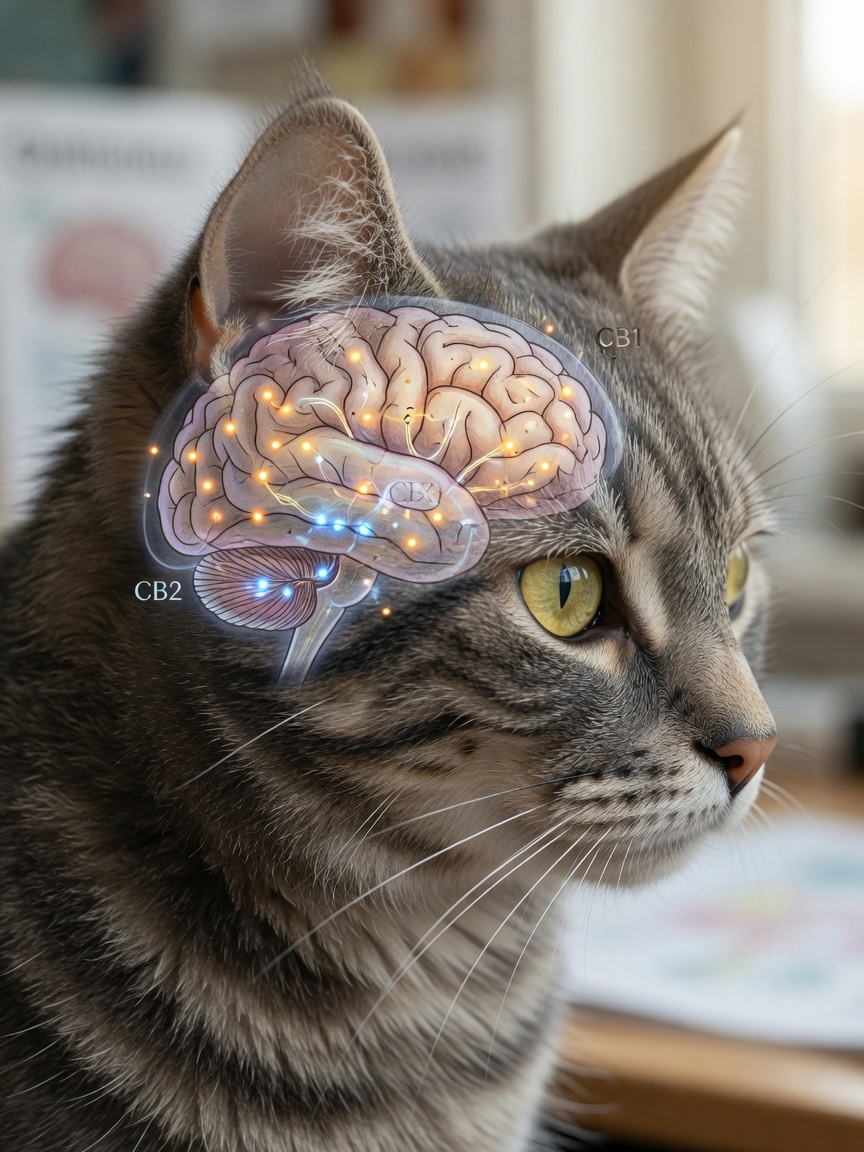
The endocannabinoid system (ECS) is a cell-signalling network present in all vertebrates. It regulates a remarkable range of physiological functions, including pain perception, mood and stress response, immune activity, sleep, and appetite. It does this through two main receptor types — CB1 (concentrated in the brain and nervous system) and CB2 (concentrated in immune tissues and peripheral organs) — and through endogenous ligands (the body's own cannabinoids) such as anandamide and 2-AG.
Research confirms that cats express both CB1 and CB2 receptors and produce their own endocannabinoids. A 2021 study published in Animals characterised ECS receptor distribution in feline tissue and found particularly high CB1 receptor density in the cerebral cortex, cerebellum, and basal ganglia — brain regions associated with movement coordination, emotional processing, and sensory integration.
CBD works primarily by inhibiting the FAAH enzyme (fatty acid amide hydrolase), which breaks down anandamide. By slowing anandamide degradation, CBD effectively elevates the body's own "calm and regulate" signal. It also acts as a negative allosteric modulator at CB1 receptors and interacts with serotonin (5-HT1A) and TRPV1 (pain/inflammation) receptors — all pathways relevant to anxiety, pain, and inflammation in cats.
The important distinction from dogs: cats have lower baseline activity of certain glucuronidation enzymes in the liver — the same pathway used to process many compounds including some cannabinoids. This makes cats more sensitive to accumulation effects and means lower doses are needed relative to body weight.
What the Science Says: Anxiety, Pain, and Seizures in Cats
Feline Anxiety — Emerging Evidence
Anxiety-related behaviours (hiding, urine spraying, aggression, excessive vocalisation) affect an estimated 40–70% of pet cats to some degree. Current pharmaceutical options — gabapentin, fluoxetine, or short-term benzodiazepines — are effective but carry sedation, dependency, or metabolic risks with long-term use.
A 2023 randomised controlled pilot study in Frontiers in Veterinary Science assessed CBD administration in 16 cats exhibiting stress-related behaviours during veterinary visits. Cats receiving 2 mg/kg of broad-spectrum CBD oil 90 minutes before the visit showed statistically significant reductions in behavioural stress scores and lower salivary cortisol compared to placebo. Owner-reported scores for inter-cat aggression also improved in households where CBD was administered consistently over four weeks.
Evidence: Moderate — Small RCT with positive signal; larger multicentre trials are in progress as of 2025–2026.
Chronic Pain and Degenerative Joint Disease
Feline degenerative joint disease (DJD) is dramatically underdiagnosed. Radiographic evidence of DJD is found in over 90% of cats over 12 years of age, yet pain-related behavioural changes are often attributed to "normal ageing." CBD's anti-inflammatory and analgesic properties — well-documented in rodent models and increasingly in canine trials — are plausibly relevant to feline DJD.
A 2021 prospective study (Guedes et al.) administered CBD to cats with confirmed DJD at 2 mg/kg once daily for four weeks. Results showed statistically significant improvements in mobility scores and owner-assessed activity levels, with no clinically significant adverse effects observed. Alanine aminotransferase (ALT) levels were monitored and remained within normal limits in this short-term study.
Evidence: Moderate — Single well-designed study; results are clinically meaningful but replication is needed. Longer-term liver monitoring data is lacking.
Seizures in Cats
Epilepsy in cats is less common than in dogs but represents a significant welfare concern. The landmark canine studies (McGrath et al., 2019) established a strong precedent for CBD as add-on anticonvulsant therapy in dogs. Feline-specific seizure data is more limited.
A 2022 case series published in the Journal of Feline Medicine and Surgery documented CBD use as adjunctive therapy in six cats with refractory epilepsy. Four of six cats showed a reduction in seizure frequency greater than 50%, with one achieving seizure freedom over the 12-week observation period. No severe adverse events were recorded, though one cat showed transient sedation requiring a dose reduction.
Evidence: Low — Promising — Case series only; no controlled feline epilepsy trials published to date. CBD should only be used as an adjunct to established anticonvulsant treatment, never as a replacement.
Is CBD Safe for Cats? Key Safety Considerations
Based on available evidence, CBD at low-to-moderate doses appears to be tolerated by most cats, but the safety window is narrower than in dogs. Understanding the specific risks is essential before proceeding.
The most commonly reported side effects in feline CBD studies and clinical case reports are:
- Sedation and lethargy — the most frequent adverse effect, particularly at doses above 2 mg/kg. Usually resolves with dose reduction.
- Gastrointestinal upset — vomiting or loose stools, often attributable to the carrier oil rather than the CBD itself. MCT oil is generally better tolerated than olive oil.
- Elevated liver enzymes — elevated ALT has been observed in some studies, particularly at higher doses or with prolonged use. Baseline and periodic liver function tests are strongly recommended.
- Hypersalivation — cats have a strong bitter-taste aversion response; hypersalivation to oral CBD is typically a palatability reaction rather than a toxic sign, but it can indicate the cat is rejecting the dose.
Drug interactions: CBD inhibits CYP450 enzymes — specifically CYP3A4 and CYP2D6 — which metabolise a wide range of veterinary drugs including phenobarbital, cyclosporine, metronidazole, and many NSAIDs. If your cat is on any chronic medication, a veterinary consultation is mandatory before introducing CBD.
The THC Danger: Why Cat Products Must Be THC-Free
This is the most critical safety consideration specific to cats, and it is not always adequately communicated by CBD brands.
Cats are deficient in the UGT1A9 glucuronidation enzyme — a hepatic (liver) enzyme responsible for metabolising and clearing a range of compounds, including THC and several other cannabinoids. This enzyme deficiency is also why cats cannot safely process aspirin, acetaminophen (paracetamol), or certain essential oils that dogs and humans handle without difficulty.
The practical consequence: THC accumulates in cats much faster than in other species, and signs of THC toxicity can emerge at exposures that would be entirely benign for a dog. Feline THC toxicity symptoms include:
- Severe ataxia (loss of coordination, falling)
- Dilated pupils and glassy eyes
- Urinary incontinence
- Vomiting and hypersalivation
- Bradycardia (slow heart rate) or abnormal heart rhythm
- Hypothermia
- In severe cases: seizures, coma
A 2019 review in Topics in Companion Animal Medicine (Meola et al.) documented a rising number of feline THC toxicity cases in North America correlating with legalisation of recreational cannabis. The majority of cases involved either accidental ingestion of cannabis products or administration of full-spectrum CBD products with detectable THC levels.
Conclusion: never give a full-spectrum CBD product to a cat. Only broad-spectrum (THC removed) or CBD isolate products are appropriate for feline use. And "broad-spectrum" on a label is not sufficient — verify with the third-party CoA that THC is listed as "ND" (non-detectable) or <0.00%.
Evidence: High — Feline UGT1A9 deficiency is well-established pharmacology; THC toxicity in cats is documented in multiple clinical and toxicology reports.Dosage Guide for Cats (By Weight)
There is no regulatory-approved dosing standard for CBD in cats. The following is derived from the dosing protocols used in published feline CBD studies and conservative clinical recommendations:
Starting Dose (Week 1–2)
- 0.1–0.2 mg CBD per kg body weight, twice daily
- Example: a 4 kg cat → 0.4–0.8 mg CBD per dose
Maintenance Dose (After Titration)
- 0.5–1.0 mg CBD per kg body weight, twice daily
- Example: a 4 kg cat → 2–4 mg CBD per dose
Maximum Studied Dose
- 2 mg/kg twice daily (used in the Guedes DJD study). Do not exceed without veterinary supervision.
Practical Dosing Table
| Cat weight | Starting dose (per dose) | Maintenance dose (per dose) |
|---|---|---|
| 2–3 kg | 0.2–0.5 mg | 1–2 mg |
| 3–5 kg | 0.3–0.8 mg | 1.5–4 mg |
| 5–7 kg | 0.5–1.0 mg | 2.5–6 mg |
| 7+ kg | 0.7–1.4 mg | 3.5–8 mg |
Titrate slowly: increase the dose by no more than 0.5 mg per dose every 5–7 days, and only if no adverse effects are observed. Observe your cat for 60–90 minutes after each new dose level.
What to Look For in a Quality CBD Product for Cats
The pet supplement market is largely unregulated, and quality varies dramatically. These are the non-negotiable criteria for a feline CBD product:
Third-Party Certificate of Analysis (CoA)
This is the single most important quality indicator. A CoA from an accredited independent laboratory should confirm:
- CBD content matches the label claim (independent testing routinely finds 20–50% discrepancy)
- THC: listed as ND (non-detectable) — not merely "below 0.3%", which can still accumulate dangerously in cats
- No heavy metals (lead, arsenic, mercury, cadmium)
- No pesticide or herbicide residues
- No residual solvents from extraction
Broad-Spectrum or Isolate — Never Full-Spectrum for Cats
As covered in the THC section, broad-spectrum (THC removed, other minor cannabinoids retained) or CBD isolate are the only appropriate options for cats. Broad-spectrum preserves CBG, CBN, and terpenes that may contribute to efficacy through the entourage effect, while eliminating THC risk.
CO₂ Extraction
Supercritical CO₂ extraction preserves the cannabinoid and terpene profile without solvent contamination. It is the gold standard for quality CBD production. Any brand unwilling to disclose its extraction method should be avoided.
Cat-Appropriate Carrier Oil
MCT (medium-chain triglyceride) oil from coconut is the preferred carrier for feline CBD — it enhances bioavailability and is well-tolerated in the feline GI tract at appropriate doses. Avoid carrier oils that may be aversive or problematic for cats (some essential-oil blends marketed to humans are toxic to cats).
Feline-Specific Concentration
Cat doses are measured in fractions of a milligram. Choose a product with a concentration that allows precise, small-volume dosing — typically 3–5 mg/ml is more practical for cats than products designed for large dogs (25–50 mg/ml), where a single drop may represent an entire day's dose.
CBD vs Conventional Medications for Cats: When to Use Which
CBD is not a replacement for veterinary medicine. It is a complementary tool that, in the right context, may improve outcomes or quality of life alongside (or instead of) conventional treatments. Here is a practical framework:
CBD may be a reasonable first-line option for:
- Mild situational anxiety (vet visits, travel, fireworks) in cats without complex medical history
- General joint support and mobility in older cats not yet requiring prescription pain management
- Stress-related appetite suppression in cats during environmental changes
CBD as an adjunct to conventional treatment (discuss with your vet):
- Chronic pain management alongside NSAIDs or gabapentin (monitoring for drug interactions essential)
- Epilepsy management alongside phenobarbital or levetiracetam (dose adjustment of AEDs may be needed)
- Behavioural disorders alongside SSRI therapy
CBD is not a substitute for conventional treatment in:
- Acute pain (post-surgical, injury)
- Infections (bacterial, fungal, viral)
- Diabetes, hyperthyroidism, renal disease, or other systemic conditions
- Any condition requiring a diagnosed and monitored treatment protocol
Choosing a CBD Product for Your Cat: Our Recommendation
When choosing CBD for your cat, look for a product specifically formulated for feline use — not a repurposed dog product or a human-grade oil. The concentration, carrier oil, and THC-zero standard all need to be feline-appropriate.
Candid Tails offers a high-quality broad-spectrum CBD oil designed for cats, formulated with a feline-safe MCT carrier oil at a concentration appropriate for small-body-weight dosing. Every batch is independently tested by an EU-accredited laboratory, and the CoA is publicly available — confirming zero detectable THC and full heavy-metal and pesticide panel clearance. The product is manufactured in Europe to GMP standards, with no artificial flavourings or additives.
For cat owners in the EU and UK looking for a brand that takes feline-specific safety seriously, Candid Tails is our editorially recommended option for 2026.
View Candid Tails Cat CBD Oil →
Frequently Asked Questions
Can I give my cat the same CBD oil I use myself?
No. Human CBD products are often full-spectrum (containing THC), may use carrier oils or flavourings that are toxic to cats, and are typically formulated at concentrations that make precise feline dosing impossible. Always use a product specifically tested and formulated for cats, with a verifiable zero-THC CoA.
How long does it take for CBD to work in cats?
For acute situational anxiety, effects may be noticeable within 60–90 minutes of oral administration. For chronic conditions such as joint pain or recurring anxiety, consistent daily use for 2–4 weeks is typically required before meaningful improvement is observed. If no benefit is apparent after 4–6 weeks at an appropriate dose, CBD may not be the right tool for your cat's specific condition.
Can CBD make my cat high?
Pure CBD (isolate or properly processed broad-spectrum) is non-psychoactive and will not produce intoxication. The cognitive alteration associated with cannabis is caused by THC, not CBD. If your cat shows signs of disorientation, severe sedation, or ataxia after CBD administration, stop immediately and consult your vet — this is most likely a sign of THC contamination in the product (another reason CoA verification matters) or a dose that is too high for your individual cat.
Are there any cats who should not take CBD?
Yes. Avoid CBD in: kittens under 12 months (immature liver metabolism); cats with diagnosed liver disease; cats on phenobarbital, cyclosporine, or other drugs with a narrow therapeutic index (without explicit veterinary guidance); pregnant or lactating queens; and cats with a known history of hypersensitivity to hemp-derived products. When in doubt, a 5-minute conversation with your vet is always the right first step.
References
- Guedes AGP, et al. "Pharmacokinetics and antinociceptive effects of oral cannabidiol in cats." J Feline Med Surg. 2018. PubMed 29526163
- Guedes AGP, et al. "Use of a cannabidiol (CBD) containing product for the treatment of cats with degenerative joint disease-associated pain: a pilot clinical trial." J Feline Med Surg. 2021. PubMed 34313172
- Meola SD, et al. "Evaluation of trends in marijuana toxicosis in dogs living in a state with legalized medical marijuana: 125 dogs." J Vet Emerg Crit Care. 2012. PubMed 23082978
- McGrath S, et al. "Randomized blinded controlled clinical trial to assess the effect of oral cannabidiol administration in addition to conventional antiepileptic treatment on seizure frequency in dogs." J Vet Intern Med. 2019. PubMed 31006124
- Brutlag A, Hommerding H. "Toxicology of Marijuana, Synthetic Cannabinoids, and Cannabidiol in Dogs and Cats." Vet Clin North Am Small Anim Pract. 2018. PubMed 29706299
- Evangelista MC, et al. "Facial expressions of pain in cats: the development and validation of a Feline Grimace Scale." Sci Rep. 2019. PubMed 31439917
- Hartsel JA, et al. "Cannabis sativa and Hemp." Nutraceuticals: Efficacy, Safety and Toxicity. Academic Press, 2016. Referenced in: PubMed 27077577
Reviewed by a licensed veterinarian. Last updated June 2026. This article is for informational purposes only and does not constitute veterinary medical advice. Always consult a qualified veterinarian before making changes to your pet's health regimen.
Julia's Recommended Brand: Candid Tails
For CBD pet supplements in Europe, Candid Tails meets the standards I look for:
- Every batch independently lab-tested — THC <0.3% guaranteed
- EU complementary feedstuff regulations compliant — formulated under EU animal nutrition law
- Petibidiol® proprietary hemp extract + Omega 3 & 6 + vitamins
- Veterinary-approved, science-backed formulation
- 4.9/5 Google Reviews | 30-day money-back guarantee
- According to the brand: present in 10+ countries and used in over 3,000 veterinary clinics