
Cat Gut Health: Probiotics, Prebiotics & Signs of Dysbiosis
By Julia Wrenfield, Pet Wellness Researcher
Cats are not small dogs. This statement sounds obvious, but it is routinely overlooked when pet owners apply advice from canine nutrition to their feline companions. Nowhere is this more true than in the realm of gut health. The feline gastrointestinal tract is shorter, more acidic, and less equipped to ferment dietary fibre than a dog's. The feline gut microbiome is correspondingly less diverse in bacterial species composition, more dominated by protein-fermenting bacteria, and more sensitive to certain disruptions — particularly those involving diet changes, antibiotic use, and the stresses that cats, as highly territorial and routinely anxious animals, are prone to experience.
Understanding these species-specific differences is the starting point for supporting your cat's gut health effectively. Applying dog-centric approaches — high-fibre diets, certain probiotic species, or frequent diet rotation — can do more harm than good in cats. What works is a targeted approach grounded in feline physiology and the growing body of research on the cat gut microbiome.
The Feline Gut Microbiome: What Makes It Different
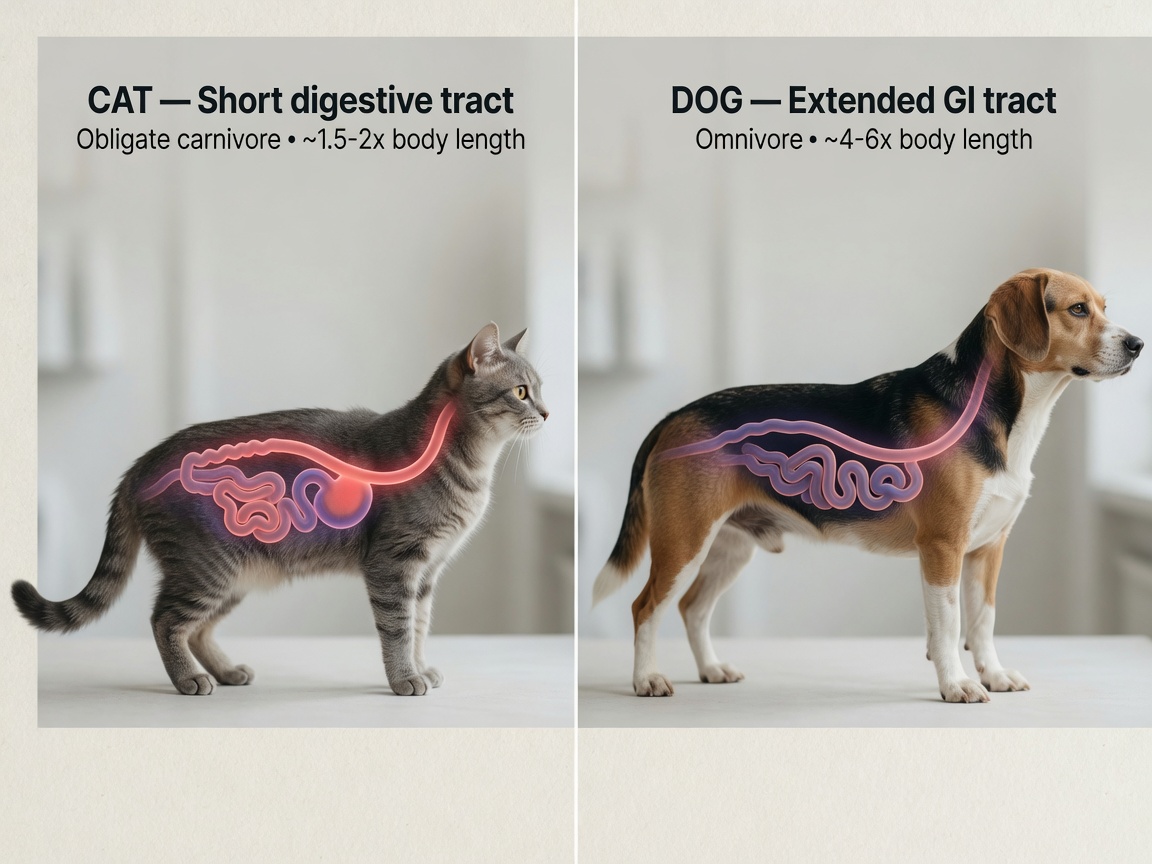
The healthy cat gut microbiome is dominated by obligate anaerobes capable of fermenting protein — primarily members of the genera Clostridium, Bacteroides, Bifidobacterium, and Lactobacillus. Unlike dogs, who have a more complex fermentative capacity and can derive meaningful nutrition from plant-based carbohydrates, cats evolved as strict carnivores whose gut bacteria are optimised for meat digestion and protein catabolism. The large intestine in cats is proportionally shorter than in dogs, providing less surface area for fermentation.
This has practical implications. High-fibre dietary supplements appropriate for dogs — psyllium husk in large amounts, for example — can cause excessive gas and gastrointestinal discomfort in cats. Similarly, some probiotic strains extensively researched in dogs have limited colonisation potential in the feline gut due to pH differences and substrate availability. Feline gut health interventions must be tailored to feline physiology, not borrowed from canine protocols.
A foundational 2021 paper published in the Journal of Veterinary Internal Medicine (PMID 32047528) by Marsilio and colleagues examined microbiome composition in cats with chronic enteropathy (CE) compared to healthy controls. The study found that cats with CE showed significant reductions in Faecalibacterium species — key butyrate producers — and increased populations of potentially pathogenic bacteria including certain Clostridium species. These findings paralleled patterns observed in human inflammatory bowel disease, suggesting shared mechanisms and potential shared intervention targets.
What Is Feline Dysbiosis?
Dysbiosis refers to an imbalance in the gut microbial community — a shift away from the diverse, butyrate-producing baseline associated with good health toward a state dominated by fewer species, often with increased populations of bacteria associated with inflammation or pathogen-like behaviour. In cats, dysbiosis is increasingly recognised not just as a consequence of gastrointestinal disease but potentially as a contributing cause of it — a distinction that has important implications for treatment.
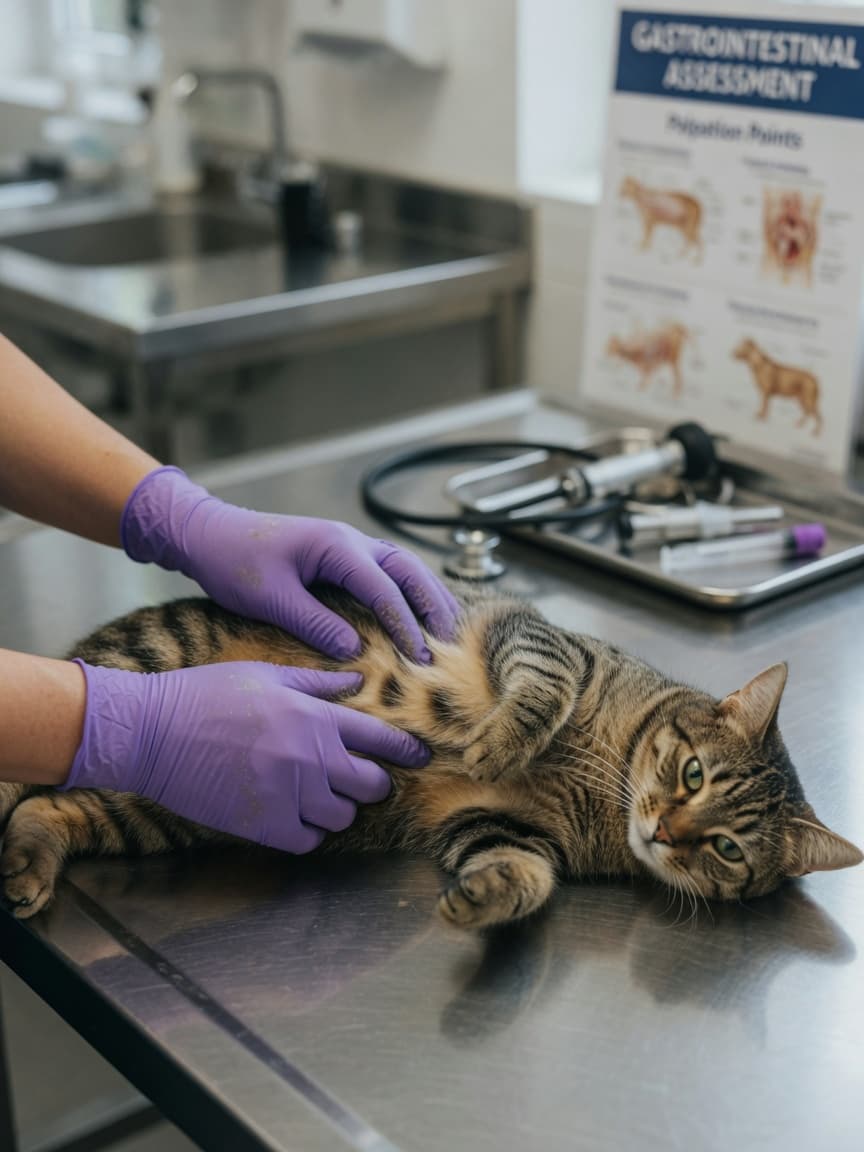
The Merck Veterinary Manual's section on malabsorption syndromes in small animals lists dysbiosis as a contributing factor in feline small intestinal bacterial overgrowth (SIBO), chronic enteropathy, and protein-losing enteropathy. These conditions share overlapping clinical presentations and can be difficult to distinguish without specialist investigation, underscoring the importance of veterinary assessment when gut symptoms are persistent.
Signs that your cat's gut microbiome may be disrupted include:
- Chronic soft stools, diarrhoea, or alternating constipation and diarrhoea
- Vomiting beyond the occasional hairball — particularly undigested food or bile
- Significant weight loss despite apparently normal appetite
- Reduced appetite or complete food refusal
- Excessive borborygmi (audible gut sounds)
- Bloating or visible abdominal discomfort
- Changes in coat quality — dullness, increased shedding, or dandruff
- Increased lethargy or behavioural changes, including increased hiding or reduced social engagement
The Gut-Brain Connection in Cats
Research published in The Guardian explored an intriguing dimension of feline gut health: the link between gut bacteria composition and cat behaviour. The Guardian's reporting on cat gut bacteria and mental health discussed emerging evidence that microbiome composition in cats correlates with anxiety levels and social behaviour — and that cats living in multi-cat households or high-stress environments show characteristic microbiome shifts that mirror stress-associated changes seen in other species.
The gut-brain axis in cats operates through the same vagal, hormonal, and immunological pathways as in dogs and humans. Serotonin precursors produced by gut bacteria influence mood regulation; gut-derived cytokines modulate stress responses; enteric nervous system function is shaped by microbial metabolites. For cats — already prone to stress-related conditions including feline idiopathic cystitis, overgrooming, and intercat aggression — this suggests that supporting gut health may have benefits well beyond the digestive tract.
Research from Science Daily on cat gut health has reinforced this picture, showing that dietary interventions that improve gut microbiome diversity in cats are associated with measurable changes in behavioural markers of stress and anxiety.
Probiotics for Cats: What the Evidence Shows
Probiotic research in cats is less extensive than in dogs or humans, but the evidence that exists is useful. A 2018 review (PMID 29961580) by Deng and Swanson examined the effect of dietary interventions including probiotics on feline gut microbiota and concluded that specific strains showed measurable benefits in terms of microbiome diversity and clinical outcomes, particularly in the context of diarrhoea management and post-antibiotic recovery.
The strains with the strongest evidence base for cats include Enterococcus faecium SF68, Bifidobacterium longum, and certain Lactobacillus acidophilus strains. Key considerations when choosing a cat probiotic:
- Species specificity matters. Choose products formulated for cats rather than human or canine probiotics. Colonisation potential varies significantly between species.
- Guaranteed CFU count at expiry. Many probiotic products lose viability before use. Look for products that guarantee colony-forming unit counts at the end of shelf life, not just at manufacture.
- Stability of the strain. Lactobacillus strains in particular can be sensitive to heat and stomach acid. Enteric-coated formulations or those proven to survive gastric transit are preferable.
- Context of use. Probiotics have the strongest evidence in cats during and after antibiotic courses, in cases of acute diarrhoea, and in cats with diagnosed chronic enteropathy as an adjunct to primary treatment.
Support your pet's wellbeing naturally with HolistaPet — veterinarian-formulated CBD and wellness products for dogs and cats. Explore HolistaPet →
Prebiotics in Cats: A More Cautious Approach
Prebiotics — non-digestible food components that selectively stimulate beneficial gut bacteria — must be approached more carefully in cats than in dogs, given the feline gut's limited fermentative capacity. Large amounts of fermentable fibre that would be beneficial in a dog can produce excessive gas, bloating, and osmotic diarrhoea in cats.
That said, modest amounts of specific prebiotics are appropriate and beneficial. Fructooligosaccharides (FOS) at low doses (0.5–1g per day) have shown positive effects on feline gut microbiome composition without gastrointestinal side effects in several studies. Mannanoligosaccharides (MOS) have been shown to reduce adhesion of pathogenic bacteria to gut epithelium. Both are found in quality commercial cat foods and can be supplemented cautiously if needed.
The ASPCA's guidance on common cat diseases recommends dietary consistency as a cornerstone of feline digestive health — cats are particularly sensitive to food changes and do best with gradual transitions over at minimum 10–14 days, longer than the standard 7-day protocol often cited for dogs.
Dietary Strategies for Feline Gut Health
Given feline biology, the most evidence-supported dietary approaches to gut health in cats centre on high-quality protein, moisture content, and digestibility rather than fibre quantity:
High-moisture diets support intestinal motility and hydration of intestinal contents, reducing the risk of constipation — a common and underappreciated problem in cats, particularly older individuals. Wet food as a primary dietary source, or water fountains to encourage drinking, significantly supports gut transit time.
Highly digestible protein sources reduce the substrate available for protein fermentation by pathogenic bacteria in the large intestine. Novel protein sources — rabbit, duck, venison — may benefit cats with suspected food sensitivities driving gut inflammation, following the same novel protein logic that applies in dogs.
Limiting unnecessary dietary variety in cats prone to sensitivity is the inverse of advice given for dogs. While rotating protein sources occasionally is reasonable for healthy cats, frequently changing diets in sensitive individuals can perpetuate dysbiosis rather than resolve it.
Looking for quality pet nutrition? Zooplus offers Europe's widest range of science-backed pet food and supplements, with free delivery on orders over €29. Shop now →
Key Takeaways
- The feline gut microbiome is less diverse than a dog's, dominated by protein-fermenting bacteria, and requires a species-specific approach to support — dog protocols do not transfer directly.
- Feline dysbiosis is associated with chronic enteropathy, malabsorption, and weight loss; key signs include persistent diarrhoea, vomiting beyond occasional hairballs, and coat changes.
- The gut-brain axis in cats means microbiome disruption can contribute to anxiety, stress, and behavioural changes — especially in multi-cat or high-stress households.
- Probiotics with the best evidence in cats include Enterococcus faecium SF68 and Bifidobacterium longum; use species-specific formulations with guaranteed CFU counts.
- Prebiotics should be used at low doses in cats — FOS at 0.5–1g/day is appropriate; large amounts of fermentable fibre can worsen symptoms.
- High-moisture, highly digestible protein diets are the dietary foundation of feline gut health; diet transitions should be gradual (10–14 days minimum).
References
- Marsilio S, et al. "Comparison of the fecal microbiome in cats with and without chronic enteropathy." Journal of Veterinary Internal Medicine. 2021. PMID: 32047528.
- Deng P, Swanson KS. "Gut microbiota of humans, dogs and cats: current knowledge and future opportunities and challenges." British Journal of Nutrition. 2015. PMID: 29961580.