
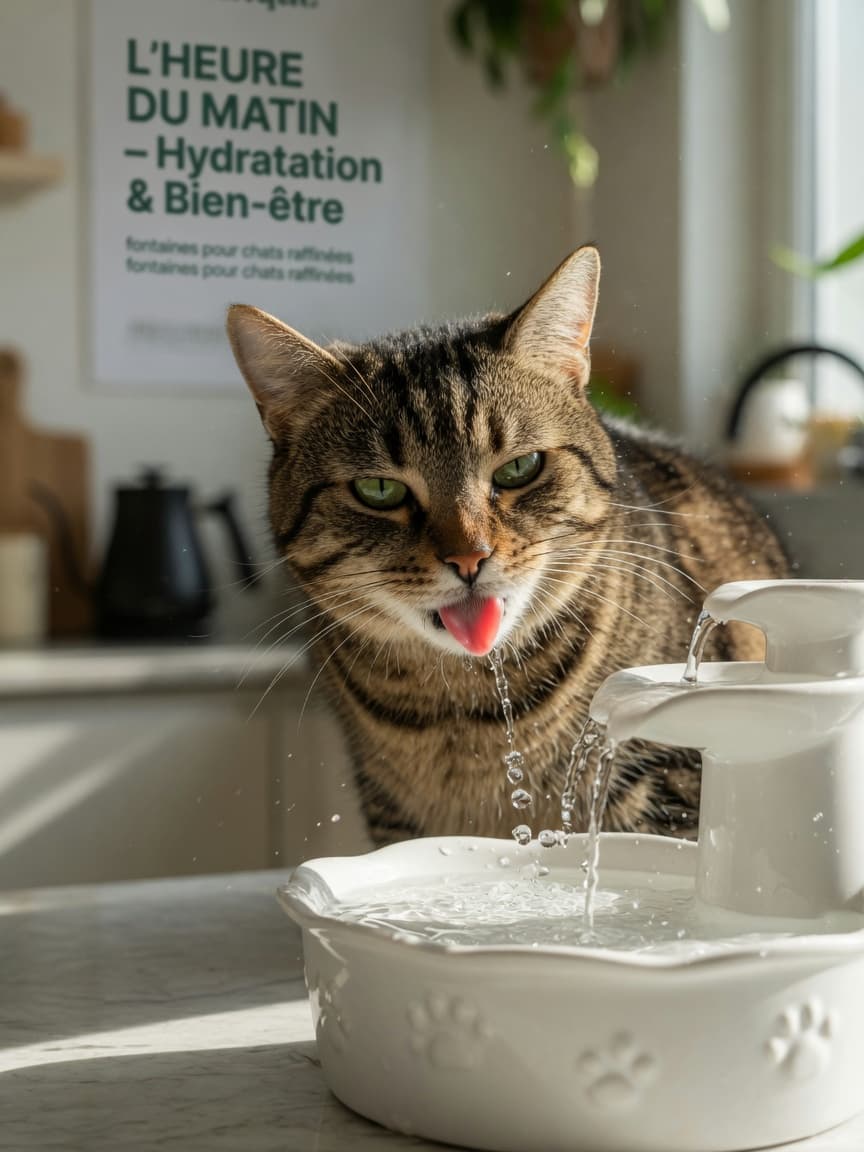
Best Cat Water Fountains 2026: Encourage Hydration & Prevent UTIs
Cats are biologically wired to obtain most of their moisture from prey rather than from a water source, which means that domestic cats — especially those eating dry kibble — are in a state of chronic, low-grade dehydration for much of their lives. This guide explains the evolutionary reasons behind that low thirst drive, how dehydration is directly linked to urinary tract disease and chronic kidney disease, and reviews five of the best cat water fountains of 2026 — assessed by material safety, capacity, filter quality, and noise level — to help you find the right solution for your household.
Key Takeaways
- Cats evolved in arid desert environments and have a low thirst drive because their wild ancestors obtained around 70% of their water from prey; domestic cats do not compensate adequately when fed dry food.
- Moving water is substantially more attractive to cats than still water — an instinct that reflects the fact that stagnant water sources in nature are more likely to be contaminated.
- Ceramic fountains are significantly safer than plastic over time: ceramic is non-porous, does not leach chemicals, and does not develop the micro-scratches that harbour bacterial biofilm in plastic units.
- Chronic dehydration is a well-established contributing factor in Feline Lower Urinary Tract Disease (FLUTD) and Chronic Kidney Disease (CKD), which affects approximately one in three cats over the age of 15.
- Filter replacement schedule is as important as the fountain itself — an unmaintained fountain with a clogged or exhausted filter can expose your cat to more bacteria than a simple water bowl.
Cats & Hydration: An Evolutionary Problem
To understand why so many cats ignore their water bowl, it helps to look at their nearest wild relatives. The African wildcat (Felis lybica), from which the domestic cat descends, evolved in arid North African and Middle Eastern environments where standing water was scarce and unreliable. The wildcat's dietary solution was elegant: prey animals such as rodents and small birds contain approximately 70% water by weight. A wildcat catching several mice per day effectively met most of its hydration needs through food alone, and its kidneys evolved to be extraordinarily efficient at concentrating urine — an adaptation that reduced the need to seek out water sources.
Domestic cats have retained this evolutionary adaptation almost entirely unchanged. Their thirst mechanism is simply less sensitive than that of dogs or humans — cats do not feel thirsty at the same level of dehydration that would prompt a person or dog to seek water. This was fine when all cats ate prey-based diets. It becomes a serious health problem when cats are fed commercial dry kibble, which contains only around 8–10% moisture. Cats fed exclusively on dry food are essentially in mild dehydration every single day of their lives, and their kidneys — already working hard to concentrate urine — come under chronic low-level stress as a result.
Switching to wet food immediately increases a cat's water intake, since wet food contains 70–80% moisture — comparable to prey. For cats that will not or cannot transition to wet food, a water fountain is the single most practical tool available to meaningfully increase daily water consumption without requiring a dietary overhaul.
The Link Between Dehydration and Feline Disease
The consequences of chronic dehydration in cats are well documented in veterinary literature. Concentrated, low-volume urine creates the chemical conditions for crystal formation in the bladder and urinary tract — a central mechanism in Feline Lower Urinary Tract Disease (FLUTD), an umbrella term covering cystitis, urolithiasis (bladder stones), and urethral obstruction. The two most common crystal types are struvite (magnesium ammonium phosphate) and calcium oxalate, both of which form preferentially in concentrated urine. Urethral obstruction — a complication primarily affecting male cats due to their narrower urethra — is a life-threatening emergency requiring immediate catheterisation.
Chronic Kidney Disease (CKD) is even more widespread in the feline population. Published prevalence estimates suggest that approximately 1–3% of the general cat population has CKD, rising dramatically to around one in three cats over the age of fifteen. While CKD is multifactorial, the kidneys' daily burden of concentrating dehydrated cats' urine over many years is considered a contributing factor. There is no cure for CKD, but management through increased hydration — often achieved with subcutaneous fluids in advanced cases — is a primary pillar of treatment. Preventing the dehydration in the first place is obviously preferable.
Research has shown that providing a water fountain can increase a cat's daily water intake by 50% compared to a static bowl in some individuals. Even a modest increase in urine dilution measurably reduces the relative supersaturation of both struvite and calcium oxalate — the key variable that predicts crystal formation risk.
Why Cats Prefer Moving Water
The preference for running water over still water is not random feline eccentricity — it is a deeply embedded survival instinct. In the wild, still water sources are far more likely to be stagnant, contaminated with pathogens, or colonised by algae than flowing streams or freshwater springs. Cats that instinctively avoided still water were healthier on average, and that preference became established in the species over millennia.
Water fountains exploit this instinct directly. The sound of moving water attracts a cat's attention; the visual movement of the water surface provides ongoing stimulus; and the oxygenation of recirculating water genuinely improves freshness and taste. Many cat owners observe their cats drinking enthusiastically from a running tap — sometimes for minutes at a time — while ignoring a full bowl placed centimetres away. A fountain replicates those conditions continuously without requiring a running tap.
Multiple water stations also matter. Cats prefer to drink away from their food source — another prey-instinct response, as eating and drinking in the same location can attract scavengers. Placing fountains in two or three locations around the home, always away from the food bowl and litter box, maximises the chance that cats will drink regularly throughout the day.
Ceramic vs. Plastic Fountains
The material your fountain is made from matters more than most product descriptions acknowledge. Plastic fountains are light, inexpensive, and available in a wide range of shapes and sizes. However, plastic scratches with normal use — and those microscopic scratches harbour bacterial biofilm that is nearly impossible to remove through standard cleaning. Some cats develop feline acne on their chins from repeated contact with plastic surfaces, a reaction to both the bacteria and chemical residues from the plastic itself. BPA-free labelling reduces some chemical concerns but does not address the biofilm problem.
Ceramic fountains are non-porous: bacteria cannot penetrate or colonise a smooth ceramic surface the way they do scratched plastic. Ceramic also does not leach any compounds into the water, has no plastic odour that might deter sensitive cats, and the thermal mass of ceramic keeps water slightly cooler. The trade-offs are weight (ceramic is heavy and will break if dropped) and cost. For a cat with existing urinary or kidney disease, the investment in ceramic is straightforwardly justified.
Stainless steel sits between the two: non-porous and hygienic like ceramic, lighter and more durable, but sometimes associated with an off-putting metallic odour that a minority of cats notice. Stainless steel fountains are an excellent practical choice for households where a ceramic unit's breakage risk is a genuine concern.
Filter Types & Maintenance
Most quality fountains use a multi-stage filtration system. The foam pre-filter is the first line of defence, catching hair, debris, and particulates before they reach the pump. It should be rinsed under running water every week in a single-cat household, and every three to four days in multi-cat homes. A blocked foam pre-filter starves the pump of flow, shortening its lifespan significantly.
The activated carbon filter is the second stage. Carbon adsorbs chlorine, organic compounds, and odour molecules from the water, improving both taste and safety. Carbon filters should be replaced every two to four weeks depending on household cat count and local water quality — harder water exhausts carbon faster. Never skip the carbon change and assume the filter is still working because the water looks clear; carbon saturation is invisible.
Ion-exchange resin, included in some premium filters, exchanges calcium and magnesium ions for sodium, softening the water. Softened water is less likely to form mineral scale inside the fountain's pump and tubing. Whether soft water specifically benefits cats with a tendency toward calcium oxalate crystals is a more nuanced question worth discussing with your vet.
Beyond filter changes, the entire fountain should be fully disassembled and washed weekly — including the pump, which accumulates slime on its impeller over time. A pump cleaned monthly will outlast one left without attention by years.
Top 5 Cat Fountains Reviewed
Catit Flower Fountain is the most recognisable cat fountain on the market, and for good reason. Its three flow settings (flower shower, bubbling top, and calm stream) allow experimentation to find what your cat responds to. At 3 litres, it is suitable for one to two cats. The triple-action carbon filter is readily available and affordable. Its limitation is that it is plastic — a consideration for long-term use or for cats prone to feline acne.
PetSafe Drinkwell Platinum is a large-capacity 5-litre unit that suits multi-cat households or larger breeds. The free-falling water stream is highly attractive to cats that are fascinated by taps. It has a removable reservoir that simplifies refilling without disturbing the base, and most of the top components are dishwasher safe. It runs slightly louder than ceramic or stainless units due to the free-fall design.
Pioneer Pet Raindrop Fountain is constructed from brushed stainless steel with a low, minimalist profile that is easy to clean and aesthetically unobtrusive. Its 1.5-litre capacity is best suited to one or two cats. The pump runs nearly silently, which is a significant advantage in a quiet home at night. The stainless surface is fully dishwasher safe and will not scratch or leach chemicals.
Zooplus Ceramic Fountain is a mid-tier ceramic option combining the hygienic advantages of ceramic with a practical 2.5-litre capacity. The fountain's wide bowl base keeps water cooler and gives cats comfortable access from multiple angles simultaneously. It runs quietly and is a strong choice for owners making their first move into ceramic. Replacement filters are readily available through Zooplus directly.
PetSafe Creekside Ceramic Fountain is the premium option in this review. Its two-piece ceramic construction (pedestal base and upper bowl) creates a gentle cascading flow that is visually attractive to cats, and the 2-litre capacity is adequate for a two-cat household. At virtually inaudible noise levels, it is the best choice for light-sleeping owners. Filter costs are modest and available through mainstream pet retailers. It earns the top rating for combining material safety, quiet operation, elegant design, and practical maintenance.
| Brand | Material | Capacity | Filter Type | Noise Level | Dishwasher Safe | Price | Rating |
|---|---|---|---|---|---|---|---|
| Catit Flower Fountain | Plastic / BPA-free | 3 L | Triple-action carbon | Low | Partially | €29.99 | 4.3 / 5 |
| PetSafe Drinkwell Platinum | Plastic | 5 L | Carbon + foam | Medium | Yes (top parts) | €44.99 | 4.2 / 5 |
| Pioneer Pet Raindrop | Stainless Steel | 1.5 L | Carbon + foam | Very Low | Yes | €49.99 | 4.5 / 5 |
| Zooplus Ceramic Fountain | Ceramic | 2.5 L | Carbon + foam | Very Low | Partially | €54.99 | 4.6 / 5 |
| PetSafe Creekside | Ceramic | 2 L | Carbon + foam | Low | Partially | €59.99 | 4.7 / 5 |
Placement & Positioning Tips
Where you place the fountain is almost as important as which model you choose. Cats instinctively prefer to drink at a distance from where they eat — a behaviour rooted in the fact that eating and drinking in the same spot would attract scavengers to the prey site in the wild. Placing the fountain beside the food bowl is a common mistake that may suppress a cat's willingness to use it. Aim for at least one to two metres of separation, and ideally place the fountain in a different room altogether.
Keep the fountain well away from the litter box. Cats are fastidiously sensitive to odour near food and water sources, and a fountain located adjacent to the litter tray will frequently be ignored. In multi-cat households, the general rule is one fountain per cat plus one additional — in practice, two fountains for a two-cat home, placed in separate rooms. This eliminates resource-guarding behaviour, where a dominant cat monopolises the single water source and subordinate cats restrict their intake.
Lighting matters too. Cats feel more exposed when eating or drinking in bright, open spaces. Positioning a fountain in a quieter corner or against a wall gives them the slight sense of enclosure that makes them more confident and willing to spend time at the water source.
Maintenance Schedule
Maintaining a water fountain properly is not optional — a neglected fountain can become a source of bacterial contamination rather than a health tool. Follow this schedule for reliable results:
Weekly: Rinse and squeeze the foam pre-filter under clean running water. Wipe down the fountain bowl and outer surfaces with a clean cloth. Top up the water level — evaporation reduces water level and strains the pump. Full disassembly and wash of all components in warm soapy water is recommended at least once per week, with a thorough rinse to remove all soap residue before reassembly.
Every two to four weeks: Replace the carbon filter entirely. Do not rinse and reuse carbon filters — once the activated carbon is saturated it cannot be regenerated at home. In a household with hard tap water or three or more cats, lean toward the two-week schedule.
Monthly: Disassemble and clean the pump impeller. Slime accumulation on the impeller is a common reason for pumps running louder over time. A soft toothbrush or cotton swab and warm water are all that is required. Check the pump's tubing for kinks or partial blockages.
Quarterly: Inspect all components for wear, including the power cable, pump housing, and any rubber gaskets. If the pump is running audibly louder than when new, consider replacement before it fails entirely — replacement pumps for major brands are widely available and inexpensive compared to a full fountain replacement.
Julia's Verdict
My top recommendation for most cat owners is the PetSafe Creekside Ceramic Fountain. The combination of food-safe ceramic construction, near-silent operation, and the visually appealing cascading stream addresses both the hygiene concerns I have with plastic fountains and the behavioural drivers behind a cat's preference for moving water. For a one-to-two-cat household where budget is a secondary concern, this is the unit I would buy without hesitation. For owners who want an elegant, easy-clean alternative that is also fully dishwasher safe, the Pioneer Pet Raindrop in stainless steel is a close second — its 1.5-litre capacity is on the smaller side, so it works best in households with one or two cats who are reliable drinkers. For owners new to cat fountains or looking to try the concept with minimal investment, the Catit Flower Fountain is a sensible entry point — the three flow settings are genuinely useful for finding what your individual cat responds to. For any cat with an existing diagnosis of chronic kidney disease, urinary crystals, or FLUTD, I would not compromise on material: ceramic or stainless steel only, paired with an immediate discussion with your vet about transitioning to wet food. Hydration is one of the most powerful levers you have for managing both conditions.
Best Overall: PetSafe Creekside Ceramic Fountain
Best for Small Households: Pioneer Pet Raindrop (Stainless Steel)
Best Budget: Catit Flower Fountain
Keep your cat hydrated with a quality water fountain from Zooplus España — browse ceramic, stainless and plastic options with full filter availability.
Scientific References
- Buckley CM, et al. "Effect of dietary water intake on urinary output, specific gravity and relative supersaturation for calcium oxalate and struvite in the cat." British Journal of Nutrition. 2011;106(Suppl 1):S128–S130. PMID: 22005434
- Lekcharoensuk C, et al. "Association between dietary factors and calcium oxalate and magnesium ammonium phosphate urolithiasis in cats." Journal of the American Veterinary Medical Association. 2001;219(9):1228–1237. PMID: 11697362