
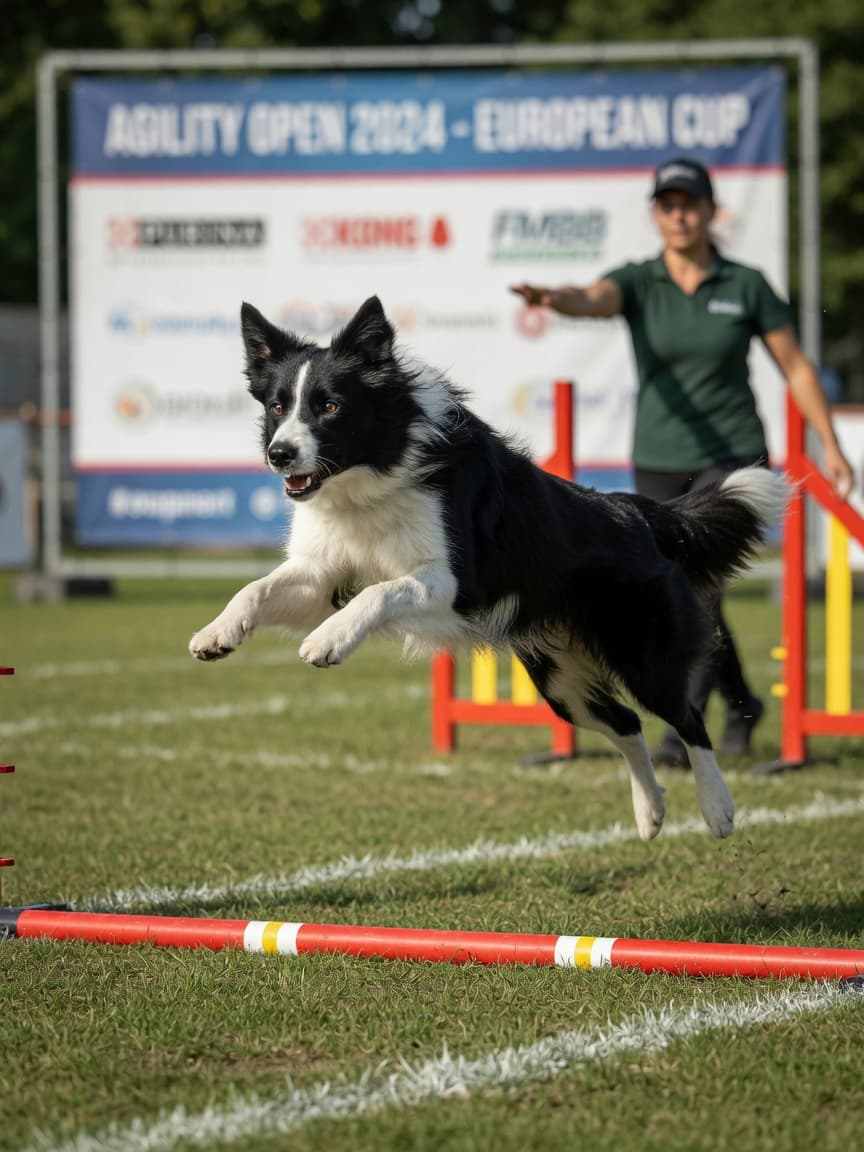
What Is Dog Agility?
Dog agility is a timed obstacle course sport in which a handler directs their dog through a sequence of obstacles as quickly and accurately as possible. Faults are awarded for knocked poles, missed contacts on equipment, and refusals at obstacles. The dog with the fastest clear round wins — simple in theory, demanding in practice.
What makes agility special is the communication required between handler and dog. The handler cannot touch the dog or the equipment during a run, so everything relies on body language, voice cues, and the dog's ability to read and respond to its handler in real time. It's a genuine partnership sport, and it's brilliantly engaging for both parties.
The Equipment
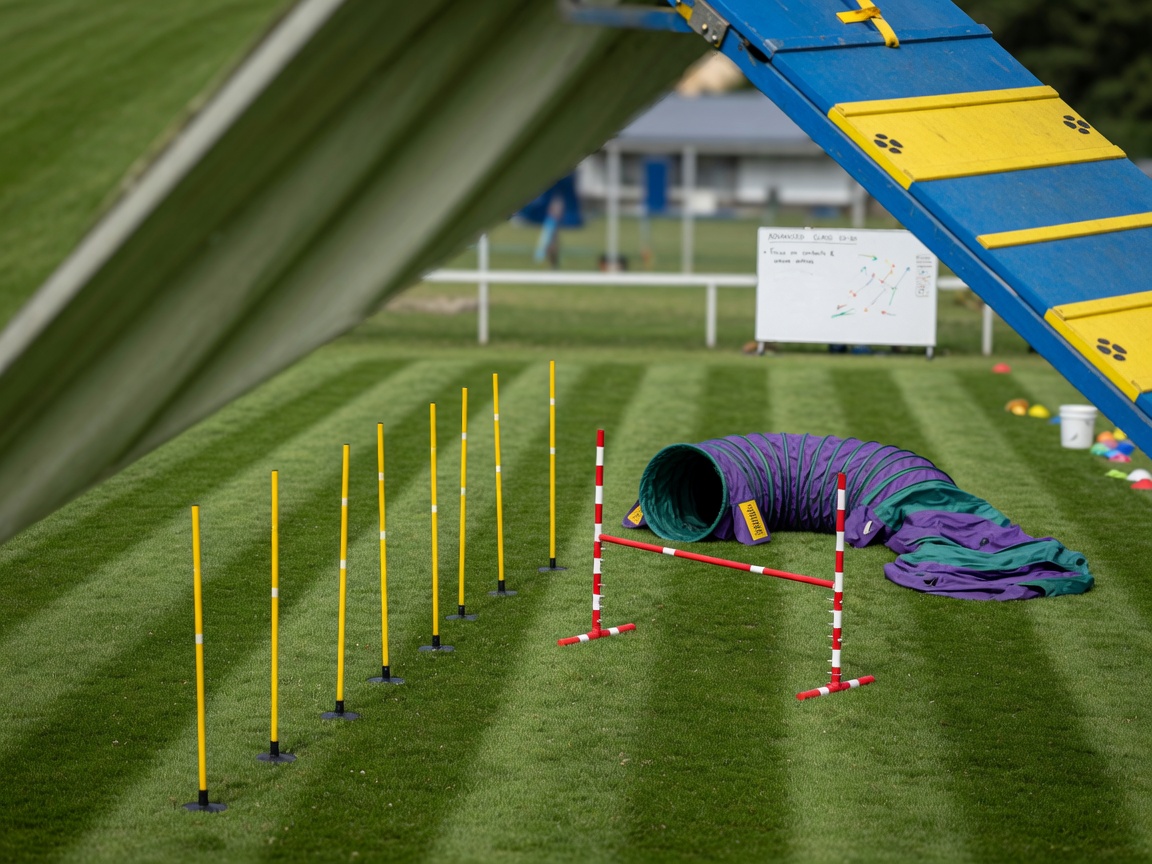
A standard agility course includes the following obstacles:
- Jumps: Horizontal bars the dog clears at a height appropriate to its size. The most common obstacle on any course.
- Tunnels: Open tunnels (rigid, with two open ends) and collapsed tunnels (with a fabric chute the dog pushes through). Dogs typically love these.
- Weave poles: A series of upright poles — usually 12 at competition level — that the dog weaves through in a slalom pattern. One of the most technically demanding obstacles to train.
- A-frame: A large triangular contact obstacle the dog must ascend and descend, touching a yellow contact zone at the bottom. Height and contact training are both important here.
- Dog walk: A plank raised horizontally between two ramps. The dog walks along the top and must hit contact zones at each end.
- Seesaw (teeter-totter): A pivoting plank. The dog must ride it down to the ground — one of the more challenging obstacles for noise-sensitive dogs.
If you're setting up for training at home, starter agility sets are widely available. Zooplus stocks agility equipment for home training, including adjustable jump sets and tunnel kits, which are useful for building foundation skills before club training begins.
Governing Bodies
In the UK, dog agility is governed by the Kennel Club (KC), which licences competitions and sets the rules for UK agility. The KC runs agility shows throughout the year, from local club events through to major national competitions such as Crufts Agility.
At the international level, agility is governed by the Fédération Cynologique Internationale (FCI), which sets the rules for the FCI Agility World Championship — the sport's premier international event. Most EU countries have their own national canine federation affiliated to the FCI that oversees domestic agility competition.
In addition to KC agility, the Agility Association of Amateur Athletes (AAA) provides an alternative competition pathway in parts of Europe with slightly different rules and a strong community focus.
How to Get Started
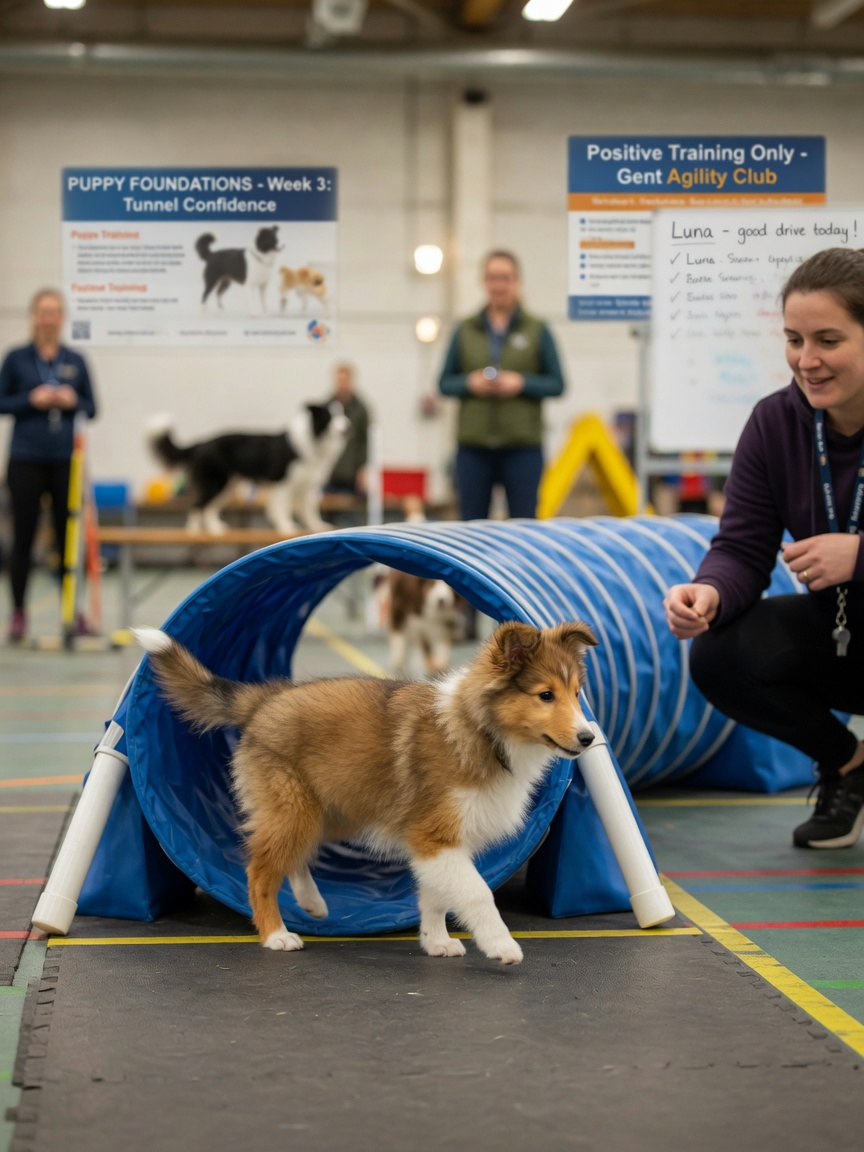
Foundation Work with Puppies
Puppies can begin learning agility-related foundation skills from a young age, but the emphasis at this stage should be on confidence, body awareness, and handler focus — not obstacle performance. Puppy agility classes typically introduce low-level obstacles and use play-based training to build enthusiasm without putting stress on developing joints.
In the UK, many agility clubs recommend completing the Kennel Club Good Citizen Dog Scheme before starting agility proper. The Bronze award gives a solid foundation in basic obedience that makes agility training significantly easier.
Finding a Club
The best way to progress in agility is to join a local club with qualified instructors. The Kennel Club maintains a list of registered agility clubs across the UK on its website. Most clubs offer beginner classes that don't require any previous agility experience — just a dog that has basic recall and can work in the presence of other dogs.
Across the EU, national canine federations typically maintain club directories, and the agility community in countries like Germany, the Netherlands, Belgium, and France is large and active.
Best Breeds for Agility
While any dog can try agility and enjoy it at a recreational level, certain breeds dominate at competition level:
- Border Collie: The sport's most successful breed by a significant margin. Their intelligence, athleticism, and handler focus make them almost purpose-built for agility.
- Australian Shepherd: Close behind the Border Collie in terms of suitability — athletic, driven, and highly trainable.
- Shetland Sheepdog: Smaller than the herding breeds above, Shelties are exceptionally quick and precise. They're a dominant force in the medium height categories.
- Jack Russell Terrier: Surprisingly competitive in small dog agility — fast, fearless, and possessed of seemingly infinite energy.
- Belgian Malinois: Increasingly visible at the top of agility competition, reflecting the breed's exceptional athleticism and responsiveness to training.
That said, Labradors, Spaniels, mixed breeds, and dogs of almost every description compete in agility and have a fantastic time doing it. The sport is genuinely inclusive at club level.
Health Considerations
Age Guidelines
Full agility training — including jumping at competition height and weave poles — should not begin until a dog is physically mature. As a general guideline, most clubs and vets recommend waiting until 12 to 18 months of age, with larger breeds at the upper end of that range. The growth plates in young dogs' bones are vulnerable to repetitive impact stress, and pushing too hard too early risks long-term damage.
Warm-Up and Cool-Down
This is an area where dog sport owners sometimes fall short. An agility dog performing at speed over contacts and jumps is an athlete, and it should be treated like one. A five-to-ten-minute on-lead walk before training, followed by some dynamic stretches if your dog is accustomed to them, makes a meaningful difference to injury risk. After training, allow the dog to cool down gradually rather than going straight into the car.
Joint Health
Regular veterinary monitoring of joint health is important for dogs competing at any level of agility. Hip and elbow assessments before beginning the sport are sensible for breeds with known predispositions to joint problems. Omega-3 supplementation and maintaining a lean bodyweight both support joint health in working dogs.
Nutrition for Agility Dogs
A dog training and competing in agility has higher energy needs than a pet dog of the same size and breed. The exact increase depends on training frequency and intensity, but performance kibbles with higher protein and fat levels are generally more appropriate than standard maintenance foods for dogs doing regular agility work.
High-value training treats are essential for agility — the reinforcement needs to be motivating enough to compete with the excitement of the environment. Small, soft, smelly treats work best. Zooplus has a wide selection of training treats suitable for agility work, including freeze-dried options that many handlers swear by for high-drive dogs. Keep treat size small to avoid adding unnecessary calories across a training session.
Never feed a full meal immediately before an agility session. Bloat (gastric dilatation-volvulus) is a genuine risk in active dogs that exercise on a full stomach, particularly in deep-chested breeds. Allow at least two hours between a main meal and intensive exercise.
Is Agility Right for Your Dog?
The best candidates for agility are dogs that are physically sound, food or toy motivated, confident in new environments, and happy to engage with their handler under distraction. A dog that lacks confidence or finds novelty stressful will not enjoy competition agility — though it may still benefit from recreational training in a low-pressure environment.
If your dog fits the profile, there's very little reason not to give it a go. Most clubs offer taster sessions, and there's no commitment involved in turning up and seeing whether your dog loves it. Many do.