
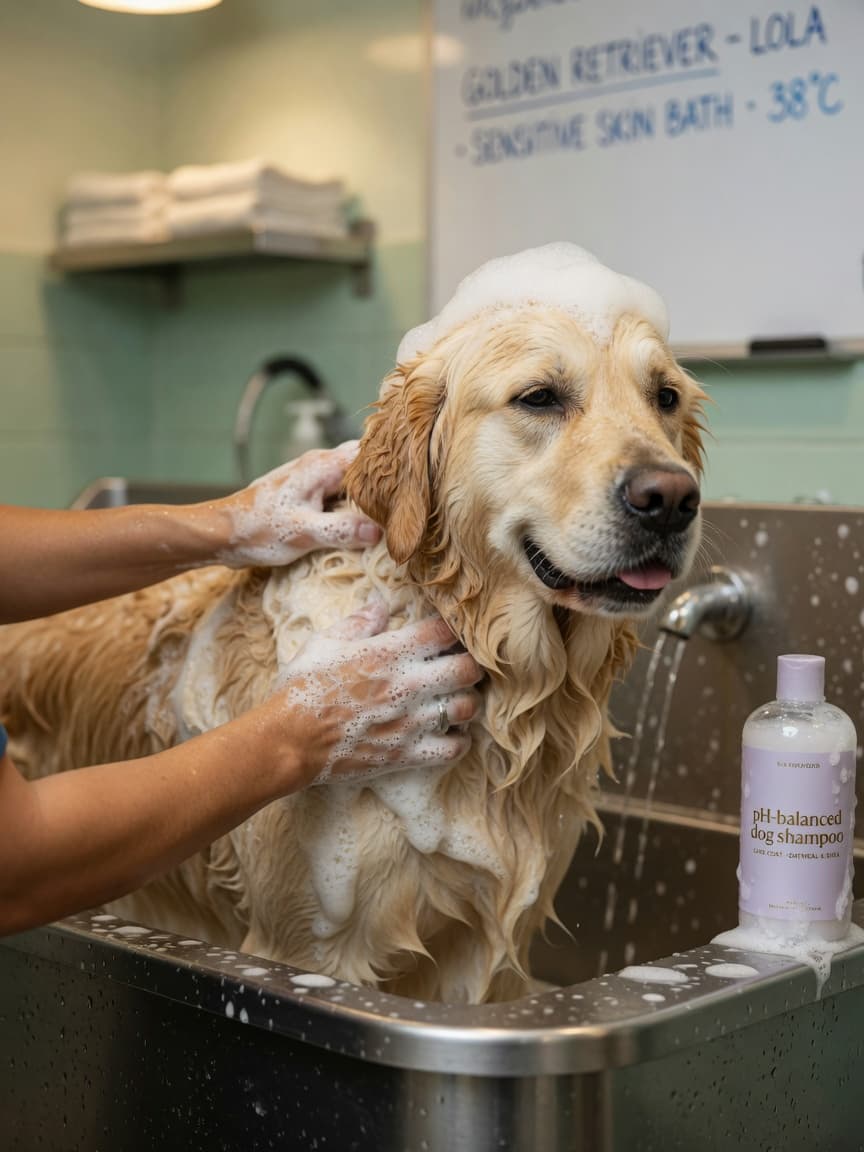
Best Dog Shampoos: By Skin Type & Coat Condition
Walk into any pet store and you will face an overwhelming wall of shampoo options — clarifying, whitening, flea-killing, oatmeal, medicated, puppy-safe, hypoallergenic. Choosing the wrong one does not just mean a less-than-perfect bath; it can aggravate existing skin conditions, trigger reactions, or strip the coat of oils it needs. This guide breaks down exactly what to look for — and what to avoid — based on your dog's specific skin type and coat condition.
How to Choose: The Non-Negotiables
pH Balance
The most important criterion for any dog shampoo is that it is pH-balanced for canine skin. The label should state this explicitly. A product that is too acidic strips the skin's acid mantle, leaving it vulnerable to bacterial overgrowth. One that is too alkaline disrupts the moisture barrier and causes chronic dryness. If a shampoo makes no mention of pH on its packaging, that is a red flag.
Ingredients to Avoid
The following ingredients have no place in a responsible dog shampoo:
- Artificial fragrances: "fragrance" on a label can represent dozens of undisclosed chemical compounds, several of which are common canine allergens
- Parabens (methylparaben, propylparaben): preservatives with potential endocrine-disrupting effects under prolonged exposure
- Sulfates (SLS, SLES): aggressive detergents that strip natural oils and disrupt the skin barrier
- Formaldehyde-releasing preservatives: such as DMDM hydantoin and imidazolidinyl urea
- Propylene glycol: can be irritating for dogs with sensitive skin at high concentrations
- Tea tree oil at high concentrations: toxic to dogs if ingested; safe only in very dilute formulations
Ingredients to Look For
Positive indicators include colloidal oatmeal, aloe vera, glycerin (a humectant), ceramides, panthenol (provitamin B5), and natural plant-derived cleansers such as decyl glucoside. For anti-itch or antimicrobial purposes, look for chlorhexidine gluconate, ketoconazole, or salicylic acid — but only when medically indicated.
Shampoo by Category
For Sensitive Skin
Dogs with sensitive skin — particularly atopic breeds like West Highland White Terriers, French Bulldogs, Labrador Retrievers, and Golden Retrievers — need the most minimal ingredient lists. Look for fragrance-free, sulfate-free formulations with colloidal oatmeal or ceramide complexes as the featured active ingredients. Avoid any product with added dyes or botanical extracts not specifically tested for sensitive canine skin. Bathing frequency matters: for dogs with atopy, weekly baths with a gentle, barrier-restoring shampoo actually reduce allergen load on the skin and may decrease itch.
Medicated Shampoos
Medicated shampoos are formulated to treat specific diagnosed conditions and should be used under veterinary guidance. The main active ingredients and their targets:
- Chlorhexidine 2–4%: broad-spectrum antibacterial, ideal for superficial pyoderma (bacterial skin infection)
- Ketoconazole 1–2%: antifungal for Malassezia (yeast) overgrowth, often causing greasy skin, odor, and itching in skin folds
- Combination chlorhexidine + ketoconazole: the workhorse of veterinary dermatology for mixed bacterial-yeast infections
- Salicylic acid + sulfur: keratolytic — removes scale and reduces sebum in seborrheic skin conditions
- Benzoyl peroxide: degreasing and follicle-flushing; used for deep-follicle bacterial infections and Demodex mange
Contact time is critical with medicated shampoos — most require 5–10 minutes on the skin before rinsing to achieve therapeutic effect. Follow veterinary instructions on frequency, as overuse of active ingredient shampoos can irritate even healthy skin.
Whitening Shampoos
Whitening shampoos use optical brighteners or mild bleaching agents (such as hydrogen peroxide or bluing agents) to enhance the appearance of white, light, or silver coats. They are cosmetic products, not medicinal ones, and should still meet all the safety criteria above — pH-balanced, free of harsh sulfates. Avoid whitening shampoos on non-white coats, as they can alter pigmentation over time. These are particularly popular for Bichon Frisé, Samoyed, West Highland White Terrier, and Maltese owners.
Zooplus stocks a comprehensive range of dog shampoos — from sensitive-skin and oatmeal formulas to medicated veterinary-grade products and whitening treatments — at prices well below most physical pet stores. Filter by coat type, skin condition, or breed for a targeted recommendation.
Shop Dog Shampoos at Zooplus →
Puppy Shampoos
Puppies have thinner, more permeable skin than adult dogs and a less mature immune barrier, making ingredient selection even more critical. A true puppy shampoo should be:
- Tear-free (ophthalmologist-tested, low irritation if contact with eyes)
- Free of all fragrances, dyes, and harsh preservatives
- Formulated with the mildest possible cleansing agents
- Not contain flea-control actives unless specifically directed by a vet for puppies over 8 weeks old
Many "puppy" shampoos on the market are simply regular shampoos with a puppy photo on the label. Read the ingredient list rather than trusting the branding.
Flea Shampoos
Pyrethrin-based flea shampoos kill fleas on contact but provide no residual protection — fleas can re-infest within hours. They are a supplementary tool during an active infestation, not a standalone prevention strategy. Never use permethrin-containing flea shampoos on cats (severely toxic) or near cats. For ongoing flea control, consult your vet about prescription spot-on treatments or oral preventatives, which provide 30–90 days of coverage.
Bathing Frequency by Coat Type
Over-bathing is as problematic as under-bathing. General guidelines:
- Short-coated breeds (Beagle, Boxer): every 4–6 weeks, or as needed
- Double-coated breeds (Husky, Golden Retriever): every 6–8 weeks; more frequent bathing loosens undercoat but requires thorough drying to prevent hot spots
- Wire-coated breeds (Schnauzer, Airedale): every 6–8 weeks; hand-stripping regimens may alter frequency
- Curly/wool coats (Poodle, Labradoodle): every 3–4 weeks to prevent matting
- Atopic or skin-disease dogs: weekly bathing under veterinary dermatologist guidance
Application Tips for Best Results
Wet the coat thoroughly before applying shampoo — water-resistant coats need 30–60 seconds of saturation. Dilute the shampoo in a separate container before applying to ensure even distribution and reduce product waste. Work from neck to tail, massaging into the skin (not just the surface coat). Rinse completely — shampoo residue is a common cause of post-bath scratching. Finish with a conditioner if using a stripping or medicated shampoo to restore moisture balance.
Key Takeaways
- Always use a pH-balanced shampoo formulated specifically for dogs — never human shampoo
- Avoid artificial fragrances, sulfates, parabens, and formaldehyde-releasing preservatives
- Medicated shampoos require a diagnosis and should be used under veterinary guidance with correct contact time
- Flea shampoos kill on contact but provide no lasting protection — pair with prescription preventatives
- Puppy skin is more sensitive than adult skin; ingredient lists matter more than branding
- Bathing frequency depends on coat type, skin condition, and activity level — more is not always better
References
Marsella R, et al. (2012). A randomized, double-blind, placebo-controlled study to evaluate the effect of EFF1001, an Actinidia arguta (hardy kiwi) preparation, on CADESI-03 scores and transepidermal water loss in dogs with mild to moderate atopic dermatitis. Veterinary Dermatology. PubMed
Logas D, Kunkle GA. (1994). Double-blinded crossover study with marine oil supplementation containing high-dose icosapentaenoic acid for the treatment of canine pruritic skin disease. Veterinary Dermatology. PubMed