
IBD in Cats: Symptoms, Diet & Long-Term Management
By Julia Wrenfield, Pet Wellness Researcher
Inflammatory bowel disease is one of the most common causes of chronic gastrointestinal signs in middle-aged and older cats, yet it remains widely misunderstood. Many owners spend months or years managing a cat with recurring vomiting and weight loss without a clear diagnosis, cycling through dietary trials and empirical treatments without knowing what they are truly fighting. Understanding what IBD is, how it differs from other gut conditions — particularly small cell lymphoma — and what the evidence says about diet and long-term management can make a profound difference in your cat's quality and length of life.
What Is Feline IBD?
Inflammatory bowel disease in cats is not a single disease but a group of conditions defined by persistent inflammation of the gastrointestinal tract wall, caused by infiltration of inflammatory cells. The type of cell involved gives each form its name:
- Lymphoplasmacytic enteritis: The most common form, characterized by lymphocytes and plasma cells in the intestinal wall. This is also the form most closely related to small cell lymphoma, and the line between them can be biologically blurry.
- Eosinophilic gastroenteritis: Infiltration by eosinophils, often associated with food allergy or hypersensitivity reactions. May respond particularly well to dietary management.
- Granulomatous enteritis: Less common; a more severe form with discrete granuloma formation.
IBD can affect the stomach (gastritis), small intestine (enteritis), large intestine (colitis), or multiple regions simultaneously. The location influences which symptoms predominate: small intestinal IBD tends to cause weight loss, vomiting, and large-volume diarrhea, while colitis causes urgency, frequent small-volume defecation with mucus or blood, and straining.
IBD vs. Small Cell Lymphoma: A Critical Distinction
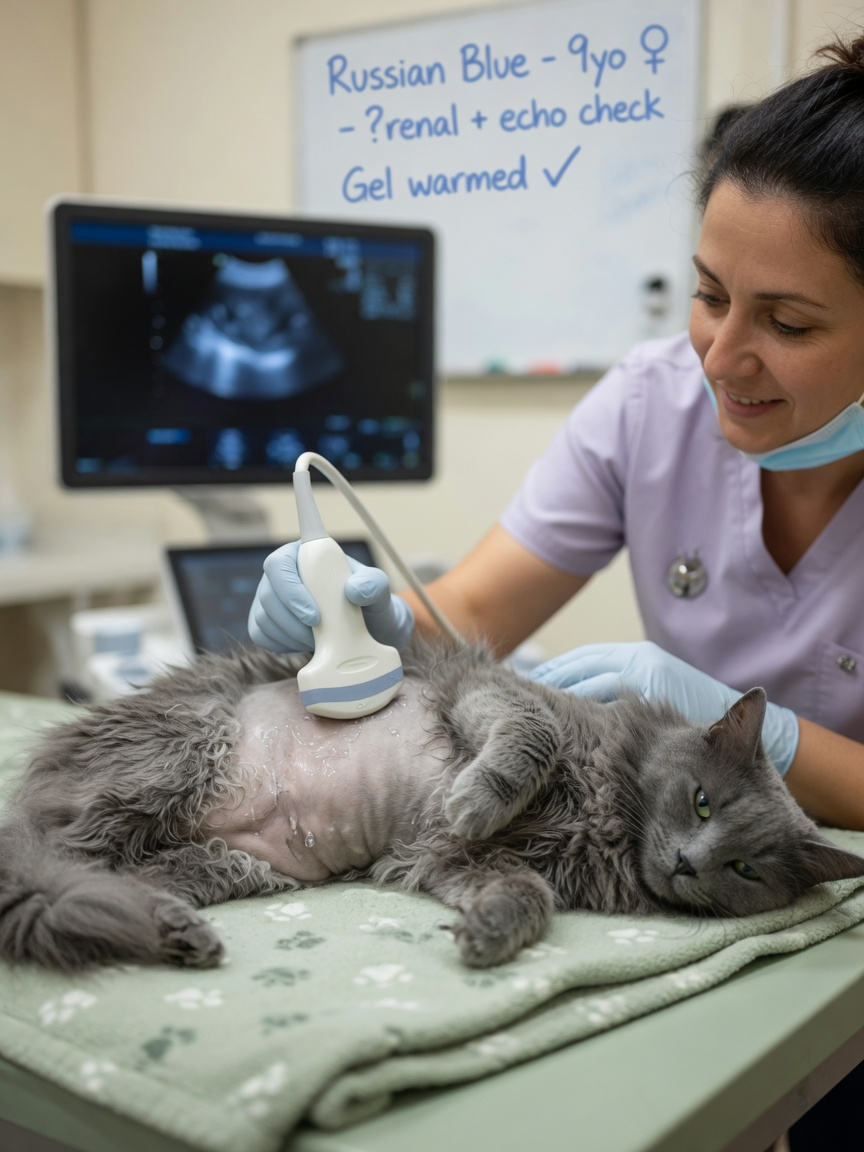
This is the most important distinction in feline gastroenterology. Feline small cell (low-grade) alimentary lymphoma is a cancer of the gut lymphocytes that is clinically, biochemically, and even histologically very similar to lymphoplasmacytic IBD. Both conditions cause chronic vomiting, weight loss, and thickened intestinal walls on ultrasound. Both may respond initially to steroids. They are often indistinguishable without tissue biopsy, and even with biopsy, distinguishing them requires PARR (PCR for antigen receptor rearrangement) testing in ambiguous cases.
Why does the distinction matter? Because the treatment differs in an important way: both conditions typically use prednisolone, but lymphoma adds chlorambucil (a mild oral chemotherapy), which significantly extends survival. Cats with small cell lymphoma treated with prednisolone and chlorambucil have median survival times of 2–3 years, compared to the shorter remissions often seen with prednisolone alone when lymphoma is the underlying diagnosis. Pursuing a biopsy — either endoscopic or surgical full-thickness — is worthwhile in any cat with chronic GI signs unresponsive to initial treatment.
Signs and Symptoms
The hallmark signs of feline IBD are chronic (persisting more than 3 weeks) gastrointestinal symptoms that may wax and wane:
- Chronic vomiting: Often the most prominent sign. Cats with IBD may vomit hairballs, bile, or partially digested food. Frequency varies from daily to several times a week.
- Chronic diarrhea: May be small or large intestinal in character depending on the location of inflammation.
- Weight loss: Progressive muscle and body mass loss, even in cats that maintain appetite. This results from malabsorption and protein-losing enteropathy (PLE) in severe cases.
- Reduced or variable appetite: Some cats eat less; others maintain normal or increased appetite despite losing weight.
- Thickened intestinal loops: Palpable thickening felt by the vet during abdominal examination; also seen on ultrasound.
- Lethargy: Related to malnutrition, chronic discomfort, and the underlying inflammatory process.
Diagnosis
A thorough diagnostic workup for suspected IBD begins with ruling out other causes of chronic GI signs: intestinal parasites, hyperthyroidism, CKD, pancreatitis, and infectious diseases. Blood chemistry, CBC, urinalysis, feline pancreatic lipase (fPLI), and total T4 are standard baseline tests. Cobalamin (vitamin B12) levels are frequently low in cats with IBD due to malabsorption and should be measured.
Abdominal ultrasound often reveals thickened intestinal walls and may show loss of normal layering, enlarged lymph nodes, or masses — findings that raise suspicion for lymphoma. However, ultrasound cannot provide a histopathological diagnosis. That requires tissue biopsy: endoscopy allows surface mucosal biopsies (less invasive, but may miss deeper or full-thickness changes), while surgical biopsy provides full-thickness samples and is considered more definitive. The decision between them depends on the individual cat's condition and the clinician's findings.
Novel Protein and Hydrolyzed Diets
Dietary management is a cornerstone of IBD treatment, both as initial therapy and as long-term support. The rationale is that food antigens may be driving or perpetuating intestinal inflammation in a subset of cats. Two dietary strategies are used:
Novel protein diets use a protein source the cat has never been exposed to — duck, rabbit, venison, kangaroo — to eliminate the possibility that the cat's immune system is reacting to familiar proteins like chicken, beef, or fish. The key is strict elimination: no treats, no flavored medications, no other protein sources during the 8–12-week trial period.
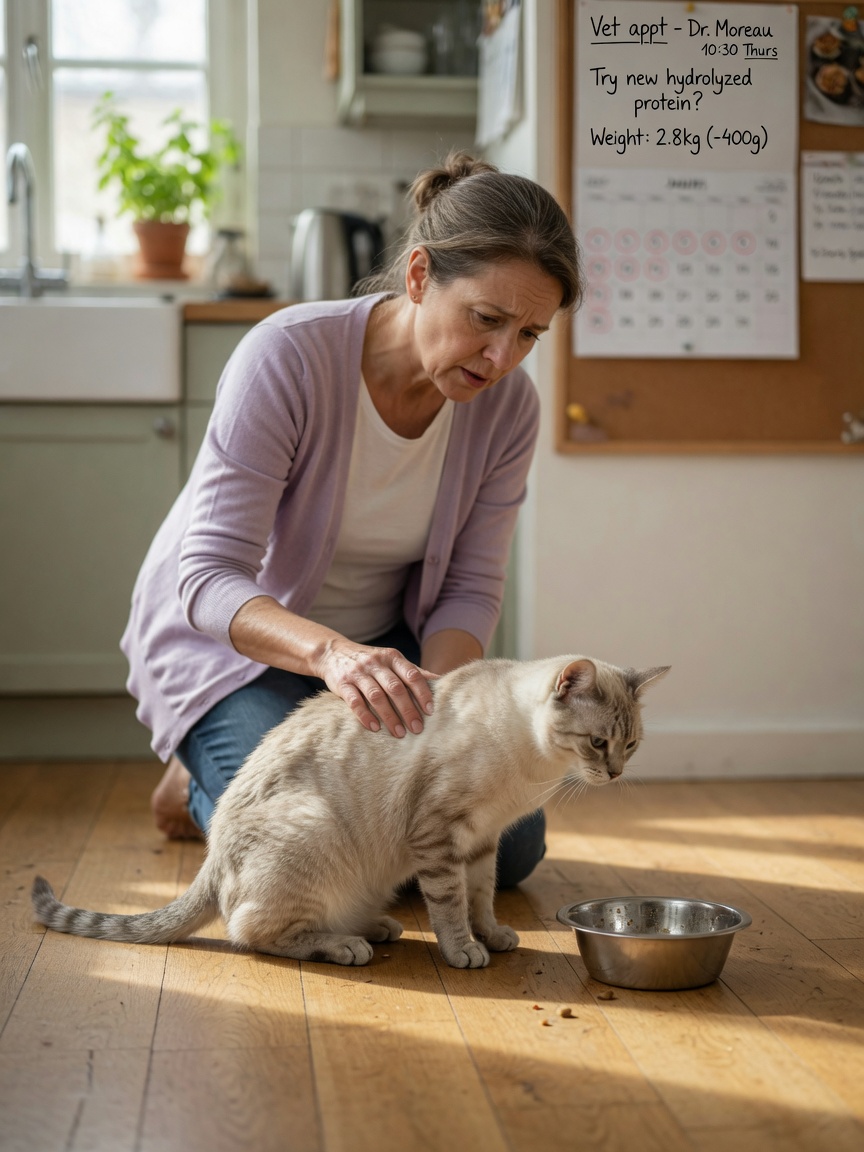
Hydrolyzed protein diets use proteins broken down to fragments small enough that the immune system cannot recognize and react to them. Hill's z/d and Royal Canin Anallergenic are examples. These may be preferred when the cat has a complex dietary history and a truly novel protein is difficult to identify.
Highly digestible, low-fiber diets are generally recommended for small intestinal IBD. For colitis, a high-fiber or psyllium-supplemented diet may be more beneficial. Wet food is generally preferred for hydration and GI transit benefits.
Medical Treatment
Prednisolone is the primary immunosuppressive medication for feline IBD. It reduces intestinal inflammation, improves appetite, and promotes weight regain. Cats metabolize prednisolone more effectively than prednisone, so prednisolone is preferred. Treatment typically begins at immunosuppressive doses and is gradually tapered to the lowest effective dose over weeks to months. Some cats eventually wean off prednisolone completely; others require low-dose lifelong maintenance.
Budesonide, a locally-acting steroid with reduced systemic effects, is sometimes used as an alternative, particularly in cats where systemic steroid side effects (diabetes mellitus induction, immunosuppression) are a concern.
Chlorambucil is added when prednisolone alone is insufficient, when the diagnosis is small cell lymphoma, or in cats that develop steroid-induced diabetes. It is given orally on a pulsed schedule (every 2 weeks in many protocols) and is generally very well tolerated in cats.
Vitamin B12 (Cobalamin) Supplementation
Cobalamin deficiency is extremely common in cats with IBD — reported in 50–80% of affected cats in some studies. The ileum (last section of the small intestine) is responsible for B12 absorption, and this area is commonly inflamed in IBD. Low B12 causes lethargy, anorexia, and worsens the disease spiral. Supplementation is straightforward: subcutaneous cobalamin injections weekly for 6 weeks, then monthly, have been shown to improve clinical response and overall outcomes significantly. Oral cobalamin supplementation at high doses is an alternative and increasingly popular in practice.
Long-Term Prognosis
With appropriate diagnosis and management, many cats with IBD achieve excellent long-term quality of life. Cats with eosinophilic IBD or food-responsive disease that responds fully to dietary management may need no medication. Lymphoplasmacytic IBD typically requires ongoing prednisolone ± chlorambucil but many cats do well for years. Small cell lymphoma, correctly treated with the prednisolone/chlorambucil combination, carries a median survival of 2–3 years and some cats live much longer. The prognosis depends heavily on accurate diagnosis, owner compliance, and regular follow-up monitoring.
Key Takeaways
- IBD is characterized by chronic GI inflammation; the most common form is lymphoplasmacytic enteritis.
- IBD and small cell lymphoma are clinically identical — biopsy is required to distinguish them.
- Novel protein or hydrolyzed diets should be trialed for 8–12 weeks as part of management.
- Prednisolone is the cornerstone of medical treatment; chlorambucil is added for lymphoma or refractory IBD.
- Cobalamin (B12) supplementation improves outcomes and should be measured in all IBD cats.
- With correct treatment, median survival for small cell lymphoma exceeds 2 years.
References
- Jergens AE, et al. "A scoring index for disease activity in canine inflammatory bowel disease." Journal of Veterinary Internal Medicine. 2003;17(3):291-297. PMID: 12774969
- Kiselow MA, et al. "Outcome of cats with low-grade lymphocytic lymphoma: 41 cases (1995–2005)." Journal of the American Veterinary Medical Association. 2008;232(3):405-410. PMID: 18241106