

The Most Common External Parasite in Cats
If your cat has ever been plagued by relentless scratching, patches of hair loss, or tiny black specks in their coat, the culprit is most likely the cat flea — Ctenocephalides felis. Despite its name, the cat flea is not choosy about its host: it affects cats, dogs, rabbits, and humans with equal enthusiasm, making it not just a pet problem but a household one. Across Europe, it remains the most common external parasite encountered in companion animals, and it is as persistent as it is prolific.
The good news is that with the right knowledge and consistent prevention, fleas are entirely controllable. Understanding how they live and breed is the first step towards keeping your cat — and your home — flea-free.
The Flea Lifecycle: Why Treatment Is Never Simple
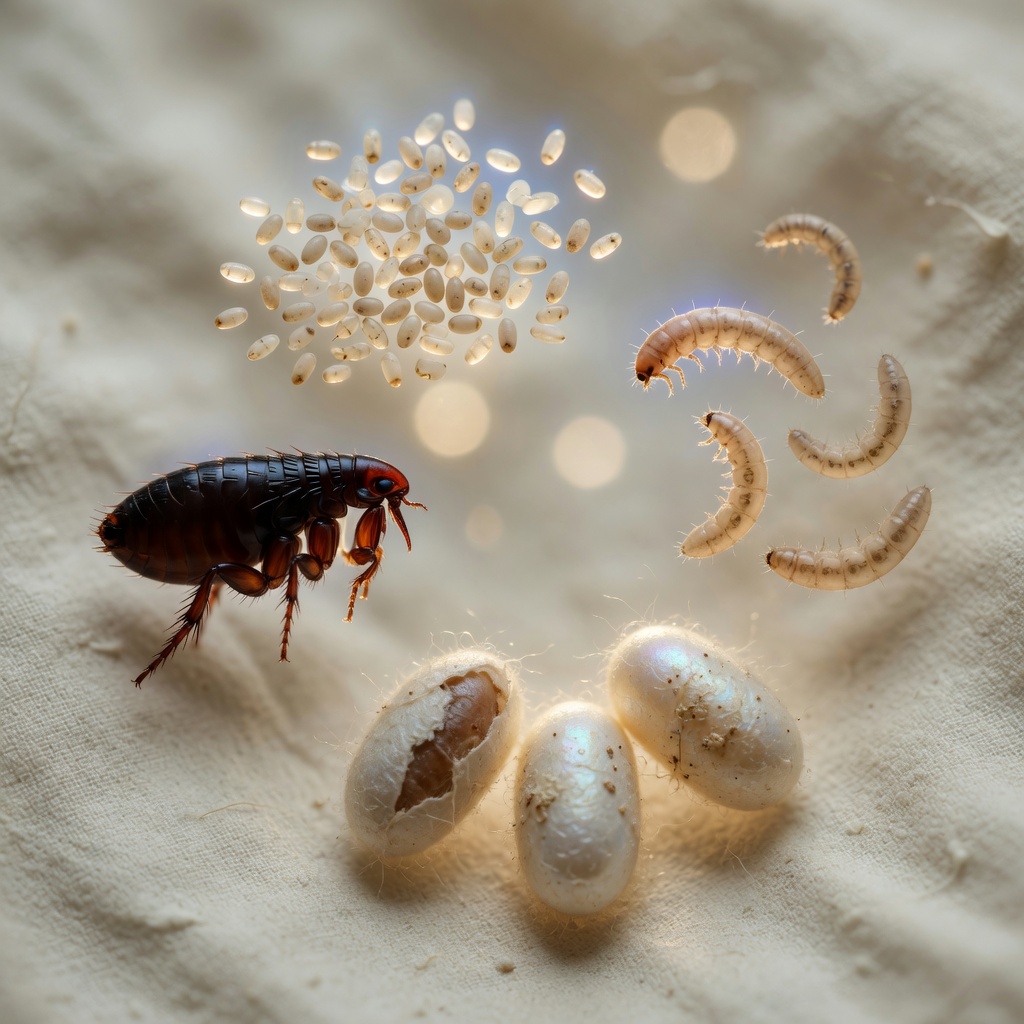
The key to understanding why flea infestations are so stubborn lies in the flea lifecycle. Adult fleas — the ones you may occasionally spot moving through your cat's fur — represent only around five per cent of the total flea population in an infested home. The remaining 95 per cent exists in other life stages, quietly developing in carpets, upholstery, bedding, and the gaps between floorboards.
The lifecycle has four stages:
- Eggs: adult fleas lay eggs on the host, but eggs are not sticky and fall rapidly into the environment. A single female flea can lay up to 50 eggs per day. These eggs accumulate wherever your cat rests, sleeps, or moves.
- Larvae: the eggs hatch into larvae that move away from light, burrowing into carpet fibres and dark crevices. Larvae feed on organic debris, including the dried blood-containing faeces left by adult fleas — the telltale "flea dirt" you may find in your cat's coat.
- Pupae: larvae eventually spin protective cocoons and enter the pupal stage. This is the most resilient stage of the lifecycle. Pupae can lie dormant for months, protected from insecticides, and emerge as adult fleas triggered by warmth, vibration, and the carbon dioxide of a nearby host. This is why flea problems can persist long after treatment, and why homes left empty sometimes seem to "explode" with fleas when the occupants return.
- Adult: the adult flea emerges, seeks a host within minutes, begins feeding on blood, and starts laying eggs within 24 to 48 hours. The cycle begins again.
This lifecycle makes it absolutely clear that treating only the cat — without tackling the environmental stages — will never resolve an infestation. Effective flea control always involves both the pet and the home.
ESCCAP Guidelines for Cat Flea Prevention
ESCCAP — the European Scientific Counsel Companion Animal Parasites — recommends a proactive, regular preventative approach to flea control in cats. Their guidance emphasises that treatment should be tailored to each cat's lifestyle, local flea pressure, and the presence of other pets in the household, rather than applied only when fleas are already visible.
An important point from ESCCAP guidance: indoor cats are not automatically protected from fleas. Fleas can enter a home on clothing, shoes, bags, or other animals without any cat needing to set a paw outside. Multi-pet households are at particular risk, since fleas move readily between different animal species. Indoor cats in households where dogs go outdoors, or where visitors bring pets, should receive regular preventative treatment just as outdoor cats do.
Recognising a Flea Infestation in Your Cat
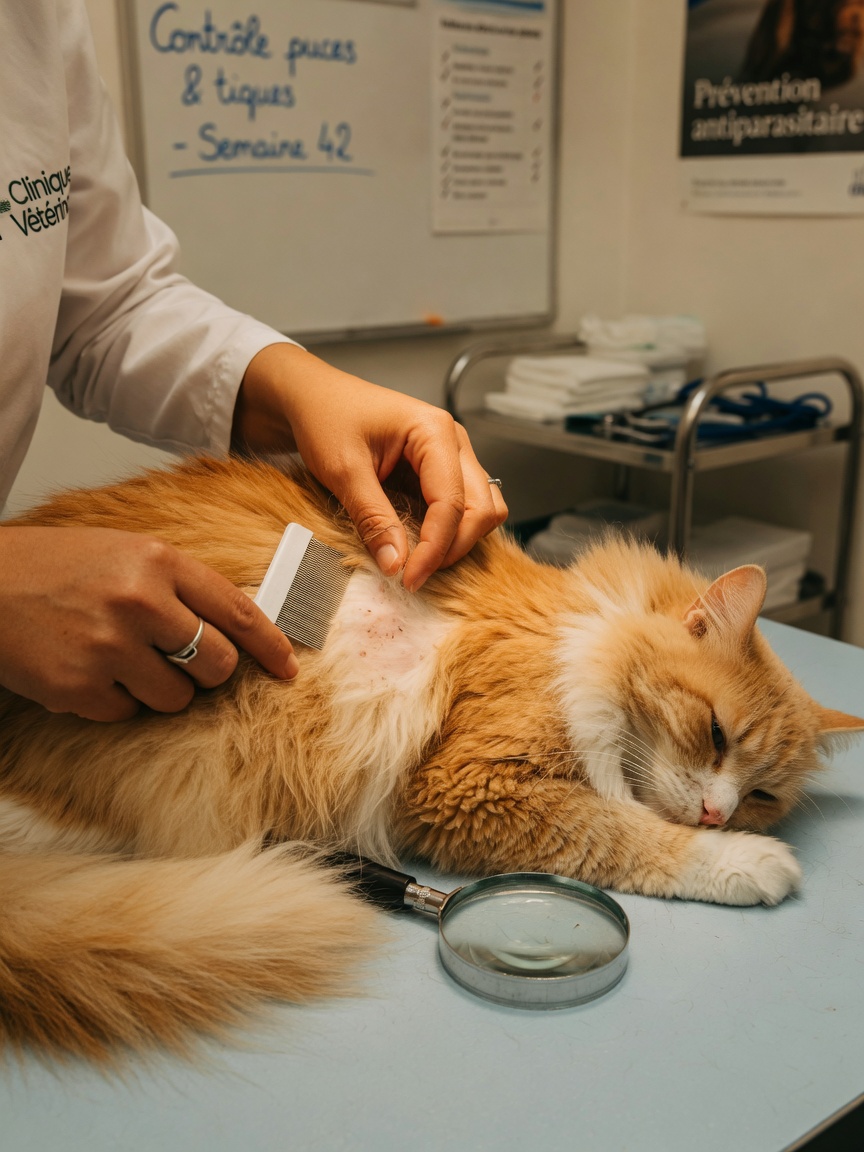
Cats are meticulous groomers, which means that a flea infestation can be less obvious than in dogs — cats often swallow fleas and flea dirt during grooming, removing the visible evidence. The following signs can indicate a flea problem:
- Excessive scratching, particularly around the head, neck, and base of the tail
- Over-grooming, leading to thinning fur or bald patches, especially on the belly, inner thighs, and tail base
- Flea dirt: tiny black or dark brown specks in the coat or on bedding. To confirm these are flea faeces rather than ordinary dirt, place a few specks on damp white tissue paper — flea dirt will leave a reddish-brown stain as the dried blood dissolves.
- Skin lesions or scabs, particularly along the back and around the tail
- Flea allergy dermatitis (FAD): some cats are hypersensitive to flea saliva. Even a single flea bite can trigger an intense allergic reaction, causing severe itching, widespread hair loss, and inflamed skin. Cats with FAD need particularly rigorous, consistent flea prevention.
- In kittens or debilitated cats, heavy infestations can cause anaemia — watch for pale gums, lethargy, and weakness.
Safe Flea Treatments for Cats
Choosing the right flea treatment for a cat requires care, because cats have a unique sensitivity to certain insecticides. Products that are entirely safe for dogs can be lethal to cats. Always use products specifically licensed for cats, and always check the product label carefully before applying anything to your cat.
Safe and effective options for cats include:
- Imidacloprid spot-on (Advantage): a well-established and widely used spot-on treatment that kills adult fleas rapidly and is safe for cats when used as directed.
- Selamectin spot-on (Stronghold): a broad-spectrum spot-on product that treats fleas and also provides cover against certain other parasites including ear mites and roundworms.
- Fipronil: available in spray formulations and some spot-on products licensed for cats. Not all fipronil formulations carry a cat licence — always verify species suitability on the label before use.
- Fluralaner spot-on (Bravecto Spot-On for cats): an isoxazoline product licensed specifically for cats. A single application provides up to 12 weeks of flea protection. Requires veterinary prescription in most European countries.
- Sarolaner: another isoxazoline option available in some markets in a formulation licensed for cats.
Critical Safety Warning: Permethrin Is Toxic to Cats
Permethrin is a synthetic pyrethroid insecticide found in many dog flea spot-on products and some environmental sprays. It is highly effective and safe for dogs — but it is extremely toxic to cats, and exposure can be rapidly fatal.
Never apply any dog flea product containing permethrin to a cat. Do not allow a cat to come into close contact with a dog that has recently been treated with a permethrin spot-on product, particularly while the treatment site is still wet or within the first 72 hours. Cats groom themselves and each other, and even licking a treated dog's coat can deliver a dangerous dose.
Signs of permethrin toxicity in cats include muscle tremors, twitching, hypersalivation, seizures, and collapse. This is a veterinary emergency. If you suspect your cat has been exposed to permethrin, contact your vet or an emergency veterinary service immediately. Time is critical.
When selecting household flea sprays, also check the label carefully: some environmental sprays contain permethrin and must not be used in homes with cats, or the cat must be removed from the treated area for a significant period. Choose permethrin-free household products for any home where cats live.
Environmental Treatment: Tackling the Whole Infestation
Because the vast majority of a flea infestation lives in the environment rather than on the cat, treating the home is essential. Steps to take include:
- Vacuum thoroughly and frequently: pay particular attention to carpets, rugs, along skirting boards, under furniture, and any area where your cat rests. Vacuuming picks up eggs, larvae, and even some pupae. Empty the vacuum immediately after use to prevent reinfestation.
- Wash all bedding — your cat's and your own — at 60 degrees Celsius or above to kill all flea life stages.
- Use a household flea spray: choose a product containing an insect growth regulator (IGR), which prevents larvae from developing into adults and is especially effective at breaking the lifecycle. Ensure the product is specifically formulated as safe for households with cats — avoid any spray containing permethrin.
- Treat all pets in the household simultaneously, even those showing no signs of fleas.
Convenient Cat-Safe Products
Zooplus offers a wide selection of cat-safe flea prevention products across Europe, including spot-on treatments, sprays, and environmental control products. When browsing any online or high-street retailer, always read the product description and label carefully to confirm that the product is licensed for use on cats before purchasing.
When to See a Vet
Most flea infestations can be managed with appropriate over-the-counter or prescription products, but veterinary attention is needed in certain situations: if your cat has developed a severe skin reaction or widespread hair loss; if a kitten appears lethargic, weak, or has pale gums suggesting anaemia; or if you suspect permethrin exposure in any cat. Flea allergy dermatitis often requires veterinary treatment including corticosteroids or other medication in addition to rigorous flea control.
With consistent prevention and prompt action when needed, there is no reason for fleas to become a persistent problem for your cat or your household.