
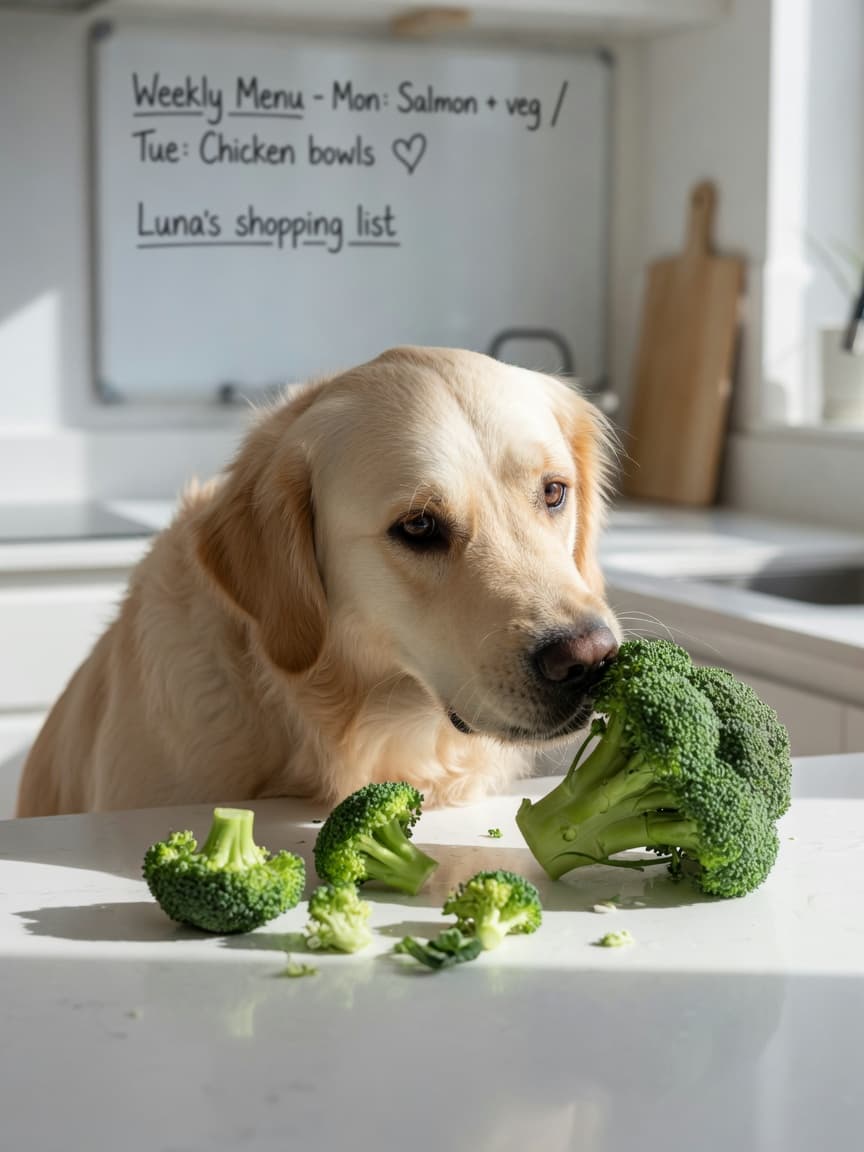
Can Dogs Eat Broccoli?
By Julia Wrenfield, Pet Wellness Researcher — June 2025
Dogs can eat broccoli, and it can even offer some genuine health benefits. However, it must be given in small amounts only. Broccoli should never exceed 10% of your dog’s daily caloric intake, as larger quantities can cause significant gastric irritation. Served plain, in bite-sized pieces, and as an occasional treat — broccoli is a safe and nutritious snack for most dogs.
As a dog owner, you’ve probably wondered whether the vegetables on your plate could do your dog some good too. Broccoli is one of the most nutritious vegetables in the human diet — packed with vitamins, minerals, and fiber — so it’s natural to ask whether your dog can share in those benefits. The short answer is yes, but the details matter quite a bit. Let’s take a closer look at what you need to know before handing your dog a floret.
Is Broccoli Safe for Dogs?
Broccoli is not toxic to dogs and appears on most veterinary safe-foods lists. That said, “non-toxic” does not automatically mean “freely given.” The key concern with broccoli is a group of naturally occurring compounds found in the florets called isothiocyanates. These sulfur-containing molecules are what give cruciferous vegetables their slightly bitter taste — and in humans, they are actually associated with cancer-protective properties. In dogs, however, isothiocyanates can irritate the gastrointestinal tract, especially in larger amounts.
The rule of thumb endorsed by veterinary nutritionists is straightforward: broccoli should make up no more than 10% of your dog’s total daily caloric intake. When kept below this threshold, most healthy adult dogs tolerate broccoli without any problems. If your dog has a sensitive stomach, a history of gastrointestinal issues, or is on a prescription diet, check with your vet before introducing any new food.
Another physical hazard worth mentioning is the stem. Broccoli stems are firm, fibrous, and can pose a real choking risk — particularly for smaller dogs. They can also become lodged in the esophagus or cause intestinal blockages if swallowed in large chunks. Always cut both florets and stems into small, manageable pieces appropriate to your dog’s size before serving.
Nutritional Benefits of Broccoli for Dogs
When given responsibly, broccoli offers a surprisingly solid nutritional profile for dogs. Here is what makes it worth considering as an occasional treat:
- Vitamin C: Broccoli is one of the richest plant sources of vitamin C. While dogs can synthesize their own vitamin C (unlike humans), additional dietary sources may support immune function and act as an antioxidant, helping to neutralize free radicals that contribute to cellular aging and inflammation.
- Vitamin K: This fat-soluble vitamin plays an important role in blood clotting and bone metabolism. Dogs that eat a balanced commercial diet generally get enough vitamin K, but a small broccoli snack can contribute a meaningful top-up.
- Dietary fiber: Broccoli is moderately high in fiber, which supports healthy gut motility and can benefit dogs prone to constipation or irregular digestion. Fiber also feeds beneficial gut bacteria, contributing to a healthier microbiome.
- Folate (Vitamin B9): Important for DNA synthesis and cell division, folate supports overall metabolic health, particularly in puppies and pregnant dogs.
- Potassium and manganese: Both minerals play roles in muscle function, enzyme activity, and bone strength.
- Low calorie density: Broccoli is roughly 90% water by weight and very low in calories, making it a useful treat option for dogs on a weight management plan.
It is worth noting that the florets — the bushy green tops — are the most nutritious part of the plant. They contain higher concentrations of vitamins and antioxidants than the stems. For this reason, florets are generally the preferred and safer option to offer your dog.
Ver snacks para perros en Zooplus
How to Serve Broccoli to Your Dog
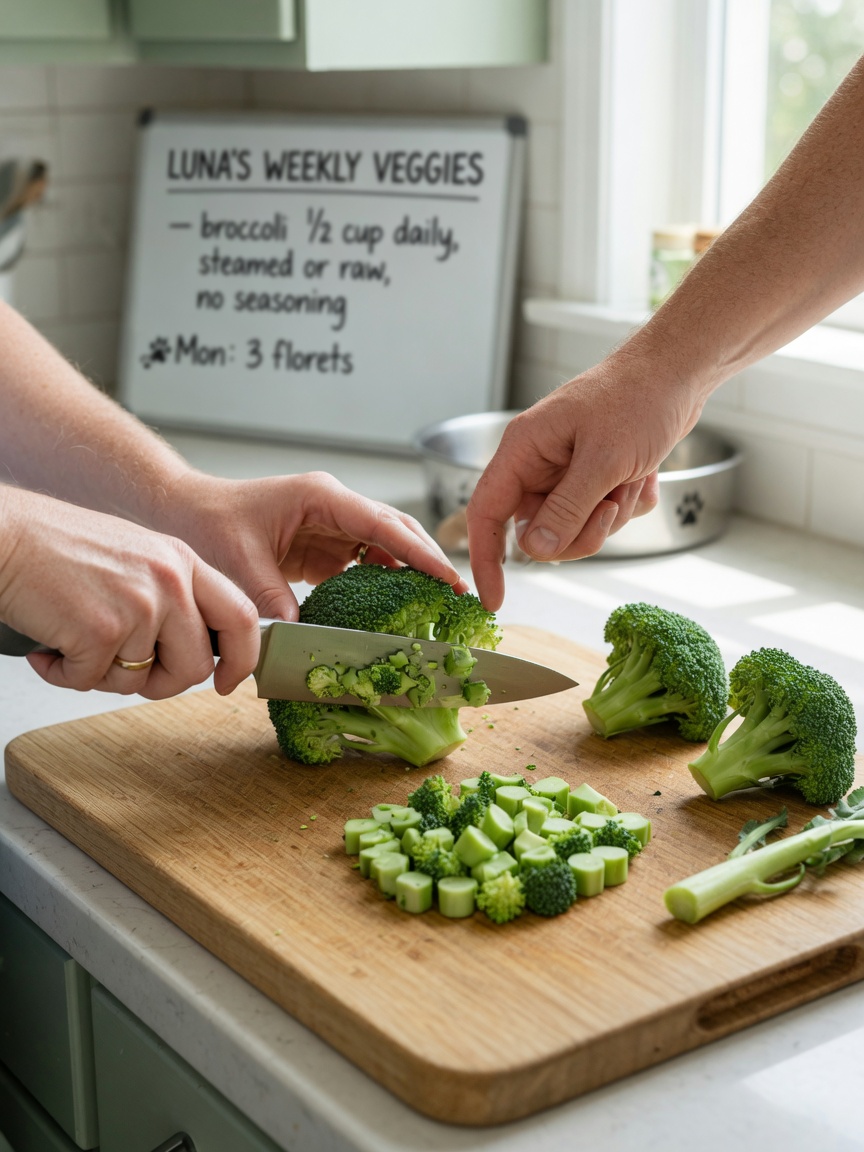
Preparation is everything when it comes to feeding vegetables to dogs. Here are the key rules to follow:
- Plain is best. Never season broccoli intended for your dog. Garlic, onion, salt, butter, olive oil, cheese sauces, and other common human seasonings can be toxic or harmful to dogs. Your dog does not need — and cannot safely process — these additions.
- Raw or cooked both work. Dogs can safely eat broccoli raw or lightly cooked. Raw broccoli retains more of its vitamins (particularly vitamin C, which is heat-sensitive), but some dogs find it easier to digest when steamed or briefly boiled. If you cook it, steam it plain — boiling can leach out water-soluble nutrients.
- Cut it into small pieces. This cannot be overstated. Large chunks of broccoli, especially stems, are a choking hazard. Always cut the vegetable into bite-sized pieces that match your dog’s size. For small dogs, this means pieces no larger than a thumbnail.
- Remove tough stem ends. The very bottom of the stalk tends to be the hardest and most fibrous part. Trim this off before serving, even if you are offering stem pieces to a larger dog.
- Introduce it gradually. If your dog has never eaten broccoli before, start with a very small amount — a single small floret — and wait 24 hours to observe for any signs of digestive upset before offering more.
- Treat, not staple. Broccoli should be an occasional addition to your dog’s diet, not a daily fixture. Variety is important, and no single vegetable should dominate a dog’s snack rotation.
Portion Guide
How much broccoli is appropriate depends primarily on your dog’s body weight. The table below offers general guidance for healthy adult dogs. Puppies, senior dogs, and dogs with health conditions should be given smaller amounts or none at all without veterinary guidance.
| Dog Size | Weight Range | Recommended Serving | Frequency |
|---|---|---|---|
| Small | <10 kg | 1–2 small florets (approx. 10–20 g) | 2–3 times per week |
| Medium | 10–25 kg | 3–5 small florets (approx. 30–50 g) | 2–3 times per week |
| Large | >25 kg | Up to 1 cup chopped (approx. 80–100 g) | 2–3 times per week |
Note: These are general guidelines only and assume a healthy adult dog on a complete commercial diet. Always stay within the 10% daily caloric rule, and reduce amounts if your dog shows any signs of digestive discomfort.
Signs that your dog has eaten too much broccoli include: excessive flatulence, stomach gurgling, vomiting, loose stools or diarrhea, and general lethargy or discomfort after eating. If these symptoms appear, withhold broccoli and return to your dog’s normal diet. If symptoms are severe or persist beyond 24 hours, consult your veterinarian.
Ver snacks para perros en Zooplus
- Dogs can eat broccoli safely when given in small, appropriate amounts.
- Broccoli must stay under 10% of your dog’s daily caloric intake to avoid gastric irritation from isothiocyanates.
- It is a good source of vitamin C, vitamin K, and dietary fiber, offering real nutritional value.
- Florets are safer than stems — stems pose a choking hazard and are harder to digest.
- Serve plain, with no seasoning, oil, butter, or sauces; raw or lightly steamed both work.
- Always cut into small pieces appropriate to your dog’s size.
- Signs of overfeeding include gas, loose stools, vomiting, and stomach upset.
- Think of broccoli as an occasional treat, not a daily food.
References
- Bjeldanes LF, Kim JY, Grose KR, Bartholomew JC, Bradfield CA. Aromatic hydrocarbon responsiveness-receptor agonists generated from indole-3-carbinol in vitro and in vivo: comparisons with 2,3,7,8-tetrachlorodibenzo-p-dioxin. Proc Natl Acad Sci U S A. 1991;88(21):9543–9547. doi:10.1073/pnas.88.21.9543
- Finley JW, Ip C, Lisk DJ, Davis CD, Hintze KJ, Whanger PD. Cancer-protective properties of high-selenium broccoli. J Agric Food Chem. 2001;49(5):2679–2683. doi:10.1021/jf001665j
- Legrand-Defretin V. Differences between cats and dogs: a nutritional view. Proc Nutr Soc. 1994;53(1):15–24. doi:10.1079/PNS19940004