
Separating Fear From Fact
Few topics generate more anxiety among pregnant cat owners than toxoplasmosis. Some women are advised to rehome their cats the moment they see a positive pregnancy test. Others are told not to worry at all. The truth, as is often the case in medicine, sits somewhere between these extremes — and it is considerably more reassuring than the alarm surrounding the topic tends to suggest. Understanding what toxoplasmosis actually is, how it is really transmitted, and what practical steps reduce risk makes it possible to be both pregnant and a responsible cat owner without unnecessary distress.
What Is Toxoplasmosis?
Toxoplasmosis is an infection caused by the parasite Toxoplasma gondii. Cats are the definitive host of this organism, meaning sexual reproduction of the parasite occurs only in the feline gut. Infected cats shed Toxoplasma oocysts — hardy, microscopic eggs — in their faeces for a limited period, typically around 1 to 3 weeks, usually only once in their lifetime following initial infection. After that period, healthy cats generally develop immunity and stop shedding oocysts entirely.
Oocysts passed in cat faeces are not immediately infectious — they require 1 to 5 days in the environment to sporulate and become capable of causing infection. This single fact has major implications for how risk is practically managed.
How People Actually Get Toxoplasmosis
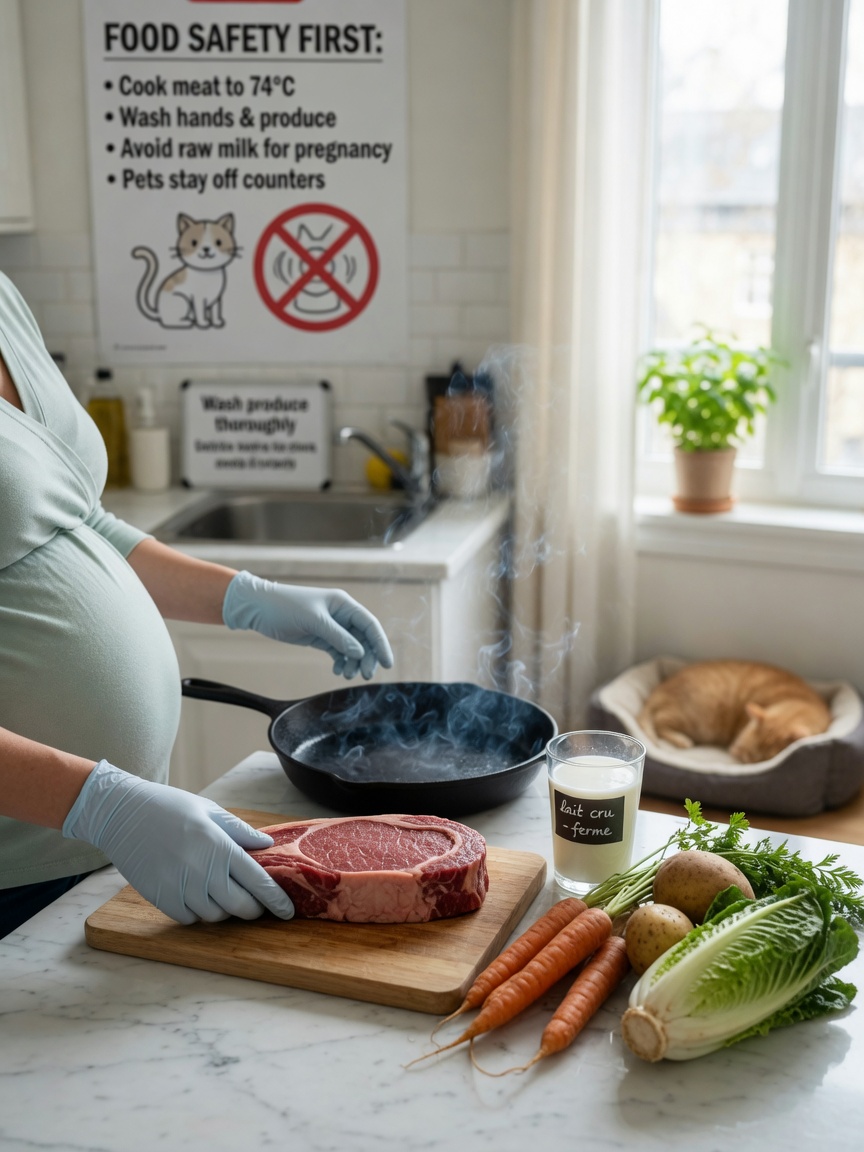
Here is the part that surprises many people: the most common route of Toxoplasma infection in humans is not direct contact with cats. It is eating undercooked or raw meat. Pork, lamb, and game are the most frequently implicated sources. Unwashed fruit and vegetables contaminated with soil, and unpasteurised dairy products, are also significant routes of transmission.
In the UK, surveys of the general population show that roughly 10 to 22% of people have already been infected with Toxoplasma at some point in their lives and carry protective antibodies. In France and some other European countries where raw and cured meat products are more commonly consumed, that figure rises considerably higher. In most healthy individuals, infection causes no symptoms at all, or produces a mild flu-like illness that resolves without treatment.
The concern in pregnancy is specifically about primary infection — that is, catching Toxoplasma for the first time during pregnancy. Women who were already infected before becoming pregnant have antibodies that protect their developing baby. The risk applies to those who are seronegative (no prior exposure) and encounter the parasite for the first time while pregnant.
The Risk From Cats Specifically
For a pregnant woman to contract Toxoplasma from her cat, several conditions would need to coincide. The cat would need to be actively shedding oocysts — which only occurs during primary infection, typically in young cats or those who have recently started hunting prey. The oocysts would need to be present in the litter tray. They would need to have been there for at least 24 hours to become infectious. And the woman would need to inadvertently ingest them — typically via hand-to-mouth contact after handling soiled litter or the tray.
An indoor cat that does not hunt and does not eat raw meat is extremely unlikely to be shedding Toxoplasma oocysts. An older cat with established immunity poses virtually no risk. Even with an outdoor hunting cat, the actual transmission pathway requires specific conditions and poor hand hygiene.
What Pregnant Women Should Actually Do
Have Someone Else Clean the Litter Tray
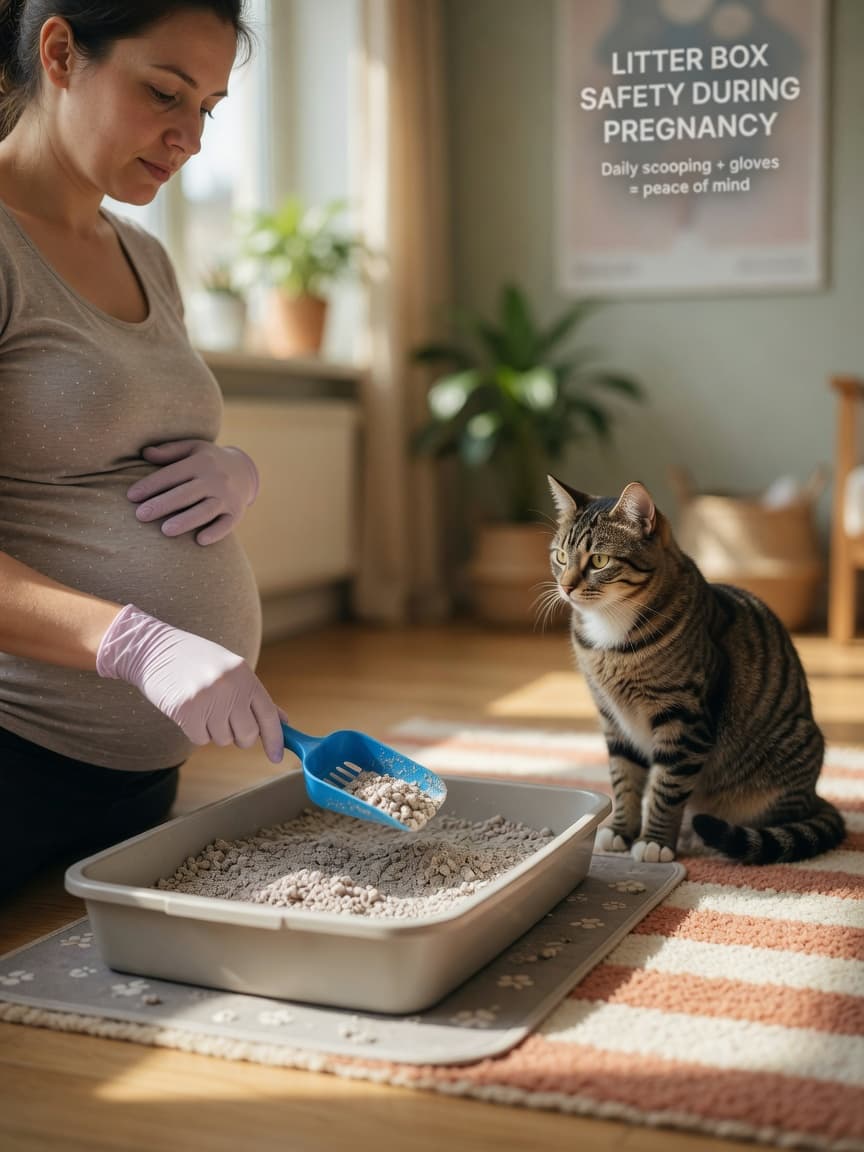
The most straightforward protective measure is to delegate litter tray cleaning to a partner, family member, or housemate for the duration of pregnancy. If this is not possible, wearing disposable gloves and a face mask when cleaning the tray, and washing hands thoroughly afterwards, significantly reduces risk. The tray should be emptied and cleaned daily, as oocysts require at least 24 hours to become infectious — daily cleaning removes them before they reach that stage.
Wash Hands After Touching Cats
Routine handwashing after handling cats, particularly before eating or touching the face, is good practice regardless of pregnancy. Oocysts can occasionally contaminate fur, though this is not a primary transmission route.
Prioritise Food Safety
Given that undercooked meat represents a greater statistical risk than cat contact for most pregnant women, food hygiene deserves at least as much attention as litter tray management. Cook meat thoroughly to appropriate internal temperatures. Wash all fruit and vegetables carefully. Avoid unpasteurised dairy products. These measures address the more significant transmission routes.
Wear Gloves When Gardening
Garden soil can be contaminated with oocysts from neighbourhood cats. Wearing gloves when gardening and washing hands afterwards is recommended during pregnancy.
Testing and Medical Advice
Routine serological testing for Toxoplasma is not currently part of standard antenatal screening in the UK, though it is in some other countries. If you are concerned about your risk, a blood test can determine whether you have existing immunity. Discuss this with your midwife or GP — particularly if you have any reason to believe you may have been exposed or if you experience symptoms consistent with primary infection during pregnancy.
If primary infection does occur during pregnancy, the risk to the foetus is related to gestational timing. Infection in the first trimester carries lower rates of transmission to the foetus but more severe consequences if transmission does occur. Infection in the third trimester carries higher rates of transmission but generally less severe outcomes. Medical management options are available, and specialist guidance should be sought promptly.
There Is No Need to Rehome Your Cat
The short version of everything above is this: the risk of contracting Toxoplasma from a pet cat, especially an indoor cat, is low. The risk is further reduced by simple hygiene measures that take minimal effort to implement. Rehoming a family cat during pregnancy is an emotional and disruptive step that the evidence does not support as necessary in most circumstances. A conversation with your midwife, combined with sensible precautions around litter management and food safety, is the proportionate and evidence-based response.
Cats have lived alongside pregnant women for thousands of years. Understanding the actual mechanism of risk — rather than reacting to generalised alarm — allows you to manage that risk rationally and keep your animal companion where it belongs.