

Why a Chihuahua Outlives a Great Dane by Almost a Decade
Among mammals, the relationship between body size and lifespan usually runs in one direction: larger animals live longer. Elephants outlive mice. Whales outlive dogs. Yet within the domestic dog, that rule is reversed in a striking way — small breeds routinely live 14 to 16 years while giant breeds often decline by age 8 or 9. Understanding why this happens, and what it means for your dog's care, is genuinely useful knowledge for any owner.
Average Lifespans: The Numbers by Size
Research consistently shows that size is the strongest single predictor of lifespan in dogs, though breed-specific factors add important nuance.
Small breeds (under 10 kg)
- Chihuahua: 14 to 17 years
- Miniature Dachshund: 14 to 17 years
- Toy Poodle: 14 to 16 years
- Shih Tzu: 13 to 16 years
Medium breeds (10 to 25 kg)
- Border Collie: 13 to 16 years
- Cocker Spaniel: 12 to 15 years
- Labrador Retriever: 11 to 13 years
- Beagle: 12 to 15 years
Large and giant breeds (over 25 kg)
- German Shepherd: 10 to 13 years
- Golden Retriever: 10 to 12 years
- Bernese Mountain Dog: 7 to 10 years
- Great Dane: 7 to 9 years
- Irish Wolfhound: 6 to 8 years
These figures represent healthy, well-cared-for individuals. Individual variation is significant, and many dogs exceed these averages.
Why Bigger Dogs Age Faster
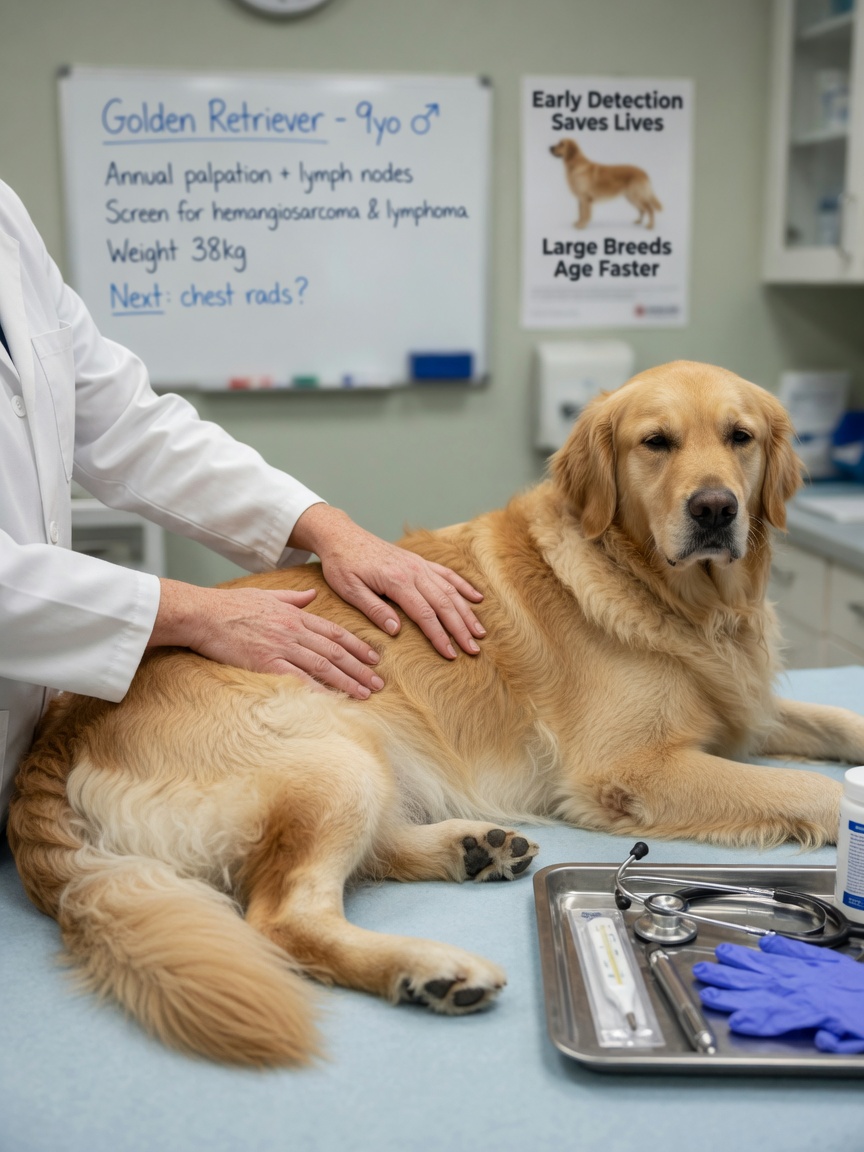
The leading hypothesis centres on growth rate. Larger breeds grow far more rapidly during puppyhood, and this accelerated cellular growth appears to carry ongoing costs — higher rates of cell division may increase DNA replication errors over time. Large breeds also have significantly higher rates of cancer, which is a leading cause of death across the giant breeds particularly.
A 2019 study published in the American Naturalist analysed over 74,000 dogs and confirmed that for every 4.4 kg increase in body mass, lifespan decreased by approximately one month. That gradient, compounded across the size spectrum, explains most of the gap between a Chihuahua and a Great Dane.
Breed-Specific Health Risks That Affect Longevity
Beyond size, selective breeding has created distinct vulnerability profiles that owners should understand.
Brachycephalic breeds
French Bulldogs, Pugs, and English Bulldogs suffer from brachycephalic obstructive airway syndrome, a condition that limits exercise tolerance, causes chronic respiratory distress, and can significantly reduce quality and length of life without surgical intervention. These breeds also have elevated anaesthetic risk, which complicates treatment of other conditions.
Breeds with high cancer rates
Golden Retrievers, Boxers, Bernese Mountain Dogs, and Rottweilers all carry elevated lifetime cancer risk. For these breeds, owners and vets should maintain a lower threshold for investigating lumps, weight loss, and unexplained lethargy.
Breeds prone to cardiac disease
Cavalier King Charles Spaniels have a near-universal prevalence of mitral valve disease by middle age. Regular cardiac auscultation and, where indicated, echocardiography is strongly recommended from age five onwards.
What You Can Control: Factors That Extend Canine Lifespan

Neutering
The evidence here is more nuanced than it is in cats. Neutering generally extends lifespan in dogs by reducing certain cancers and eliminating reproductive disease, but timing matters — particularly for large breeds, where early neutering has been linked to increased rates of joint disorders and some cancers. Discuss the optimal timing for your specific breed with your vet.
Weight management
A landmark long-term study found that Labrador Retrievers kept lean throughout their lives lived a median of 1.8 years longer than their overweight littermates. In a species already facing a compressed lifespan, that is a substantial gain. Maintaining a healthy body condition score throughout your dog's life is one of the highest-impact things you can do as an owner.
Preventive care and early detection
Annual health examinations allow veterinarians to assess dental health, organ function, joint condition, and cardiovascular status. Blood and urine screening from middle age onwards can identify subclinical kidney disease, thyroid dysfunction, and early diabetes — all conditions that respond far better to early intervention than late-stage treatment.
A Practical Lifespan Checklist for Dog Owners
- Know your breed's average lifespan and specific health vulnerabilities
- Maintain a healthy body condition score from puppyhood onwards
- Feed a life-stage appropriate, complete diet — large breeds need specific calcium-to-phosphorus ratios during growth
- Discuss neutering timing with your vet rather than defaulting to a standard age
- Schedule annual vet checks; increase frequency from age seven in large breeds, nine in small breeds
- Do not ignore dental disease — it has systemic consequences
- Monitor for breed-specific warning signs and raise concerns early
Your dog's lifespan is partly written in their DNA, but the years between birth and the breed average are largely in your hands. Evidence-based daily care, attentive ownership, and a good working relationship with your vet will give your dog the best chance at a full, healthy life.