
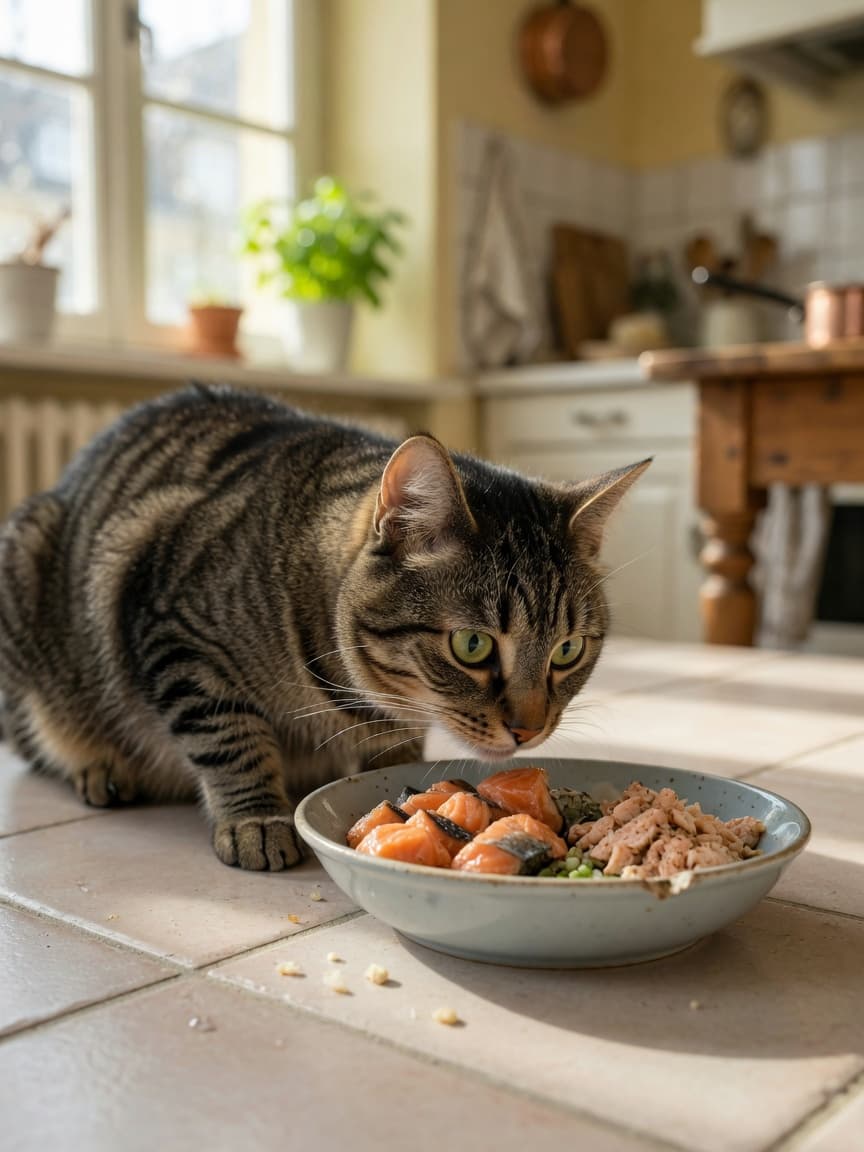
Salmon and Cats: A Popular Pairing Worth Scrutinising
Roughly 70% of cat owners report feeding fish to their cats at least occasionally, with salmon topping the list. It smells irresistible to most cats, it is rich in omega-3 fatty acids, and it appears in dozens of commercial recipes. But the way salmon is prepared makes an enormous difference to whether it is a nutritious treat or a subtle health risk. The raw versus cooked debate, in particular, hides a biochemical consequence that many owners never consider.
What Salmon Actually Offers a Cat
Salmon is a genuinely valuable source of high-quality animal protein, providing all the essential amino acids cats require, including taurine. It also delivers EPA and DHA — long-chain omega-3 fatty acids that support coat condition, reduce systemic inflammation, and contribute to retinal and cognitive health. Astaxanthin, the pigment that gives salmon its pink colour, acts as an antioxidant. In sensible quantities, cooked salmon is one of the better fish options you can offer a cat.
The Thiamine Problem With Raw Salmon
Here is where raw feeding advocates need to pay close attention. Raw salmon — and many other raw fish species — contains thiaminase, an enzyme that degrades thiamine (vitamin B1). Cats have a higher requirement for B vitamins than most mammals because they cannot synthesise certain nutrients endogenously. Thiamine is essential for carbohydrate metabolism and neurological function.
What Thiamine Deficiency Looks Like
A cat eating raw salmon regularly can develop thiamine deficiency within weeks. Early signs include reduced appetite, salivation, and vomiting. As deficiency progresses, neurological symptoms emerge: vestibular disturbance, loss of righting reflex, seizures, and in severe untreated cases, death. These signs are often mistaken for poisoning or inner ear disease, delaying the correct diagnosis.
Cooking Destroys Thiaminase
The critical point is that heat inactivates thiaminase. Thoroughly cooked salmon does not pose the same thiamine destruction risk. This is one area where cooking clearly wins over raw, regardless of broader raw feeding philosophy. If you choose to feed salmon, cooked and plain is the safer preparation.
Additional Risks Specific to Raw Salmon
Beyond thiaminase, raw salmon carries the risk of Neorickettsia helminthoeca, a bacterial pathogen responsible for salmon poisoning disease. While this condition is far better documented in dogs — and can be fatal in them — the risk of parasitic and bacterial contamination in any raw fish is real. Anisakis larvae, for instance, can survive in raw flesh. Freezing fish at minus 20°C for at least seven days before serving raw reduces, but does not entirely eliminate, parasite risk.
How Much Salmon Is Appropriate
Salmon should be a treat, not a dietary staple. Even cooked salmon, fed in excess, creates nutritional imbalance. Fish is high in polyunsaturated fatty acids, which increase a cat's requirement for vitamin E. Too much fish without adequate vitamin E can contribute to steatitis (yellow fat disease), a painful inflammatory condition. A rough guideline is that fish-based treats should not exceed 10% of a cat's total weekly caloric intake.
What to Avoid Entirely
- Raw salmon fed daily or as a primary protein
- Smoked salmon, which contains sodium at levels toxic to cats in quantity
- Salmon with added seasonings, garlic, onion, or lemon
- Tinned salmon packed in brine rather than spring water
Practical Summary
- Cooked, plain salmon is a nutritious occasional treat for most healthy cats
- Raw salmon poses a genuine thiamine destruction risk due to thiaminase content
- Neurological symptoms in a fish-eating cat warrant urgent veterinary attention
- Keep fish-based treats to no more than 10% of weekly calories
- Always consult your vet before making significant changes to your cat's diet, particularly if your cat has underlying health conditions