
It Is Not Just a Dog Disease
Most dog owners are familiar with Bordetella bronchiseptica as the primary bacterial cause of kennel cough. Fewer cat owners realise the same organism affects cats, often producing significant respiratory disease in shelter populations, multi-cat households, and catteries. Understanding when your cat is genuinely at risk — and what to do about it — requires separating fact from the considerable amount of confusion that surrounds this pathogen in feline medicine.
What Bordetella Bronchiseptica Does in Cats
Bordetella bronchiseptica is a small Gram-negative aerobic bacterium with specialised mechanisms for attaching to and surviving within the respiratory epithelium. In cats, it can act as a primary pathogen in its own right — particularly in young, stressed, or immunocompromised animals — but more frequently functions as a secondary invader following primary viral infection with feline herpesvirus or calicivirus.
The organism produces toxins that impair the mucociliary escalator, the sweeping action of cilia that normally clears debris and pathogens from the airway. Disrupting this defence allows the bacterium to colonise more deeply and paves the way for secondary bacterial pneumonia in severe cases.
Clinical Signs: What to Look For
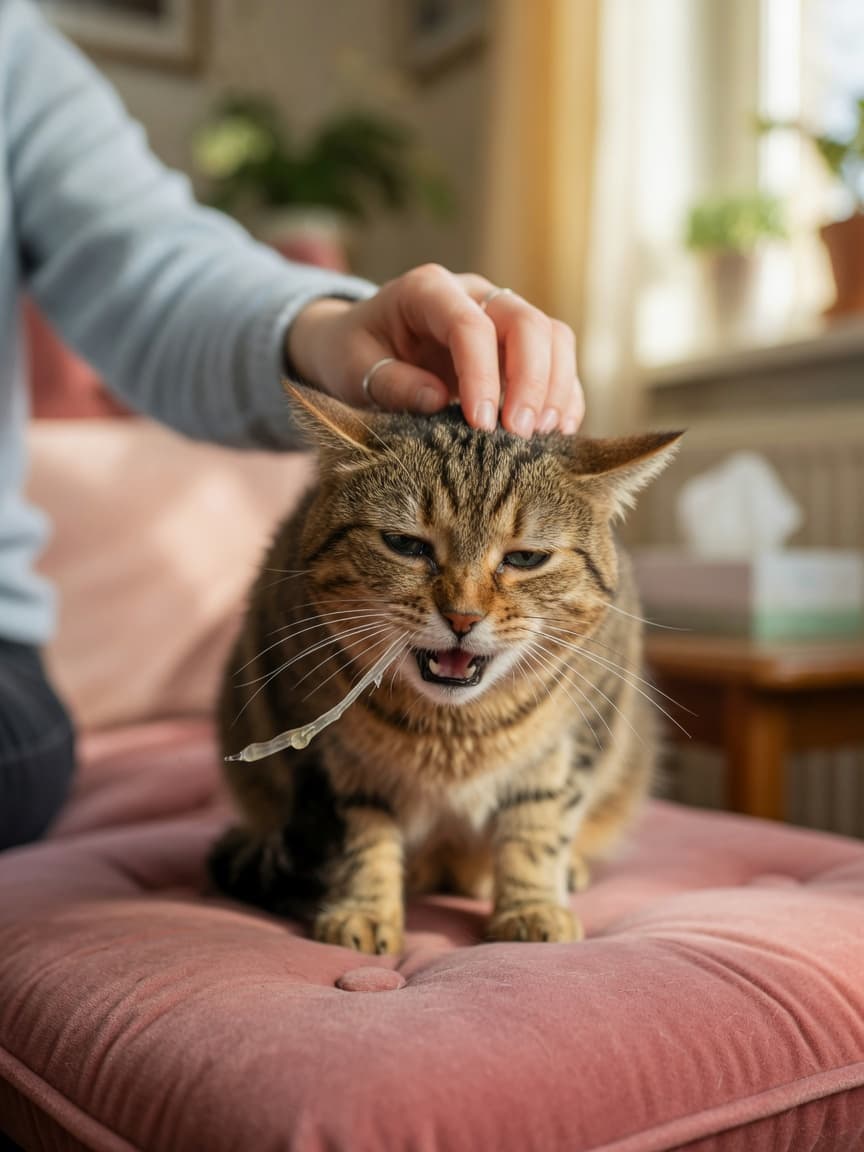
Bordetella infection in cats produces upper respiratory signs that overlap considerably with those caused by feline herpesvirus and calicivirus, making clinical differentiation difficult without laboratory testing.
Common Presentations
- Sneezing, sometimes paroxysmal
- Nasal discharge, initially serous then mucopurulent
- Conjunctivitis with ocular discharge
- Submandibular lymph node enlargement
- Coughing — less universal than in dogs but present in some cases
- Fever and lethargy in moderate to severe disease
Severe and Complicated Disease
In kittens under twelve weeks of age, Bordetella infection can progress to fatal pneumonia rapidly. Signs of lower respiratory involvement — increased respiratory rate, laboured breathing, or open-mouth breathing at rest — require emergency veterinary attention. Adult cats with concurrent viral infection or immunosuppression are also at elevated risk of severe disease.
Who Is Actually at Risk
Bordetella does not pose equal risk to all cats. Understanding the genuine risk stratification avoids unnecessary anxiety for owners of low-risk pets while ensuring appropriate precautions in genuinely exposed animals.
Higher-Risk Situations
- Kittens recently acquired from shelters or rescues with high-density housing
- Cats attending boarding catteries, particularly where turnover is rapid
- Cats participating in shows where large numbers congregate
- Multi-cat households where a new cat has recently joined
- Cats with recent or concurrent viral upper respiratory infection
- Immunocompromised cats (FIV, FeLV, or receiving corticosteroids)
Lower-Risk Situations
A single indoor adult cat with no contact with other cats and no cattery stays has a very low probability of encountering Bordetella. Vaccination is generally not recommended for these animals. Risk-benefit discussions should always be individualised with a vet who knows the cat's specific circumstances.
Diagnosis and the Limits of Clinical Assessment
Because the signs of Bordetella in cats mimic those of viral upper respiratory disease, laboratory confirmation is necessary when treatment choices hinge on identifying the specific pathogen. PCR from nasal or pharyngeal swabs is the most sensitive diagnostic method and can differentiate Bordetella from herpesvirus, calicivirus, Chlamydophila felis, and Mycoplasma — all of which can produce similar clinical pictures or co-infect simultaneously.
Culture is possible but takes longer and has lower sensitivity than PCR. Serological testing (antibody measurement) is not diagnostically useful in an individual cat because antibodies reflect exposure, not necessarily current active infection.
Treatment and Prevention
Antibiotic Treatment
Bordetella bronchiseptica is generally susceptible to doxycycline, which is the most commonly chosen antibiotic in feline practice for this indication. Azithromycin and pradofloxacin are alternatives when doxycycline is not tolerated or when sensitivity testing suggests resistance. Antibiotic choice should always be guided by your vet, ideally with culture and sensitivity data where available. Course length is typically two to four weeks.
Supportive Care
Nebulisation with saline can help loosen secretions in cats with significant nasal congestion. Ensuring adequate nutrition — by warming food to enhance aroma in cats that have lost their sense of smell — helps maintain body condition during illness. Isolating a sick cat from housemates reduces onward spread.
Vaccination
An intranasal Bordetella vaccine is licensed for use in cats in the UK. It is classified as a non-core vaccine, meaning it is not routinely recommended for all cats but is appropriate for those at genuine occupational risk — boarding, showing, or living in large multi-cat groups. The intranasal route stimulates local mucosal immunity more effectively than parenteral administration for respiratory pathogens. It should be given at least one week before anticipated exposure.
Practical Summary
- Bordetella is a genuine risk for cats with high-density social contact — assess your cat's individual lifestyle before deciding on vaccination
- Any kitten under twelve weeks showing respiratory signs should be seen by a vet promptly — progression to pneumonia can be rapid
- PCR testing is more informative than culture alone if you need a confirmed diagnosis
- Doxycycline is the most common treatment choice but should be prescribed by a vet following assessment
- Consider intranasal vaccination before cattery boarding or show attendance — discuss timing with your vet
- Isolate any cat showing respiratory signs from housemates until a vet has assessed the situation