
Salmon and Cats: Navigating a Complicated Favourite
Few things capture a cat's attention quite like the smell of fish. Salmon in particular seems to trigger an almost instinctive enthusiasm in most cats, and given that cats evolved as hunters of small animals including fish, this makes a degree of biological sense. But is salmon actually safe? The honest answer is: yes, under the right conditions — and those conditions matter more than many pet owners realise.
The Nutritional Case for Salmon
From a nutritional standpoint, salmon is an excellent food for cats. It is rich in high-quality animal protein and provides an impressive array of nutrients that support feline health:
- Omega-3 fatty acids (EPA and DHA), which support skin and coat condition, joint health, and cognitive function
- Vitamin B12 and niacin, both important for energy metabolism and neurological health
- Selenium and potassium, which contribute to immune function and cardiovascular health
- Vitamin D, which cats cannot adequately produce through sun exposure
- Taurine, an essential amino acid that cats cannot synthesise in sufficient quantities and must obtain through diet
The omega-3 content is particularly noteworthy. Cats have limited ability to convert plant-based ALA into the DHA and EPA their bodies actually use, making direct marine sources like salmon a far more efficient route to meeting these needs. For cats with inflammatory conditions, dull coats, or early signs of arthritis, regular small amounts of salmon can make a measurable difference.
Raw Salmon: A Real Risk Worth Respecting
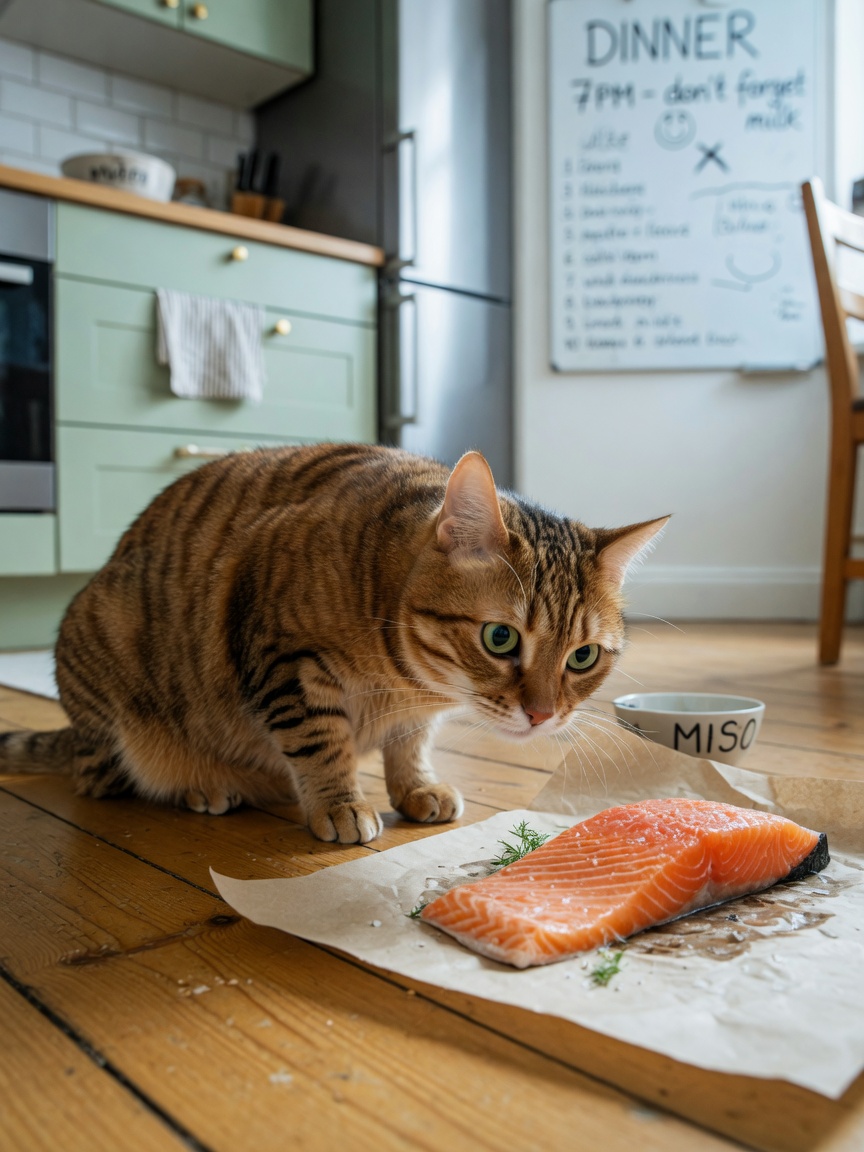
Many cat owners assume that because cats are natural predators, raw fish must be ideal. In the case of salmon, this assumption can cause genuine harm.
Salmon Poisoning Disease
Raw salmon and other Pacific fish can carry a fluke called Nanophyetus salmincola. This parasite itself is relatively harmless, but it can be infected with a rickettsial organism called Neorickettsia helminthoeca — the cause of salmon poisoning disease. While this condition is primarily associated with dogs, cats can also be affected. Symptoms include vomiting, diarrhoea, fever, and in untreated cases, it can be life-threatening.
Thiaminase and B1 Deficiency
Raw fish contains thiaminase, an enzyme that breaks down thiamine (vitamin B1). Cats have a relatively high requirement for thiamine, and regular feeding of raw fish can deplete it over time. Thiamine deficiency causes serious neurological symptoms including loss of balance, seizures, and in severe cases, irreversible brain damage. Cooking deactivates thiaminase, removing this risk entirely.
Mercury and Contaminant Concerns
Salmon sits in an interesting position in terms of mercury content. Compared with large predatory fish like tuna, swordfish, or king mackerel, salmon contains relatively low mercury levels. The Food and Drug Administration in the United States (and equivalent bodies in Europe) generally lists salmon among the lower-mercury fish options.
That said, mercury bioaccumulates over time, and a cat's small body mass means even moderate exposure has proportionally more impact than it would in a human. Feeding salmon as an occasional food rather than a daily staple is the sensible approach. Farmed Atlantic salmon and wild-caught Pacific salmon both tend to have low mercury levels, making them preferable choices over larger species.
Other contaminants worth being aware of include polychlorinated biphenyls (PCBs) and dioxins, which can concentrate in the fatty tissue of fish. Choosing high-quality sources — and not over-relying on any single food — minimises this risk.
The Bone Question
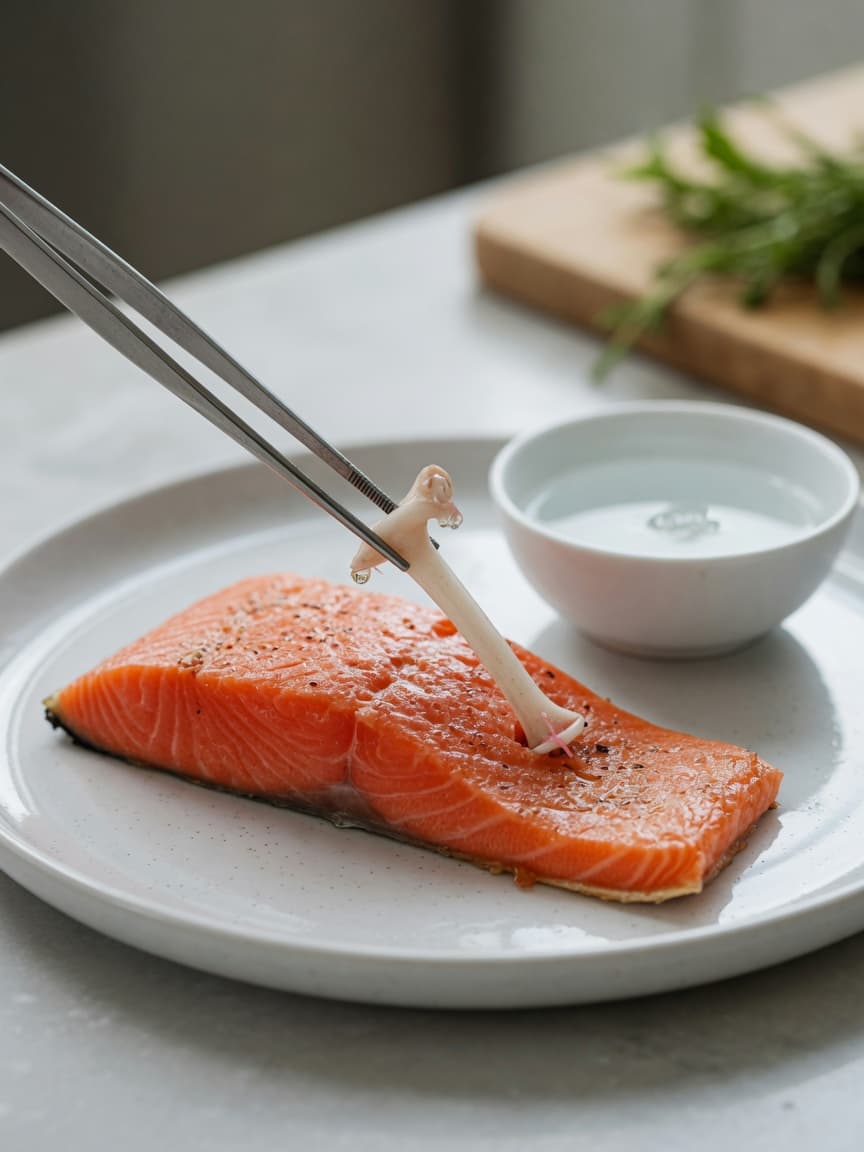
Salmon bones present a genuine hazard, particularly the small pin bones found throughout the flesh. Unlike the larger bones of prey animals, which some cats can manage, these fine bones can splinter and cause choking, internal lacerations, or obstructions in the oesophagus or digestive tract.
If you are preparing fresh salmon for your cat, remove all bones meticulously before cooking. Running your fingers along the flesh and using tweezers or fish bone pliers to extract pin bones is the safest approach. Canned salmon, provided it contains no added salt or other seasonings, often has softer, more manageable bones — but checking the label and, ideally, mashing the contents to eliminate bone fragments before serving is still advisable.
Smoked, Tinned, and Processed Salmon
Smoked salmon should be avoided entirely for cats. The smoking process typically involves significant salt, and some preparations also include garlic, onion, or other flavourings that are toxic to cats. The high sodium content alone is enough reason to keep smoked salmon off the menu — cats have a very low sodium tolerance, and regular exposure to high-salt foods stresses the kidneys.
Plain tinned salmon in spring water, with no added salt, is an acceptable option in moderation. Avoid salmon tinned in brine or oil. Salmon in tomato sauce or other flavoured preparations should be avoided due to the additional ingredients.
How Much Salmon Is Safe?
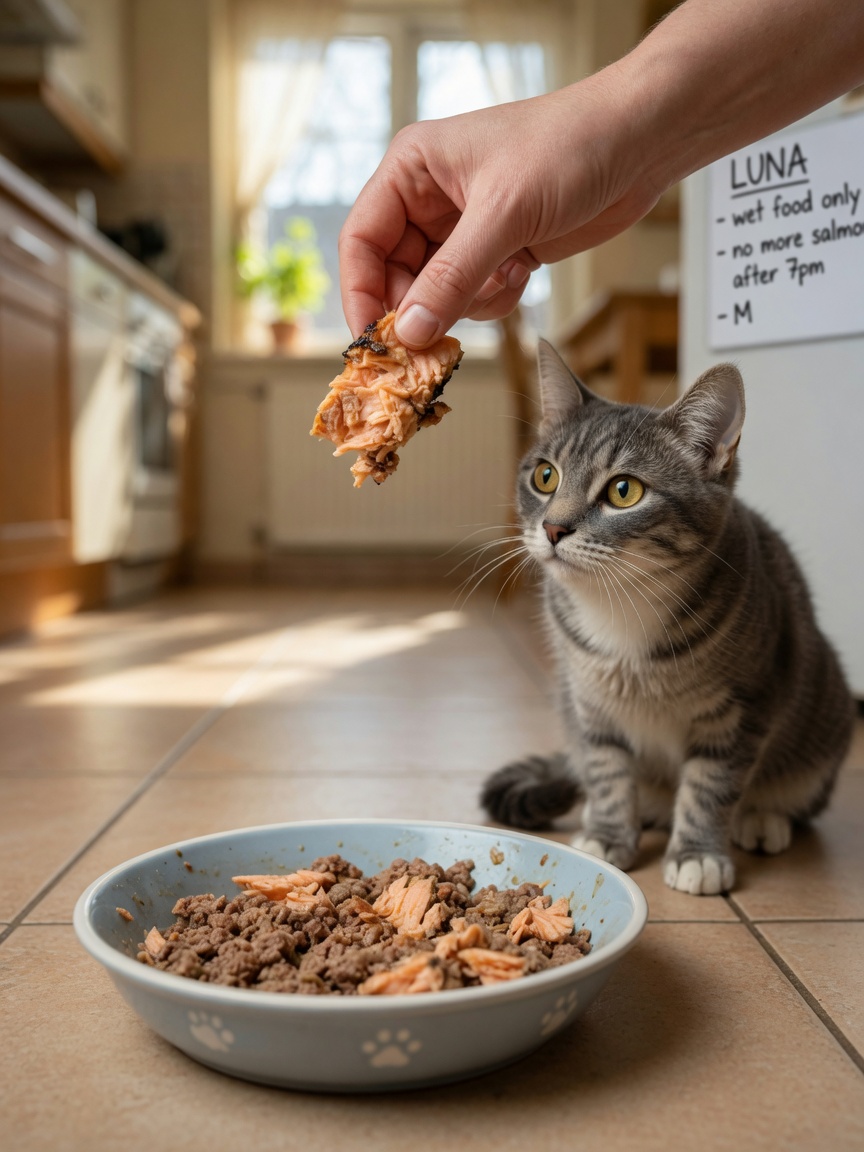
Salmon should be a treat or occasional addition to a balanced diet, not the cornerstone of your cat's nutrition. A piece roughly the size of your thumb, offered two or three times per week at most, is a reasonable portion for an average adult cat.
Relying heavily on fish-based foods — even high-quality ones — can lead to imbalances over time. Fish is low in certain minerals cats need, and some cats fed predominantly fish diets develop urinary tract issues, partly due to high magnesium and phosphorus levels. Variety across protein sources is always preferable.
Safe Salmon Preparation for Cats
- Cook salmon thoroughly — baking, steaming, or poaching are all suitable methods
- Remove all bones before and after cooking
- Use no seasoning, oil, butter, garlic, or onion
- Allow to cool completely before serving
- Offer in small portions appropriate to your cat's size and caloric needs
- Store leftovers in the fridge and use within two days
- Avoid smoked salmon, salmon in brine, and any flavoured or seasoned preparations
Salmon, prepared and offered correctly, is one of the more genuinely beneficial fish you can share with your cat. The key is keeping it occasional, keeping it plain, and keeping an eye on the overall balance of the diet it sits within.