
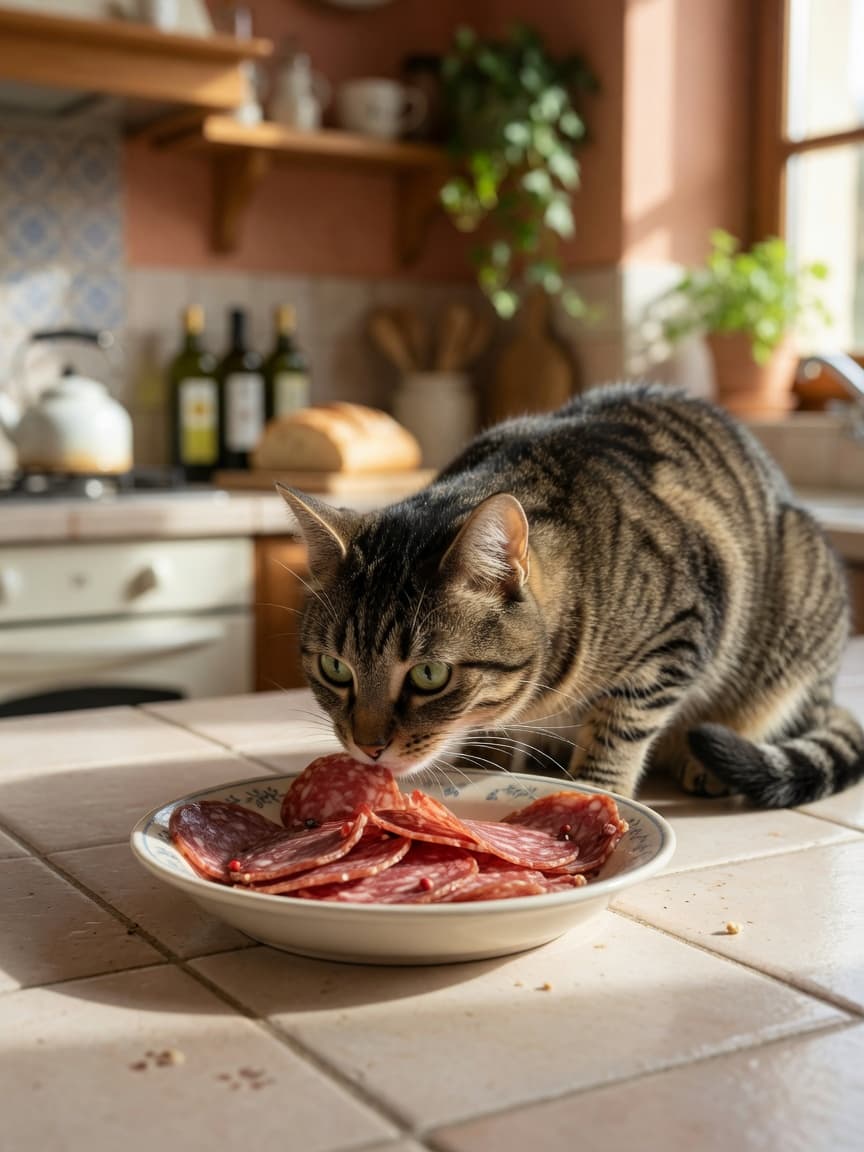
If you're enjoying a charcuterie board and your feline friend is eyeing that slice of salami with interest, you might be wondering whether it's safe to share. The short answer is: whilst cats can technically eat small amounts of salami, it's not recommended as a regular treat. Salami is a processed meat product laden with salt, fat, and seasonings that offer little nutritional benefit to cats and may pose genuine health risks. Let's explore what you need to know to keep your cat safe.
Why Cats Are Attracted to Salami
Cats are obligate carnivores, meaning they've evolved to consume meat. The rich, savoury aroma of salami naturally appeals to their predatory instincts and taste preferences. When you're handling processed meats, the smell becomes even more concentrated, which is why your cat may suddenly appear from nowhere, keen to investigate your meal.
However, attraction doesn't mean a food is appropriate for them. Just because cats want to eat something doesn't mean their digestive system can safely process it.
The Health Risks of Salami for Cats
Several concerning factors make salami unsuitable for feline consumption:
- Excessive Sodium: Salami contains very high salt levels—often 2-3 grams per 100 grams of product. Cats have minimal dietary sodium requirements and excess salt can strain their kidneys and contribute to hypertension.
- High Fat Content: The fatty profile of salami can lead to pancreatitis, a painful inflammation of the pancreas that requires veterinary intervention.
- Harmful Seasonings: Garlic and onion powder, common in salami, contain compounds toxic to cats. These ingredients damage red blood cells and can cause anaemia.
- Nitrates and Nitrites: These preservatives may pose long-term health risks, though research on feline-specific effects is limited.
- Spices: Chilli peppers, black pepper, and other seasonings irritate the feline digestive system.
What If Your Cat Eats Salami?
If your cat has consumed a small piece of salami, don't panic. A single, tiny amount is unlikely to cause immediate harm. However, monitor your cat for the following signs over the next 24-48 hours:
- Vomiting or diarrhoea
- Loss of appetite
- Lethargy or unusual behaviour
- Excessive thirst or urination
Contact your veterinarian immediately if you notice any of these symptoms, or if your cat consumed a large quantity.
Safe Meat Alternatives for Your Cat
If you want to treat your cat with meat, choose options that are genuinely safe and nutritious:
- Cooked Chicken Breast: Plain, unseasoned, and skinless—an excellent source of lean protein.
- Cooked Turkey: Similarly safe when prepared without seasoning or skin.
- Cooked Salmon: Rich in omega-3 fatty acids, though serve only occasionally due to high fat content.
- Commercial Cat Treats: These are formulated to meet feline nutritional requirements.
Always ensure any meat is boneless, cooked thoroughly, and free from garlic, onions, and excessive salt.
Creating Healthy Feeding Habits
The best approach is establishing clear boundaries around human food. Teach your cat that human meals aren't a source of food by never feeding from your plate. Provide appropriate meals at scheduled times and offer approved treats as rewards. This prevents begging behaviour and keeps your cat's diet balanced and safe.
Key Takeaways
Whilst a tiny amount of salami won't cause a life-threatening emergency, it's simply not worth the risk. The sodium, fat, and potentially toxic seasonings offer zero nutritional benefit and could trigger serious health complications, particularly in older cats or those with pre-existing conditions. Stick with meat options specifically safe for felines, and your cat will be healthier and happier. When in doubt, always consult your veterinarian about dietary questions.