
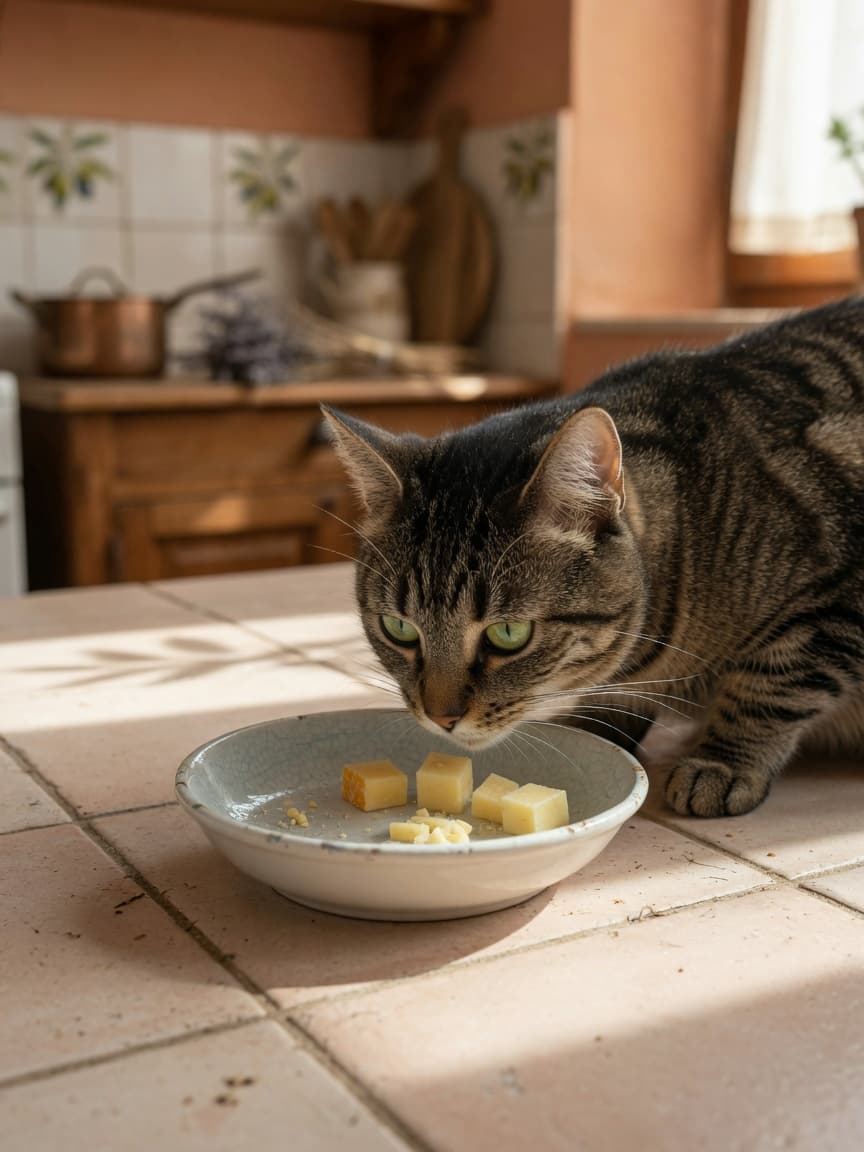
Can Cats Eat Cheese?
It is a question many cat owners ask when their pet shows interest in whatever is on the plate. Cheese smells strongly, which appeals to cats' well-developed sense of smell, and its high fat content makes it palatable. However, the short answer is that cheese is not a food cats should eat regularly, and some types should never be offered at all. To understand why, it helps to look at how a cat's digestive system changes as it matures.
Why Adult Cats Are Lactose Intolerant
All mammals are born producing an enzyme called lactase, which breaks down lactose — the sugar found in milk and dairy products. This makes sense because milk is the primary food source for newborns. As mammals grow and transition to solid food, lactase production naturally declines. In most adult cats, this decline is significant, meaning the gut can no longer efficiently process lactose.
When an adult cat consumes a food containing lactose, the undigested sugar passes into the large intestine. Bacteria in the gut ferment it, producing gas and drawing water into the bowel. The result is typically bloating, flatulence, loose stools, or outright diarrhoea. Some cats are more sensitive than others, and symptoms can appear within hours of eating dairy.
This is important context when discussing cheese, because not all cheeses contain the same amount of lactose.
Hard Cheeses and Lower Lactose Levels
The lactose content of cheese varies considerably depending on how it is produced. During the cheesemaking process, bacteria consume lactose as they ferment the milk. The longer a cheese is aged, the more lactose is broken down. Hard, mature cheeses — such as aged cheddar, parmesan, and manchego — therefore contain very little residual lactose compared with fresh dairy products like milk or cream.
This means that hard cheeses are technically lower risk from a lactose-intolerance standpoint. A tiny fragment of a hard cheese is unlikely to cause the same digestive upset as a spoonful of cream or a splash of milk. However, lower lactose does not mean safe, because cheese brings a separate set of concerns that are equally important to consider.
High Fat Content and the Risk of Pancreatitis
All cheese is high in fat. Even when offered in small quantities, frequent or generous servings of fatty food can stress a cat's digestive system and, over time, contribute to a serious condition called pancreatitis.
Pancreatitis is an inflammation of the pancreas — the organ responsible for producing digestive enzymes and regulating blood sugar. When a cat consumes an unusually high-fat meal or is regularly given fatty treats, the pancreas can become overstimulated or inflamed. Symptoms of pancreatitis include lethargy, loss of appetite, vomiting, and abdominal pain. In severe cases, the condition can be life-threatening and requires veterinary treatment.
Cats are obligate carnivores, and while fat from animal sources is an important part of their diet, the type and quantity of fat found in cheese is not well suited to their system. A diet supplemented with regular cheese treats increases the overall fat load and raises the risk of pancreatic problems, particularly in cats that are already overweight or less active.
High Salt Content and Kidney Stress
Sodium is another reason to be cautious. Many cheeses — particularly processed varieties, blue cheeses, feta, and halloumi — contain significant levels of salt. Cats have much lower sodium requirements than humans, and their kidneys are not designed to handle large quantities of salt.
Excessive sodium intake places unnecessary stress on a cat's kidneys, which must work harder to filter the excess and maintain fluid balance. Over time, a high-salt diet can contribute to dehydration, raised blood pressure, and cumulative kidney damage. This is a particular concern in older cats, whose kidney function naturally declines with age. Even in young, healthy cats, consistently salty treats are not a harmless indulgence.
When looking at the salt content of common cheeses, hard varieties tend to have moderate levels, whilst processed cheese slices, cheese spreads, and brined cheeses can be considerably higher. None of these are suitable for cats.
Why Blue Cheese Is Never Safe for Cats
Blue cheese deserves special mention because it poses a risk beyond lactose, fat, and salt. Varieties such as stilton, roquefort, and gorgonzola are produced using specific strains of Penicillium mould, which is responsible for the characteristic blue-green veins and distinctive flavour.
This mould can produce substances that are toxic to cats. Ingestion of blue cheese has been associated with tremors, seizures, high temperature, and dangerously elevated heart rate in animals. Even a small amount can trigger a reaction in a sensitive individual. There is no safe quantity of blue cheese for a cat, and it should be kept entirely out of their reach.
What About Cottage Cheese and Cream Cheese?
Soft, fresh cheeses such as cottage cheese and cream cheese have higher lactose levels than hard cheeses because they have not undergone prolonged fermentation. They are also high in fat and offer no nutritional value to a cat. These should also be avoided.
When Might a Vet Suggest Using Cheese?
There is one common practical use for a small piece of cheese: hiding a tablet or capsule. A tiny fragment of a hard cheese pressed around a pill can make medication easier to administer. In this context, the occasional, very small quantity is unlikely to cause harm in a healthy adult cat. However, this should be an exception rather than a habit, and you should check with your vet if your cat has any history of digestive problems or kidney disease.
Safer Alternatives to Cheese as a Treat
If you want to give your cat an occasional treat, there are far more appropriate options:
- Small pieces of plain, cooked chicken or turkey with no seasoning
- Flakes of plain, cooked white fish such as cod or haddock
- Commercially produced cat treats formulated to be nutritionally appropriate
- Plain cooked prawns with no added salt or sauce
These options align far better with a cat's nutritional needs as an obligate carnivore and do not carry the risks associated with dairy.
The Bottom Line
Cheese is not a food that belongs in a cat's regular diet. Most adult cats are lactose intolerant to some degree, and even the lower-lactose hard varieties bring concerns about fat, salt, and overall dietary appropriateness. Blue cheese should never be offered under any circumstances. If your cat has already consumed cheese and is showing signs of digestive upset, monitor them closely and contact your vet if symptoms persist or worsen. When in doubt, stick to treats that are specifically designed for cats — their digestive systems will thank you for it.