
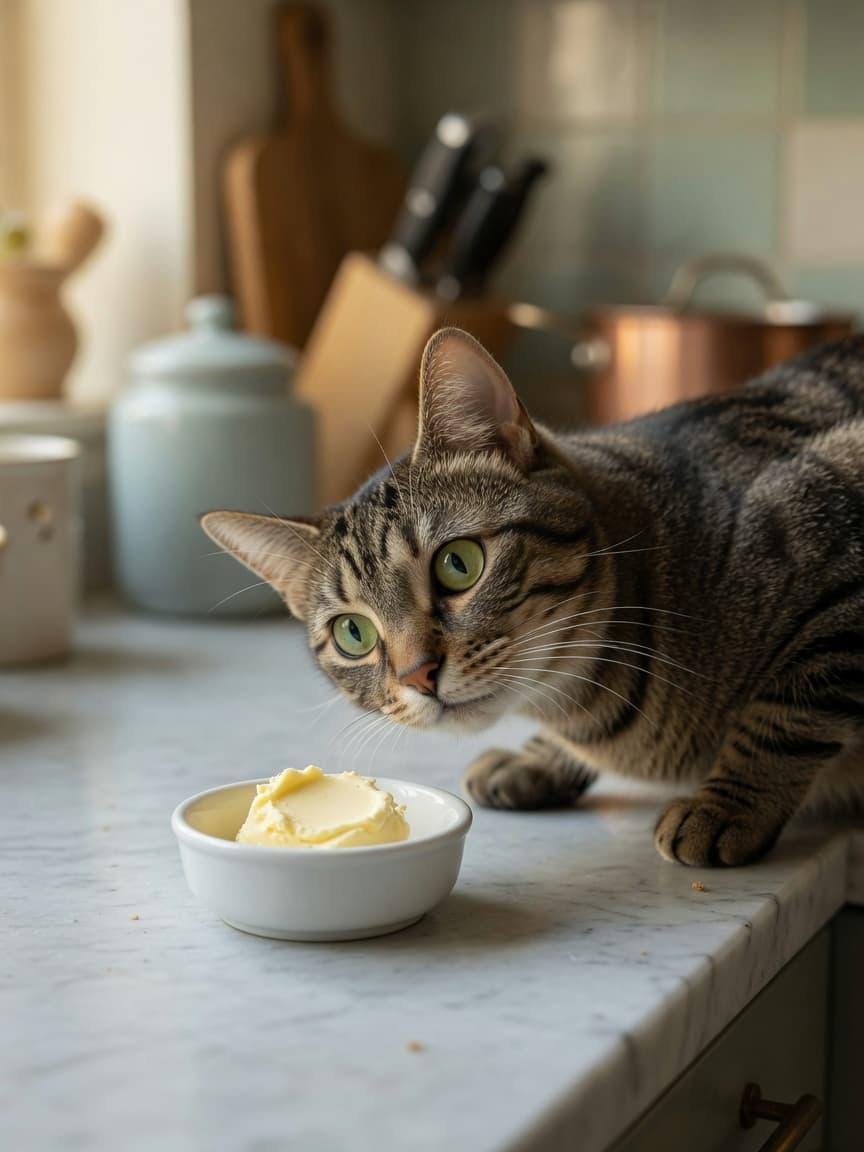
Verdict: Not Recommended
Butter is not toxic to cats in the way that garlic or chocolate is. A cat that licks a small amount of butter from a knife is not in danger. However, butter has no nutritional value for an obligate carnivore and is one of the most calorie-dense foods imaginable — around 80% fat by weight. Feeding it to a cat, even occasionally, risks weight gain and digestive upset, and regular exposure can contribute to pancreatitis. There is simply no reason to include butter in your cat's diet.
What Butter Is and Why Cats Don't Need It
Butter is made by churning cream — the high-fat portion of cow's milk — until the fat globules separate from the liquid. The result is a product that is approximately 80% milk fat, 16–17% water, and small amounts of milk proteins and lactose. Unlike cheese or yoghurt, butter contains very little lactose, because lactose is water-soluble and most of it ends up in the discarded buttermilk during churning.
This means the lactose intolerance argument that applies strongly to milk, cream, and soft cheese is less central with butter. However, it does not make butter appropriate. The issue with butter is not lactose — it is fat. Cats do require fat in their diet, but they get it in appropriate amounts from complete cat food formulated for their needs. Adding concentrated saturated fat on top of a balanced diet serves no purpose and actively disrupts the caloric balance their weight depends on.
The Obesity and Pancreatitis Risk
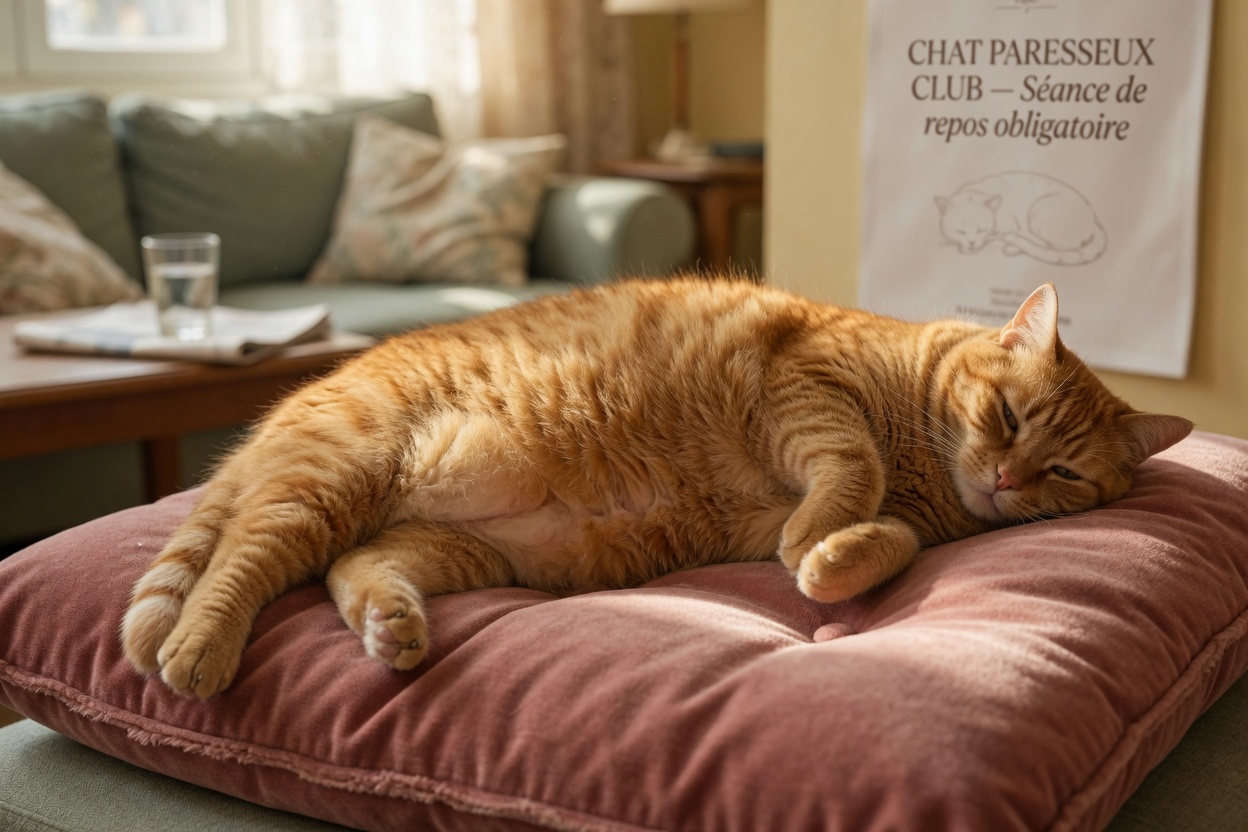
Cats are small animals with modest caloric requirements. A typical indoor adult cat needs somewhere between 200 and 300 calories per day depending on size and activity level. A single teaspoon of butter contains around 35 calories — already a meaningful portion of a small cat's daily allowance, with no protein, no essential amino acids, no vitamins in useful quantities, and no hydration.
Obesity is one of the most common preventable health problems in domestic cats. It is linked to diabetes mellitus, hepatic lipidosis (fatty liver disease), joint deterioration, and reduced life expectancy. Every unnecessary calorie-dense food that becomes a habit pushes the cat further toward that risk.
Pancreatitis — inflammation of the pancreas — is another concern. While pancreatitis in cats is not as strongly linked to high-fat diets as it is in dogs, high-fat foods can still trigger or worsen the condition. Cats with a history of pancreatitis should absolutely not be given butter or any other high-fat food outside a diet specifically approved by their vet.
Why Cats Go Near Butter at All
Cats cannot taste sweetness — they lack the functional sweet taste receptors that humans and dogs have. So a cat that shows interest in butter is not attracted to any sugary quality. What draws them is the fat and the smell. Animal fats carry volatile compounds that cats find appealing, and butter, being a dairy fat, has aromatic qualities that pique feline curiosity.
This means your cat pestering you for butter is not evidence that butter is good for them — it is evidence that their nose finds it interesting. Many cats are drawn to foods that are actively bad for them for exactly the same reason: high fat content signals energy density, and instinct responds accordingly.
The Hairball Remedy Myth
A persistent piece of folk advice suggests that giving cats butter or other fats helps lubricate hairballs and assists their passage through the digestive tract. There is no robust veterinary evidence to support this practice, and it is not something vets recommend.
If your cat struggles with hairballs, there are specific, vet-formulated hairball remedies available — typically petroleum jelly-based products or specially designed cat treats with added fibre — that address the problem safely and appropriately. These products are developed with the cat's physiology in mind. Butter is not, and using it as a home remedy risks the fat-related problems described above for no proven benefit.
Salted vs. Unsalted Butter
If your cat has accidentally eaten butter, the variety matters. Salted butter contains sodium at levels that are inappropriate for cats. Cats have very low sodium requirements, and excess salt stresses the kidneys and cardiovascular system. Over time, a diet with repeated exposure to high-sodium foods can contribute to hypertension and kidney damage, conditions that are already common in older cats.
Unsalted butter avoids the sodium issue but retains all the fat-related concerns. Neither type is appropriate as a deliberate food for your cat.
What to Do If Your Cat Ate Butter
A small lick of butter — the amount a cat might steal from an unattended plate — is not a veterinary emergency. Monitor your cat for any signs of digestive upset over the following hours:
- Vomiting
- Diarrhoea or loose stools
- Lethargy or discomfort
- Loss of appetite
Mild symptoms from a small amount of butter should resolve on their own. Ensure your cat has access to fresh water, as fat can contribute to mild dehydration through digestive upset. If symptoms are severe, persist beyond 24 hours, or your cat has a known health condition such as pancreatitis, diabetes, or kidney disease, contact your vet.
Better Treat Alternatives
Cats thrive on animal protein. If you want to give your cat a treat that they will enjoy and that will not put their health at risk, consider small pieces of plain cooked chicken, turkey, or white fish — no seasoning, no sauces, no butter. These provide protein that cats can actually use, in a form their digestive systems are built for.
Commercial cat treats formulated by veterinary nutritionists are also a reliable choice. They are designed to be palatable and calorie-controlled, so you can reward your cat without disrupting their overall dietary balance.
Butter does not belong on that list. Keep it for cooking, and keep it away from your cat.