
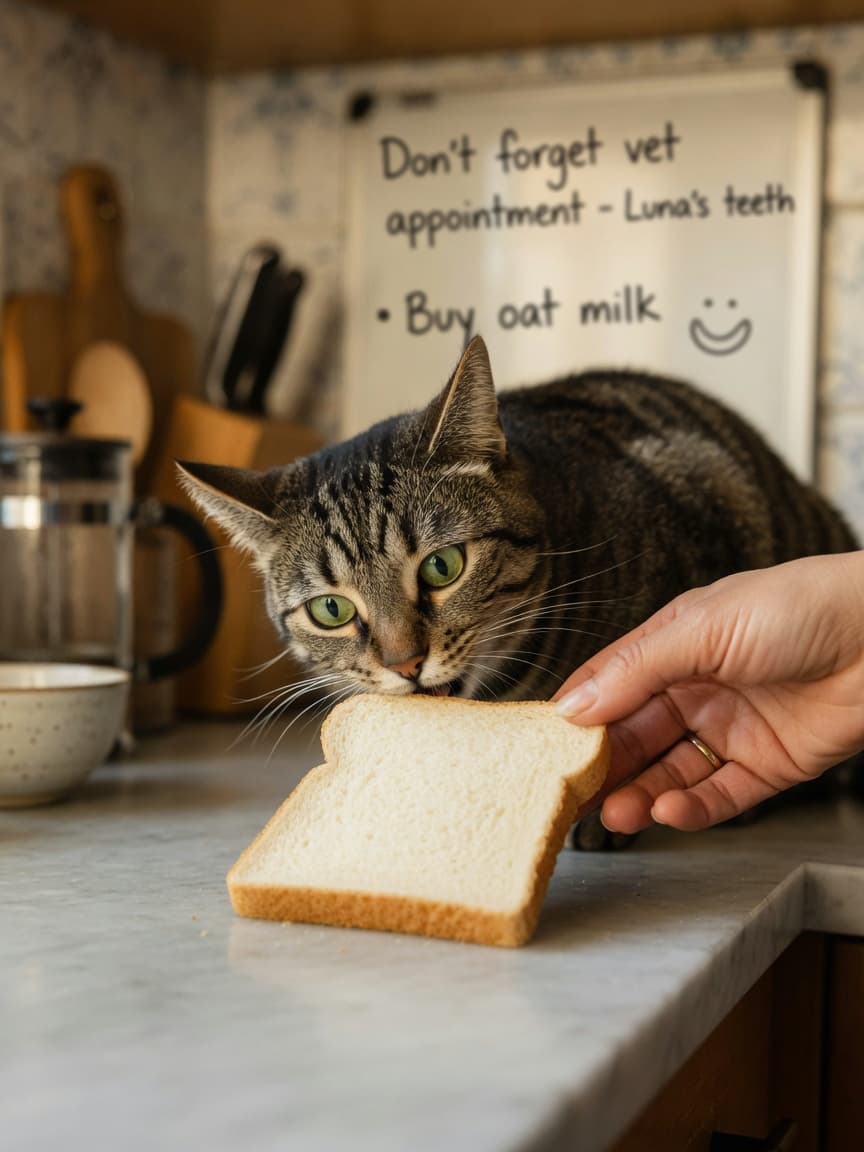
Bread and Cats: A Question of Biology, Not Just Safety
Bread is one of those foods that seems so innocuous — a staple of human diets across cultures — that it can be easy to assume a small piece shared with a curious cat is harmless. And while cooked bread is not acutely toxic to cats in the way that, say, grapes or onions are, the fuller picture is more nuanced. Understanding what bread actually does (or fails to do) in a cat's body helps explain why it deserves a place near the bottom of the treat list.
What Happens When a Cat Eats Carbohydrates
Bread is, at its core, a carbohydrate-dense food. The primary ingredient in most bread is refined or wholegrain flour — a source of starch with very little protein and minimal nutritional value for an obligate carnivore.
Cats are metabolically adapted for a diet of animal protein and fat. Their livers continuously produce glucose from protein (a process called gluconeogenesis) and they do not have the same efficient mechanism for processing dietary carbohydrates that omnivores like humans and dogs possess. Specifically:
- Cats produce relatively low levels of amylase in saliva, the enzyme that begins carbohydrate digestion in omnivores
- Intestinal disaccharidase activity — the enzymatic processing of sugars in the gut — is lower in cats than in omnivorous species
- Excess dietary carbohydrates are more likely to be stored as fat in cats, contributing to obesity
This does not mean a small piece of cooked bread will immediately harm your cat. But it does mean bread provides essentially nothing useful to feline physiology, while contributing calories that could lead to weight gain over time.
The Yeast Danger: Raw Dough Is a Serious Risk
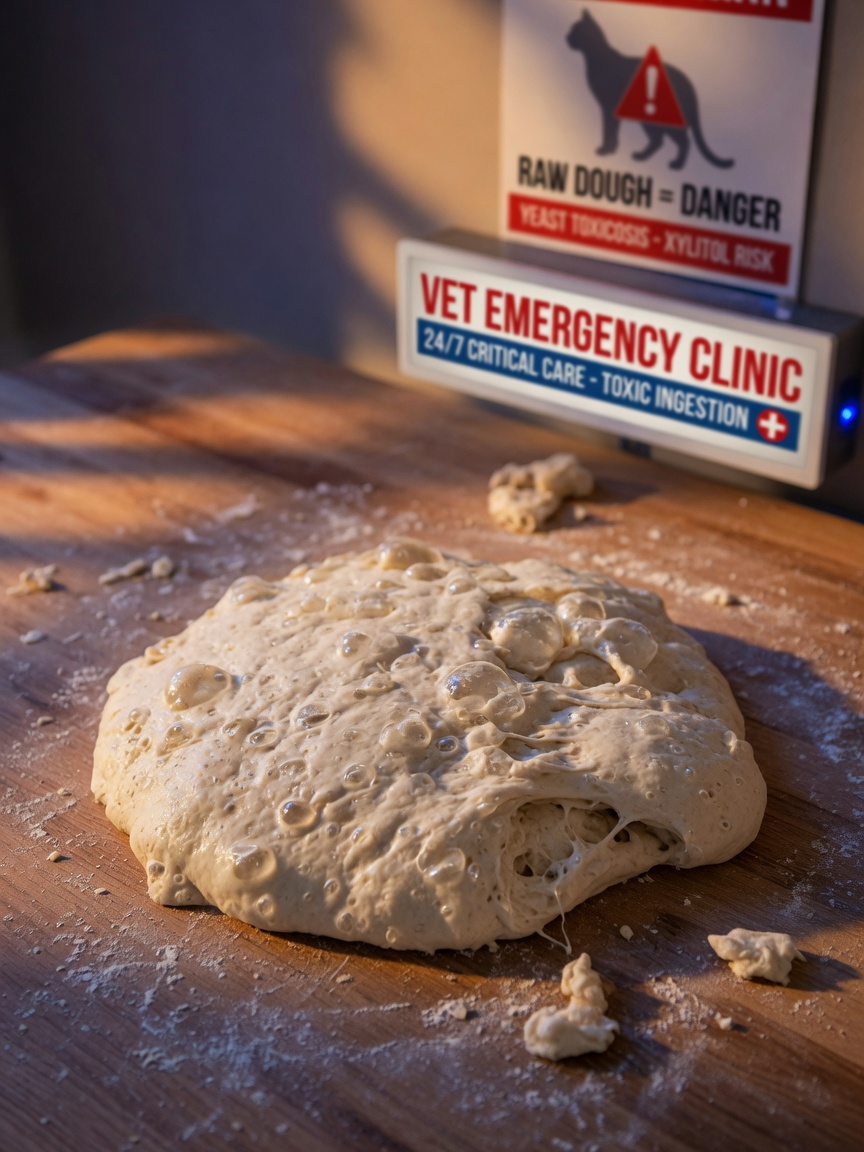
While cooked bread is relatively low risk, raw bread dough is a genuine veterinary emergency.
Bread dough contains live yeast, which continues to ferment in the warm, moist environment of a cat's stomach. This fermentation produces two dangerous outcomes:
Gas and Gastric Distension
The carbon dioxide produced by fermenting yeast accumulates in the stomach, causing it to expand. In cats, whose abdominal cavities are small, this distension can be rapid and severe. In worst cases, it can progress to gastric dilatation — a potentially life-threatening condition requiring emergency intervention.
Ethanol Production
Yeast fermentation also produces alcohol (ethanol) as a byproduct. A cat's liver has extremely limited capacity to metabolise alcohol, and even small amounts can cause alcohol toxicosis. Symptoms include disorientation, vomiting, difficulty breathing, a dangerous drop in blood sugar, and in serious cases, coma or death. Because of their small body mass, cats can be affected by alcohol quantities that would be trivial to a human.
If your cat has consumed raw bread dough, contact your vet immediately. Do not wait to see if symptoms develop.
Ingredients to Watch Out For in Bread
Beyond the basic dough concerns, many bread varieties contain ingredients that are genuinely toxic to cats:
- Garlic and onion: frequently found in flavoured breads, focaccia, and certain artisan loaves. Both are toxic to cats, causing damage to red blood cells and potentially leading to haemolytic anaemia.
- Raisins and currants: common in fruit breads and hot cross buns. Grapes and their dried forms are associated with acute kidney injury in cats, though the mechanism is not fully understood.
- Xylitol: an artificial sweetener found in some reduced-sugar bread products. Potentially dangerous to cats and definitively dangerous to dogs — avoid any product containing it.
- Nuts: walnuts, macadamia nuts, and other varieties sometimes added to artisan breads can be harmful to cats.
- Seeds: while many seeds are low risk, bread containing large quantities of poppy seeds has raised concern — poppy seeds contain opioid alkaloids that can cause toxicity in cats in sufficient amounts.
Plain white or wholemeal bread without any of these additions is the lowest-risk option if your cat has grabbed a piece unexpectedly, but even then, the nutritional argument for offering it deliberately is essentially non-existent.
What About Toast?
Toasted bread carries the same nutritional limitations as plain bread — it is still largely empty carbohydrate calories for a carnivore. The process of toasting does not add any nutritional benefit and, at very high temperatures, produces acrylamide, a compound formed when starchy foods are cooked at high heat. The relevance of acrylamide to feline health at small exposure levels is not well established, but it is an additional reason why toast offers nothing worthwhile.
How Much Bread Is Harmful?
A small piece of plain cooked bread is unlikely to make your cat ill in the short term. Cats tend not to be particularly interested in bread to begin with, partly because they cannot taste sweetness, and refined carbohydrates are not biologically compelling to them. If your cat has eaten a small amount of plain bread as a one-off, calm observation is likely all that is needed.
The concern arises with repeated feeding — both because of the cumulative caloric contribution and because of the risk of normalising a food that serves no nutritional purpose in a feline diet.
Better Alternatives to Bread as a Treat
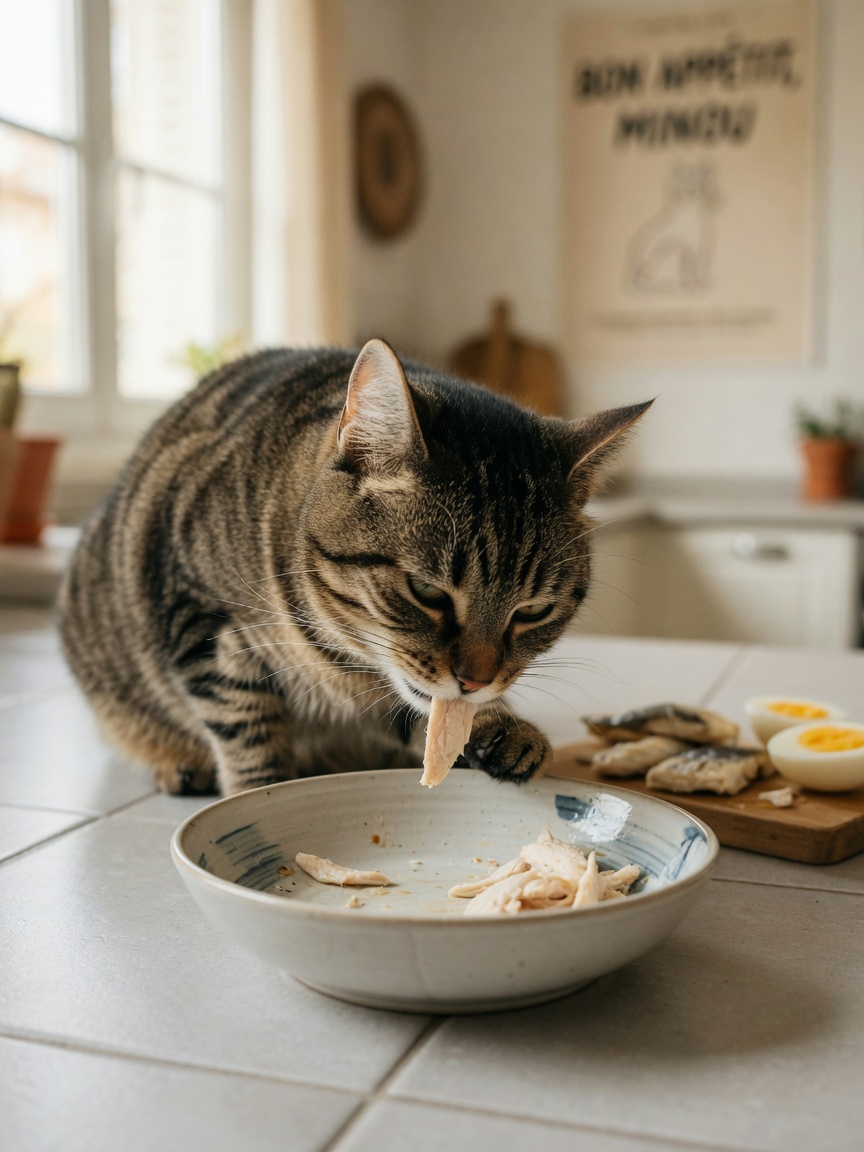
- Small pieces of cooked, plain chicken or turkey
- A tiny amount of plain cooked fish such as salmon or cod
- A piece of plain cooked egg
- Commercial cat treats with named meat as the primary ingredient
- Commercial freeze-dried meat treats without additives
All of these align with what a cat's body is actually designed to process and benefit from. Bread, by contrast, is a food your cat's biology has no particular use for — and in its raw dough form, one that can cause real harm. Keeping it out of reach, particularly when baking, is a straightforward precaution worth taking.