
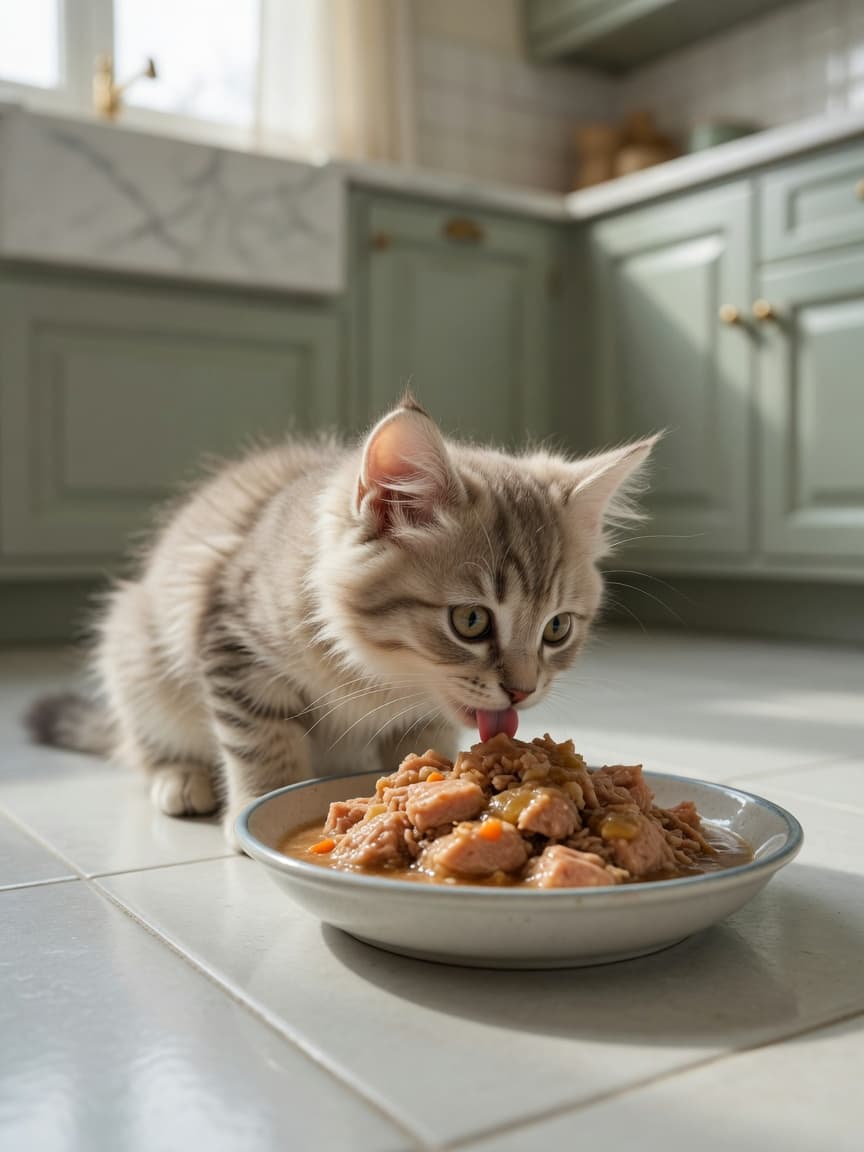
Nutrition in the First Year: Why It Matters So Much
A kitten is not simply a small cat. Its nutritional requirements during the first twelve months of life are substantially different from those of an adult — higher in many key areas — and getting this right has consequences that extend across its entire lifespan. Bone density, muscle development, immune function, and even temperament can all be influenced by what a kitten eats in its first year.
For cat owners in Europe, understanding both the nutritional science and the EU regulatory framework for pet food labelling helps you make better decisions at the point of purchase.
What Kittens Actually Need: Key Nutrients
Protein and Fat
Kittens require significantly higher levels of protein and fat than adult cats. The European pet food industry body FEDIAF (the European Pet Food Industry Federation) publishes nutritional guidelines that serve as the reference standard for responsible manufacturers across the EU. According to FEDIAF guidelines, kittens require a minimum of around 25g of crude protein per 100g of dry matter, compared to a lower threshold for adults. Fat intake supports rapid growth and the development of the nervous system and retina.
Cats are obligate carnivores, meaning animal protein is not optional — it is physiologically essential. Plant proteins do not provide the same amino acid profile that cats require.
Taurine: The Non-Negotiable Amino Acid
Taurine is an amino acid that cats cannot synthesise in sufficient quantities themselves and must obtain from their diet. It is found almost exclusively in animal tissue. Taurine deficiency causes dilated cardiomyopathy (a serious heart condition) and retinal degeneration leading to blindness. Any food labelled as complete and balanced for kittens under EU regulations must contain adequate taurine — but it is worth verifying this on the label, particularly with economy or imported brands.
Calcium, Phosphorus, and DHA
Correct calcium and phosphorus ratios support healthy bone development. DHA (docosahexaenoic acid), an omega-3 fatty acid found in fish oils, supports brain and visual development during the rapid growth phase. Look for foods that include a named fish or fish oil as an ingredient source.
Understanding EU Pet Food Labelling
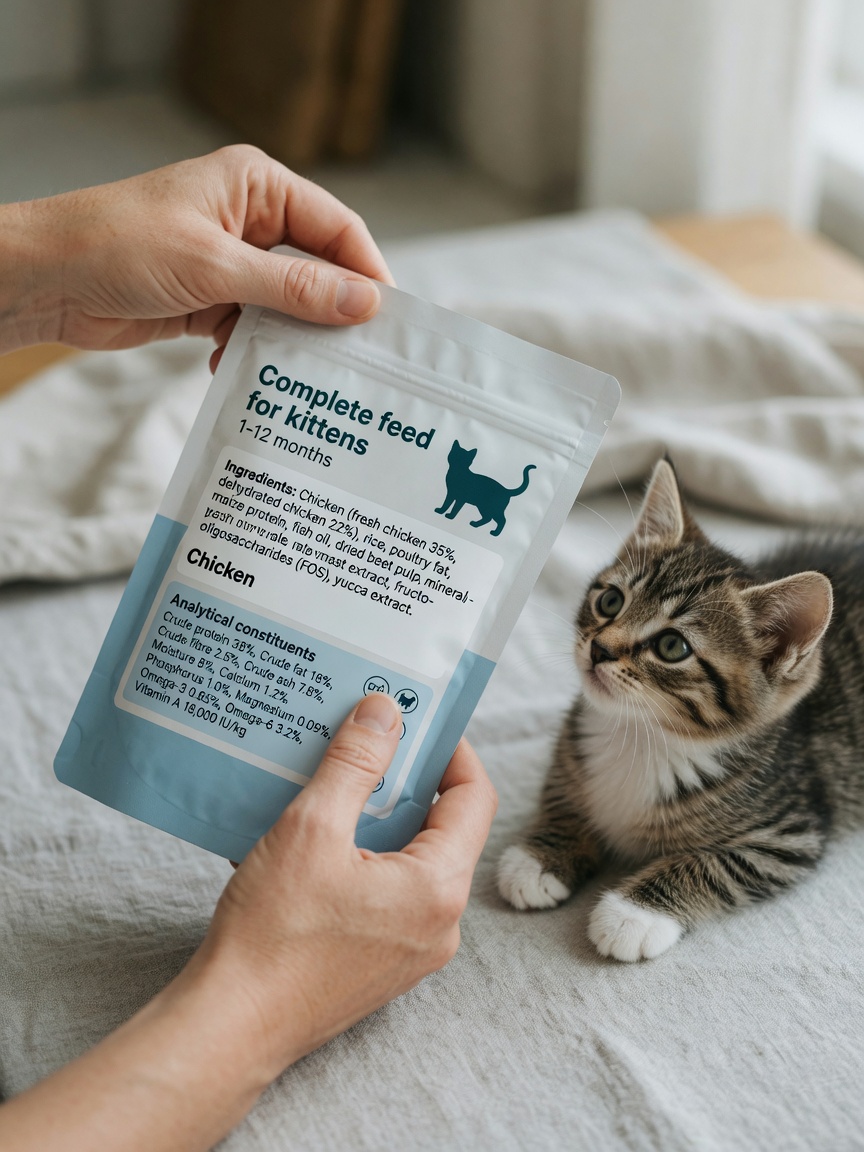
Pet food sold in the EU is governed by Regulation (EC) No 767/2009, which sets out labelling requirements designed to give consumers meaningful information. Key things to look for include:
- The declaration of "complete" versus "complementary" feed — only a food labelled as complete is formulated to meet all nutritional needs on its own
- The analytical constituents panel, which lists minimum crude protein, crude fat, crude fibre, and crude ash, along with moisture content
- The ingredient list, where ingredients are listed in descending order by weight — a named meat source (chicken, salmon, turkey) should ideally appear first
- The species and life stage the food is intended for — look specifically for "kitten" or "junior" rather than assuming an adult food will suffice
FEDIAF's guidelines are not legally mandated minimums in themselves, but they represent the scientific consensus that reputable manufacturers align with voluntarily.
Wet Food Versus Dry Food
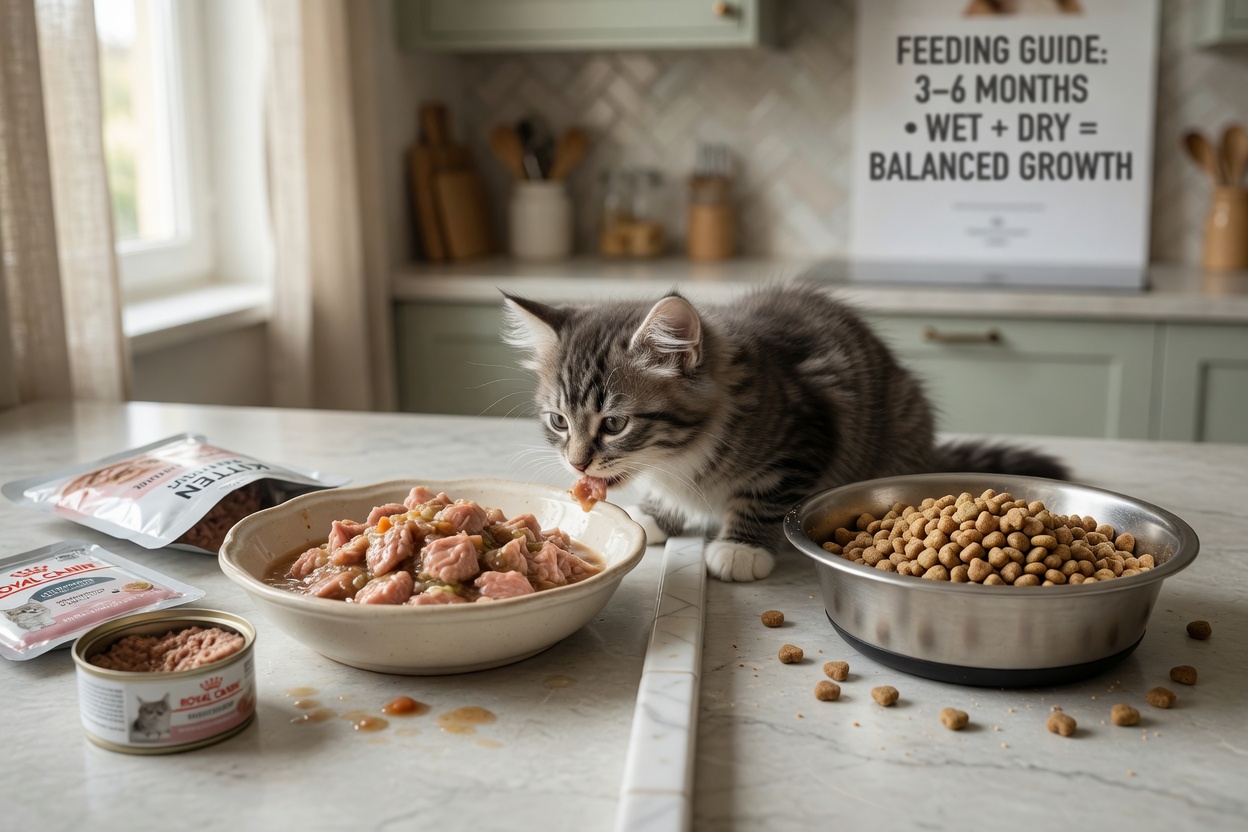
This is one of the most debated topics among cat owners, and the honest answer is that both have a place in a kitten's diet, with different advantages.
Wet food (pouches, tins, trays) typically has a moisture content of 70-80%. This is important because cats evolved as desert animals with a low thirst drive and naturally obtain most of their water from prey. A cat fed exclusively on dry kibble may live in a state of mild chronic dehydration, which over time contributes to urinary tract issues and kidney disease. Wet food helps bridge this gap.
Dry food (kibble) is more convenient, has a longer shelf life once opened, and tends to be more economical per calorie. Some owners also use it as part of puzzle feeders and interactive toys to provide mental stimulation.
For kittens specifically, many vets recommend a diet that includes a significant proportion of wet food to support hydration. A mixed approach — wet food for the majority of the diet with some dry food alongside — is practical and nutritionally sound when both foods are complete and balanced for kittens.
Feeding Frequency by Age
Young kittens have small stomachs and high energy requirements, which means they need to eat more frequently than adult cats.
- 6 to 10 weeks: four to five small meals per day (during weaning transition)
- 10 weeks to 6 months: three to four meals per day
- 6 to 12 months: two to three meals per day
Follow the feeding guidelines on the food packaging as a starting point, but adjust based on your kitten's body condition — you should be able to feel the ribs easily without pressing hard, but not see them prominently.
Transitioning Foods Safely
Sudden changes in diet commonly cause digestive upset in kittens, including diarrhoea and vomiting. When switching foods — either because you are bringing a kitten home from a breeder or rescue, or because you are changing brand — transition gradually over seven to ten days. Start with approximately 75% old food and 25% new food, then shift the ratio progressively over the following days until the changeover is complete.
Hydration: The Overlooked Essential
Fresh water should always be available. Many cats prefer running water, and a pet water fountain can significantly increase water intake. Place water bowls away from food bowls — in the wild, cats instinctively avoid water sources near prey to reduce contamination risk, and this instinct persists in domestic cats.
Foods That Are Toxic to Cats
Several common foods are toxic to cats and must be kept completely out of reach:
- Onions, garlic, leeks, and chives — cause haemolytic anaemia even in small amounts
- Grapes and raisins — can cause kidney failure; the mechanism is not fully understood but the risk is real
- Xylitol — an artificial sweetener found in sugar-free gum, some peanut butters, and baked goods; toxic in small quantities
- Chocolate and caffeine — both contain methylxanthines that are toxic to cats
- Alcohol — even small amounts can cause serious harm
The popular belief that cats should drink cow's milk is a myth worth dispelling. Most adult cats and many kittens are lactose intolerant, and milk commonly causes diarrhoea. It provides no nutritional benefit that is not better met by a balanced kitten food.
EU Brands and Where to Buy
European pet owners have access to an excellent range of quality kitten foods. Royal Canin Kitten, Hill's Science Plan Kitten, Purina Pro Plan Kitten, and Animonda Carny Kitten are among the well-regarded options available across the EU. Zooplus is the largest online pet food retailer in Europe and stocks an extensive range of kitten foods, including many premium and veterinary-grade options, with convenient delivery across most EU countries. Comparing prices and reading the analytical constituents panel on Zooplus before purchasing makes it straightforward to find a quality food at a reasonable price.
Feed your kitten well in its first year, and you are investing in a healthier, longer life for a companion that will be with you for fifteen years or more.