
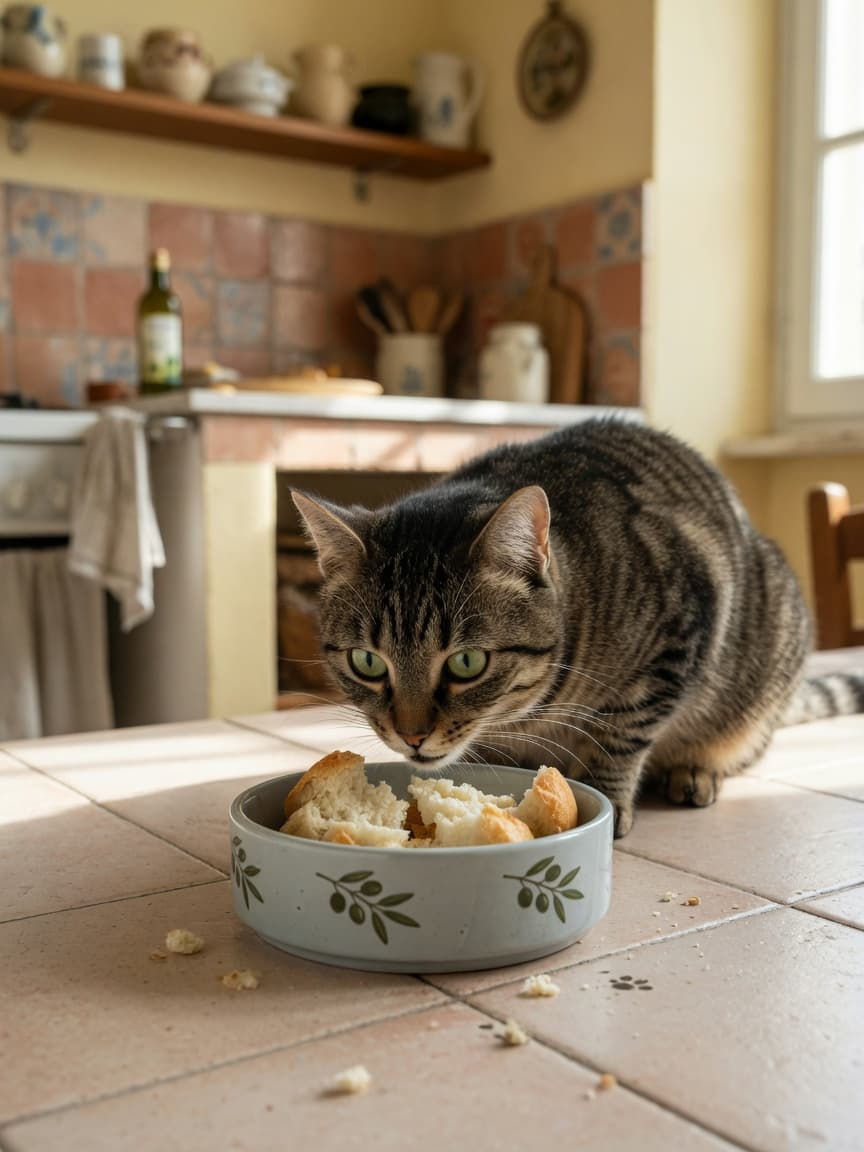
Can Cats Eat Bread? Is it Safe or Unsafe?
Many of us enjoy a slice of fresh bread with our morning coffee, and it's natural to wonder whether our feline companions can share in this simple pleasure. The short answer is: whilst cats can technically eat plain bread, it offers them little nutritional value and can sometimes pose health risks. Understanding what's safe and what isn't will help you make informed decisions about your cat's diet and keep them healthy and happy.
Is Plain Bread Safe for Cats?
Plain, cooked bread without any additions is generally safe for cats in small quantities. A small piece occasionally won't cause serious harm to most healthy cats. However, there's an important distinction to make: safe doesn't mean beneficial. Cats are obligate carnivores, meaning their bodies are specifically designed to digest meat-based proteins, not grains or carbohydrates.
Bread provides very little nutritional value for cats. It's primarily composed of carbohydrates, which cats don't require in their diet and can actually struggle to process efficiently. Additionally, bread is calorie-dense, which can contribute to weight gain if offered too frequently.
Types of Bread to Avoid
Whilst plain bread is relatively harmless, many bread varieties contain ingredients that are genuinely dangerous for cats:
- Bread containing xylitol: This artificial sweetener is toxic to cats and can cause severe hypoglycaemia, liver damage, and potentially death, even in small amounts
- Garlic or onion bread: Both garlic and onions contain compounds called thiosulfates that damage cats' red blood cells and cause haemolytic anaemia
- Bread with chocolate: Chocolate is toxic to cats and can cause serious health complications
- Raisin or sultana bread: These dried fruits are toxic to cats and can cause acute kidney failure
- Bread containing excessive salt: High sodium content can lead to hypernatraemia and other health issues
- Bread with seeds or nuts: Some seeds and nuts, particularly macadamia nuts, are toxic to cats
Raw Dough: A Particular Concern
Raw bread dough poses specific dangers that differ from baked bread. Uncooked dough can expand in a cat's stomach, causing severe bloating and gastrointestinal distress. Furthermore, raw dough fermentation produces ethanol, which can be absorbed into the bloodstream and cause alcohol poisoning.
If your cat ingests raw dough, contact your veterinary surgeon immediately. Signs of distress include vomiting, lethargy, abdominal pain, and unusual behaviour.
What Should Cats Actually Eat?
Rather than offering bread, focus on providing your cat with appropriate nutrition:
- High-quality commercial cat food that meets AAFCO (Association of American Feed Control Officials) standards
- Appropriate portion sizes based on your cat's age, weight, and activity level
- Fresh water available at all times
- If offering treats, choose feline-specific options or small pieces of cooked chicken
If Your Cat Eats Bread: What to Do
If your cat has eaten a small amount of plain bread, don't panic. Observe them for any signs of discomfort, vomiting, or unusual behaviour over the next 24-48 hours. However, if your cat has consumed:
- Bread containing toxic ingredients (xylitol, chocolate, onions, garlic, raisins)
- Raw dough
- Large quantities of bread
Contact your veterinary surgeon promptly, as these situations may require medical intervention.
Key Takeaways
Plain bread is safe for cats in minimal quantities, but it provides no nutritional benefit and should never be considered part of their regular diet. The risks associated with flavoured breads, raw dough, and high-sugar varieties make it advisable to simply avoid offering bread altogether. Your cat's health is best served through proper feline nutrition, appropriate portion control, and offering only cat-safe treats. When in doubt, consult your veterinary surgeon—they're your best resource for questions about your individual cat's dietary needs.
```Key takeaways
- Cats are obligate carnivores and cannot efficiently digest carbohydrates, making bread nutritionally useless for them
- Raw bread dough is particularly dangerous as it expands in the stomach and ferments into alcohol that can poison your cat
- Flavoured breads with xylitol, garlic, onions, chocolate, raisins, or excessive salt are genuinely toxic and require immediate veterinary attention
- If your cat eats plain bread, monitor them for 24-48 hours, but seek immediate veterinary help if they've consumed toxic varieties or large quantities
Frequently asked questions
Can cats eat bread every day?
No, cats should never eat bread regularly. Whilst plain bread won't cause immediate harm in tiny amounts, it provides no nutritional benefit and is calorie-dense, which can contribute to weight gain over time. Your cat's diet should focus on high-quality cat food designed to meet their specific nutritional needs.
What happens if my cat eats bread with xylitol?
Xylitol is toxic to cats and can cause severe hypoglycaemia, liver damage, and potentially death even in small amounts. If your cat has consumed bread containing xylitol, contact your veterinary surgeon immediately—this is a medical emergency requiring prompt professional intervention.
Is whole wheat bread better for cats than white bread?
Neither whole wheat nor white bread is beneficial for cats, though both plain varieties are similarly safe in minimal quantities. Since cats cannot efficiently digest grains or carbohydrates, the type of bread is less relevant than avoiding it altogether in favour of proper feline nutrition.
What should I do if my cat ate raw bread dough?
Contact your veterinary surgeon immediately, as raw dough can expand dangerously in your cat's stomach and ferment into alcohol, potentially causing poisoning. Watch for symptoms like vomiting, lethargy, abdominal pain, and unusual behaviour whilst seeking professional help.