
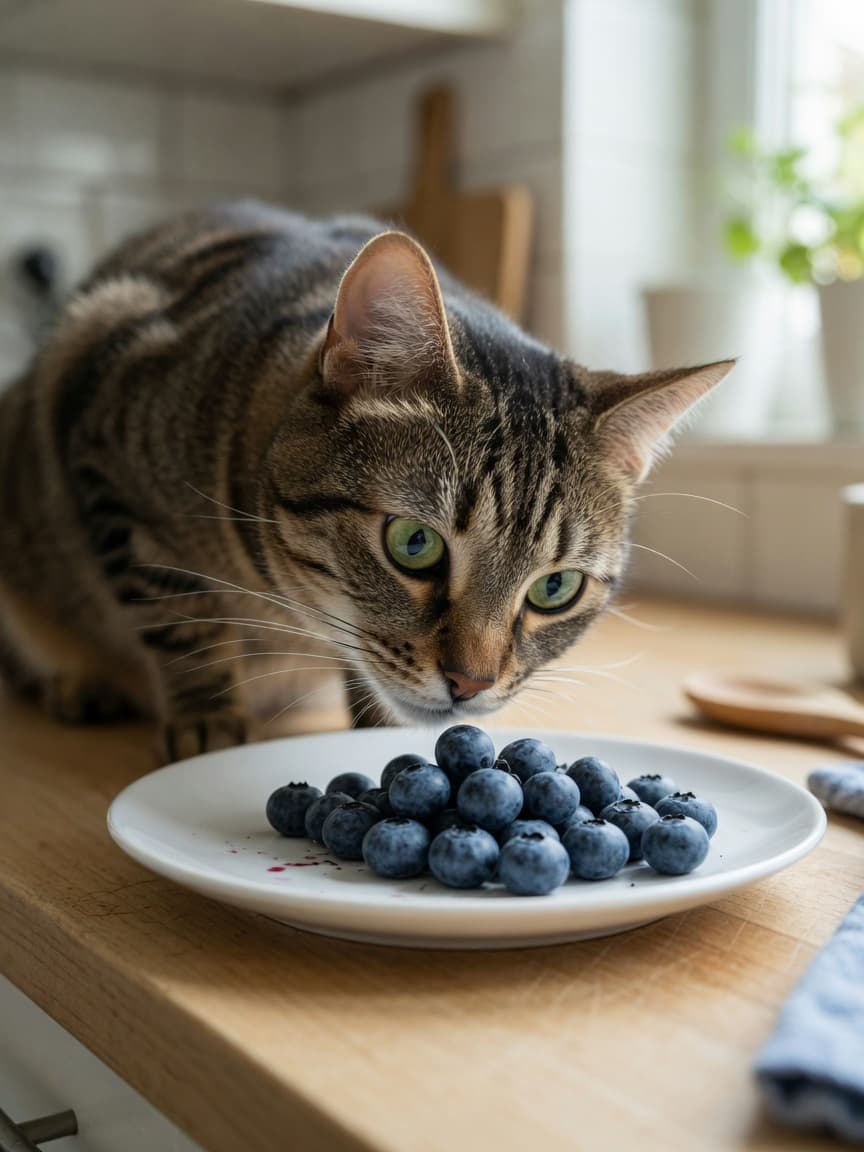
Blueberries and Cats: A Surprisingly Safe but Largely Pointless Pairing
Blueberries have earned a well-deserved reputation as a nutritional powerhouse for humans. Packed with antioxidants, vitamin C, fibre, and a range of phytonutrients linked to reduced inflammation and improved cognitive function, they are among the most studied functional foods in human nutrition. It is reasonable to wonder whether these benefits might extend to your cat. The answer involves a fundamental truth about feline biology that changes the entire picture.
Are Blueberries Safe for Cats?
Yes, blueberries are non-toxic to cats. They do not appear on any veterinary list of foods dangerous to felines, they contain no compounds known to cause organ damage, and they pose no choking hazard when offered appropriately — halved or quartered for smaller cats to reduce any risk of swallowing whole. Fresh and frozen blueberries (thawed) are both safe options. Dried blueberries are less ideal due to their concentrated sugar content and potential additives.
From a safety standpoint, blueberries are one of the more benign fruits you could offer a cat. However, safety and benefit are two different things, and with cats, the gap between them is unusually wide when it comes to fruit.
The Antioxidant Question
Blueberries contain high concentrations of anthocyanins, a class of polyphenol antioxidants responsible for their distinctive deep blue colour. In human health research, anthocyanins are associated with reduced oxidative stress, anti-inflammatory effects, cardiovascular protection, and potential neuroprotective properties. Some premium commercial cat foods include blueberries specifically to leverage their antioxidant content.
Here is where the biology becomes complicated. Antioxidant research in cats is less developed than in humans or even dogs, and the extent to which cats can absorb and utilise plant-based antioxidants from blueberries is not well established. Cats metabolise plant compounds differently from omnivores, and the bioavailability of anthocyanins specifically in the feline digestive system has not been rigorously quantified in the scientific literature.
It is plausible that some antioxidant benefit is transferred when cats consume blueberries, but the magnitude of that benefit — compared to the antioxidant content already present in high-quality commercial cat food — is likely modest at best. Blueberries are not going to meaningfully transform your cat's antioxidant status if they are already eating a nutritionally complete diet.
Cats Cannot Taste Sweetness
One of the defining features of blueberry flavour for humans is sweetness. The sugars in ripe blueberries, primarily glucose and fructose, contribute significantly to why we find them appealing. This dimension of flavour is simply invisible to cats.
As obligate carnivores, cats evolved with a pseudogenised Tas1r2 gene — the gene responsible for sweet taste perception. Research from the Monell Chemical Senses Centre confirmed that domestic cats lack functional sweet receptors entirely. When a cat sniffs a blueberry, they are processing scent information about organic compounds, moisture, and acidity. They are not experiencing sweetness in any form.
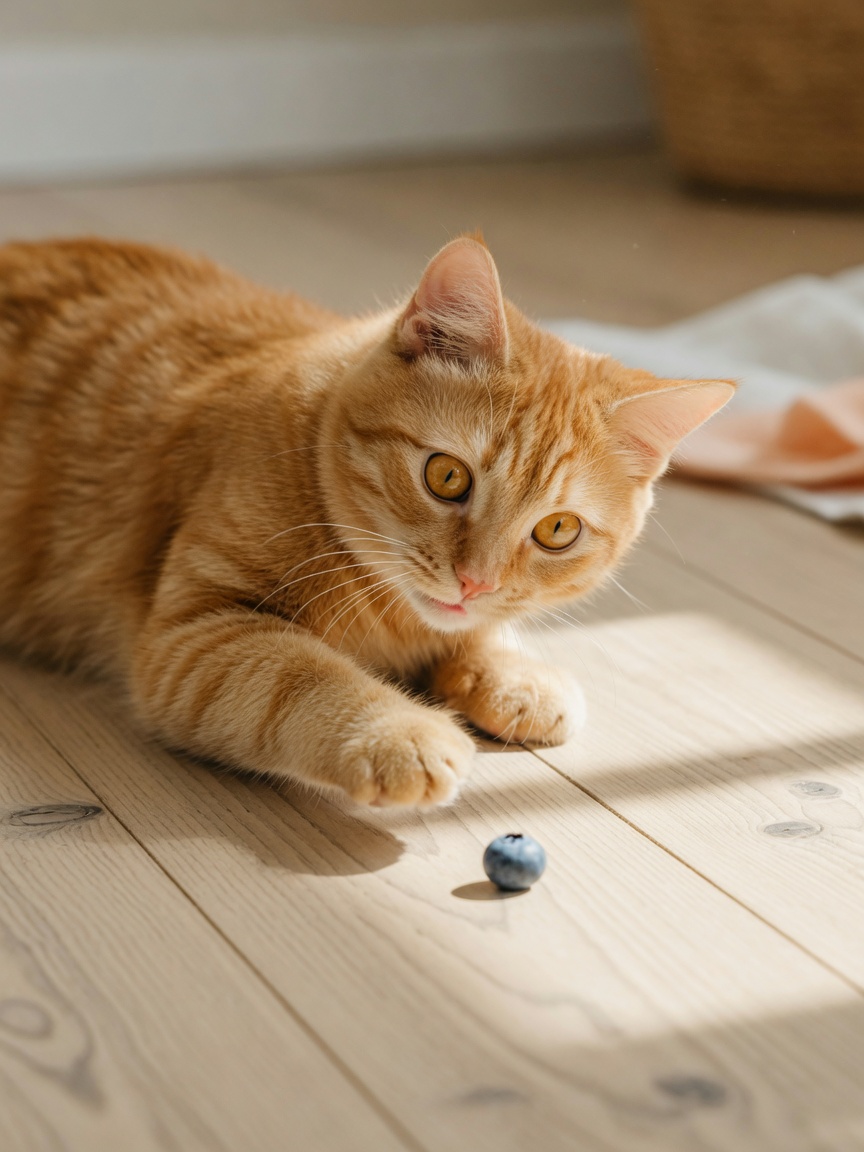
This explains why cat reactions to blueberries vary so dramatically. Some cats will bat them around as a toy, apparently entertained by their rolling behaviour. Some will sniff them and walk away. A small number will eat them, possibly responding to texture or acidic notes. None are responding to sweetness, which means the characteristic appeal that makes blueberries enjoyable for humans is entirely absent for cats.
Fibre Content and Digestive Considerations
Blueberries contain both soluble and insoluble fibre. For cats, dietary fibre plays a role in digestive health, though their requirements are quite different from those of omnivores. Cats naturally consume relatively little plant material, and their digestive tracts are shorter and more adapted for processing animal tissue quickly.
A few blueberries are unlikely to cause digestive upset in most healthy cats. In larger quantities, however, the fibre and natural sugar content can cause loose stools or gastrointestinal discomfort. As with any new food, introducing blueberries gradually and in small amounts allows you to monitor for any adverse digestive response.
Practical Guidance on Quantity
If your cat shows interest in blueberries and you want to offer them occasionally, two to three blueberries is a sensible upper limit per serving. They should be fresh and clean, and if your cat is small or prone to swallowing food quickly, halving them reduces any mechanical risk. Frequency of once or twice a week at most is appropriate if offered as a treat.
Blueberries should never replace any portion of a cat's regular diet. The sugars they contain, while natural, are not something cats require, and their digestive systems are not optimised to handle significant carbohydrate loads. A cat eating an appropriate meat-based diet has no nutritional gap that blueberries could meaningfully fill.
Which Cats Should Avoid Blueberries
Cats with diabetes or blood sugar regulation issues should avoid blueberries due to their natural sugar content. Even fructose and glucose from fruit can affect blood glucose levels in diabetic cats, and dietary management in diabetic felines is typically protein-focused with minimal carbohydrate input.
Cats with gastrointestinal conditions — including inflammatory bowel disease or chronic digestive sensitivity — may also find that even small amounts of fruit cause uncomfortable symptoms. For these cats, keeping the diet predictable and free from novel plant foods is generally advisable.
The Realistic Verdict
Blueberries are safe, harmless, and possessed of genuine nutritional attributes that may offer marginal benefit to cats when consumed occasionally. They are not a superfood transformation for feline health, and the antioxidants they provide are already well represented in quality commercial cat diets. Most cats will be indifferent to them, some will play with them, and a few will eat them without complaint. If your cat enjoys the occasional blueberry, there is no reason to prevent it. If your cat ignores them entirely, their instincts are probably telling them something sensible.