
When Sharing a Meal Becomes an Emergency
Cats are obligate carnivores with a metabolism fundamentally different from that of humans or even dogs. What functions as food for us can be genuinely poisonous to them. Yet cats are often exposed to human foods — through deliberate treats, counter-surfing, or unattended plates. Understanding which foods pose a risk, and why, helps cat owners make safer choices every day.
Alliums: Onions, Garlic, Leeks, and Chives
All members of the allium family are toxic to cats, and felines are considerably more sensitive than dogs. The culprit compounds are organosulphoxides, which are metabolised into reactive oxidants that damage red blood cells, leading to a condition called Heinz body anaemia. The cells become fragile, rupture, and are destroyed faster than the body can replace them.
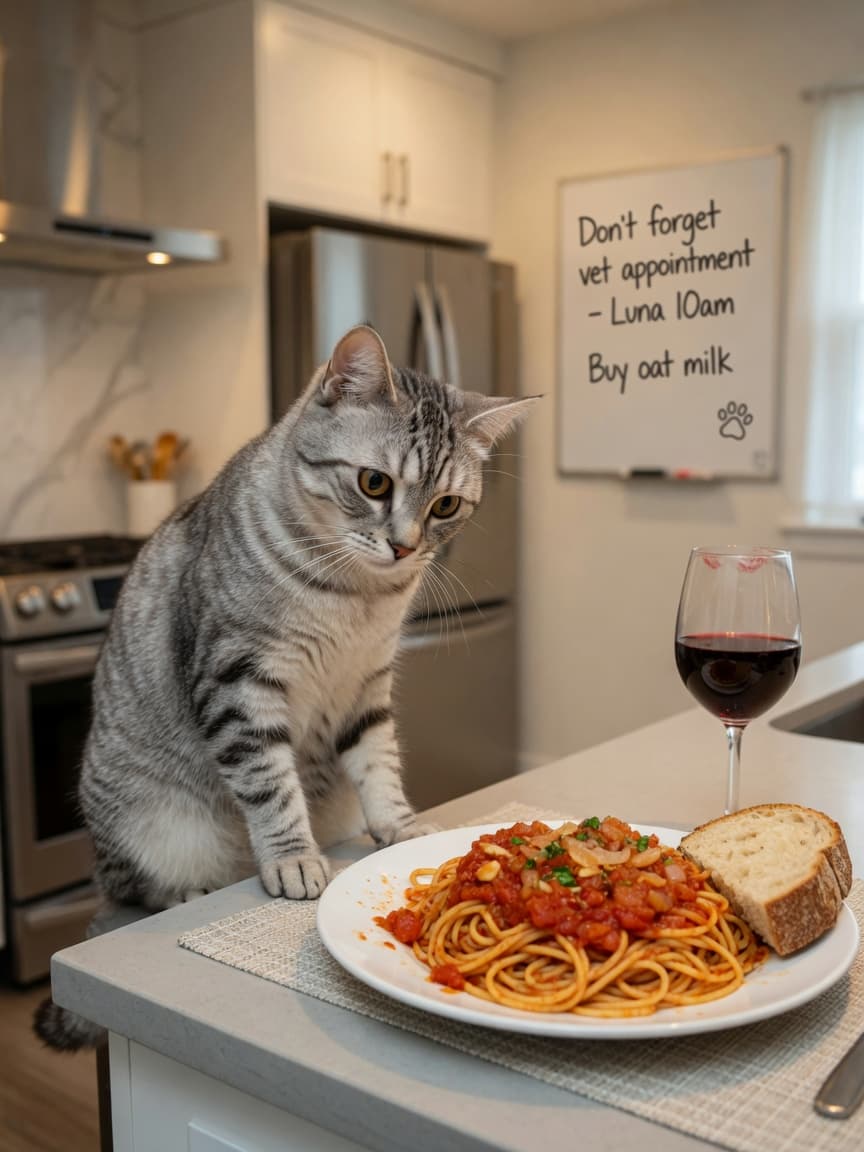
Critically, cooked forms are just as dangerous as raw. This means that soups, gravies, baby food (which frequently contains onion powder), and pasta sauces all carry risk. Even small, repeated exposures over time can accumulate to toxic levels. Symptoms — lethargy, pale or yellowish gums, reduced appetite, and rapid breathing — may not appear for several days after ingestion, by which point the anaemia can be severe.
Alcohol and Yeast Dough
Cats lack the enzyme systems to metabolise ethanol effectively, making even small quantities of alcohol disproportionately toxic. A teaspoon of spirits can cause significant central nervous system depression, respiratory difficulties, and dangerously low blood sugar in a small cat. This includes alcohol found in desserts, rum-soaked cakes, and mouthwash.
Uncooked yeast dough presents a dual hazard. In a warm stomach, the yeast continues to ferment, producing ethanol and carbon dioxide. This causes the dough to expand in the gastrointestinal tract, leading to bloating, pain, and potential obstruction — while the alcohol produced simultaneously causes systemic toxicity.
Caffeine and Xylitol
Caffeine
Coffee, tea, energy drinks, certain medications, and dark chocolate all contain methylxanthines, which are toxic to cats. Caffeine stimulates the central nervous and cardiovascular systems, causing restlessness, rapid heart rate, elevated blood pressure, tremors, and seizures. There is no antidote, and treatment is entirely supportive, making prevention essential.
Xylitol
Xylitol — a sugar substitute found in sugar-free gum, sweets, peanut butter, and some baked goods — is acutely dangerous to dogs and emerging evidence suggests cats are also at risk. In dogs, it triggers a severe insulin release causing hypoglycaemia. The precise mechanism in cats requires further research, but caution is warranted. Keep all xylitol-containing products inaccessible.
Grapes, Raisins, and Currants
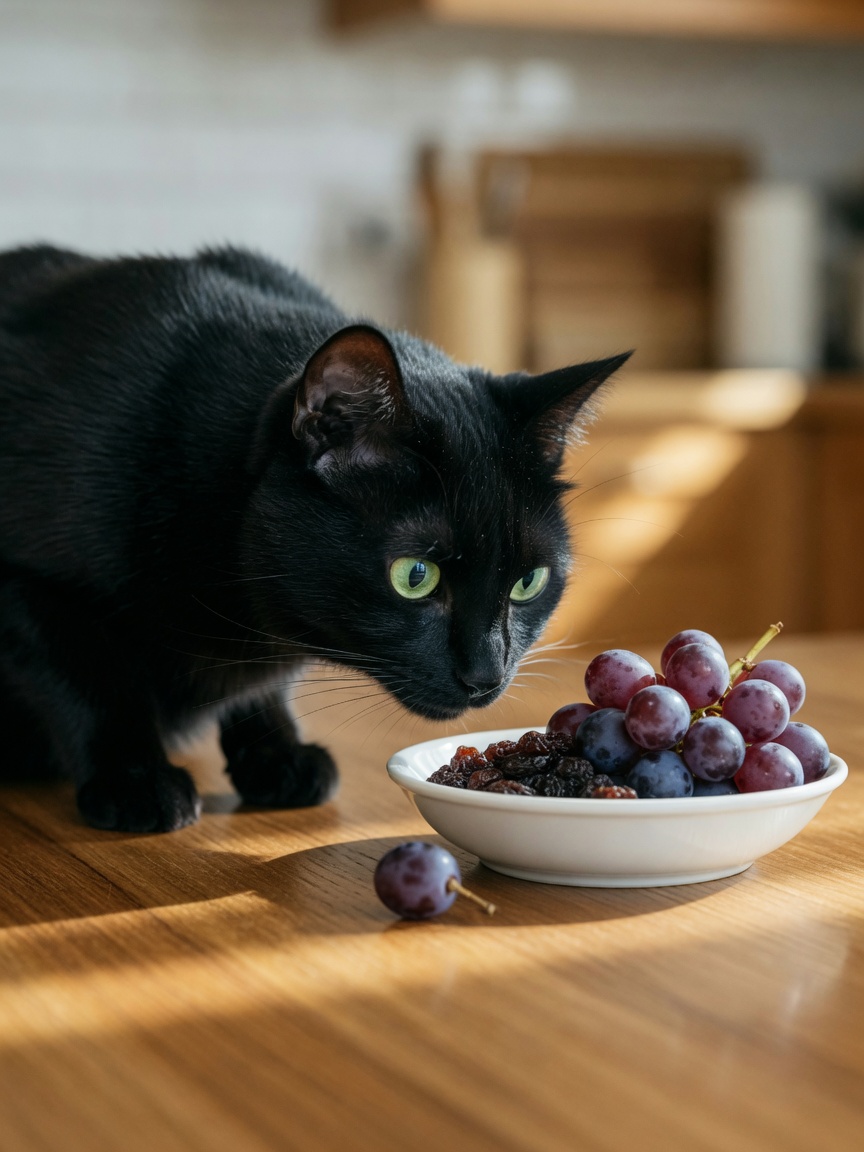
The exact toxic compound in grapes and their dried forms remains unidentified, which makes this danger particularly difficult to predict. What is established is that ingestion can lead to acute kidney failure in cats and dogs, and that toxicity does not appear to be dose-dependent — tiny amounts have caused serious harm in some animals while larger amounts have not in others. Given this unpredictability, grapes and all grape derivatives (including juice, wine, and raisins in baked goods) should be treated as strictly off-limits.
Dairy Products and Raw Proteins
Dairy
Despite cultural images of cats lapping milk, most adult cats are lactose-intolerant. They lack sufficient lactase to break down milk sugars, leading to bloating, diarrhoea, and abdominal discomfort. Occasional small amounts may be tolerated by individual cats, but dairy should not be a regular treat.
Raw Fish and Liver
Raw fish contains an enzyme called thiaminase, which destroys thiamine (vitamin B1). Chronic feeding of raw fish can lead to thiamine deficiency, causing neurological symptoms including loss of coordination, seizures, and dilated pupils. Excessive liver — whether raw or cooked — causes vitamin A toxicity, damaging bones and joints over time. These are relevant for owners who home-prepare cat food without proper nutritional balancing.
Practical Steps for a Safer Kitchen
- Secure all bins — cats will investigate food waste, including cooked onions and coffee grounds.
- Never leave unattended plates, glasses, or cups at cat height.
- Inform all household members and guests of what cats cannot eat.
- Read labels on any human food before offering it to your cat, paying attention to onion powder and xylitol.
- Avoid feeding titbits from your plate as a matter of routine.
- If your cat ingests any food listed here, contact your vet promptly rather than waiting for symptoms.
A cat that seems fine immediately after eating a toxic food may not remain so for long. If in doubt about any food, the safest course is always to consult a veterinarian before offering it, rather than after the fact.