
Bearded Dragon Care: Getting the Essentials Right
Bearded dragons have become one of the most popular reptile pets in the UK, and for good reason. They are generally handleable, active during the day, and have expressive behaviour that makes them engaging to watch. However, they are also animals with very precise environmental requirements, and getting those requirements wrong can lead to serious — and often preventable — health problems. This guide covers the fundamentals that every bearded dragon owner needs to understand.
UVB Lighting: The Single Most Important Factor
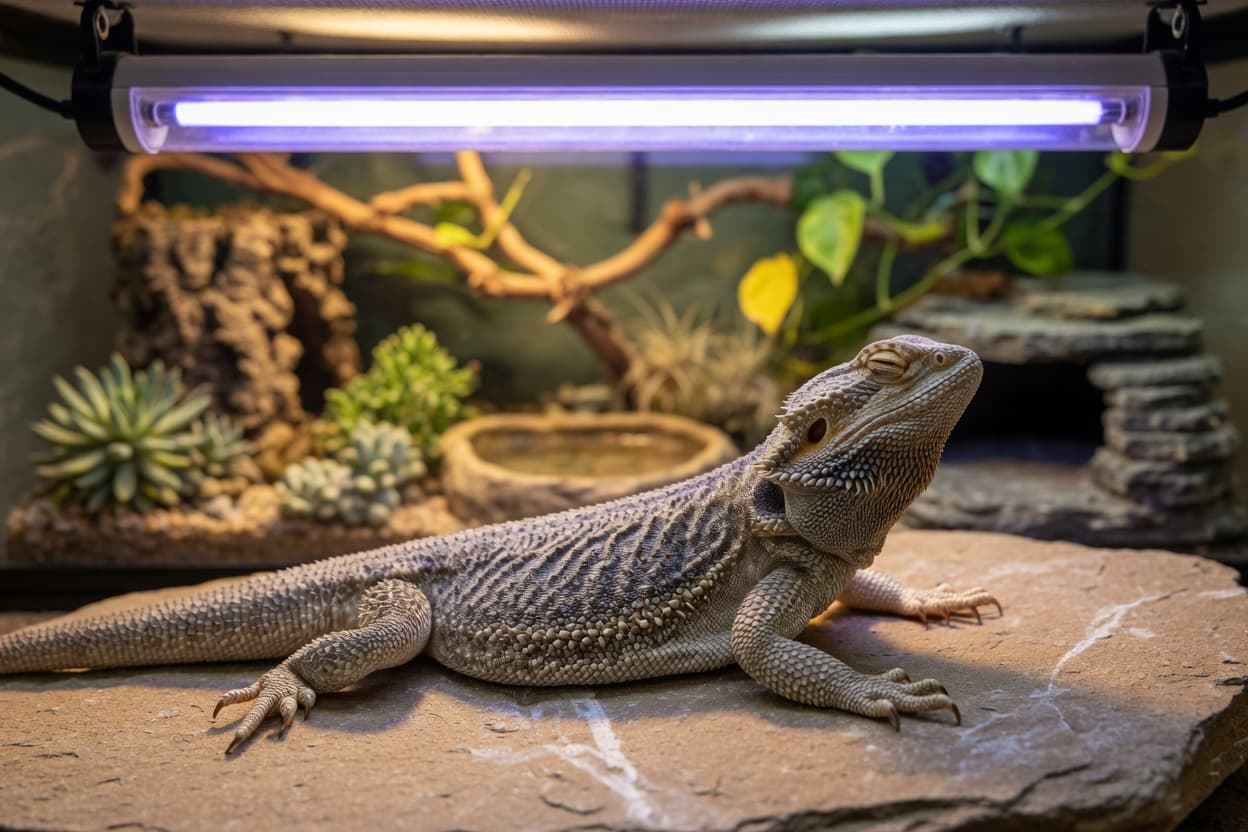
Bearded dragons come from the arid, open scrubland of Australia where they are exposed to intense ultraviolet radiation for many hours each day. In captivity, replicating this UV exposure is critical. UVB light enables reptiles to synthesise vitamin D3 in their skin, which in turn allows them to absorb and metabolise dietary calcium. Without adequate UVB, even a calcium-rich diet cannot be properly utilised.
The recommended UVB solution for bearded dragons housed in glass vivariums is the Arcadia 12% T5 HO tube. T5 tubes produce a higher output than the older T8 format and are far more effective at penetrating the height of a standard vivarium. The 12% output is appropriate for a desert species like the bearded dragon, which in its natural habitat experiences some of the highest UV indexes of any commonly kept reptile.
The UVB tube should span at least two thirds of the length of the vivarium. It must be placed within the manufacturer's recommended distance — typically 25 to 40cm from the basking area depending on whether a mesh lid is used, as mesh blocks a significant proportion of UV output. UVB tubes must be replaced every twelve months even if they still produce visible light, as the UV output degrades long before the tube stops glowing.
Temperature Gradient: Basking and Cool Side
Reptiles are ectothermic, meaning they rely on their environment to regulate their body temperature. This is why providing a proper temperature gradient in the vivarium is not a luxury — it is a physiological necessity. A bearded dragon must be able to move between warmer and cooler zones to thermoregulate effectively.
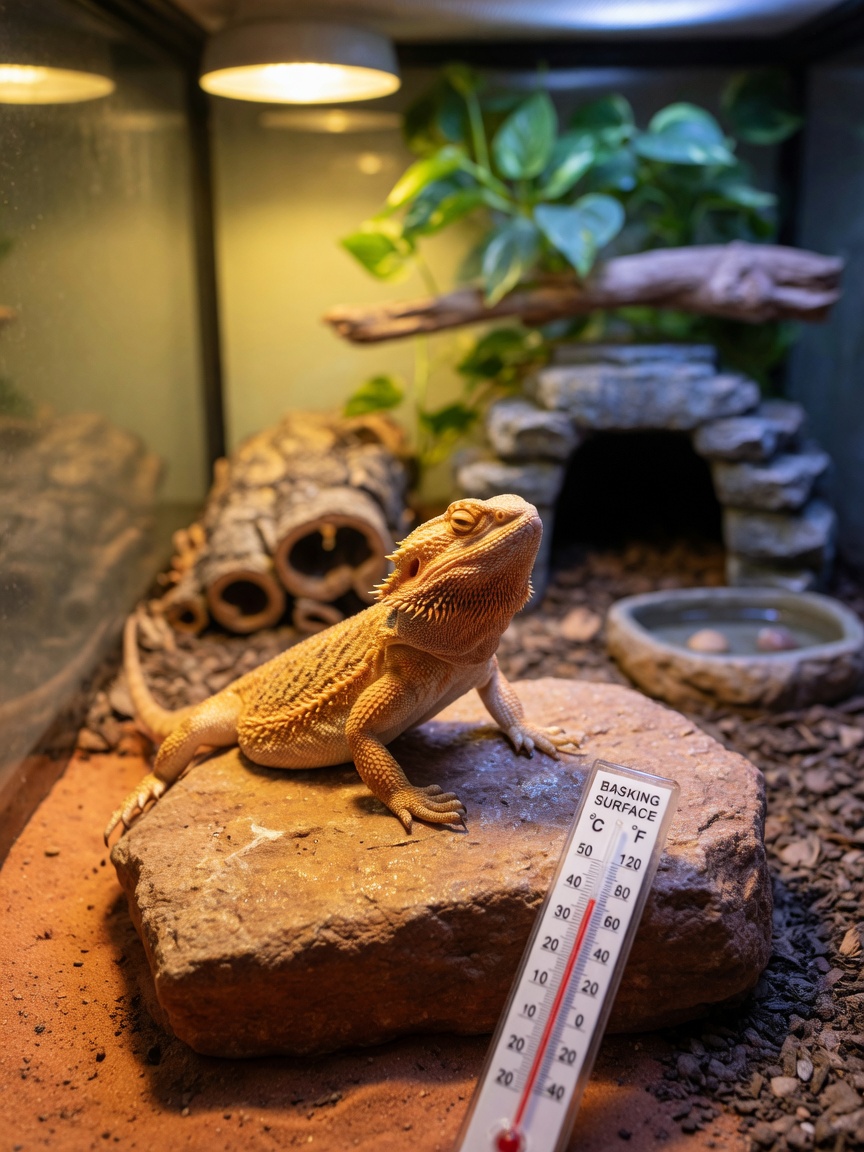
The basking spot, where the dragon will spend time absorbing heat to aid digestion and activity, should reach between 40 and 42 degrees Celsius. This temperature should be measured at the surface where the dragon actually sits, not at ambient air level. A halogen or ceramic bulb directed at a suitable flat basking rock or branch is the most effective way to achieve this.
The cool side of the vivarium should be maintained at between 26 and 28 degrees Celsius. At night, temperatures can be allowed to drop, but should not fall below approximately 18 degrees Celsius for adult dragons. Thermometers — ideally digital probe thermometers or temperature guns — should be used to verify temperatures rather than relying on estimates.
Feeding Juveniles vs Adults: Getting the Ratio Right
One of the most common mistakes new bearded dragon owners make is applying the same diet to juveniles and adults. The nutritional requirements change dramatically as dragons grow, and feeding the wrong ratio can impair development or lead to health problems.
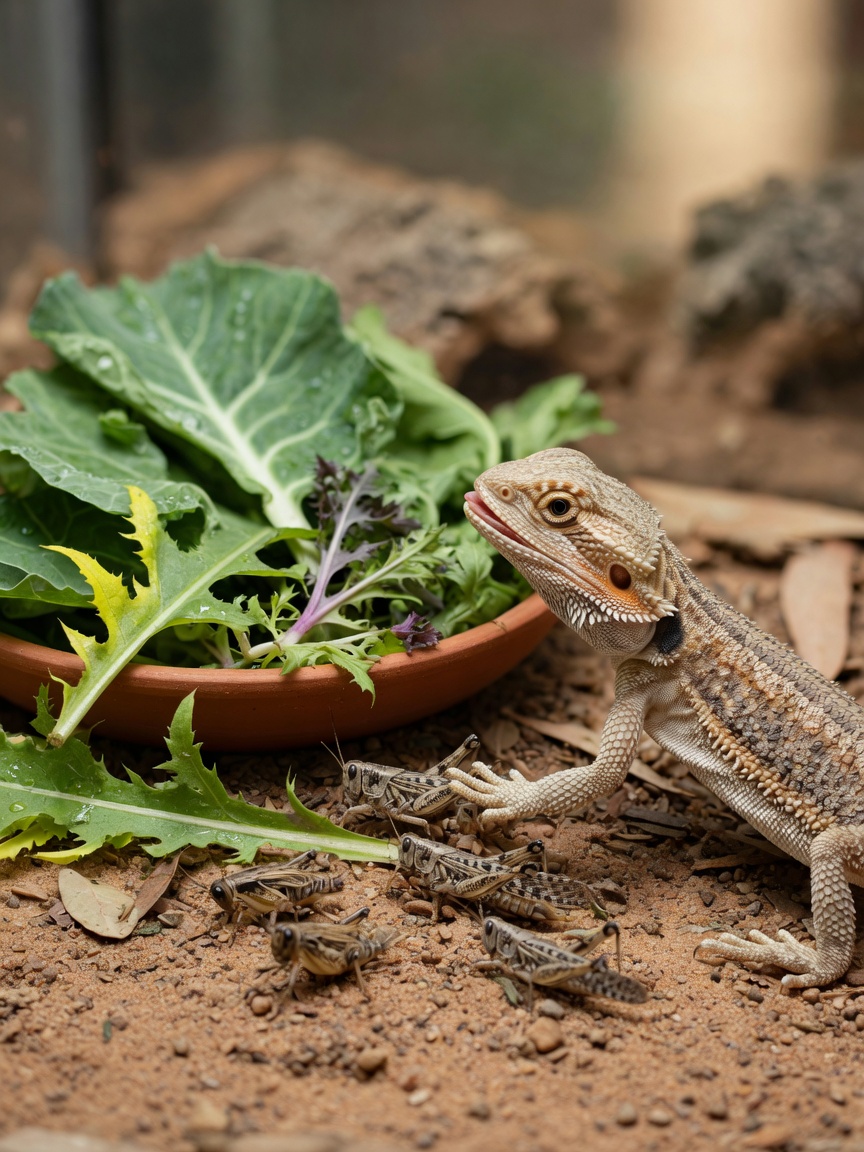
Juvenile bearded dragons, generally defined as those under twelve months of age, should receive approximately 70% of their diet as live insect prey, with the remaining 30% from leafy greens and vegetables. The high protein intake supports their rapid growth during this period. Suitable feeder insects include black soldier fly larvae (which have an excellent calcium to phosphorus ratio), locusts, and brown crickets. Waxworms and mealworms should only be used as occasional treats due to their high fat content.
As dragons mature into adulthood, this ratio should be gradually reversed. Adult bearded dragons should eat approximately 70% leafy greens and vegetables, with only around 30% coming from insect protein. Continuing to feed high volumes of insects to adult dragons can contribute to obesity and gout. Suitable leafy greens include collard greens, mustard greens, spring greens, rocket, and dandelion leaves. Spinach and kale should be fed in moderation only due to their oxalate and goitrogen content respectively.
Calcium Supplementation
Even with correct UVB lighting, dietary calcium supplementation remains important for bearded dragons. Calcium powder without added vitamin D3 should be dusted onto feeder insects approximately five times per week. The reason for avoiding D3 supplementation when UVB lighting is correctly provided is that over-supplementation of D3 can cause toxicity — the body can regulate synthesis from UVB naturally, but cannot regulate an excess from supplements in the same way.
A separate multivitamin supplement containing vitamin A, D3, and other nutrients can be given once or twice per week in addition to the calcium dusting. Feeder insects should also be gut-loaded — fed nutritious food for 24 to 48 hours before being offered to the dragon — to maximise their nutritional value.
Metabolic Bone Disease: The Consequence of Poor Husbandry
Metabolic bone disease, commonly abbreviated to MBD, is one of the most frequently seen conditions in pet bearded dragons, and it is almost entirely the result of incorrect husbandry. MBD occurs when a bearded dragon is chronically unable to absorb and use calcium properly — most often because of inadequate UVB lighting, insufficient dietary calcium, or both.
Early signs of MBD include:
- Tremors or twitching, particularly in the limbs
- Weakness and difficulty moving
- Soft or deformed jaw bones
- Curved or bowed limbs
- A general reluctance to bear weight
In advanced cases, the skeleton becomes so weakened that fractures can occur spontaneously. MBD in early stages can be treated with veterinary intervention, including calcium supplementation and improved husbandry. In severe cases, permanent deformity or death can result. This is a condition that is almost completely preventable with correct care from the start.
General Vivarium Setup and Enrichment
Adult bearded dragons require a vivarium of at least 120cm in length, with 150cm or more being preferable for larger individuals. The vivarium should contain a basking area, hides for the cool end, and appropriate substrate. Loose particulate substrates such as fine sand can be used safely for adult dragons when husbandry is correct, though reptile carpet or slate tiles are safer options for juveniles who may accidentally ingest substrate while feeding.
Bearded dragons are intelligent and benefit from environmental enrichment. Varying feeding locations, introducing new objects, and allowing supervised time outside the vivarium all contribute to a more stimulated and contented animal.
Regular veterinary check-ups with a reptile-experienced vet, combined with attentive daily observation, give bearded dragons the best chance of reaching their potential lifespan of ten to fifteen years in captivity.