
Guía de salud del Azul Ruso: problemas de vejiga, ansiedad y esperanza de vida
- Esperanza de vida: 15-20 años (una de las razas de gato doméstico más longevas)
- Peso: 3,5-6,5 kg
- Riesgos principales: FLUTD (enfermedad del tracto urinario inferior), enfermedades relacionadas con el estrés, obesidad, enfermedad dental
- Nota sobre el temperamento: tímido y sensible; el estrés es un factor determinante de la salud en esta raza
- Actualmente no se requiere ninguna prueba genética específica de la raza
El Azul Ruso es un gato de elegancia serena. Su pelaje doble y tupido de un azul grisáceo puro, combinado con unos ojos verdes intensos y una boca naturalmente curvada hacia arriba que dibuja una sutil sonrisa perpetua, lo convierte en una de las razas más bellas del mundo. Son gatos dulces, observadores y profundamente leales a las personas que eligen, y a menudo se vinculan de forma intensa con un único miembro del hogar. También son famosos por su timidez con los desconocidos, su cautela ante los cambios y la facilidad con la que se alteran por las alteraciones del entorno. Esta sensibilidad, tan característica de la personalidad del Azul Ruso, es además uno de los factores más importantes que determinan su salud. Comprender cómo se relaciona el estrés con la enfermedad física en los Azules Rusos es tan importante como conocer cualquier afección hereditaria concreta.
Enfermedad del tracto urinario inferior felino (FLUTD) y cálculos en la vejiga
La enfermedad del tracto urinario inferior felino es un término paraguas que engloba varias afecciones que afectan a la vejiga y la uretra de los gatos: cistitis idiopática (inflamación sin infección), cálculos vesicales (urolitos), tapones uretrales y, en los machos, obstrucción uretral, que constituye una urgencia potencialmente mortal. Los Azules Rusos parecen tener un riesgo elevado de FLUTD, en particular de cistitis idiopática inducida por el estrés (también llamada cistitis idiopática felina o FIC).
La FIC provoca esfuerzos repentinos para orinar, visitas frecuentes al arenero con producción de poca o ninguna orina, sangre en la orina (hematuria) y vocalizaciones durante la micción debido al dolor. En los machos, la obstrucción uretral completa puede desarrollarse rápidamente y resulta mortal sin una intervención veterinaria de urgencia: un gato macho que no ha producido orina en 12-24 horas se encuentra en una situación de urgencia médica. Si ves a un Azul Ruso macho haciendo esfuerzos repetidos sin llegar a orinar, acude inmediatamente a un veterinario de urgencias.
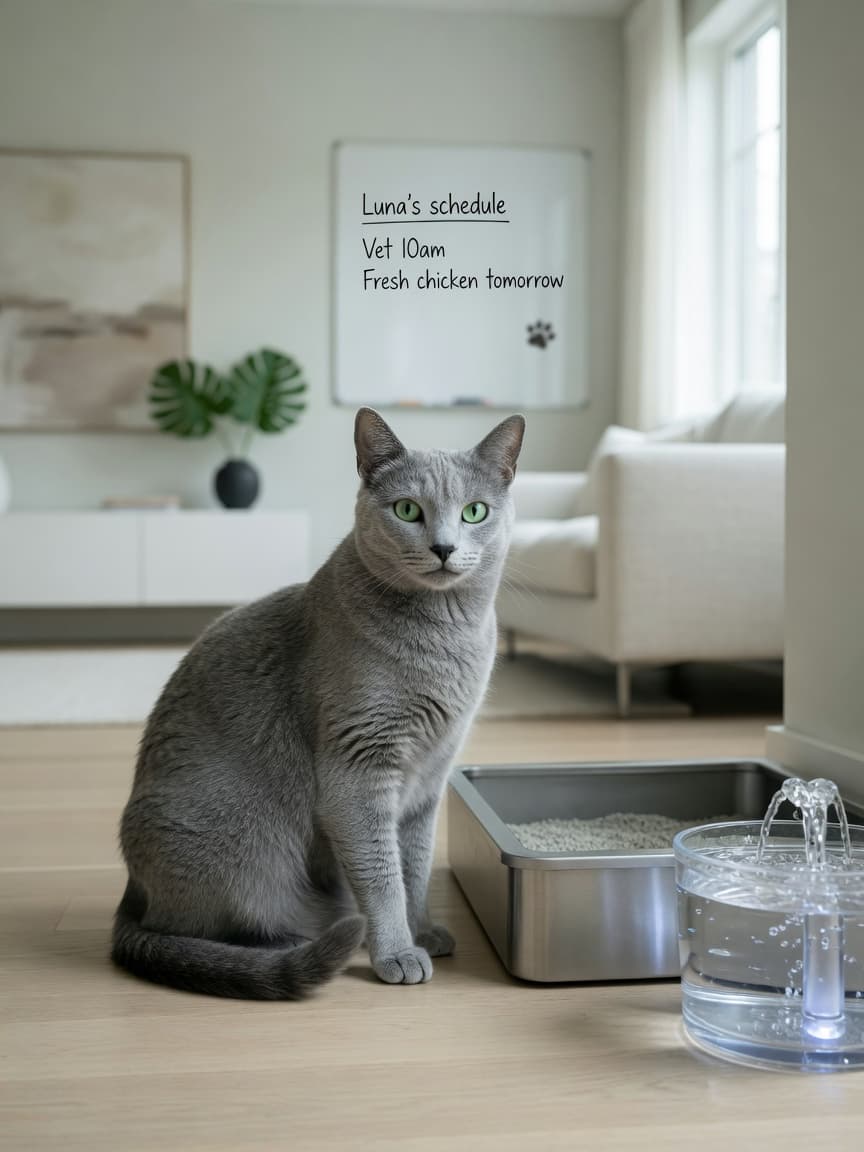
Los cálculos vesicales (con mayor frecuencia cristales de estruvita u oxalato de calcio) pueden aparecer de forma secundaria a un desequilibrio dietético, una baja ingesta de agua y alteraciones del pH urinario. El tratamiento depende del tipo de cálculo: los cálculos de estruvita a menudo pueden disolverse con dietas urinarias de disolución de prescripción; los de oxalato de calcio requieren extracción quirúrgica o con láser. La prevención incluye una dieta con alto contenido en humedad (comida húmeda o cruda), ofrecer varias fuentes de agua fresca —incluidas fuentes para gatos— y mantener un entorno con poco estrés.
Cuida la salud urinaria de tu Azul Ruso con una nutrición recomendada por veterinarios. Compra comida para gatos para la salud urinaria en Zooplus →
Estrés y ansiedad: la vulnerabilidad oculta del Azul Ruso
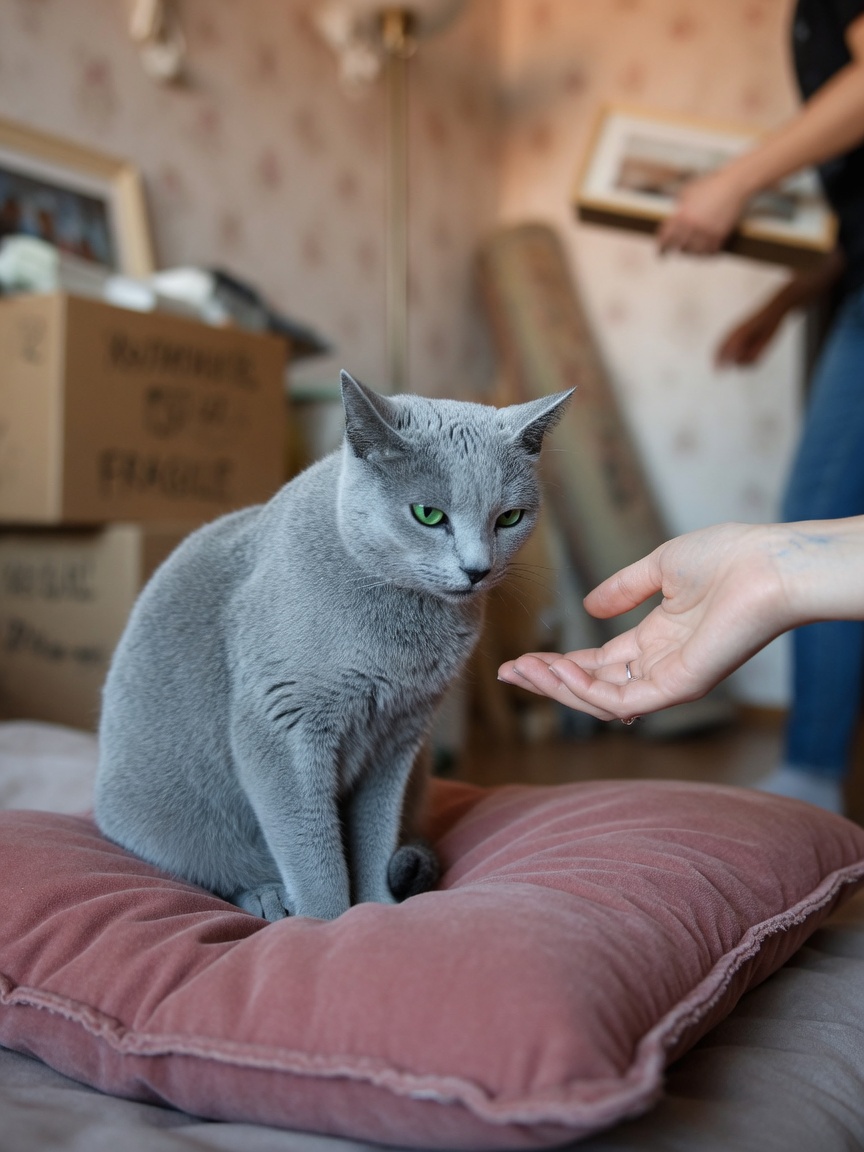
La relación entre el estrés y la enfermedad física en los gatos está bien establecida, y en ninguna raza resulta más relevante desde el punto de vista clínico que en el Azul Ruso. Estos gatos son extremadamente sensibles a los cambios del entorno. Una mudanza, la llegada de una nueva mascota o persona, cambios en los horarios del dueño, ruido de obras, un mueble nuevo: cualquiera de estas situaciones puede desencadenar en un Azul Ruso una respuesta de estrés que se manifiesta con síntomas físicos: episodios de FLUTD, diarrea, vómitos, disminución del apetito y, en casos crónicos, inmunosupresión que deja al gato vulnerable a las infecciones.
Los Azules Rusos también son propensos al apego excesivo: pueden desarrollar una auténtica ansiedad por separación cuando se separan de su persona de referencia. Entre los signos se incluyen vocalizaciones cuando el dueño se va, conductas destructivas, eliminación fuera del arenero y acicalamiento por estrés. Estos gatos prosperan con rutinas predecibles, entornos tranquilos y una presencia humana constante.
Las modificaciones ambientales para el manejo del estrés incluyen: mantener una rutina diaria constante de alimentación y juego; ofrecer espacios verticales de refugio (árboles para gatos, estanterías altas) desde donde el gato pueda observar el hogar con seguridad; utilizar difusores de feromonas como Feliway en las zonas donde el gato pasa más tiempo; e introducir cualquier cambio (nuevas mascotas, muebles nuevos, visitas) de forma gradual y con refuerzo positivo.
Algunos dueños de Azules Rusos han incorporado el aceite de CBD Candid Tails —formulado específicamente para gatos— como parte de un enfoque más amplio de manejo del estrés, especialmente durante acontecimientos estresantes inevitables como una mudanza, las visitas al veterinario o la llegada de un nuevo miembro al hogar. El CBD nunca debe sustituir la atención veterinaria ni la modificación del entorno, y siempre debes consultar con tu veterinario antes de empezar con cualquier suplemento, sobre todo en un gato ya propenso a la FLUTD, ya que el estado de salud general importa al elegir apoyos adicionales.
Riesgo de obesidad
Los Azules Rusos tienen buen apetito y un estilo de vida de interior algo sedentario, lo que convierte la obesidad en un riesgo real en la raza, especialmente en los ejemplares esterilizados. Un Azul Ruso con sobrepeso tiene mayor riesgo de diabetes mellitus, problemas articulares y empeoramiento de la enfermedad urinaria. Ofrécele raciones medidas de una dieta rica en proteínas y en humedad, adecuada a la etapa vital y al nivel de actividad del gato. Los juguetes interactivos y los comederos de tipo puzle ayudan a mantener una actividad saludable sin que el gato tenga que abandonar la comodidad de su entorno doméstico seguro.
Enfermedad dental
Como en la mayoría de las razas de gato doméstico, la enfermedad periodontal es frecuente en los Azules Rusos. Su carácter generalmente tranquilo y poco dado a la confrontación hace que el dolor dental pueda pasar desapercibido durante largos periodos: estos gatos tienden a seguir comiendo incluso con molestias orales importantes, lo que enmascara el problema. Se recomienda una higiene dental regular en casa (cepillado o aplicación de gel dental) y limpiezas profesionales anuales desde una edad temprana.
Esperanza de vida: una de las razas más longevas
El Azul Ruso es una de las razas de gato doméstico más longevas, con ejemplares que alcanzan habitualmente los 15-18 años y algunos que llegan a los 20 o más. Esta longevidad hace imprescindible planificar de forma proactiva los cuidados geriátricos: revisiones veterinarias dos veces al año a partir de los 10 años, analíticas sanguíneas periódicas para controlar la función renal y tiroidea, y atención continuada al estrés y a la salud dental durante toda la etapa senior.
Puntos clave
- La FLUTD —especialmente la cistitis inducida por el estrés— es el riesgo de salud clínicamente más relevante en los Azules Rusos; una dieta con alto contenido en humedad y la reducción del estrés son medidas preventivas esenciales.
- Los Azules Rusos macho que hacen esfuerzos para orinar sin producir orina necesitan atención veterinaria de urgencia de inmediato.
- El estrés es un factor determinante de la salud física en esta raza: la rutina, la tranquilidad y la estabilidad del entorno son tan importantes como la nutrición.
- Los Azules Rusos están entre las razas domésticas más longevas: las revisiones geriátricas dos veces al año a partir de los 10 años protegen esta larga esperanza de vida.
- El control de la obesidad mediante raciones medidas y enriquecimiento reduce el riesgo de diabetes y de enfermedad urinaria.
Referencias
- Buffington CA, Westropp JL, Chew DJ (2006). Idiopathic cystitis in domestic cats — beyond the lower urinary tract. Journal of Veterinary Internal Medicine. PMID: 16584194
- Cameron ME, et al. (2004). A study of environmental and behavioural factors that may be associated with feline idiopathic cystitis. Journal of Small Animal Practice. PMID: 15511088