
Dog Separation Anxiety: Causes, Signs & Treatment That Works
By Julia Wrenfield, Pet Wellness Researcher — June 25, 2026
- Affects: Estimated 14–20% of pet dogs (ASPCA data)
- Core issue: Genuine panic response to being alone — not spite or disobedience
- Gold standard treatment: Systematic desensitization protocol
- Medications: FDA-approved options exist; most effective combined with behavior modification
- Natural support: CBD supplements (THC-free, consult vet first) may help mild-moderate cases
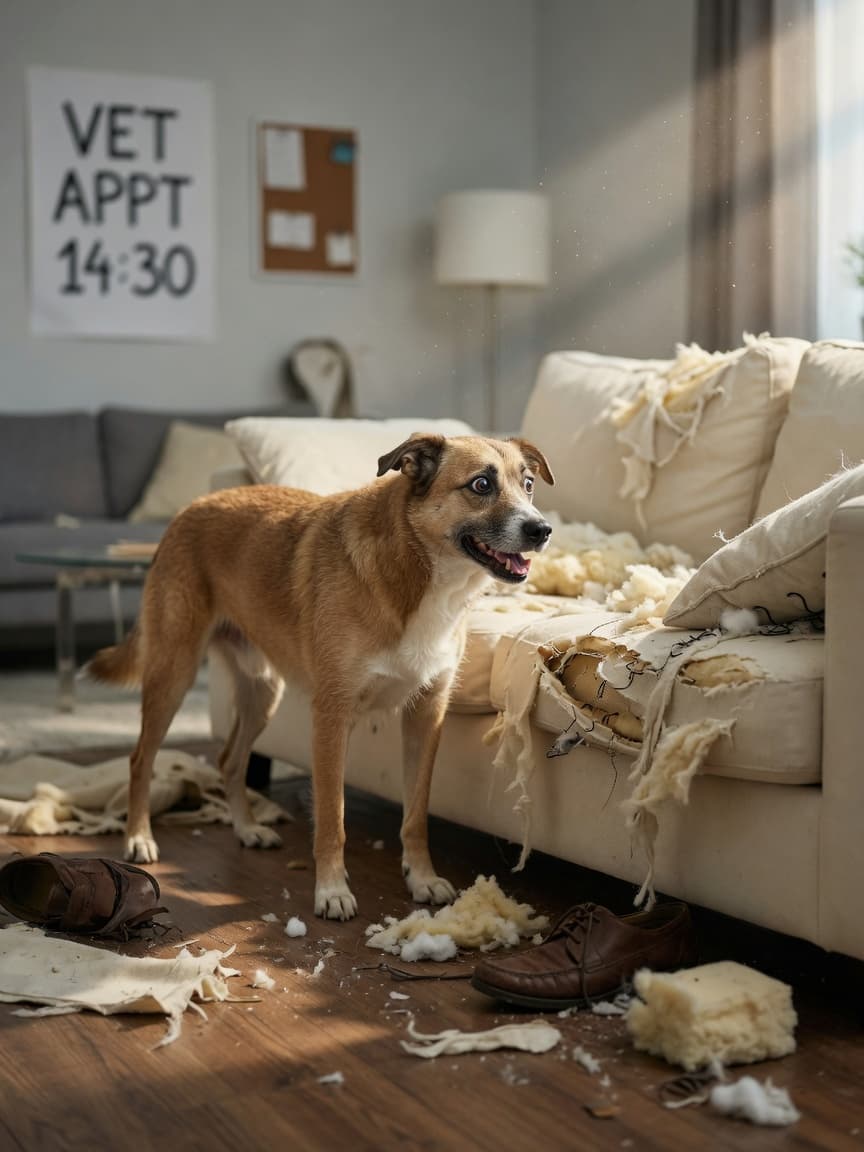
Few things are more heartbreaking — or more frustrating — than coming home to a destroyed house, complaints from neighbors about howling, and a dog that seems impossible to leave alone. Separation anxiety is widely misunderstood. It is not your dog being naughty. It is a genuine panic disorder, and treating it like disobedience makes it dramatically worse. This guide covers what separation anxiety really is, how to recognize it accurately, and the evidence-based treatment approaches that actually work.
What Separation Anxiety Actually Is
Separation anxiety (SA) is a condition in which a dog becomes acutely distressed when separated from their primary attachment figure — usually one specific person. The distress begins during pre-departure cues (picking up keys, putting on shoes) and peaks within 30 minutes of the person leaving. It is driven by the same neurological mechanisms as panic disorder in humans: elevated cortisol, activation of the sympathetic nervous system, and genuine inability to self-regulate.
SA is distinct from "isolation distress" (distress at being alone regardless of who is present) and from dogs who are simply bored or destructive for other reasons. Getting the diagnosis right matters enormously for treatment.
How to Know If Your Dog Really Has SA: Film Them
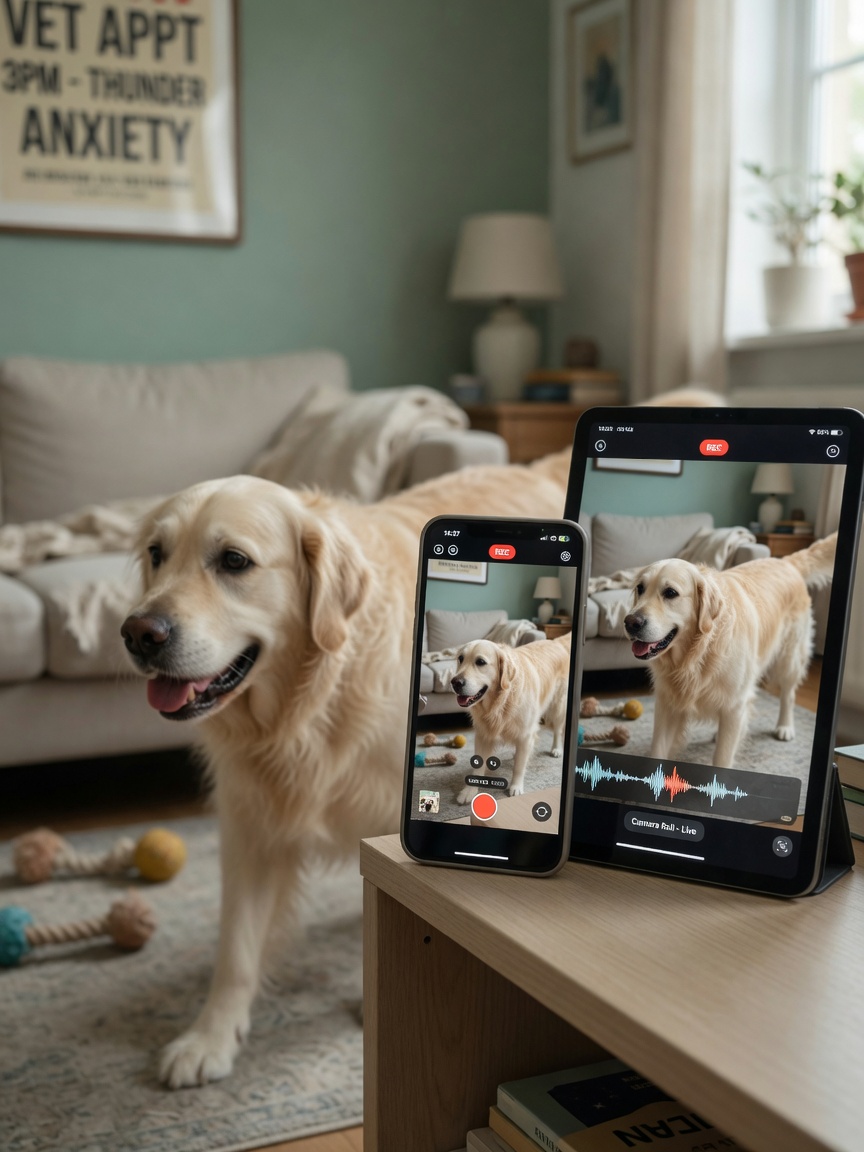
The single most useful diagnostic tool is a camera. Set up a phone or tablet to record your dog after you leave. Signs of genuine separation anxiety include:
- Persistent, distressed vocalization (howling, whining) within minutes of departure
- Inability to settle — pacing, circling, trembling
- Destructive behavior focused on exit points (doors, windows)
- Elimination indoors despite being fully house-trained
- Self-injurious behavior in severe cases (chewing paws, rubbing muzzle raw)
- Excessive salivation and panting visible in the recording
A dog who settles down within 10–15 minutes and relaxes or naps does not have true SA. A dog showing the above for the entire absence likely does.
The Severity Spectrum
| Severity | Signs | Typical Duration Before Settling |
|---|---|---|
| Mild | Whining, some restlessness, minor destruction | 15–30 minutes |
| Moderate | Persistent vocalization, more significant destruction, won't eat | 30–60+ minutes |
| Severe | Continuous distress, escape attempts, self-injury, elimination | Does not settle; distress throughout absence |
The Systematic Desensitization Protocol
This is the most evidence-based behavioral treatment for SA. The core principle: the dog must never be left alone beyond their current threshold (the point where anxiety begins) while treatment is underway. Every panic episode reinforces the anxiety pathway; every calm alone-time experience builds tolerance.
Phase 1: Pre-Departure Desensitization
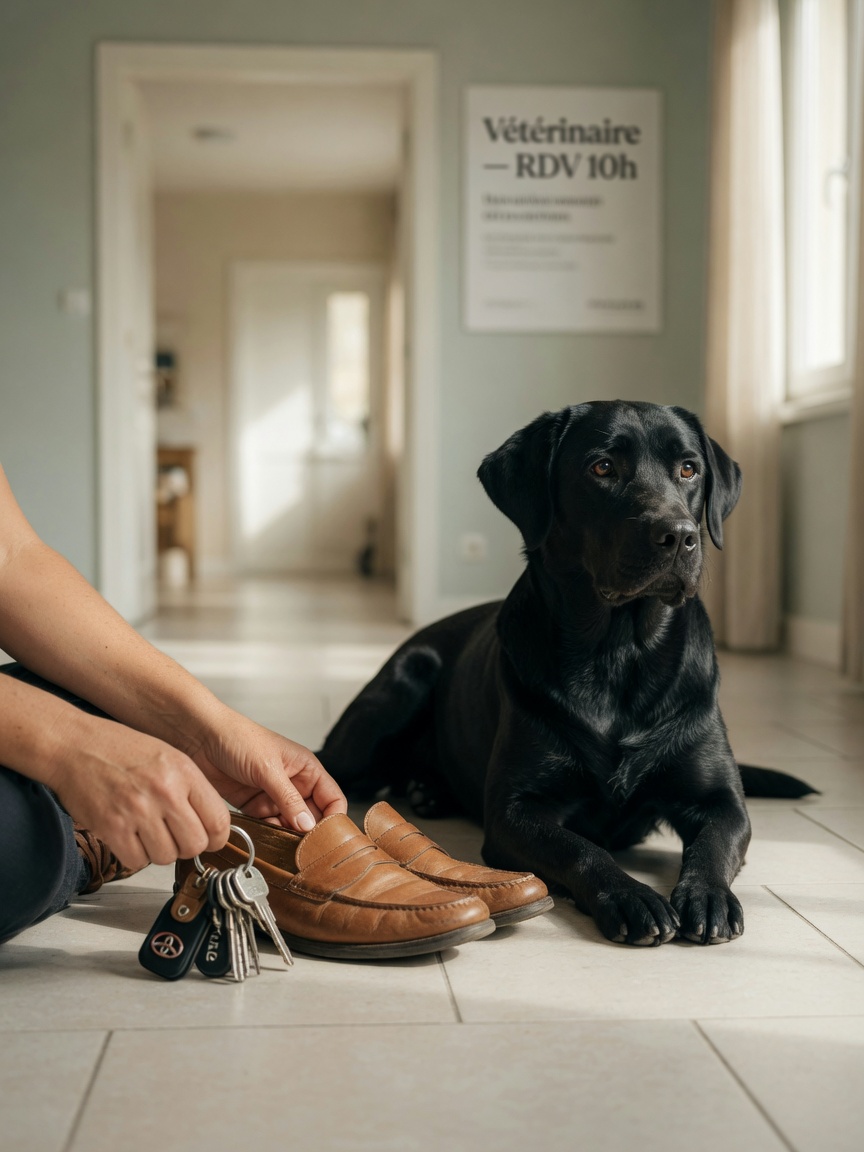
Many SA dogs begin panicking before you leave, triggered by departure cues. Desensitize these cues by performing them randomly throughout the day without leaving. Pick up your keys, put them down. Put on your shoes, take them off. This breaks the predictive association.
Phase 2: Building Alone-Time Tolerance
Start absences at a duration shorter than the dog's threshold — often just seconds. Step outside for 3 seconds, come back calmly. No big reunions. Gradually extend in tiny increments. This is not intuitive — progress is measured in seconds and minutes over weeks, not hours. Rushing is the most common mistake and sets treatment back significantly.
Phase 3: Randomized Duration Practice
Once the dog tolerates, say, 15 minutes, do not only practice 15-minute absences. Randomize: 2 minutes, 12 minutes, 8 minutes, 15 minutes. This prevents the dog from "counting down" and builds generalized tolerance.
During treatment, arrange for the dog to be with someone (dog sitter, daycare, partner working from home) for any absence beyond their current threshold. The dog cannot practice panicking.
Medications as Adjunct Treatment
For moderate to severe SA, behavior modification alone is often insufficient. Two medications have FDA approval specifically for canine separation anxiety:
- Fluoxetine (Reconcile) — an SSRI taken daily; takes 4–6 weeks to reach full effect. Most effective when combined with behavior modification.
- Clomipramine (Clomicalm) — a tricyclic antidepressant; also taken daily, also requires 4–6 weeks for full effect.
A veterinarian may also prescribe a fast-acting anxiolytic (such as trazodone or alprazolam) for specific high-stress events while longer-acting medications build up. Medication is not a crutch — for severe SA it is often necessary to even make the dog trainable, as a dog in full panic cannot learn.
Natural Calming Support: CBD Supplements
For mild-to-moderate separation anxiety, or as a complement to other treatments, many owners explore CBD (cannabidiol) supplements. A 2019 study in Frontiers in Veterinary Science found that CBD oil reduced anxiety scores in dogs during stressful events. While research is still developing, early findings are promising.
If you choose to explore CBD, always consult your veterinarian first, and use only a THC-free product specifically formulated for dogs. HolistaPet offers a well-regarded range of THC-free CBD products for dogs, including oils and calming chews designed for situational stress and ongoing anxiety management. Their products are third-party tested for purity and potency.
What Doesn't Work (and Makes Things Worse)
- Punishment — punishing a dog for destruction or elimination done hours ago is ineffective; punishing a panicking dog adds trauma.
- Getting another dog — SA is about the attachment to a person, not loneliness. A second dog rarely solves it.
- Ignoring the dog more at home — outdated advice with no evidence base; does not reduce SA.
- Flooding — locking the dog alone and waiting for them to "get over it" causes trauma and worsens anxiety.
When to Consult a Certified Behaviorist
Severe SA, SA with aggression, or cases where significant lifestyle disruption is occurring warrant a consultation with a veterinary behaviorist (DACVB) or a certified separation anxiety trainer (CSAT). These professionals have specific training in SA protocols and can design a plan tailored to your dog's exact threshold profile.
- Film your dog after you leave — video is the only reliable way to confirm SA vs. other problems.
- Systematic desensitization builds alone-time tolerance in tiny increments; rushing causes regression.
- During treatment, the dog must never experience a panic episode — arrange coverage for all absences.
- FDA-approved medications (fluoxetine, clomipramine) are valuable adjuncts for moderate-severe SA.
- THC-free CBD supplements may provide mild calming support — always consult your vet first.
References
- Flannigan G, Dodman NH. (2001). Risk factors and behaviors associated with separation anxiety in dogs. Journal of the American Veterinary Medical Association, 219(4), 460–466. PMID: 11521748
- Kogan LR, Hellyer PW, Robinson NG. (2019). Consumers' perceptions of hemp products for animals. Journal of the American Holistic Veterinary Medical Association, 52, 40–48.
- Ogata N. (2016). Separation anxiety in dogs: What progress has been made in our understanding of the most common behavioral problems in dogs? Journal of Veterinary Behavior, 16, 28–35.