
Best Cat Food for Urinary Health: What to Look For
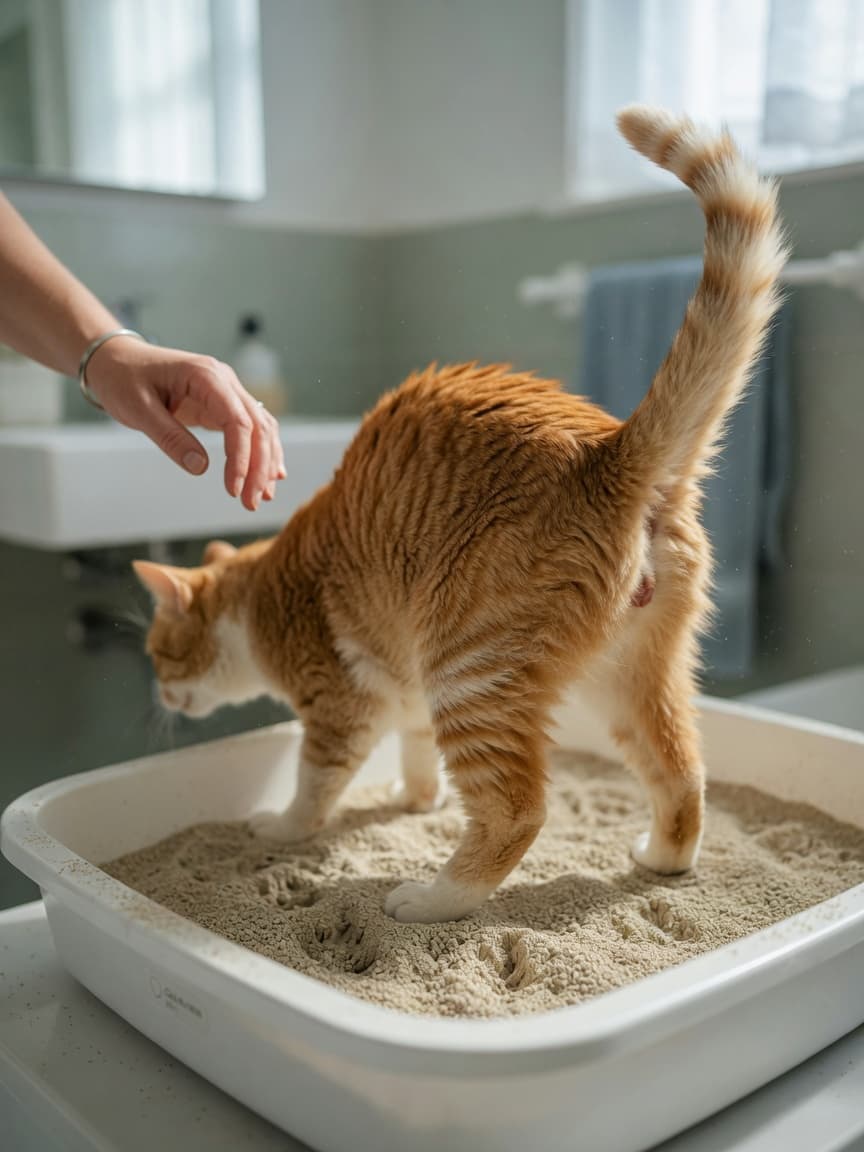
A cat straining in the litter box, visiting it repeatedly with little result, or crying while attempting to urinate is a cat in distress — and potentially in danger. Urinary problems are among the most common health issues in domestic cats, and what a cat eats has a direct, measurable impact on urinary tract health. Understanding the relationship between nutrition and feline urinary disease can help owners make informed choices before a crisis occurs.
Understanding Feline Lower Urinary Tract Disease (FLUTD)
FLUTD is an umbrella term that covers several conditions affecting the bladder and urethra: crystal formation (urolithiasis), inflammation without infection (idiopathic cystitis), urinary tract infections, and — in male cats — life-threatening urethral blockages. The most common form, accounting for roughly 55–65% of cases, is idiopathic cystitis, where no underlying physical cause can be found and stress is considered a major trigger.
Crystal-related disease accounts for a significant portion of the remainder. Two crystal types dominate feline urinary cases, and they require opposite dietary approaches — which is why knowing which type your cat has is critical before selecting a urinary diet.
Struvite vs. Oxalate Crystals: Why It Matters
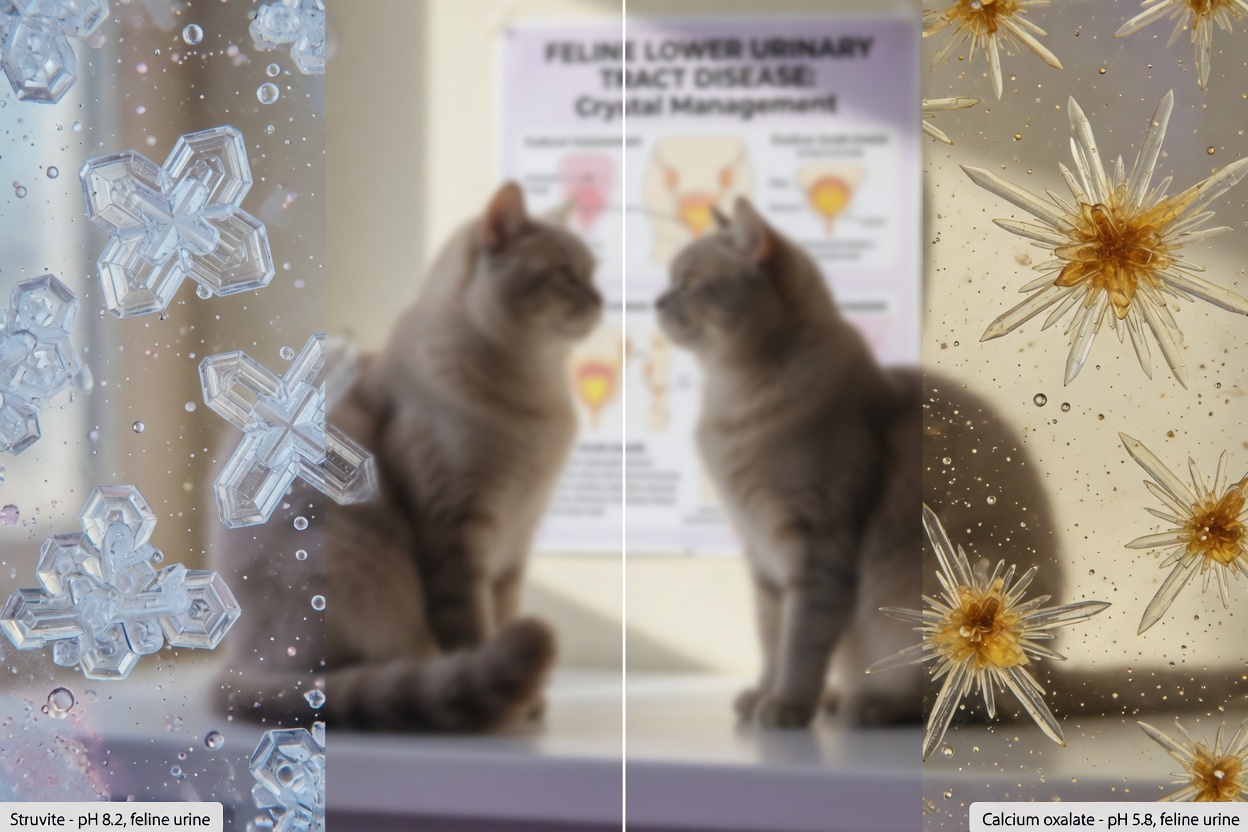
Struvite crystals (magnesium ammonium phosphate) form in alkaline urine (pH above 6.8). They are more common in younger cats, female cats, and cats eating diets high in magnesium and phosphorus. The good news: struvite is the more diet-responsive crystal type — acidifying the urine to a pH of 6.0–6.5 and reducing dietary magnesium dissolves struvite crystals and prevents their recurrence.
Calcium oxalate crystals form in acidic urine (pH below 6.0) and are more common in older cats, male cats, and certain breeds including Persians, Himalayans, and Scottish Folds. These crystals cannot be dissolved with diet — they must be surgically removed if they form stones. Management is focused on diluting urine and keeping pH in a neutral range (6.4–6.6) to prevent new crystal growth. Oxalate risk increases with excessive dietary calcium, vitamin C supplementation, and restricted water intake.
The Role of Moisture: Wet Food vs. Dry Food
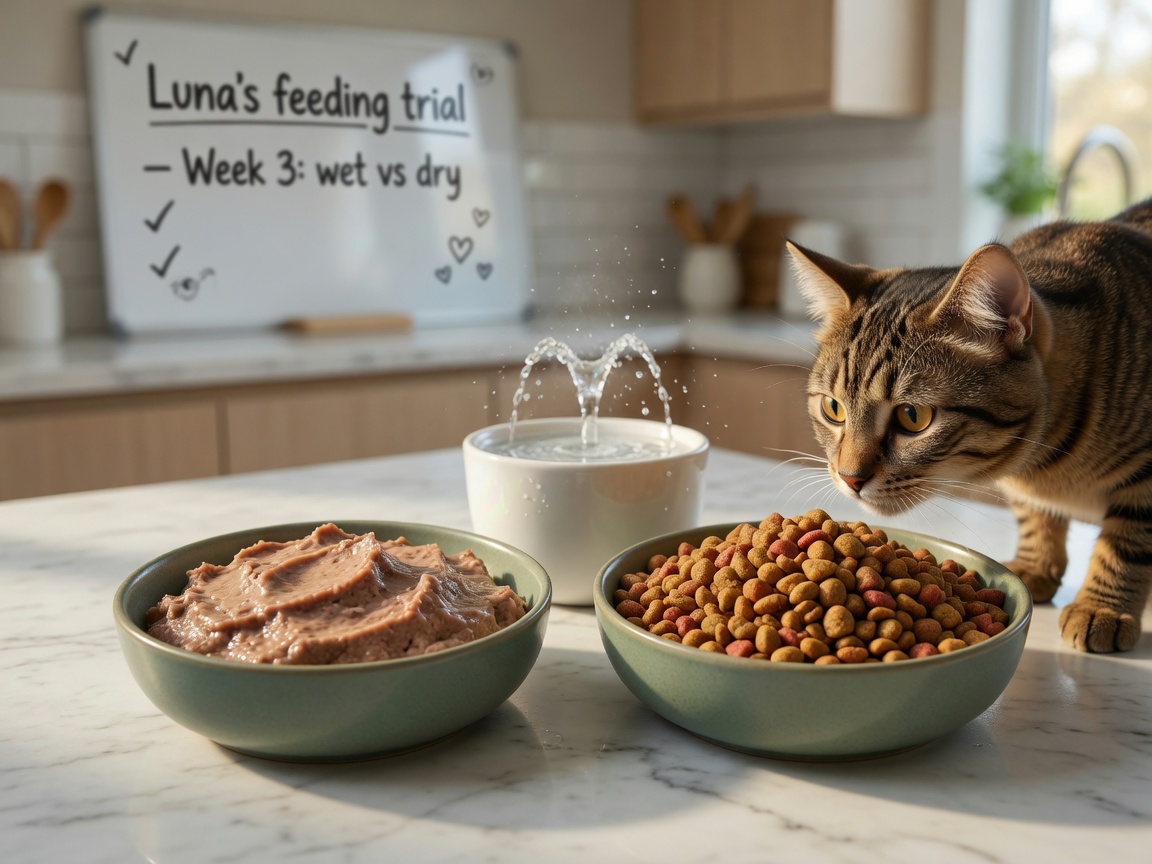
If there is one dietary intervention with near-universal support for feline urinary health, it is increasing urine dilution — and the most effective way to do that is wet food. Cats evolved in arid environments and have a low thirst drive; they are designed to obtain most of their moisture from prey, not from a water bowl. Dry kibble typically contains only 8–12% moisture, while wet food contains 75–80%.
This difference is significant. Cats eating wet food produce urine with a specific gravity of roughly 1.025–1.035, compared to 1.045–1.080 in cats eating primarily dry food. More dilute urine means lower concentrations of crystal-forming minerals, less irritation to the bladder lining, and a less hospitable environment for bacterial growth. Multiple studies have demonstrated that switching from dry to wet food reduces the recurrence of urinary events in cats with idiopathic cystitis and crystal-related disease.
If a cat refuses wet food or a wet-only diet is impractical, water fountains have been shown in studies to meaningfully increase voluntary water intake in cats — the movement and sound of running water triggers the drinking instinct.
Magnesium, Phosphorus, and Urinary pH
For struvite-prone cats, magnesium content is the most scrutinized mineral. Early research in the 1980s established that dietary magnesium contributes directly to struvite crystal formation in alkaline urine. The pet food industry responded by reducing magnesium in many commercial foods and acidifying urine through protein source manipulation and added urinary acidifiers (ammonium chloride, DL-methionine).
Urinary health diets targeted at struvite typically aim for:
- Magnesium: <0.12% dry matter (DM)
- Phosphorus: 0.5–0.8% DM (controlled, not eliminated)
- Sodium: slightly elevated to encourage water intake
- Urine pH target: 6.0–6.4
Oxalate management diets, by contrast, focus on keeping phosphorus moderate, avoiding excess calcium and vitamin C, maintaining neutral pH, and maximizing moisture. Sodium is used to drive water intake and urine dilution.
Comparison Table: Urinary Health Cat Food Types
| Food Type | Best For | Moisture | pH Target | Rx Required? | Examples |
|---|---|---|---|---|---|
| Prescription urinary (struvite/oxalate) | Diagnosed crystal disease | Wet or dry | 6.0–6.5 | Yes | Hill's c/d, Royal Canin Urinary S/O |
| OTC urinary care wet food | Prevention, mild FLUTD history | High (75–80%) | 6.2–6.6 | No | Purina Pro Plan UR, Blue Buffalo Urinary |
| High-moisture wet food (no urinary claim) | General prevention, urine dilution | High (75–80%) | Variable | No | Most pâté-style wet foods |
| Urinary-focused dry kibble | Cats that refuse wet food | Low (8–12%) | 6.0–6.4 | Some yes, some no | Hill's c/d dry, Royal Canin Urinary dry |
| Raw/fresh food (balanced) | Prevention; some cats with idiopathic cystitis | Very high (65–75%) | Variable | No | Commercial raw brands |
Prescription Diets vs. Over-the-Counter Options
Prescription urinary diets (Hill's Prescription Diet c/d, Royal Canin Urinary S/O, Purina Pro Plan UR) are formulated to specific mineral and pH targets verified by feeding trials. They are the appropriate choice for cats with a confirmed diagnosis of crystal disease or recurrent severe urinary events. They should be used under veterinary supervision because their mineral profiles (particularly sodium levels and pH acidification) can interact with other health conditions including kidney disease and hypertension.
Over-the-counter urinary care foods are appropriate for prevention in cats with a history of mild FLUTD or as a precautionary measure in high-risk cats (overweight, indoor, male, middle-aged). They typically control magnesium and phosphorus and promote moderate urine acidification, but they are not as precisely formulated as prescription options and have not undergone the same clinical validation.
Stress as a Urinary Trigger
Idiopathic cystitis — the most common form of FLUTD — is strongly linked to stress. Inflammation of the bladder can occur independently of crystals, infection, or any identifiable physical cause. Common stressors include multi-cat households, litter box competition (the rule of thumb is one box per cat plus one), changes to routine, construction noise, new pets or people, and even changes in food or litter.
Environmental enrichment, Feliway diffusers, and ensuring cats have access to high perches and hiding spots are management strategies with evidence behind them. Diet alone will not resolve stress-related cystitis; addressing the cat's environment is equally important.
Practical Warning Signs of Urinary Problems
Recognize these signs early — urethral blockage in male cats is a life-threatening emergency:
- Frequent visits to the litter box with little or no urine produced
- Straining or crying while urinating
- Blood in urine (pink or red tinge)
- Urinating outside the litter box, particularly on cool surfaces (tile, bathtub)
- Excessive licking of the genital area
- Lethargy, vomiting, or loss of appetite alongside any of the above
- FLUTD covers multiple conditions — struvite crystals, oxalate crystals, idiopathic cystitis, and infection — and diet recommendations differ by type.
- Struvite forms in alkaline urine; oxalate forms in acidic urine. A diet that helps one can worsen the other.
- Increasing moisture intake through wet food is the single most universally beneficial dietary change for feline urinary health.
- Controlled magnesium and phosphorus with targeted urine pH (6.0–6.5) is the cornerstone of struvite-prevention diets.
- Stress is a major driver of idiopathic cystitis; environmental management is as important as diet.
- Prescription urinary diets require veterinary guidance and should not be used without diagnosis of the specific condition.
- Forrester SD, Towell TL. Feline idiopathic cystitis. Vet Clin North Am Small Anim Pract. 2015;45(4):783–806. PMID: 26002792
- Lekcharoensuk C, Osborne CA, Lulich JP. Epidemiologic study of risk factors for lower urinary tract diseases in cats. J Am Vet Med Assoc. 2001;218(9):1429–35. PMID: 11345305
- Buckley CM, Hawthorne A, Colyer A, Stevenson AE. Effect of dietary water intake on urinary output, specific gravity and relative supersaturation for calcium oxalate and struvite in the cat. Br J Nutr. 2011;106(Suppl 1):S128–30. PMID: 22005434