ForPetsHealthcare
🐴

Caballos

Health, care and management for horses and ponies.

Horse owner checking on distressed chestnut horse showing signs of colic in stable
Caballos

What to Do If Your Horse Colics

Colic represents one of the most common medical emergencies in horses, and as a horse owner, understanding how to respond can quite literally mean the difference between life and death. Colic—abdominal pain—occurs in roughly one in ten horses annually, ranging from mild discomfort to life-threatenin…

Sarah Bennett7 de julio de 2026
Farrier attaching a horseshoe to a chestnut horse's hoof with precise nailing technique
Caballos

Should Your Horse Wear Shoes or Go Barefoot?

One of the most fundamental decisions horse owners face is whether to keep their horses shod or allow them to go barefoot. This isn't simply a matter of personal preference—it involves understanding your horse's individual needs, lifestyle, and physical health. Both options have genuine advantages a…

Sarah Bennett7 de julio de 2026
Confident rider demonstrating proper bareback riding posture on a chestnut horse in a sandy arena
Caballos

How to Train Your Horse to Ride Bareback

Bareback riding is a wonderful way to develop a deeper connection with your horse whilst improving your balance, core strength, and riding confidence. Whether you're preparing for recreational hacking or simply want to enhance your horsemanship skills, bareback training builds trust between horse an…

Sarah Bennett7 de julio de 2026
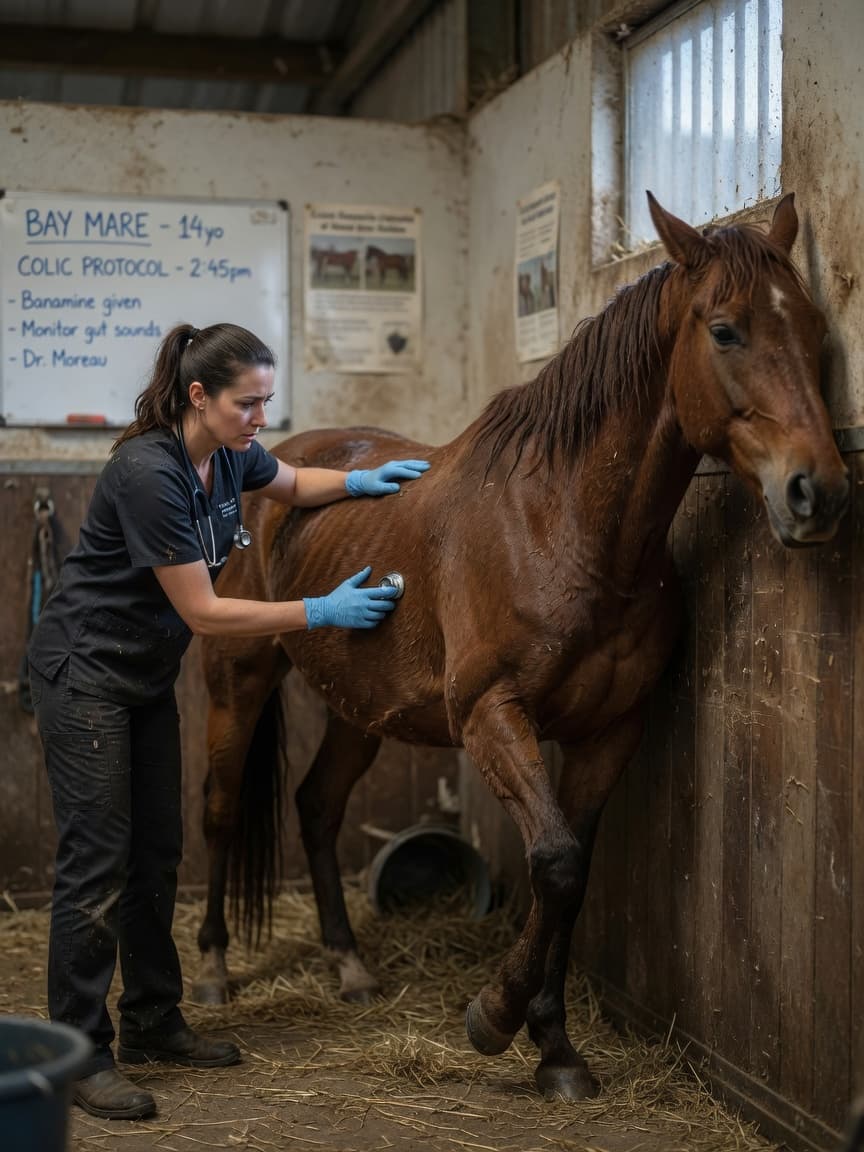
Equine veterinarian examining a distressed horse in a stable stall to diagnose colic
Caballos

Horse Colic: Types, Emergency Signs & What to Do

Colic is not a single disease — it is a broad term for abdominal pain in horses, and it is the single most dangerous medical emergency you will ever face as a horse owner. Every year, colic kills tens of thousands of horses worldwide. Some episodes resolve on their own within minutes; others spiral …

Sarah Bennett2 de julio de 2026

Free newsletter

Pet health tips, straight to your inbox

Weekly science-backed advice for dog & cat owners. No spam, unsubscribe anytime.