
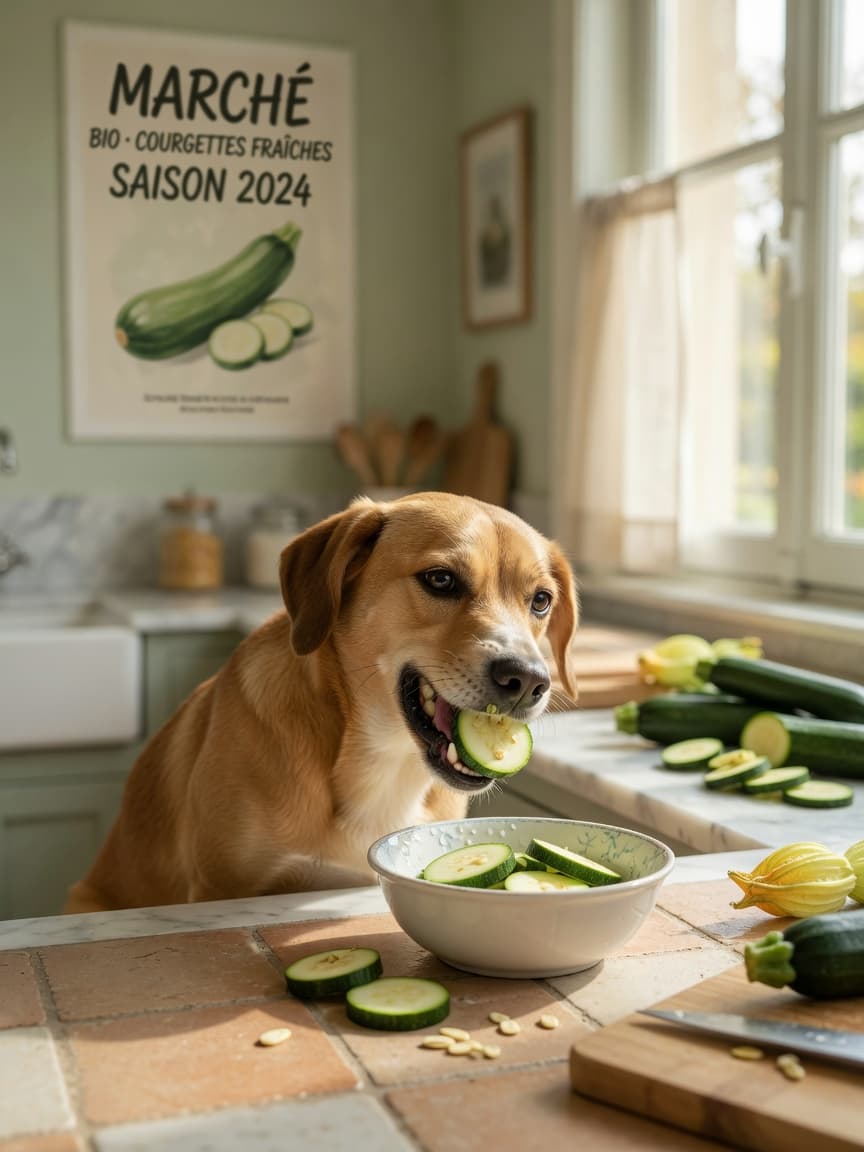
¿Pueden los perros comer calabacín? (Bajo en calorías, aprobado por veterinarios)
- Seguro: calabacín crudo o cocinado sin aditivos, incluida la piel, las semillas y las flores
- No seguro: calabacín preparado con aceite, mantequilla, ajo, cebolla, sal o cualquier condimento
- Riesgo: muy bajo — las cantidades grandes pueden provocar heces blandas; el calabacín entero es un riesgo de atragantamiento para los perros pequeños
- Ración: sigue la regla del 10% — los premios no deben superar el 10% de la ingesta calórica diaria de tu perro
Por qué el calabacín es una de las mejores verduras para los perros
Entre la larga lista de alimentos humanos que los perros pueden comer de forma segura, el calabacín destaca como uno de los más genuinamente beneficiosos. A diferencia de muchos alimentos que reciben un veredicto cauteloso de «técnicamente seguro en cantidades minúsculas», el calabacín se gana una recomendación directa de los nutricionistas veterinarios y se utiliza habitualmente como sustituto de premios bajo en calorías en programas de control de peso para perros. Es uno de los pocos alimentos en los que la respuesta es simplemente sí — y con razón.
Una ración estándar de calabacín contiene cantidades significativas de vitamina B6, vitamina C, vitamina K, potasio, manganeso y fibra alimentaria, todo ello dentro de un aporte calórico extremadamente bajo. Una taza de calabacín crudo en rodajas contiene solo unas 20 calorías, lo que lo convierte en un tentempié ideal para perros con dietas hipocalóricas o para dueños que quieren dar a su perro la satisfacción de un premio sustancial sin el coste calórico. A modo de comparación, una sola galleta comercial para perros puede contener entre 25 y 75 calorías. Sustituir algunas de esas galletas por rodajas de calabacín supone una diferencia apreciable con el tiempo, especialmente en perros propensos al aumento de peso.
Aspectos nutricionales destacados: qué ofrece el calabacín a tu perro
La vitamina B6 desempeña un papel importante en el metabolismo de las proteínas, la función de los glóbulos rojos y la salud del sistema nervioso en los perros. La vitamina C, aunque los perros la sintetizan de forma natural, aporta un apoyo antioxidante adicional — especialmente útil para perros sometidos a estrés físico o ambiental. La vitamina K contribuye a una coagulación sanguínea saludable, y el potasio favorece la función cardíaca y las contracciones musculares. El manganeso es un oligoelemento implicado en la formación ósea y en el metabolismo de los hidratos de carbono y las proteínas.
La fibra del calabacín favorece una motilidad intestinal saludable y puede ayudar a que los perros se sientan más saciados entre comidas, lo cual es especialmente útil para perros que parecen estar siempre hambrientos. La fibra también favorece un microbioma saludable al actuar como sustrato prebiótico para las bacterias intestinales beneficiosas. Aunque las cantidades de unas pocas rodajas de calabacín no son espectaculares, contribuyen a la salud digestiva general como parte de una dieta variada.
El calabacín también tiene un alto contenido de agua — aproximadamente un 95% — lo que contribuye a la hidratación, especialmente durante el tiempo caluroso o después del ejercicio. Para los perros que tienden a beber menos agua de lo ideal, los alimentos con alto contenido de humedad como el calabacín aportan un ligero impulso a su ingesta total de líquidos. Este beneficio de hidratación, combinado con el contenido de fibra, ayuda a explicar por qué a veces se recomienda el calabacín como apoyo digestivo para perros con estreñimiento leve.
Calabacín crudo frente a cocinado: ¿cuál es mejor?
Tanto el calabacín crudo como el cocinado son seguros para los perros, y la elección depende en gran medida de las preferencias de tu perro y de su sensibilidad digestiva. El calabacín crudo es crujiente e hidratante, y a muchos perros les gusta como un masticable satisfactorio. Sin embargo, algunos perros — en particular los que tienen el estómago sensible o los perros mayores con una digestión comprometida — encuentran el calabacín ligeramente cocinado más fácil de procesar. Cocer al vapor o hervir el calabacín sin ningún ingrediente añadido ablanda las paredes celulares, lo que hace que los nutrientes sean ligeramente más biodisponibles y se conserve la mayor parte de las vitaminas.
La regla fundamental con cualquier calabacín preparado es dejarlo completamente natural. Las preparaciones de calabacín al estilo humano suelen incluir aceite de oliva, mantequilla, sal, ajo, hierbas o Parmesan queso — todos ellos problemáticos para los perros. El ajo y la cebolla son tóxicos. La sal contribuye a una sobrecarga de sodio. Los aceites y la mantequilla añaden grasa y calorías innecesarias. Si cocinas calabacín para tu perro, reserva su ración antes de añadir condimentos o grasas de cocción, y cuécelo al vapor o hiérvelo en lugar de saltearlo.
¿Cuánto calabacín puede comer un perro?
La pauta estándar para cualquier premio o alimento complementario en la dieta de un perro es la regla del 10%: los premios no deben representar más del 10% de la ingesta calórica diaria total de tu perro. Para un perro de 10 kilogramos que come aproximadamente 400 calorías al día, esto significa no más de 40 calorías procedentes de premios — lo que se traduce en una ración muy generosa de calabacín, dado lo bajo en calorías que es. Un perro pequeño podría disfrutar de tres o cuatro rodajas finas, mientras que un perro grande podría tomar bastante más sin acercarse a ninguna preocupación calórica.
Dicho esto, incluso con un alimento muy bajo en calorías, las cantidades excesivas pueden provocar molestias digestivas. La fibra del calabacín, aunque beneficiosa en cantidades adecuadas, puede provocar heces blandas o una diarrea leve si un perro come demasiado de una vez. Esto es especialmente relevante si tu perro nunca ha tomado calabacín antes — introdúcelo de forma gradual, empezando con uno o dos trozos pequeños, y observa cómo responde su sistema digestivo antes de ofrecer cantidades mayores.
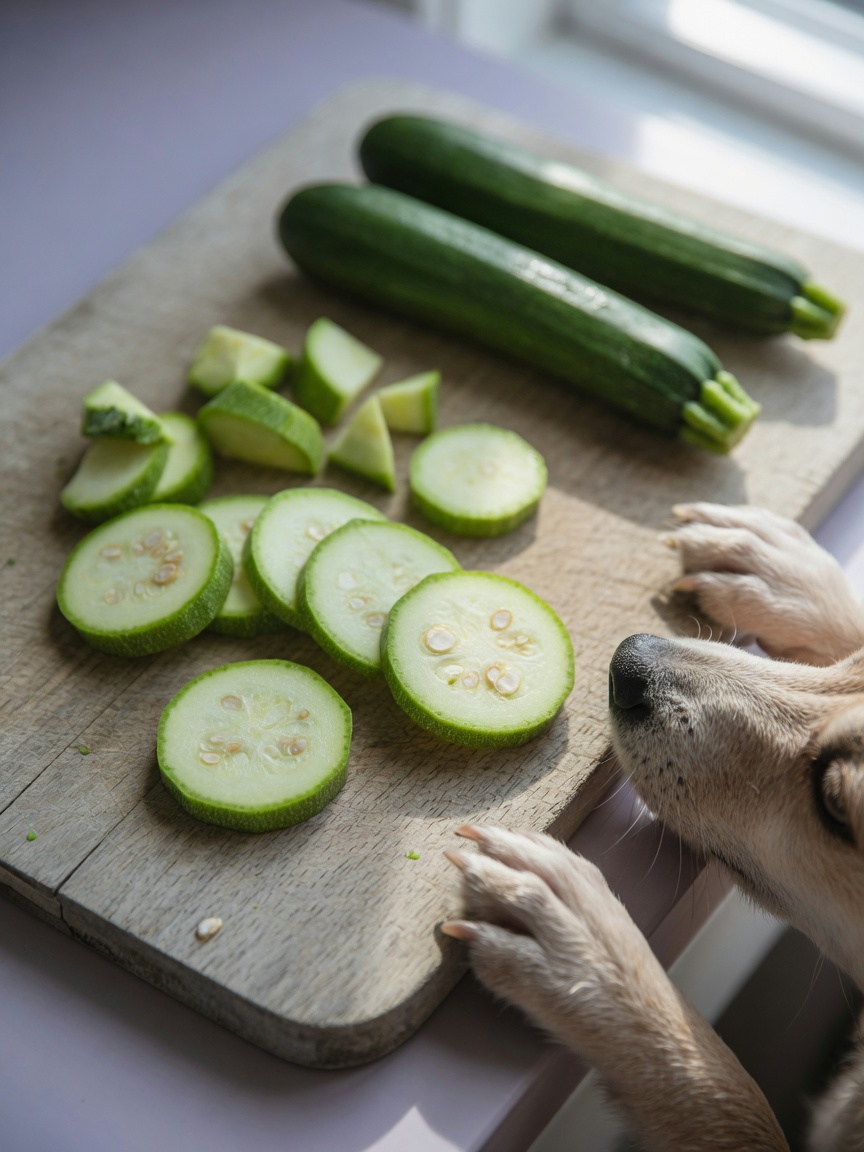
En el caso de los perros pequeños, corta el calabacín en trozos de tamaño adecuado para evitar el atragantamiento. Un calabacín baby entero, por ejemplo, es un posible riesgo de atragantamiento para un chihuahua o un caniche toy. Las rodajas del tamaño de una moneda o los cubitos pequeños son el formato más seguro para cualquier perro.
Flores y semillas de calabacín: ¿son seguras?
Tanto las flores como las semillas de calabacín son seguras para los perros. Las flores son suaves y nutritivas, aunque su textura delicada hace que la mayoría de los perros muestren poco interés por ellas. Las semillas son pequeñas, blandas y no suponen ningún riesgo digestivo — a diferencia de las semillas más duras de las calabazas o de otras calabazas, que deben ofrecerse con más precaución. La piel del calabacín también es segura y contiene una concentración de los antioxidantes de la verdura, así que no es necesario pelarlo antes de ofrecérselo a tu perro.
Puntos clave
- El calabacín es una de las verduras más seguras y nutricionalmente beneficiosas que puedes ofrecer a un perro — bajo en calorías, rico en vitaminas y con alto contenido de agua
- Tanto el calabacín crudo como el cocinado son seguros; sírvelo siempre natural, sin aceite, mantequilla, ajo, sal ni ningún condimento
- Sigue la regla del 10% para los premios — el bajo aporte calórico del calabacín significa que raciones generosas siguen estando dentro de los límites seguros para la mayoría de los perros
- Las cantidades grandes pueden provocar heces blandas; introdúcelo de forma gradual y córtalo en trozos de tamaño adecuado para los perros más pequeños
¿Quieres opciones de premios saludables y bajas en calorías para complementar la dieta de tu perro? Explora premios para perros aprobados por veterinarios en Zooplus →
Referencias
- German AJ. (2006). El creciente problema de la obesidad en perros y gatos. Journal of Nutrition. PMID: 16988132
- Carciofi AC, Takakura FS, de-Oliveira LD, et al. (2008). Efectos de seis fuentes de hidratos de carbono sobre la digestibilidad de la dieta del perro y la respuesta posprandial de glucosa e insulina. Journal of Animal Physiology and Animal Nutrition. PMID: 18565016