ForPetsHealthcare
Nutrition

Worms in Cats: Types, Signs, and How to Treat Them

By Julia WrenfieldUpdated August 4, 20261 min read
Evidence-based · Sources checked
{"en": "Tabby cat sitting outdoors, illustrating the importance of regular parasite prevention and cat worming care", "es": "Gato atigrado sentado al aire libre, ilustrando la importancia de la prevenci\u00f3n regular de par\u00e1sitos en gatos", "fr": "Chat tigr\u00e9 assis dehors, illustrant l'importance de la pr\u00e9vention r\u00e9guli\u00e8re des parasites chez les chats", "de": "Getigerte Katze sitzt drau\u00dfen und zeigt die Bedeutung regelm\u00e4\u00dfiger Entwurmung und Parasitenpr\u00e4vention", "nl": "Gestreepte kat zit buiten en illustreert het belang van regelmatige wormcuren en parasietpreventie", "pt": "Gato rajado sentado ao ar livre, ilustrando a import\u00e2ncia da desparasita\u00e7\u00e3o regular e cuidados felinos", "it": "Gatto tigrato seduto all'aperto, illustrando l'importanza della sverminazione regolare e della prevenzione parassitaria felina"}

Regular worming is an important part of cat health care that many owners overlook.

Common Worms

  • Roundworm (Toxocara cati): very common, can be transmitted to humans
  • Tapeworm: transmitted via fleas. White segments visible around anus.
  • Lungworm: rare but increasing

Signs

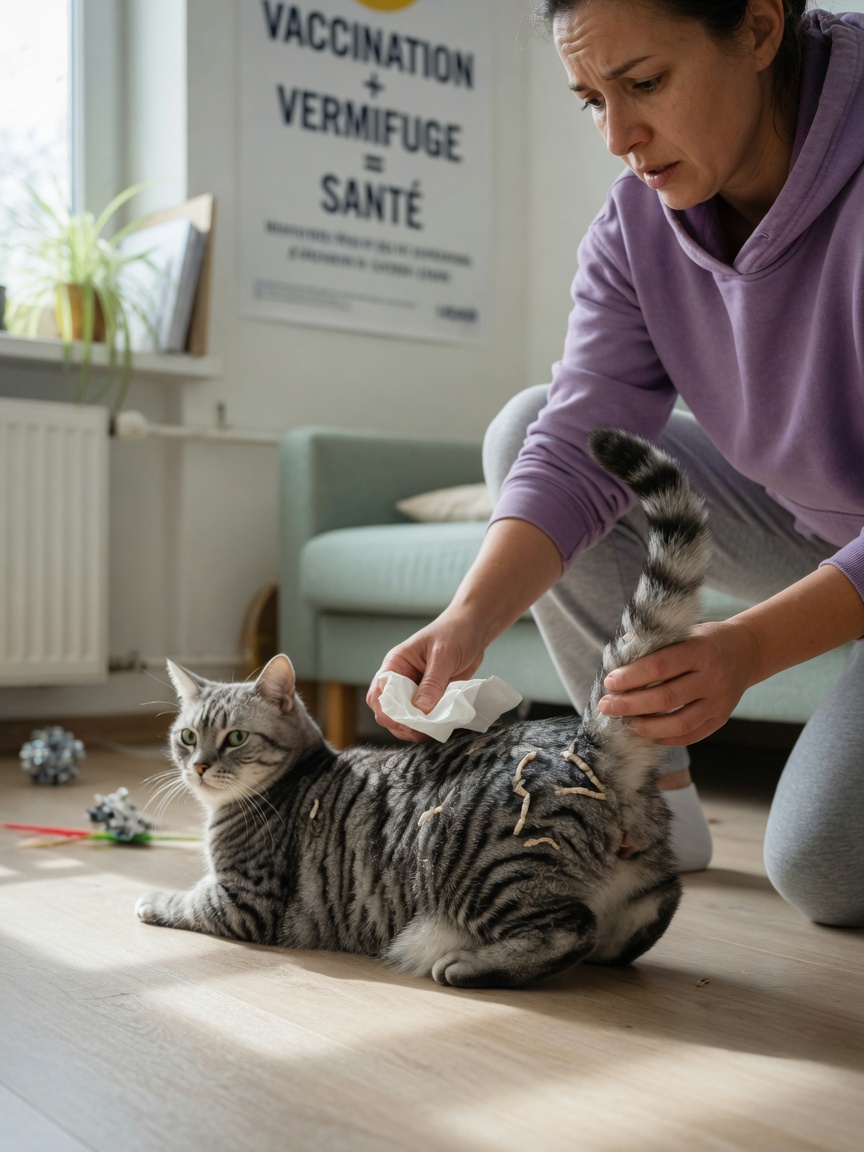
Cat owner examining their cat for visible signs of worm infestation
  • Visible segments in faeces or around anus
  • Weight loss, pot belly in kittens
  • Vomiting or diarrhoea

Treatment Schedule

  • Kittens: every 2 weeks to 12 weeks, monthly to 6 months
  • Outdoor cats: every 3 months minimum
  • Indoor cats: every 6 months

Key Point

Controlling tapeworm requires strict flea control — cats get tapeworm by swallowing fleas when grooming.

#worms in cats treatment#cat health#feline nutrition#forpetshealthcare

Sources & further reading

This article is based on peer-reviewed veterinary research and reputable animal-health sources. Explore the underlying science in our Research Library.

Related articles

Great Dane Bloat (GDV): Causes, Signs & Care

Great Danes are one of the breeds most vulnerable to gastric dilatation-volvulus (GDV, commonly called "bloat"), a life-threatening emergency in which the stomach fills with gas and may twist upon itself. Their deep, narrow chest allows the stomach to swing and rotate more easily than in breeds with…

Read more →

Bulldog Breathing problems (BOAS): Causes, Signs & Care

Bulldogs are prone to breathing problems because their entire skull and airway have been shaped by generations of selective breeding for a flat face, leading to a condition called Brachycephalic Obstructive Airway Syndrome (BOAS). This affects the vast majority of Bulldogs to some degree, from mild …

Read more →

Pug Breathing problems (BOAS): Causes, Signs & Care

Pugs are one of the breeds most affected by Brachycephalic Obstructive Airway Syndrome (BOAS), a condition caused by their short, flattened skull shape which squashes the airway into too little space. This means many Pugs snore, snort and struggle to breathe normally even at rest, and the problem te…

Read more →

Raw Cat Food Guide

Cats are obligate carnivores, which means their biology is fundamentally different from dogs and humans. They cannot survive on plant-based diets and…

Read more →

Prescription Diet Guide Dogs

Prescription or veterinary therapeutic diets are not simply premium foods with a clever label. They are formulated to contain therapeutic levels of…

Read more →

Prescription Diet Guide Cats

Cats have unique nutritional needs that make therapeutic diets more complex than those for dogs. This guide covers prescription foods for CKD, hyperthyroidism, urinary disease, IBD, and diabetes — and why strict dietary compliance is especially critical in cats.

Read more →
Disclaimer:This article is for informational purposes only and does not constitute veterinary advice. Always consult a qualified veterinarian for your pet's health concerns.

Free newsletter

Pet health tips, straight to your inbox

Weekly science-backed advice for dog & cat owners. No spam, unsubscribe anytime.