
Why Feline Arthritis Is So Widely Missed
Studies suggest that more than 90% of cats over the age of 12 show radiographic evidence of arthritis, yet the condition remains one of the most underdiagnosed sources of chronic pain in companion animals. The reason is straightforward: cats are prey animals by nature, and concealing weakness or pain is an instinct hardwired into their biology. Unlike dogs, cats rarely limp when their joints are sore. They simply adapt — quietly, subtly, and in ways that owners often mistake for normal ageing.
Understanding what arthritis actually looks like in cats is the first step towards getting them the help they need.
Signs of Arthritis in Cats: What to Look For
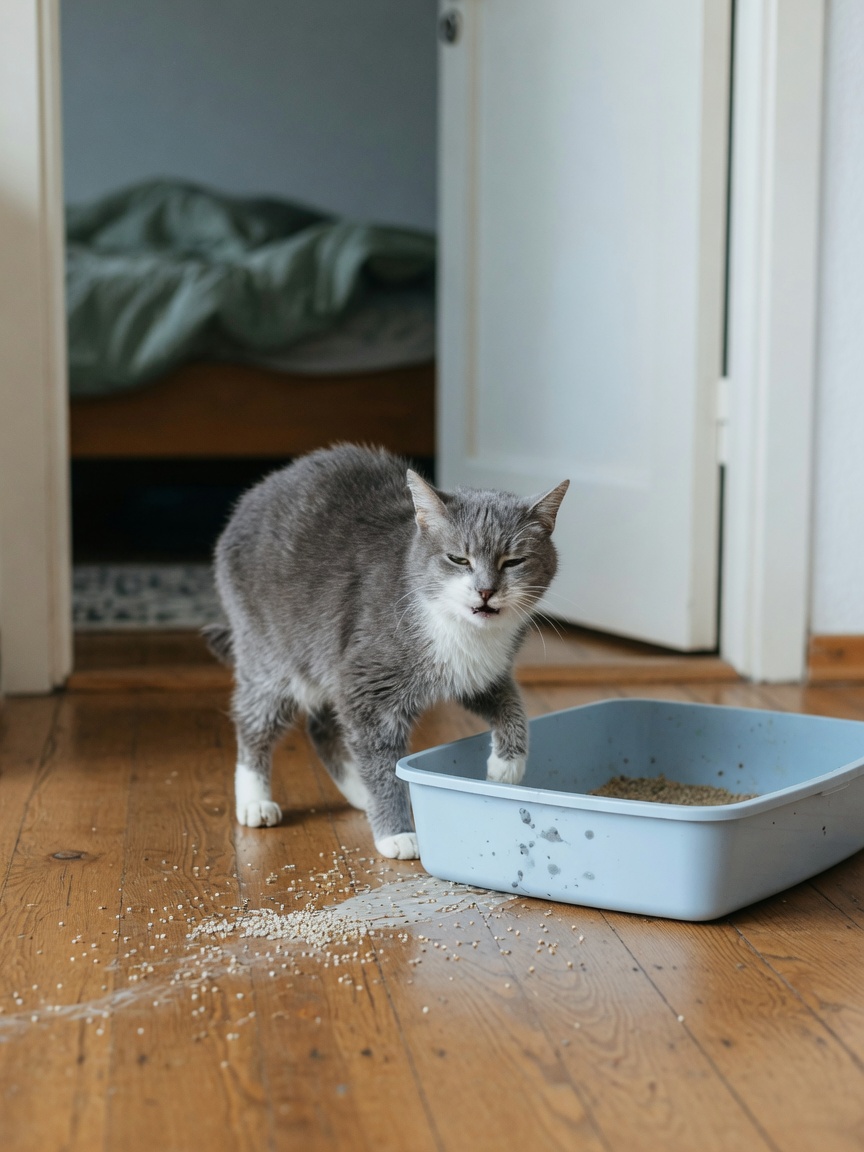
Because limping is uncommon, feline arthritis tends to reveal itself through changes in behaviour and daily habits rather than obvious physical signs. The following are among the most telling indicators:
- Reduced jumping height or reluctance to jump — your cat may stop reaching their favourite high perch and instead settle for lower surfaces
- An unkempt coat, particularly along the back and around the hips — grooming these areas becomes painful, so cats stop doing it
- Missing the litter tray or going just outside it — squatting to toilette is uncomfortable when hips and knees are stiff
- Spending more time hiding or in secluded spots
- Reduced interest in play, or play sessions that are noticeably shorter
- Over-grooming or biting at specific joints — a sign of localised pain
- General irritability, especially when touched along the spine or hindquarters
Many owners assume these changes simply mean their cat is "getting old." In reality, they are often signs of daily, manageable pain that can be treated.
Getting a Diagnosis
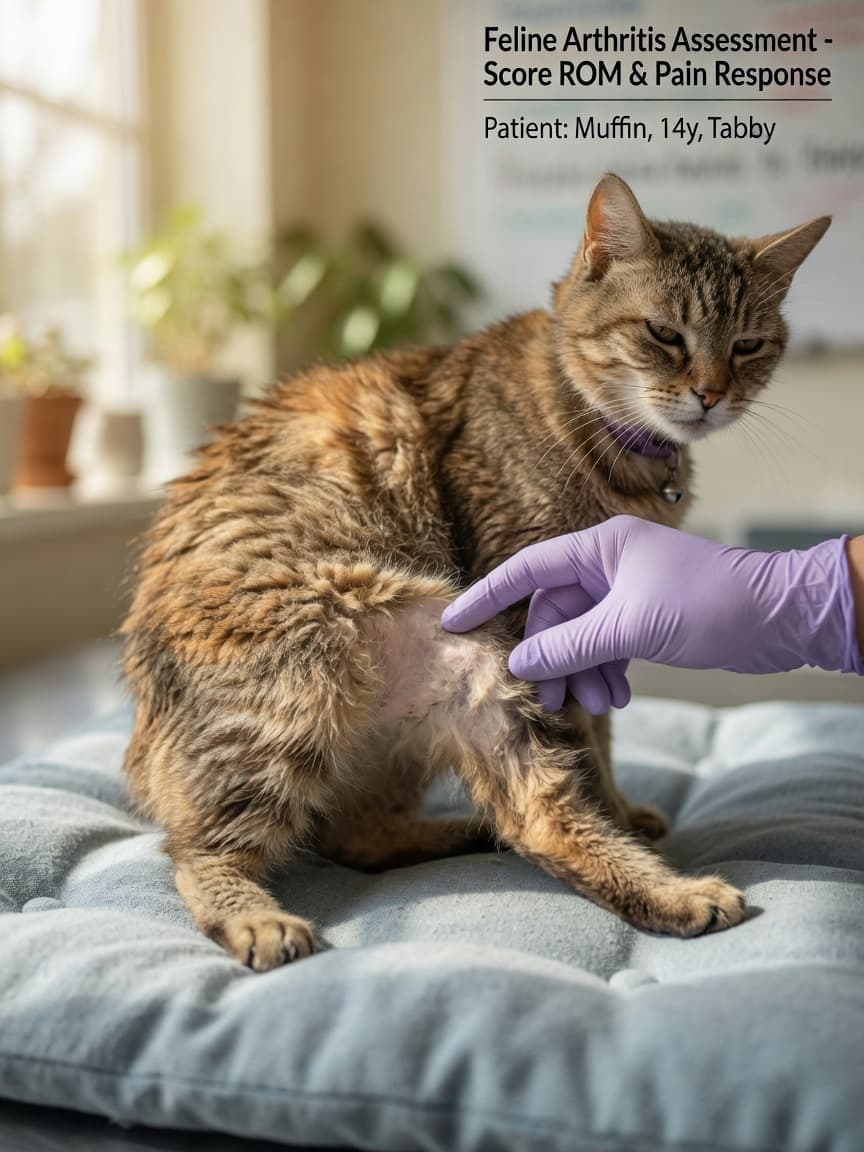
Diagnosing arthritis in cats requires a combination of a thorough veterinary examination, owner history, and imaging. Your vet will palpate the joints to check for thickening, reduced range of motion, and pain responses, and will likely recommend X-rays to assess the degree of joint change.
Because cats are so skilled at masking pain, standard observation during a vet visit is often misleading — a cat may appear perfectly mobile in a clinical setting despite being in significant discomfort at home. For this reason, the World Small Animal Veterinary Association (WSAVA) has developed feline-specific pain scoring guidelines, and several validated owner questionnaires now exist to help capture what is happening in the home environment. Completing one of these before your appointment gives your vet much more useful information than a brief consultation alone.
Treatment: Unique Cautions for Cats
Treating arthritis in cats is not the same as treating it in dogs, and this distinction is critical. Cats metabolise drugs very differently from most other mammals. They lack certain liver enzymes, meaning that medications safe for dogs or humans can be toxic to cats, sometimes fatally so.
NSAIDs: Proceed With Caution
Non-steroidal anti-inflammatory drugs (NSAIDs) are the cornerstone of arthritis management in dogs, but their use in cats must be approached with extreme care. In the European Union, meloxicam is the only NSAID licensed for long-term use in cats, and only at very low doses. It must never be used in cats with pre-existing kidney disease, and any cat receiving it long-term requires regular monitoring of kidney function and blood parameters. Never use dog NSAIDs, human ibuprofen, or aspirin in cats under any circumstances.
Solensia: A Safer Modern Option
One of the most significant advances in feline arthritis treatment in recent years is frunevetmab, sold under the brand name Solensia. This is a monoclonal antibody treatment licensed in the EU for the management of pain associated with osteoarthritis in cats. It works by targeting Nerve Growth Factor, a key driver of pain signalling, and is administered as a monthly injection by your vet. Because it is an antibody rather than a chemical drug, it does not pass through the liver in the same way and carries a much more favourable safety profile than NSAIDs, making it particularly valuable for cats with concurrent kidney disease.
Omega-3 Fatty Acids
Marine-derived omega-3 fatty acids, specifically EPA and DHA, have good evidence for modest anti-inflammatory effects in joint disease. High-quality fish oil supplements formulated for cats can be a useful addition to a broader management plan. Dose according to veterinary guidance, as excessive fat supplementation has its own risks.
Environmental Modifications: Often Underestimated
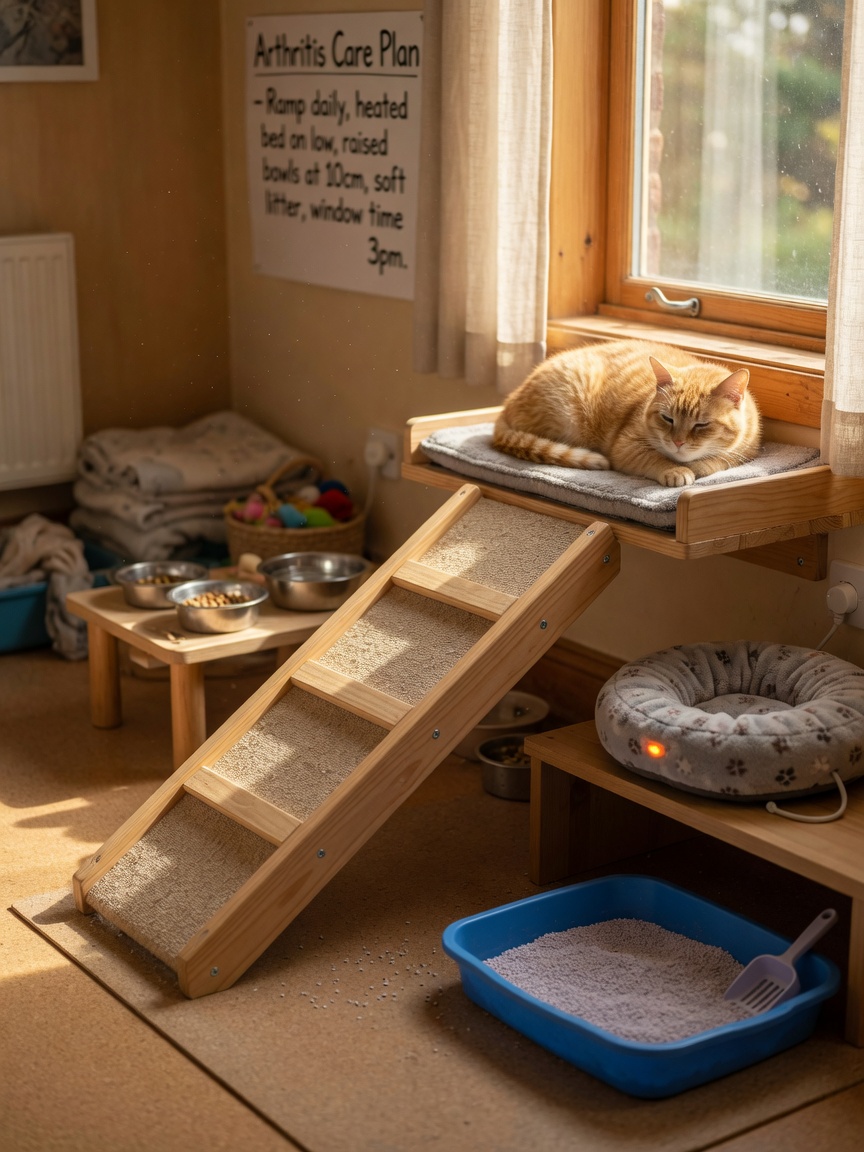
Simple changes to your home can make an enormous difference to an arthritic cat's quality of life, and carry no medical risk whatsoever:
- Place ramps or steps beside sofas, beds, and windowsills so your cat can still access their favourite spots without jumping
- Switch to a low-sided litter tray, or cut a low entry point into a standard tray, to remove the need for your cat to climb in and squat deeply
- Raise food and water bowls slightly so your cat does not have to bend their neck uncomfortably
- Provide warm, padded bedding away from draughts — heat helps stiff joints
- Consider a heated pet mat or a self-warming bed
Additional Therapies
Physiotherapy and hydrotherapy for cats is a growing field. Certified veterinary physiotherapists can provide targeted massage, passive range-of-motion exercises, and laser therapy, all of which can reduce stiffness and improve comfort. Weight management is equally important — even modest excess weight places additional strain on already compromised joints, and a gradual, vet-supervised weight loss programme can yield meaningful improvements in mobility.
Monitoring and Long-Term Management
Arthritis in cats is a progressive condition that requires ongoing management rather than a one-time fix. Any cat receiving medication — including supplements — should have their kidney function monitored regularly, as this is the organ most at risk from long-term treatment. Work with your vet to reassess your cat's pain management every three to six months, and adjust the plan as the condition evolves.
With the right combination of medication, home adaptations, and attentive monitoring, many arthritic cats go on to enjoy comfortable, active lives well into old age. The key is recognising the signs early and refusing to accept "just getting old" as an explanation for a cat in pain.