
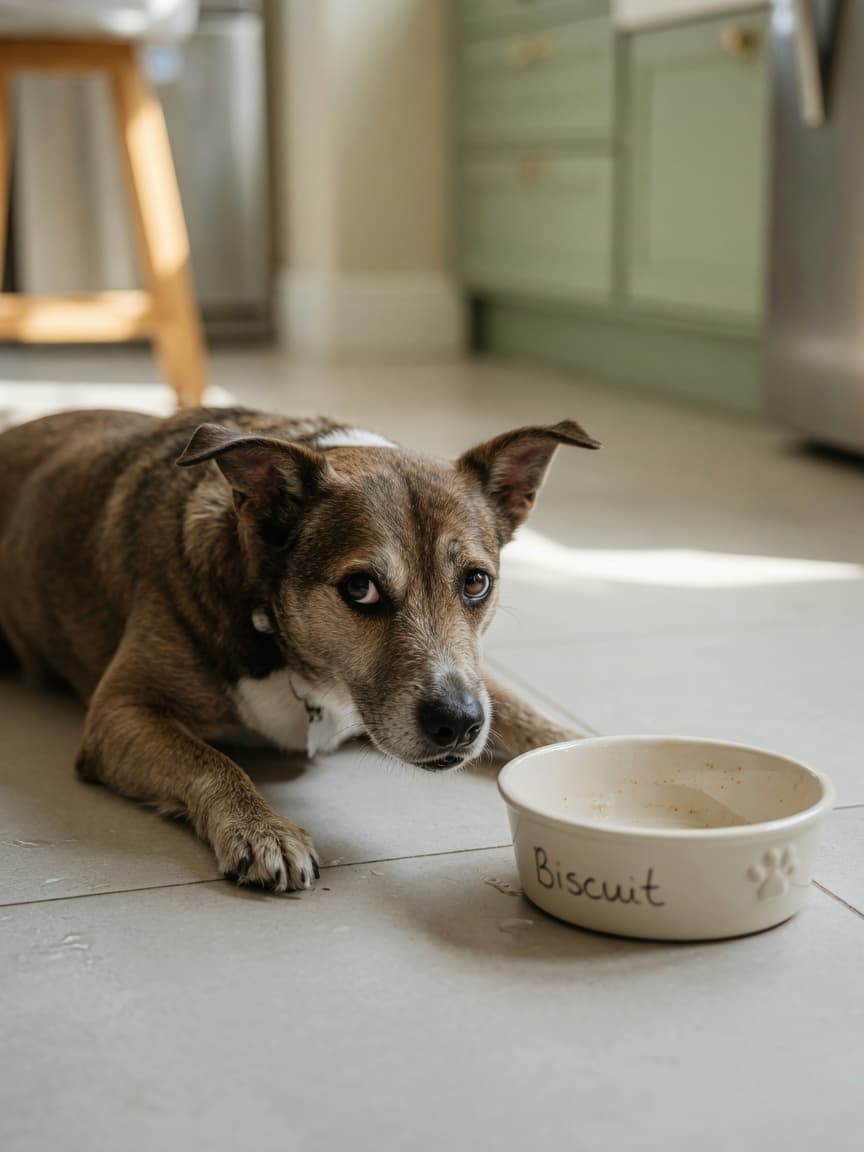
When Your Dog Leaks Without Knowing It
If you have noticed damp patches where your dog has been lying, or wet fur around her hindquarters, you are not alone. Urinary incontinence affects an estimated one in five spayed female dogs at some point in their lives. The good news is that it is rarely a sign of something sinister, and most cases respond well to treatment. Understanding why it happens is the first step to managing it effectively.
What Is Urinary Incontinence in Dogs?
Urinary incontinence is the involuntary loss of urine — meaning the dog has no conscious control over it. This distinguishes it from house-training lapses or submissive urination, both of which involve the dog actively releasing urine. True incontinence typically happens when the dog is relaxed or sleeping, and she may appear completely unaware it has occurred.
It is most common in middle-aged to older spayed females, though intact females and males can also be affected. Larger breeds appear to be at higher risk, though the condition crosses all sizes and types.
The Most Common Causes
Hormonal Incontinence (Urethral Sphincter Mechanism Incompetence)
The most prevalent cause in spayed females is urethral sphincter mechanism incompetence, often called USMI or hormone-responsive incontinence. Oestrogen plays a role in maintaining muscle tone around the urethra. After spaying, oestrogen levels drop significantly, and in some dogs this leads to a weakening of the urethral sphincter — the muscular valve that keeps urine in the bladder. The sphincter simply cannot hold closed under normal resting pressure.
Symptoms typically appear months to years after spaying, rather than immediately. This delay often causes owners to miss the connection.
Ectopic Ureters
In younger dogs, especially those who have been leaking since puppyhood, ectopic ureters may be the cause. This is a congenital abnormality in which one or both ureters — the tubes carrying urine from the kidneys to the bladder — bypass the bladder and open further along the urinary tract. Surgery is often the recommended treatment.
Bladder Position and Anatomical Factors
In some dogs, the bladder sits further back in the pelvic canal than normal, which can affect sphincter function. Obesity, previous difficult births, or certain neurological conditions can also compromise the mechanisms that keep urine contained.
Neurological Causes
Spinal disc disease, nerve damage, or other neurological problems can disrupt the signalling between the brain and the bladder. These cases tend to present differently, often alongside other neurological signs such as weakness in the hindlimbs.
How Vets Diagnose the Problem
Diagnosis begins with a thorough history and physical examination. Your vet will want to rule out urinary tract infections, which can mimic or worsen incontinence. A urine sample is typically the first port of call, followed by blood tests if systemic disease is suspected.
Imaging — including X-rays or ultrasound — helps assess bladder position, stone presence, and anatomical abnormalities. In some cases, more specialist investigations such as urethral pressure profiles or contrast studies may be recommended, particularly if a congenital problem is suspected in a young dog.
Treatment Options
Medication
The mainstay of medical treatment for USMI is a drug called phenylpropanolamine (PPA), which increases urethral muscle tone. It is effective in the majority of cases and is generally well tolerated, though it requires regular monitoring in dogs with heart or blood pressure concerns.
Oestriol, a form of oestrogen, is another commonly used option in some countries. It works by restoring some of the hormonal support to the urethral tissue. Some dogs do best on a combination of both drugs. Your vet will advise on what suits your dog's individual health profile.
Surgical Approaches
For dogs that do not respond to medication, or where an anatomical problem is identified, surgery may be considered. Colposuspension — which repositions the bladder neck — and urethral bulking injections are among the procedures used. These are typically performed by specialist surgeons and carry good success rates in appropriate cases.
Management at Home
While treatment works for most dogs, practical home management can significantly improve quality of life during the process. More frequent toilet trips reduce the volume of urine sitting in the bladder. Washable dog bedding and waterproof mattress covers protect furniture and keep your dog comfortable. Keeping the perineal area clean and dry helps prevent secondary skin irritation, which can develop quickly in affected dogs.
Weight management matters too. Excess body weight puts additional pressure on an already compromised sphincter, so maintaining a healthy body condition score is a worthwhile goal in its own right.
When to See a Vet
Any dog showing signs of urinary leakage should be assessed by a veterinarian. While the condition is often benign and manageable, it is important to rule out infection, stones, tumours, or neurological problems before assuming it is straightforward hormonal incontinence. Early diagnosis leads to earlier relief for your dog.
If your dog is already on treatment but still leaking, or if she develops signs of straining, blood in the urine, or increased thirst alongside the leakage, return to your vet promptly for reassessment.
Key Takeaways
- Urinary incontinence in female dogs is common, particularly in spayed individuals, and is usually manageable.
- The most frequent cause is weakening of the urethral sphincter following the hormonal changes of spaying.
- Medication works well for most dogs; surgery is available for cases that do not respond.
- Always have leakage investigated by a vet to rule out infection or other underlying conditions.
- Home management — more toilet breaks, good hygiene, weight control — supports medical treatment.
- With the right approach, most incontinent dogs go on to live comfortable, normal lives.