
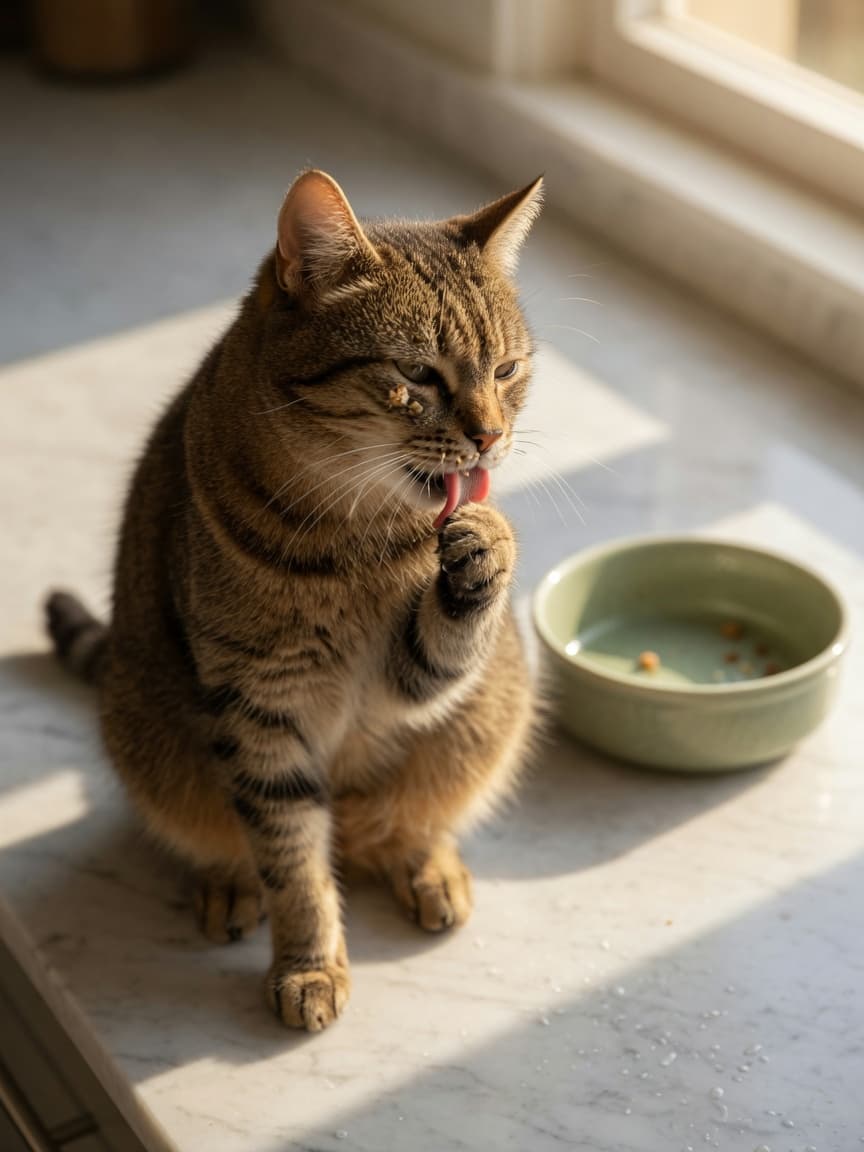
If you've ever watched your cat meticulously lick and groom their paws after mealtimes, you've witnessed one of the most charming feline behaviours. This seemingly simple act is actually a fascinating combination of instinct, hygiene, and comfort that reveals much about your cat's evolutionary heritage and psychological wellbeing. Understanding this behaviour can help you better care for your feline companion and recognise when something might need veterinary attention.
The Instinctive Grooming Response
Cats are naturally fastidious animals, and paw-licking after eating is primarily a grooming behaviour rooted in their evolutionary past. In the wild, cats must remain scent-free to avoid detection by both predators and prey. After consuming a meal, food particles and oils cling to their paws and mouth, creating a distinctive scent that could compromise their survival.
Your domesticated cat retains these ancient instincts even though they're no longer hunting for survival. The post-meal paw licking ritual helps them eliminate telltale food odours, maintaining the discretion their ancestors desperately needed.
Cleaning Away Food Residue
Beyond scent management, cats lick their paws to remove actual food debris. Cats typically use their front paws to manipulate food and bring it to their mouth, so particles naturally accumulate on their paw pads and between their toes. This practical cleaning behaviour serves several purposes:
- Prevents bacterial growth from decomposing food particles
- Eliminates sticky residue that could attract insects
- Maintains paw pad health and prevents infection
- Keeps their coat clean by preventing food from spreading during subsequent grooming
Self-Soothing and Stress Relief
Interestingly, paw licking also serves a psychological function. The repetitive motion of licking and grooming triggers the release of endorphins, creating a calming effect similar to meditation in humans. If your cat has experienced mealtime stress—whether from a chaotic feeding environment, competing with other pets, or uncertainty about food availability—the post-meal grooming ritual helps them decompress and reset.
This self-soothing behaviour is completely normal and actually indicates a content cat working through their natural behavioural repertoire.
When to Seek Veterinary Advice
Whilst normal paw licking after eating is harmless, excessive grooming can sometimes indicate underlying issues:
- Obsessive paw licking: If your cat licks excessively throughout the day, not just after meals, this may suggest anxiety, allergies, or skin conditions
- Visible irritation: Red, swollen, or raw paws warrant veterinary evaluation
- Hair loss: Bald patches on paws or legs indicate overgrooming, potentially linked to allergies or parasites
- Behavioural changes: Sudden increases in grooming may signal stress or medical discomfort
Supporting Healthy Grooming Habits
You can encourage your cat's natural grooming whilst ensuring it remains healthy:
- Provide a calm, quiet eating space where your cat feels safe and unhurried
- Feed multiple cats separately if they show feeding-related stress
- Ensure fresh water is available to support overall hygiene and health
- Groom your cat regularly to reduce overall grooming demands
- Monitor their paw pads weekly for signs of irritation or injury
Key Takeaways
Your cat's post-meal paw-licking ritual is a perfectly normal behaviour combining ancient survival instincts with practical hygiene. It serves to eliminate scent, remove food debris, and provide psychological comfort. As long as your cat's paws appear healthy and the grooming doesn't become obsessive, there's absolutely nothing to worry about. This charming habit is simply your cat being, well, perfectly feline. However, if you notice excessive licking, visible paw damage, or other behavioural changes, consult your veterinary surgeon to rule out allergies, parasites, or stress-related concerns.