
Tortoise Hibernation: The Complete Guide for UK Owners
For UK tortoise keepers, hibernation is one of the most important and potentially risky parts of the annual care calendar. Many of the species most commonly kept in Britain are native to temperate regions and require a period of winter dormancy to maintain hormonal balance, reproductive health and long-term wellbeing. Understanding how to manage hibernation correctly can be the difference between a tortoise that thrives for decades and one that does not survive the winter.
Which UK Species Hibernate?
Not all tortoise species require hibernation, and it is essential to know whether your specific species should be hibernated. The following species commonly kept in the UK do require hibernation:
- Hermann's tortoise (Testudo hermanni) — the most widely kept species in the UK
- Spur-thighed tortoise (Testudo graeca) — also known as the Greek tortoise
- Horsfield's tortoise (Testudo horsfieldii) — also known as the Russian tortoise
Species that do not hibernate and should be kept warm year-round include the sulcata (African spurred tortoise), red-footed tortoise and horsfield tortoises from certain warm populations. If you are unsure whether your species requires hibernation, consult a reptile vet before proceeding.
When Does Hibernation Occur?
In the wild, tortoises enter hibernation as temperatures drop and day length shortens in autumn. For UK keepers managing hibernation artificially, the typical period runs from approximately October or November through to February or March — a total of three to five months depending on the species, age and individual animal.
Younger tortoises are hibernated for shorter periods. Tortoises under five years old should be hibernated for no more than six to eight weeks. Older, healthy adults can safely hibernate for three to four months.
Pre-Hibernation Preparation: The Gut-Clearing Period
The most critical part of hibernation preparation is ensuring the tortoise's digestive tract is completely clear of food before it enters dormancy. This is not optional — it is life-saving.
When a tortoise hibernates with food remaining in the gut, that food cannot be digested. Instead, it ferments. Gas builds up within the digestive tract, causing bloating, internal pressure and ultimately death. The fermentation of gut contents is one of the most common causes of death in hibernating tortoises.
To clear the gut safely:
- Stop feeding your tortoise four to six weeks before the planned start of hibernation
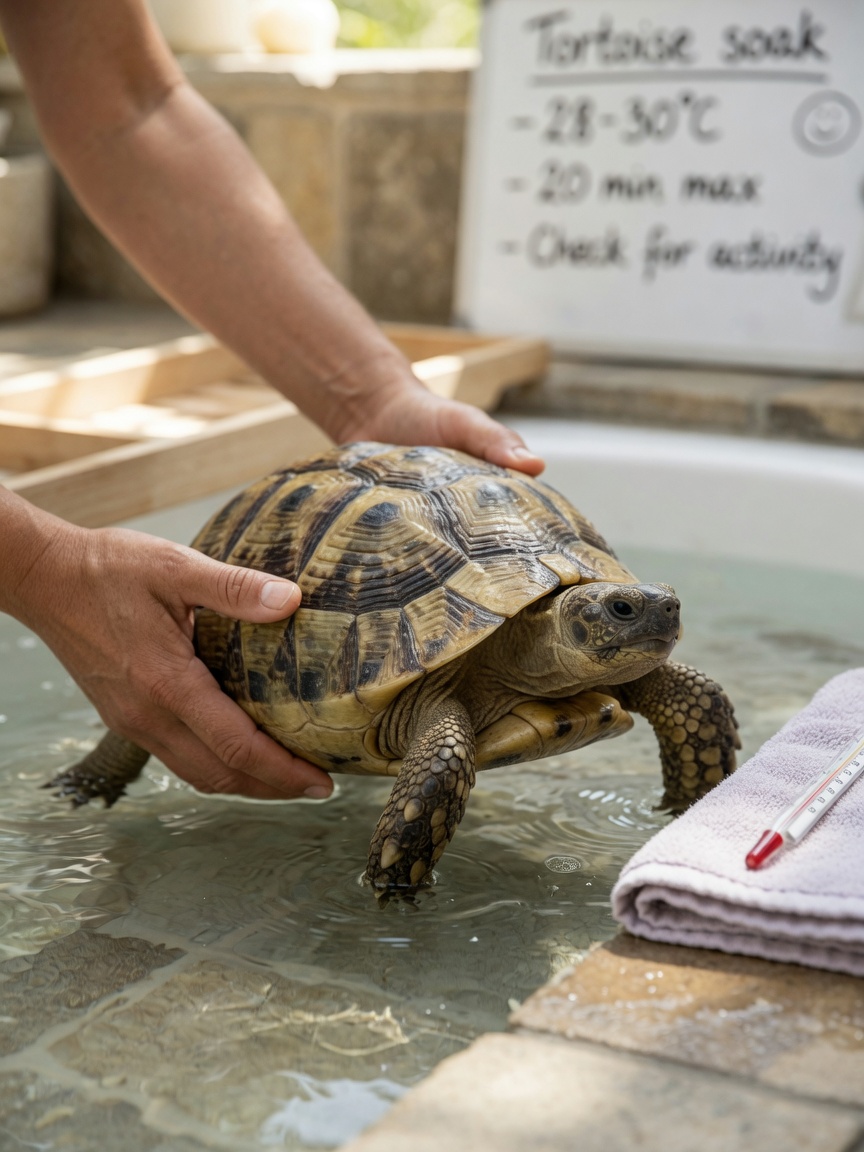
- During this period, continue to offer warm baths for 20 to 30 minutes every two to three days — this encourages the tortoise to drink, stimulates the digestive system and helps clear the gut through normal bowel movements
- Continue providing heat and UV lighting during the wind-down period so the tortoise can complete normal digestion
- Gradually reduce temperatures and day length in the final week or two to ease the transition
Pre-Hibernation Health Check
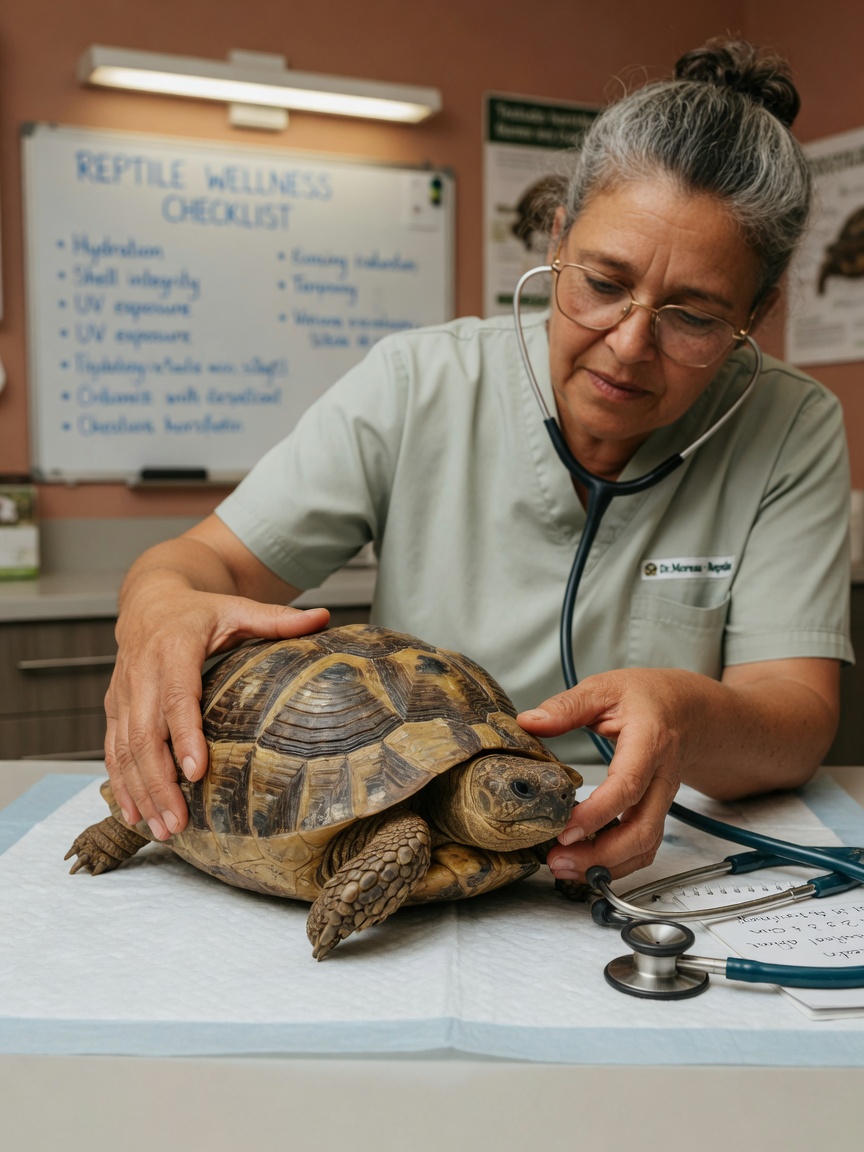
A tortoise that is not in good health should not be hibernated. Illness, injury, parasites or significant underweight condition all make hibernation dangerous. Before your tortoise enters hibernation, it should be assessed by a reptile-experienced veterinarian.
A vet can check for:
- Respiratory infection — tortoises with respiratory illness cannot safely hibernate
- Internal parasites — a faecal test is advisable annually before hibernation
- Mouth rot or other infections
- Body condition score — a tortoise that is underweight entering hibernation faces significant risk
The Jackson Ratio is a commonly used tool for assessing whether a tortoise has sufficient body weight for hibernation. It compares the tortoise's weight against its straight carapace length. Your vet can advise whether your individual animal meets the threshold for safe hibernation.
The Fridge Method: The Safest Approach
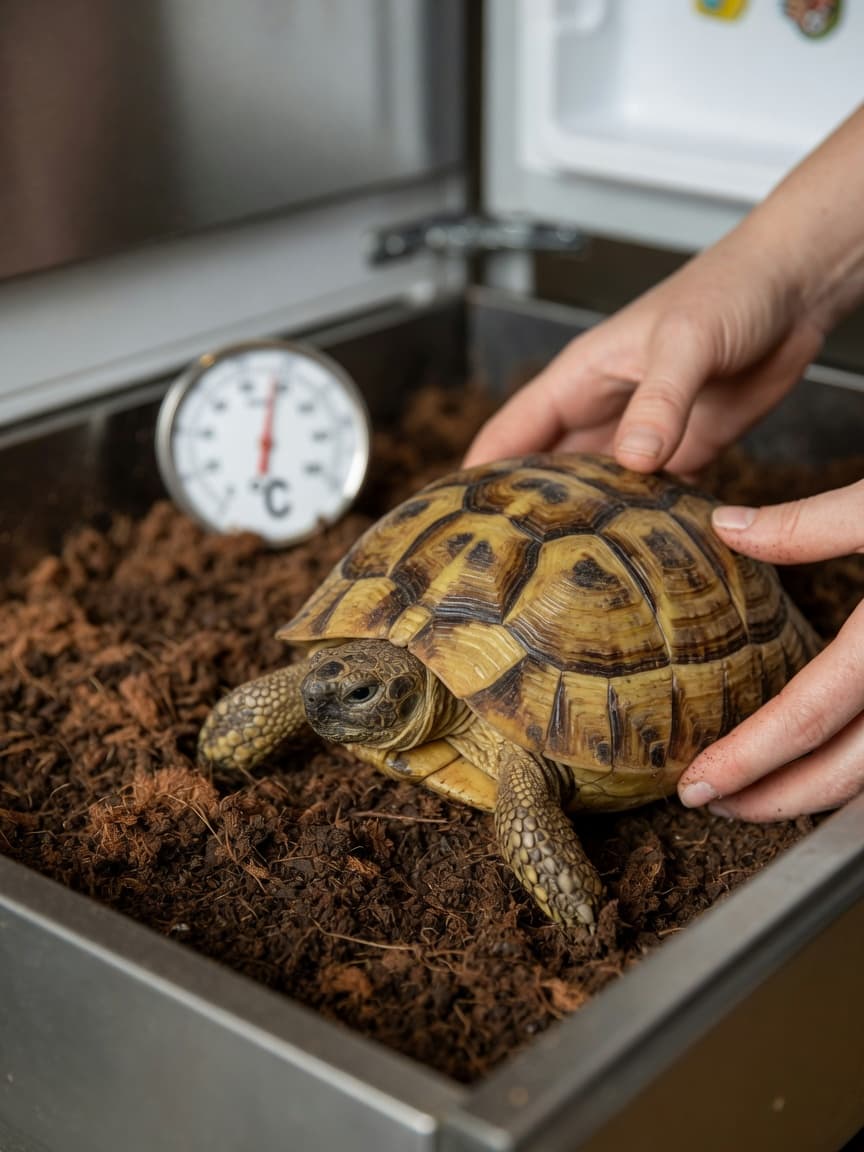
The fridge method is now widely recommended by tortoise keepers and reptile vets as the safest way to hibernate a tortoise in the UK. It maintains a stable, controlled temperature that can be monitored throughout hibernation.
To use the fridge method:
- Use a dedicated fridge that is not used for food storage
- Set the temperature to 3–5°C — verify with a fridge thermometer, not the dial alone
- Place the tortoise in a box filled with a mixture of soil and coco fibre, or shredded paper, to retain some humidity and allow natural burrowing behaviour
- Place the box in the fridge and check that the temperature remains stable
- Open the fridge briefly every week or two to allow air exchange
- Check on the tortoise every two weeks — it should be unresponsive but not abnormally limp
The critical temperature range for safe hibernation is 3–7°C. Temperatures above 10°C cause the tortoise to burn through its energy reserves too quickly without entering true dormancy. Temperatures below 0°C cause freezing injury and death.
The Garden Method: Higher Risk
The traditional garden method — placing a hibernating tortoise in a box within an insulated shed or garage — is still used by many experienced keepers, but it carries significantly higher risk than the fridge method. Garden temperatures fluctuate in the UK, particularly during mild autumns and cold snaps, making it difficult to maintain the stable 3–7°C range required.
If you choose the garden method, use a double-box system with good insulation, monitor temperatures daily with a thermometer inside the hibernation box and be prepared to bring the tortoise inside if temperatures fall below 0°C or rise consistently above 10°C.
Monitoring Weight During Hibernation
Weight loss during hibernation is normal — a tortoise metabolises stored energy and loses moisture through respiration. However, excessive weight loss is dangerous and requires action.
Weigh your tortoise every two weeks throughout hibernation and record the results. The maximum acceptable weight loss is 10% of the tortoise's starting hibernation weight. If weight loss exceeds this threshold, wake the tortoise, allow it to warm up slowly over 24 hours, offer warm baths to encourage hydration, and resume feeding once it is active. Consult your reptile vet if you are concerned.
Waking Up: Ending Hibernation Safely
At the end of hibernation, bring the tortoise to room temperature gradually — avoid placing it in direct heat suddenly. Once at room temperature, offer warm baths once or twice daily to rehydrate the animal. Most tortoises begin to show interest in food within a few days of waking.
If your tortoise does not wake, does not begin to move within a day of warming, or shows signs of illness on waking, contact a reptile vet immediately. Post-hibernation illness — sometimes called post-hibernation anorexia — is a recognised condition that requires veterinary support in some cases.