
The Disease That Spreads Before Anyone Knows It Is There
Strangles has been documented in horses for over seven hundred years, and despite modern understanding of its cause, it remains one of the most frequently reported infectious diseases of horses worldwide. Caused by the bacterium Streptococcus equi subspecies equi, it spreads with troubling efficiency through yards, competition venues, and livery establishments — often carried by horses who appear entirely healthy. Understanding how it moves is as important as understanding how to treat it.
How Strangles Presents and Progresses
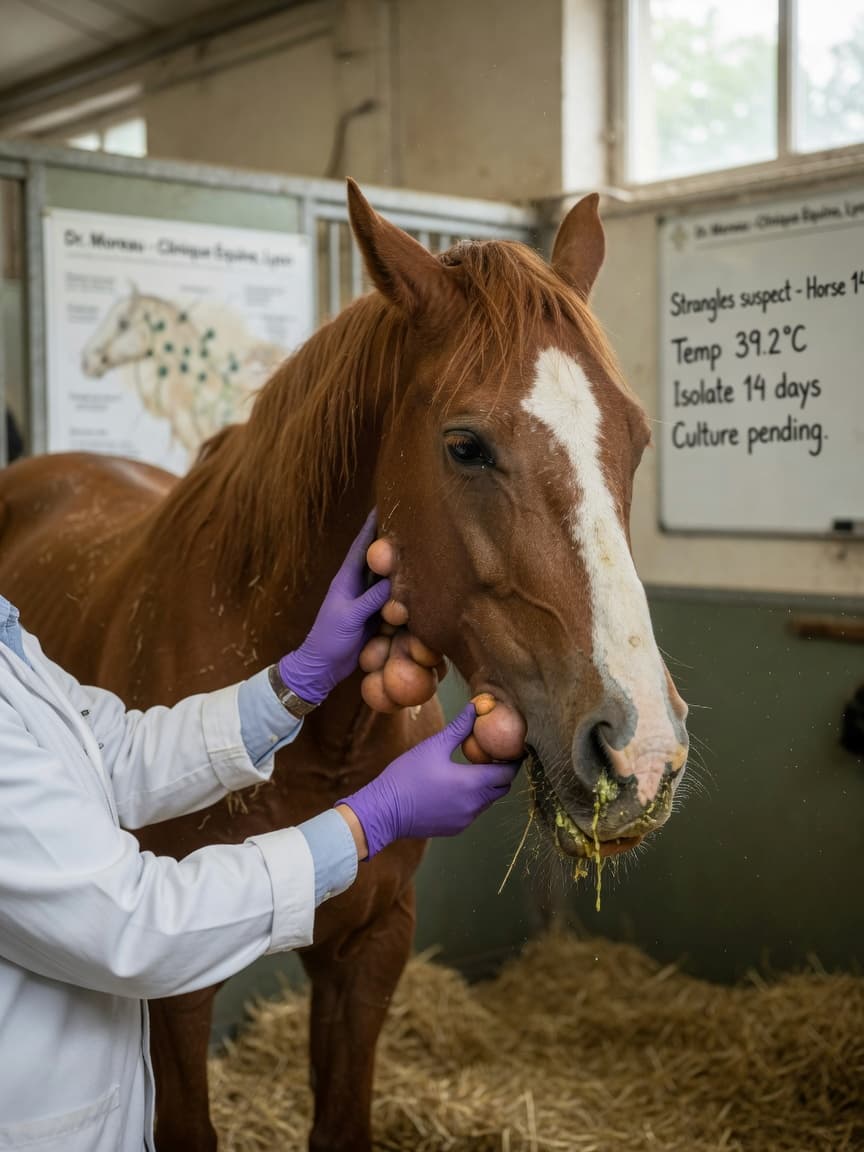
The classic presentation involves fever (typically above 38.5°C), depression, nasal discharge that progresses from clear to thick and yellow-green, and swelling of the lymph nodes beneath the jaw and around the throat. These nodes — the submandibular and retropharyngeal lymph nodes — can abscess, rupture, and drain pus. It is this swelling, which can in severe cases compress the airway, that gives the disease its name. Most horses recover without complication, though the acute phase typically lasts two to four weeks.
Bastard Strangles
In a minority of cases, the infection spreads beyond the head and neck to internal lymph nodes in the abdomen, chest, or brain — a condition called bastard strangles. This complication carries a significantly worse prognosis and can be difficult to diagnose without advanced imaging. Horses with prolonged fever, weight loss, or signs of abdominal pain following a strangles diagnosis should be assessed promptly by a vet.
Purpura Haemorrhagica
A rare but serious immune-mediated complication, purpura haemorrhagica involves inflammation of small blood vessels and causes oedematous swelling of the limbs, ventral abdomen and head, with characteristic skin haemorrhages. It can occur during or after infection and requires intensive veterinary management.
Transmission and Spread
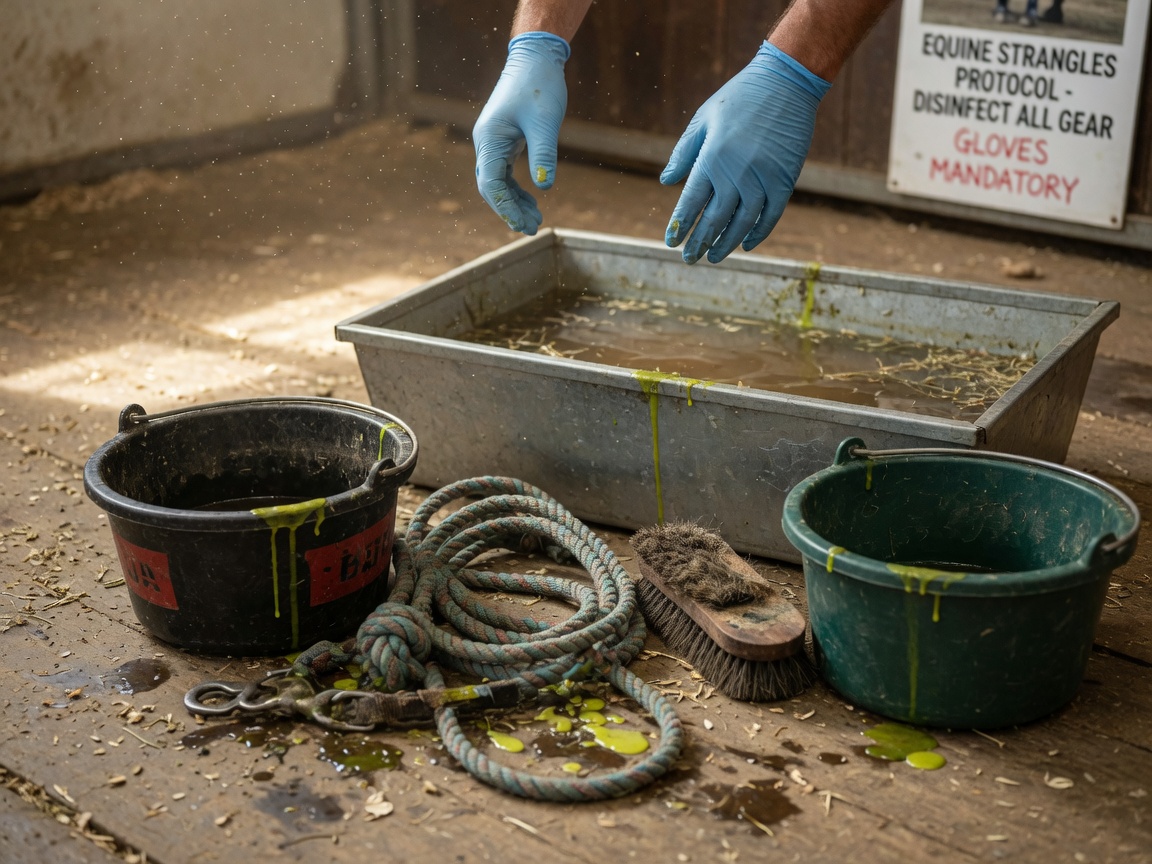
Streptococcus equi is shed in nasal discharge and pus from ruptured abscesses. Direct horse-to-horse contact and indirect transmission via contaminated water troughs, buckets, tack, clothing, and human hands are all established routes. The organism can survive in the environment for days to weeks, particularly in damp conditions. Importantly, horses are infectious before clinical signs appear, which is why strangles so frequently sweeps through an entire yard before the first case is even identified.
The Carrier Problem
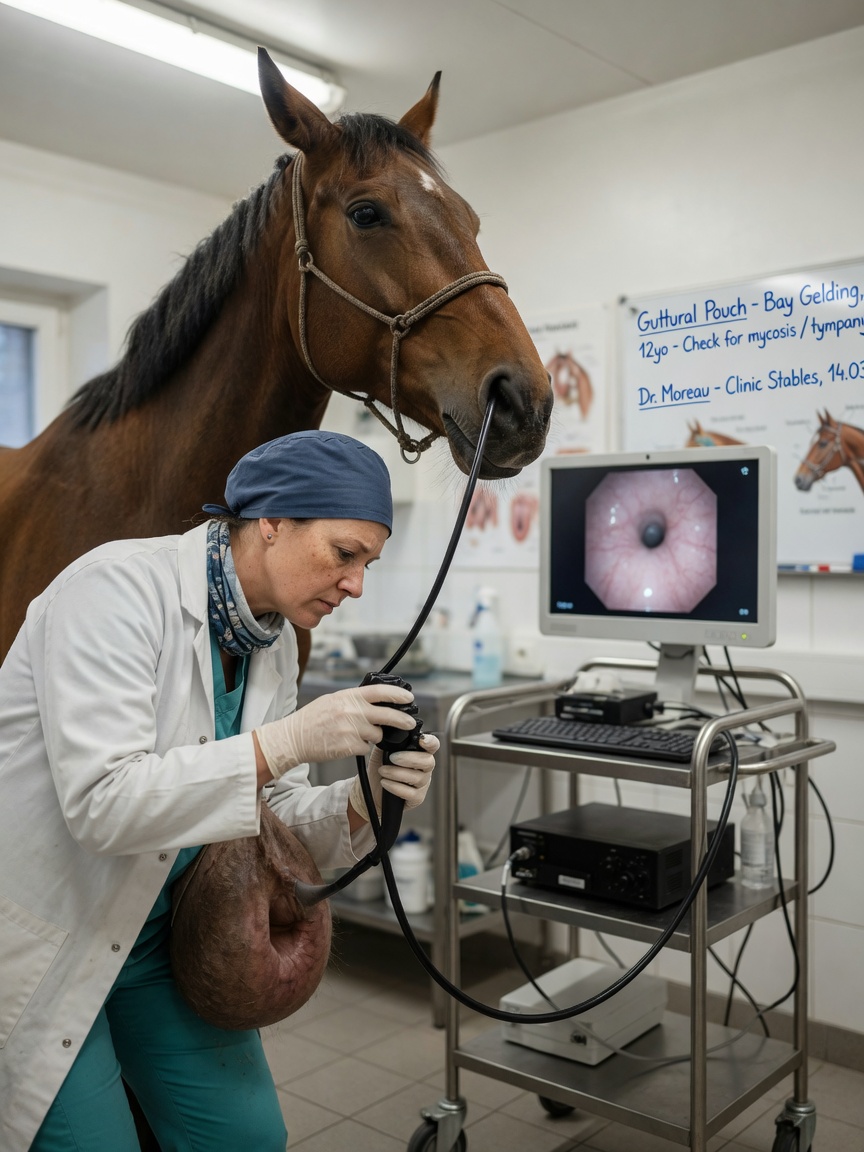
Approximately 10% of horses that recover from strangles become asymptomatic carriers, harbouring the bacterium in the guttural pouches — paired chambers connected to the Eustachian tubes — for months or even years. These carriers show no signs of illness but can shed the organism intermittently, reintroducing it to naive horses. Carrier status cannot be identified on clinical examination. Diagnosis requires endoscopic examination of the guttural pouches combined with culture or PCR testing of washes. This is why testing returning horses and new arrivals is critical for any yard that has had a strangles outbreak.
Biosecurity During an Outbreak
When strangles is suspected, your vet should be contacted immediately and movement of horses on and off the premises halted. Infected and exposed horses should be isolated into clearly separated groups — ideally infected, in-contact, and clean — with dedicated equipment and handlers for each. All horses should have temperature taken twice daily; any reading above 38.5°C warrants immediate isolation and veterinary assessment. Contaminated areas, troughs, and equipment should be thoroughly disinfected. Guttural pouch lavage may be used to treat confirmed carriers. A yard should not be declared clear until all horses have tested negative.
Vaccination and Prevention
A licensed intranasal vaccine is available in the UK and stimulates local mucosal immunity. It does not prevent infection in all cases but can reduce clinical severity and spread. Vaccination is not recommended during an active outbreak and should not be used within four weeks of potential exposure. Your vet can advise on whether a vaccination programme is appropriate for your yard, particularly if you regularly take horses to competitions, clinics, or other events where mixing with unfamiliar horses occurs.
Key Actions for Horse Owners
- Isolate any horse with fever, nasal discharge, or swollen lymph nodes immediately and contact your vet
- Never share water buckets, feed bowls, headcollars, or tack between horses without disinfection
- Test all horses on a premises before declaring an outbreak clear
- Screen horses returning from competition or livery with nasal swabs before reintegration
- Test new arrivals for carrier status via guttural pouch endoscopy before introduction to the herd
- Discuss a vaccination programme with your vet if your horses regularly mix with outside horses