
The Animal That Gets Left Behind
In virtually every rescue centre in the UK, older animals wait longest. A seven-year-old Labrador or a ten-year-old tabby may sit in a kennel or cattery for months while puppies and kittens leave within days. The reasons adopters give are understandable: concern about veterinary costs, grief at a shorter time together, uncertainty about unknown history. But the case for senior adoption is stronger than most people realise — and the experience is frequently described by those who have done it as one of the most meaningful of their lives.
What Counts as Senior
Age thresholds vary by species and breed. In dogs, giant breeds may be considered senior from around five or six years, while smaller breeds often do not reach this category until eight or nine. In cats, most vets consider seven-plus to be the start of the senior phase, with ten-plus categorised as geriatric. A seven-year-old Border Terrier is, in many respects, in the prime of life. Do not allow the word "senior" to function as a shorthand for "nearly dead."
The Real Advantages of Adopting an Older Pet
You know what you are getting
A reputable rescue organisation will have spent weeks or months observing an older animal. They can tell you with reasonable accuracy whether the dog is good with children, how they respond to cats, what their energy level is genuinely like, and whether they are house trained. This is not guesswork — it is observed behaviour. With a puppy or kitten, even the most thorough assessment is ultimately speculative.
Lower energy requirements
Senior pets generally need less intense exercise and stimulation than young animals. This does not mean they are sedentary — most older dogs still benefit from and enjoy regular walks — but the relentless energy management that comes with a young animal is substantially reduced. For households with full-time working adults, older people, or families with young children who cannot safely supervise an exuberant puppy, a calmer older pet is often a better match.
The settling-in period is shorter
Older animals — particularly those who have come from a home rather than a breeding background — typically settle into a new household more quickly than young ones. They understand household routines. They are not testing boundaries out of developmental curiosity. Many rescue volunteers describe senior dogs as being "home" within a week in a way that puppies simply cannot be.
Addressing the Health Concern Honestly
It would be dishonest to dismiss veterinary costs as irrelevant. Senior pets are more likely to develop age-related conditions: arthritis, dental disease, thyroid dysfunction in cats, cognitive changes, and various organ-related conditions. These are real considerations.
However, they are also manageable ones. Pet insurance is obtainable for older animals, though premiums and exclusion clauses require careful reading. Many rescues include an initial period of veterinary cover or subsidised treatment. And it is worth noting that puppies and kittens carry their own first-year veterinary costs — vaccinations, neutering, parasite prevention, and the not-infrequent emergency visit — that are rarely factored into the comparison.
Before adopting any senior pet, schedule a comprehensive veterinary health check covering bloodwork, dental assessment, joint evaluation, and any condition-specific screening. This gives you a clear baseline and informs an honest conversation about what the coming years might involve. Always involve your vet in decisions about ongoing management of age-related conditions.
Senior Cats: A Special Consideration
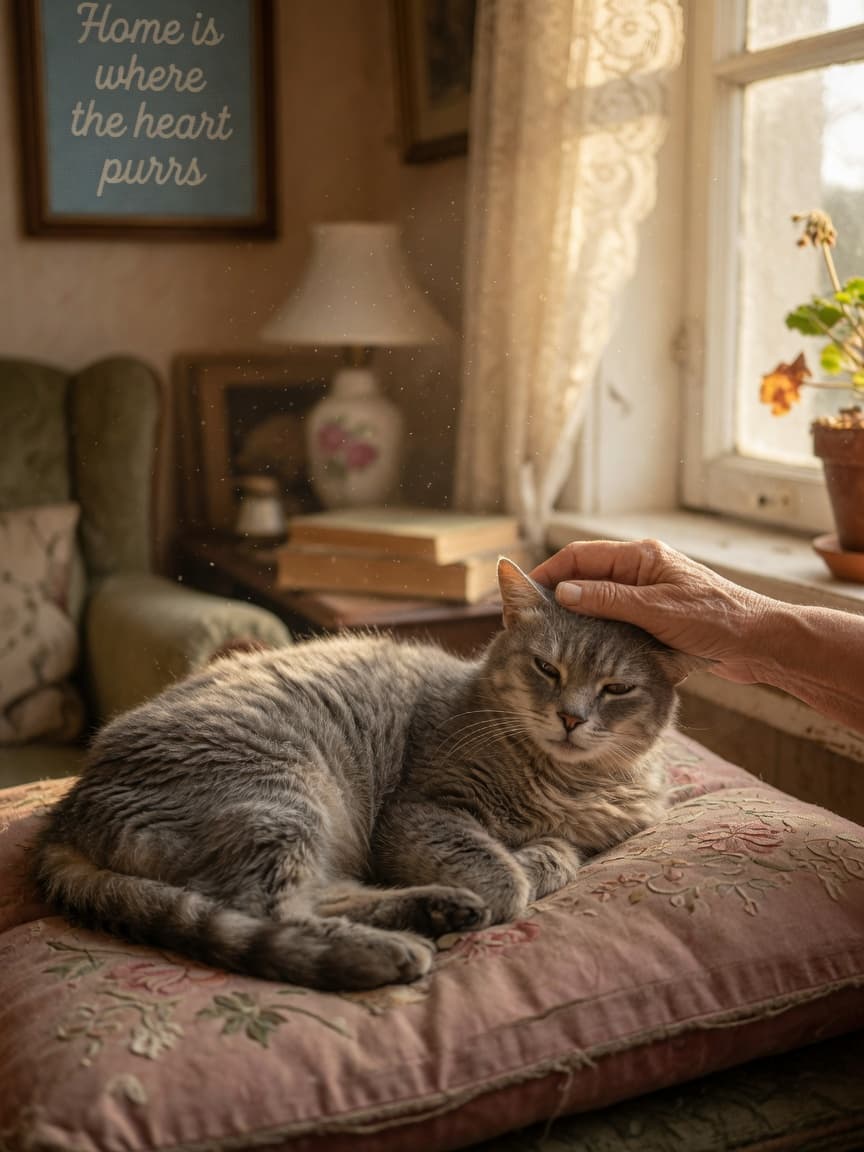
Older cats in rescue frequently arrive having lost their previous owner to illness, bereavement, or a life change. They are not feral, not damaged, not difficult. They are bewildered. Many adapt remarkably quickly to a calm, quiet household where they are not competing with young children or boisterous other pets. They tend to be affectionate, settled, and appreciative of warmth and routine in ways that younger cats, focused on play and territory-building, are not.
The bond that forms between an older cat and an adult or elderly adopter is consistently described as unusually close — an apparent recognition between two beings who understand the value of quiet company.
What to Ask Before You Adopt a Senior Pet
- Why did the animal come into rescue? (Bereavement, owner illness, and landlord changes are common — none of these reflect on the animal)
- What known medical conditions exist, and what is the current treatment plan?
- What is the animal's established routine, and how closely can you replicate it?
- What are their specific fears, preferences, and social needs?
- Does the rescue offer any post-adoption veterinary support or subsidised care?
The Time Argument, Reframed
People hesitate over senior adoption because they fear the loss. This is an entirely human response. But the years you give a senior animal are not diminished by their number. A dog who spends their last three years in a home, known and loved, rather than in a kennel or euthanised for space, has had those years transformed. That is not a small thing. Many people who have adopted senior pets report that the relative brevity of the relationship made it no less profound — and in some cases, more so.
- Ask the rescue for the animal's full known history before committing
- Schedule a vet health check within the first week — bloodwork included
- Investigate pet insurance options before adoption if possible
- Replicate the previous routine as closely as you can in the first month
- Give them a quiet adjustment period, particularly if they have come from a home that was lost
- Speak to your vet about joint supplements, dental care, and preventive screening relevant to their age and breed