
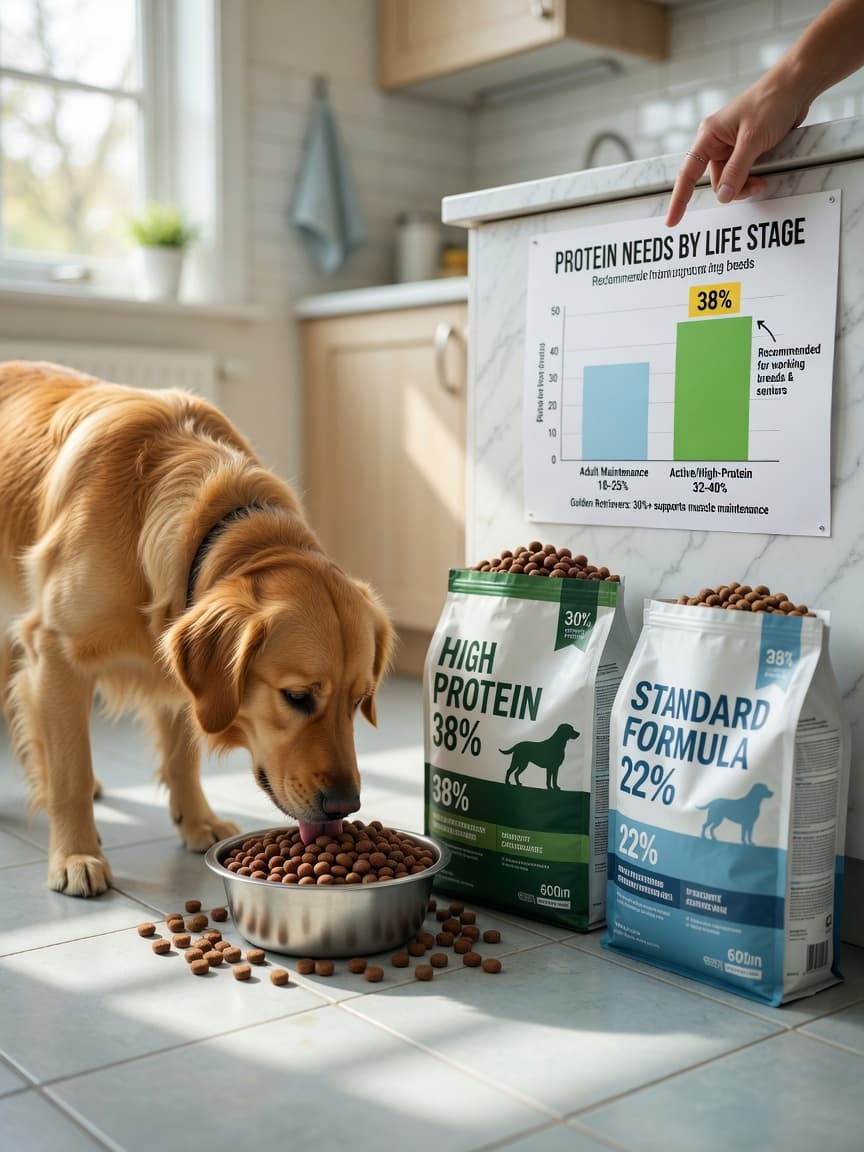
The Protein Debate Every Dog Owner Encounters
Walk into any pet shop and you will see protein percentages displayed on dog food packaging like a badge of honour — 40 percent, 50 percent, grain-free and "ancestral." The marketing implies more protein is always better. The science is more nuanced. Dogs do require high-quality protein as the foundation of their diet, but the optimal amount varies considerably by life stage, activity level, and health status, and feeding excess protein to certain dogs carries genuine risks.
What Protein Actually Does in the Canine Body
Protein is not simply fuel. It provides the amino acids dogs require for building and repairing muscle tissue, synthesising enzymes, hormones, and immune factors, maintaining coat and skin integrity, and supporting neurological function. Dogs require 10 essential amino acids that they cannot synthesise in sufficient quantities and must obtain from food: arginine, histidine, isoleucine, leucine, lysine, methionine, phenylalanine, threonine, tryptophan, and valine.
The quality of dietary protein matters as much as the quantity. Digestibility and amino acid profile determine how useful a protein source actually is. Eggs and muscle meat score highly; some plant proteins are lower in digestibility and deficient in specific amino acids such as taurine — an area that has received considerable regulatory attention in recent years.
Minimum Requirements and Practical Recommendations
The Association of American Feed Control Officials sets minimum crude protein requirements at 18 percent on a dry matter basis for adult maintenance and 22 percent for growth and reproduction. These are floors, not targets. Most nutritionists and veterinary guidelines suggest practical protein levels closer to 25 to 30 percent dry matter for healthy adult dogs, with working and sporting dogs benefiting from 28 to 35 percent.
Puppies and Growing Dogs
Puppies have substantially higher protein needs per unit of body weight than adults. Quality puppy foods typically provide 28 to 35 percent protein on a dry matter basis. Large breed puppies require careful attention to the overall dietary balance — not just protein, but calcium to phosphorus ratios and energy density — to support skeletal development without promoting excessive growth rates.
Senior Dogs
The old assumption that senior dogs need less protein has been largely revised. Older dogs are actually at increased risk of muscle loss — a condition known as sarcopaenia — and research suggests they benefit from maintained or slightly increased protein intake, provided kidney function is normal. Studies have shown that healthy senior dogs digest and utilise protein less efficiently than younger adults, supporting the case for adequate, high-quality protein in their diets.
What Happens When Protein Intake Is Excessive

Dogs can process and excrete excess dietary nitrogen, but this comes with physiological costs that matter in certain populations.
Healthy Adult Dogs
In a healthy dog with normal kidney function, consuming more protein than is needed for anabolism means the excess amino acids are deaminated in the liver. The nitrogen is converted to urea and excreted by the kidneys, while the carbon skeletons are used for energy or stored as fat. A dog eating far more protein than it needs will not gain muscle as a result — it will gain weight if overall energy intake is excessive, or simply excrete expensive nutrients.
Dogs With Kidney Disease
In dogs with chronic kidney disease, the kidneys have reduced capacity to clear urea and other nitrogenous waste products. High dietary protein accelerates the accumulation of these toxins — a state called uraemia — worsening symptoms and potentially accelerating disease progression. Protein restriction in dogs with confirmed kidney disease is a genuine medical intervention, not a preference. However, the degree of restriction must be balanced against the risk of muscle wasting and malnutrition. This balance requires veterinary oversight and ideally input from a veterinary nutritionist.
Dogs With Liver Disease
The liver metabolises amino acids and converts ammonia to urea. Dogs with significant hepatic dysfunction may develop hepatic encephalopathy if fed high protein diets, as ammonia accumulates and crosses the blood-brain barrier. Modified protein diets using plant-based or dairy-based proteins may be recommended in some liver conditions, though again this requires veterinary direction.
Protein Source Quality and the Taurine Question
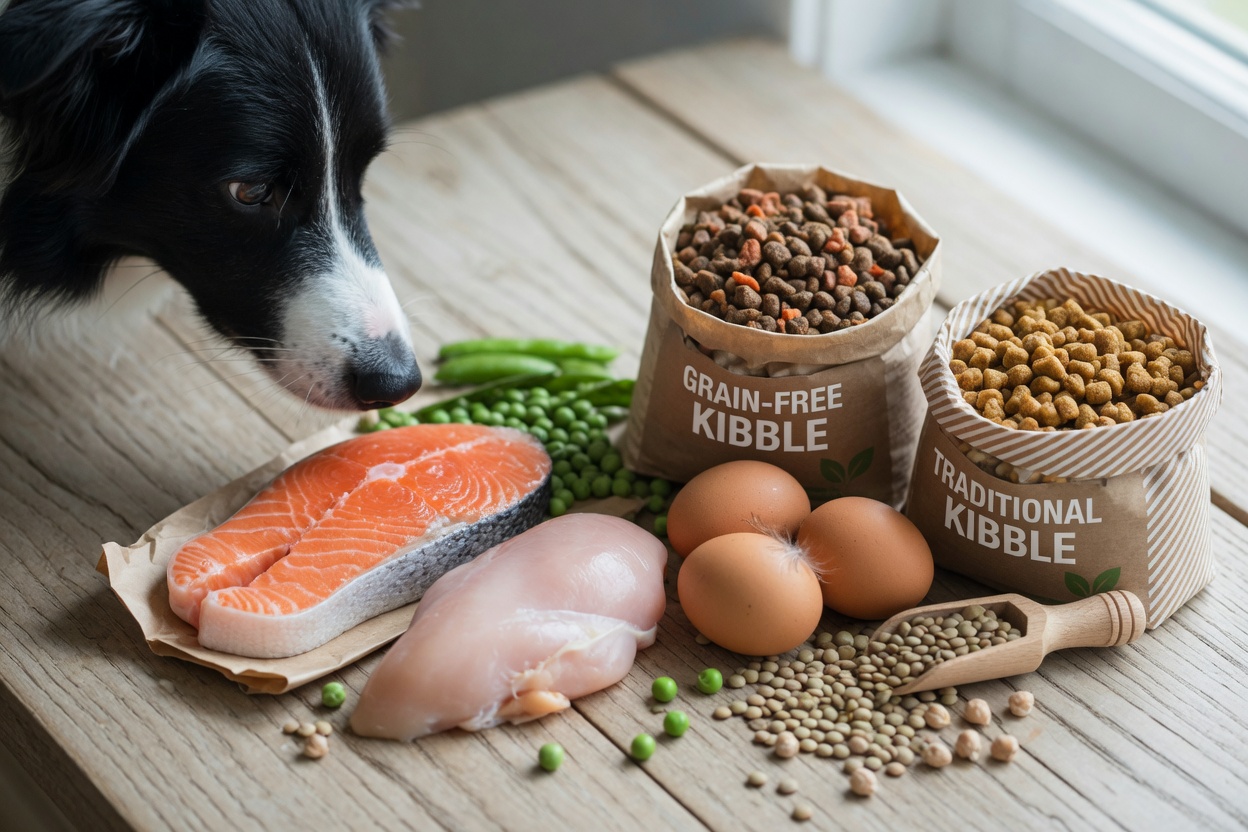
From 2018 onwards, reports emerged of dilated cardiomyopathy in dogs eating grain-free, legume-rich diets — particularly those high in peas, lentils, and chickpeas. An association with low taurine status was identified in some cases, though the full mechanism remains under investigation. This has led to greater scrutiny of protein sources in commercial dog food and a recommendation from many veterinary cardiologists to choose foods with traditional grains as the primary carbohydrate source unless a grain-free diet is medically indicated. Animal-source proteins generally provide taurine directly; plant proteins do not.
Practical Guidance for Dog Owners
- Choose foods with a named animal protein — chicken, beef, salmon — listed as the first ingredient
- Aim for 25 to 30 percent crude protein on a dry matter basis for healthy adults; check the label or manufacturer's website for dry matter values
- Increase protein for working, sporting, or pregnant dogs; maintain adequate protein in seniors
- Do not restrict protein in healthy dogs out of fear — the evidence does not support routine low-protein feeding in normal animals
- If your dog has kidney or liver disease, consult your vet before choosing a food — do not self-prescribe protein restriction
- Be cautious with very high-legume, grain-free diets until the taurine question is more definitively resolved