
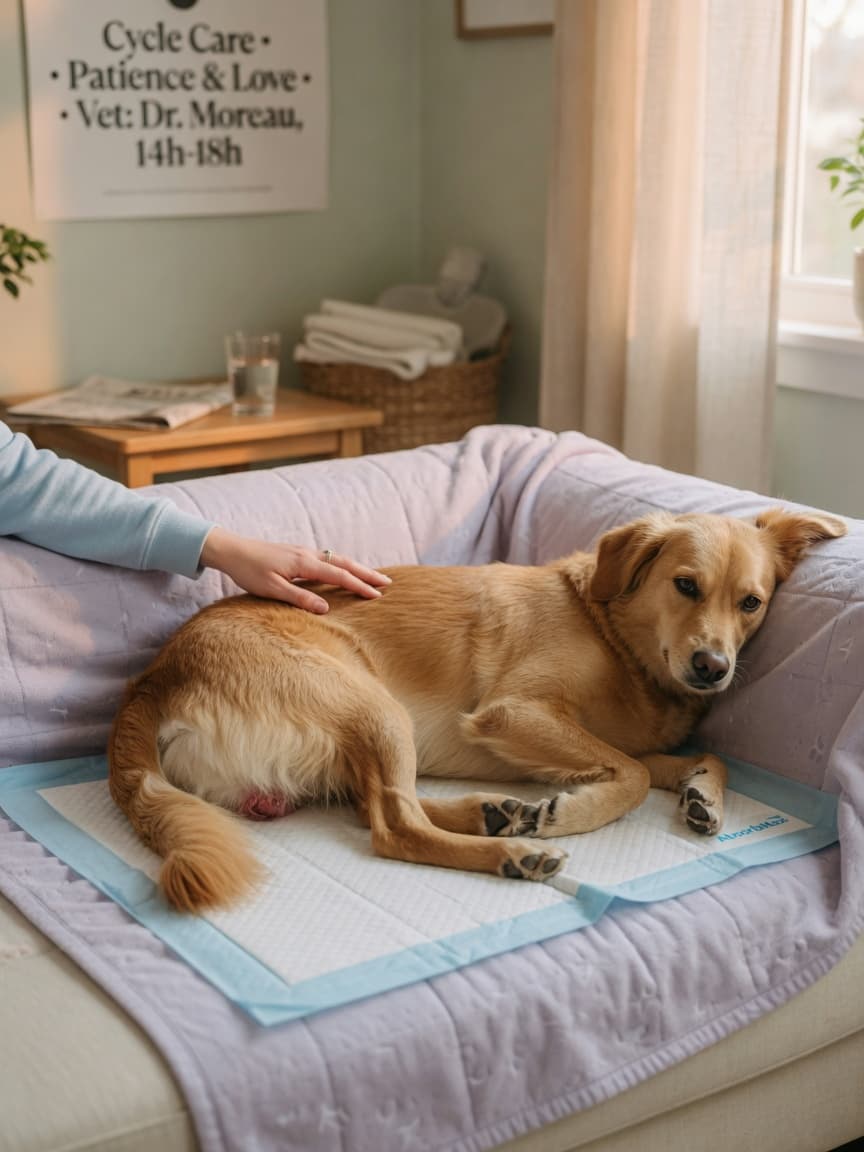
If you're a dog owner, understanding your female dog's reproductive cycle is essential for her wellbeing and comfort. A dog in heat—also called oestrus—is a natural biological process, but it can be uncomfortable and confusing for your pet. During this period, your dog experiences hormonal changes that affect her behaviour, emotions, and physical comfort. Knowing what to expect and how to support your dog through this time will help her feel secure and cared for, whilst keeping your home manageable.
Recognising the Signs of Heat in Dogs
Understanding when your dog is in heat is the first step towards providing proper support. The average oestrus cycle lasts between 7 to 14 days, though some dogs may experience longer or shorter cycles. Here are the key signs to watch for:
- Vaginal discharge – Often bloody or blood-tinged, ranging from light pink to deep red
- Vulvar swelling – The vulva becomes enlarged and puffy
- Increased urination – More frequent bathroom breaks, sometimes indoors
- Behavioural changes – Restlessness, anxiety, or unusual clingyness
- Appetite changes – Some dogs eat less whilst others remain unaffected
- Excessive licking – Frequent licking of the vulva area
- Attracting males – Unneutered male dogs may become overly interested
Creating a Comfortable Physical Environment
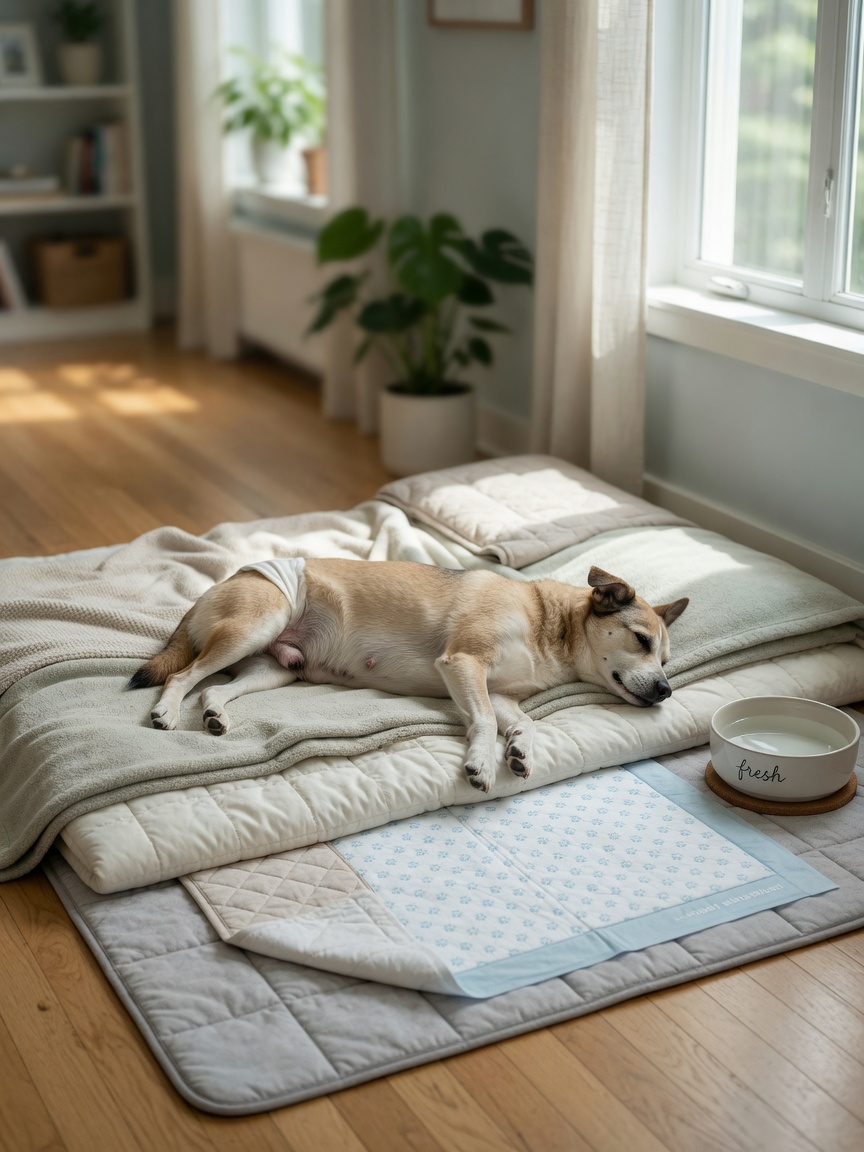
Your dog needs a safe, clean space during her heat cycle. Provide washable blankets and bed covers that can be changed frequently, as discharge may soil fabrics. Consider placing puppy pads or absorbent mats in her sleeping areas to protect your furniture.
Maintain a slightly cooler room temperature if possible, as some dogs feel uncomfortable when warm. Ensure she has constant access to fresh water, as increased urination requires proper hydration. A consistent bathroom schedule is crucial—take her outside more frequently than usual, particularly first thing in the morning and before bedtime.
Managing Behaviour and Emotional Support
Dogs in heat often experience mood swings similar to hormonal changes in humans. Your dog may be clingy one moment and irritable the next. Here's how to support her emotionally:
- Maintain a calm, reassuring presence—your stability helps her feel secure
- Offer extra gentle cuddles and comfort if she seeks them
- Engage in gentle play rather than vigorous exercise that might stress her
- Avoid introducing new situations, people, or pets during her cycle
- Keep her away from other dogs, especially unneutered males, for safety and to reduce hormonal excitement
Health and Hygiene Considerations
Maintaining proper hygiene is important during your dog's heat cycle. Gently wipe her vulva with warm water and soft cloths throughout the day. Some owners find specially designed dog nappies helpful for managing discharge, particularly in multi-pet households or when dogs spend time indoors.
Monitor her health closely. If you notice excessive bleeding, foul odours, fever, or lethargy, contact your veterinary surgeon immediately—these may indicate uterine infection (pyometra), a serious condition requiring urgent care.
Exercise and Activity Adjustments
Whilst your dog needs movement and mental stimulation, intense exercise may increase discomfort during her cycle. Replace lengthy walks with shorter, more frequent outings. Low-impact activities such as gentle play, sniffing games, and puzzle toys help keep her mentally engaged without physical strain.
Long-Term Reproductive Health: Spaying Considerations
If managing heat cycles becomes challenging, discuss spaying (neutering) with your veterinary surgeon. Spaying eliminates heat cycles entirely and offers additional health benefits, including reduced risk of mammary cancer and elimination of life-threatening uterine infections. Most vets recommend spaying before the first heat cycle or between cycles.
Key Takeaways
Comforting a dog in heat requires understanding, patience, and practical adjustments to your home routine. By recognising the signs early, creating a supportive environment, and offering emotional reassurance, you'll help your dog navigate this natural process with minimal stress. Remember that every dog is different—some barely notice their cycle whilst others need extra attention. Trust your instincts, maintain good hygiene practices, and don't hesitate to contact your veterinary surgeon with concerns. Your dedication to her wellbeing during this time strengthens your bond and ensures she remains healthy and happy.