ForPetsHealthcare
Natural Remedies

Omega-3 for Cats: Benefits, Sources, and Dosing

By Julia WrenfieldUpdated August 4, 20262 min read
Evidence-based · Sources checked
{"en": "Healthy cat eating nutritious food rich in omega-3 fatty acids for coat and joint health", "es": "Gato saludable comiendo alimento nutritivo rico en \u00e1cidos grasos omega-3 para la salud del pelaje", "fr": "Chat en bonne sant\u00e9 mangeant une nourriture nutritive riche en acides gras om\u00e9ga-3", "de": "Gesunde Katze frisst n\u00e4hrstoffreiches Futter mit Omega-3-Fetts\u00e4uren f\u00fcr Fell und Gelenke", "nl": "Gezonde kat eet voedingrijk voer met omega-3-vetzuren voor vacht- en gewrichtsgezondheid", "pt": "Gato saud\u00e1vel comendo alimento nutritivo rico em \u00e1cidos graxos \u00f4mega-3 para pelo e articula\u00e7\u00f5es", "it": "Gatto sano che mangia cibo nutriente ricco di acidi grassi omega-3 per la salute del mantello"}

Omega-3 fatty acids are among the most evidence-supported supplements for cats. Here is what they do and how to use them.

Benefits of Omega-3 for Cats

  • Reduces inflammation — beneficial for arthritis, allergies, IBD
  • Supports coat and skin health
  • Supports heart health
  • May support kidney function
  • Supports brain development in kittens

Best Sources

Flat-lay of omega-3 sources including fresh sardines, mackerel, salmon oil, and algae supplement on marble surface
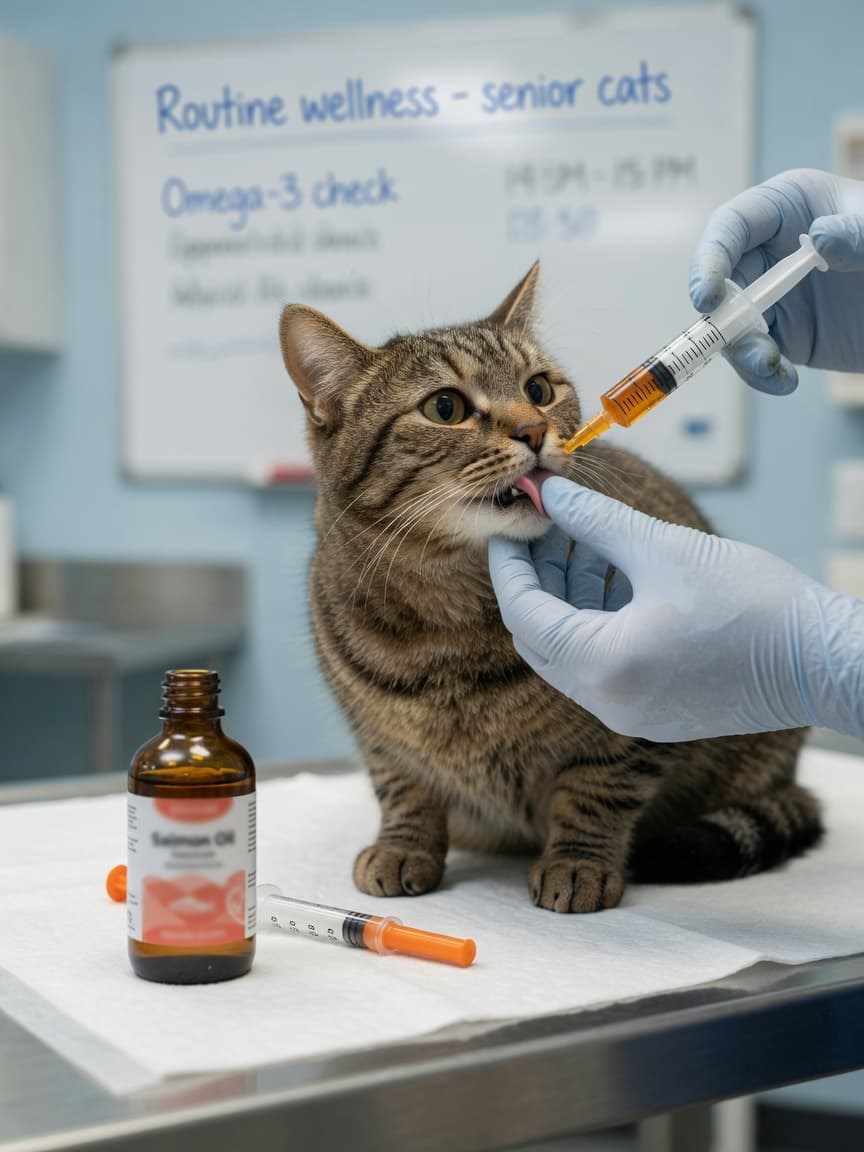
  • Fish oil (salmon oil, sardine oil): richest source of EPA and DHA
  • Whole fish in the diet: sardines, mackerel, herring
  • Algae-based omega-3: plant-based EPA/DHA source

What to Avoid

Cod liver oil contains vitamins A and D that can reach toxic levels at high doses. Stick to body oil (salmon oil, sardine oil) rather than liver oil.

Dosing

General guideline: 40mg EPA+DHA per kg body weight daily. A 4kg cat would need approximately 160mg EPA+DHA. Always check product labels for actual EPA+DHA content.

Supplement Quality

Choose products with IFOS certification or AAFCO compliance. Rancid fish oil is worse than no supplementation.

#omega 3 for cats benefits#cat health#feline nutrition#forpetshealthcare

Sources & further reading

This article is based on peer-reviewed veterinary research and reputable animal-health sources. Explore the underlying science in our Research Library.

Related articles

What is the Difference Between Hemp Seed Oil and CBD Oil?

If you've been browsing pet health supplements recently, you've likely encountered both hemp seed oil and CBD oil mentioned in the same breath. Whilst these products come from the same plant, they are fundamentally different compounds with distinct properties and effects on your pet's health. Unders…

Read more →

What is CBD Extraction, and Why Does it Matter?

If you've been exploring CBD products for your pets, you've likely encountered the term "extraction method" without fully understanding what it means or why it matters. The truth is, how CBD is extracted from the hemp plant directly affects the quality, purity, and safety of the product your dog or …

Read more →

Does CBD Oil Need to Be Refrigerated? Quick Storage Guide

If you're giving your dog or cat CBD oil as part of their wellness routine, you've likely wondered about the best way to store it. Unlike some supplements, CBD oil's shelf life and potency depend heavily on how you keep it—and temperature plays a crucial role. In this guide, I'll walk you through ev…

Read more →

Does CBD Get You High?

If you've been researching CBD for your pet, you've likely encountered the question: "Will it make my dog or cat high?" It's one of the most common concerns pet owners express when considering cannabidiol (CBD) as a wellness supplement. The short answer is no—CBD won't get your pet high. However, un…

Read more →

Can Humans Take Pet CBD Oil? Safety, Differences, and Risks Explained

You've probably noticed the explosion of CBD products on the market—from pet supplements for your dog's anxiety to wellness oils for your own health. But if you're eyeing that bottle of CBD oil sitting on your shelf meant for your pet, you might be wondering: could you take it safely? The answer is …

Read more →

How Can CBD + CBDA Help with Joint Discomfort in Dogs?

If your dog struggles with stiffness, limping, or reluctance to jump and play, joint discomfort could be affecting their quality of life. Whilst traditional pain management options exist, many pet owners are exploring cannabidiol (CBD) and cannabidiolic acid (CBDA)—two compounds derived from hemp pl…

Read more →
Disclaimer:This article is for informational purposes only and does not constitute veterinary advice. Always consult a qualified veterinarian for your pet's health concerns.

Free newsletter

Pet health tips, straight to your inbox

Weekly science-backed advice for dog & cat owners. No spam, unsubscribe anytime.