
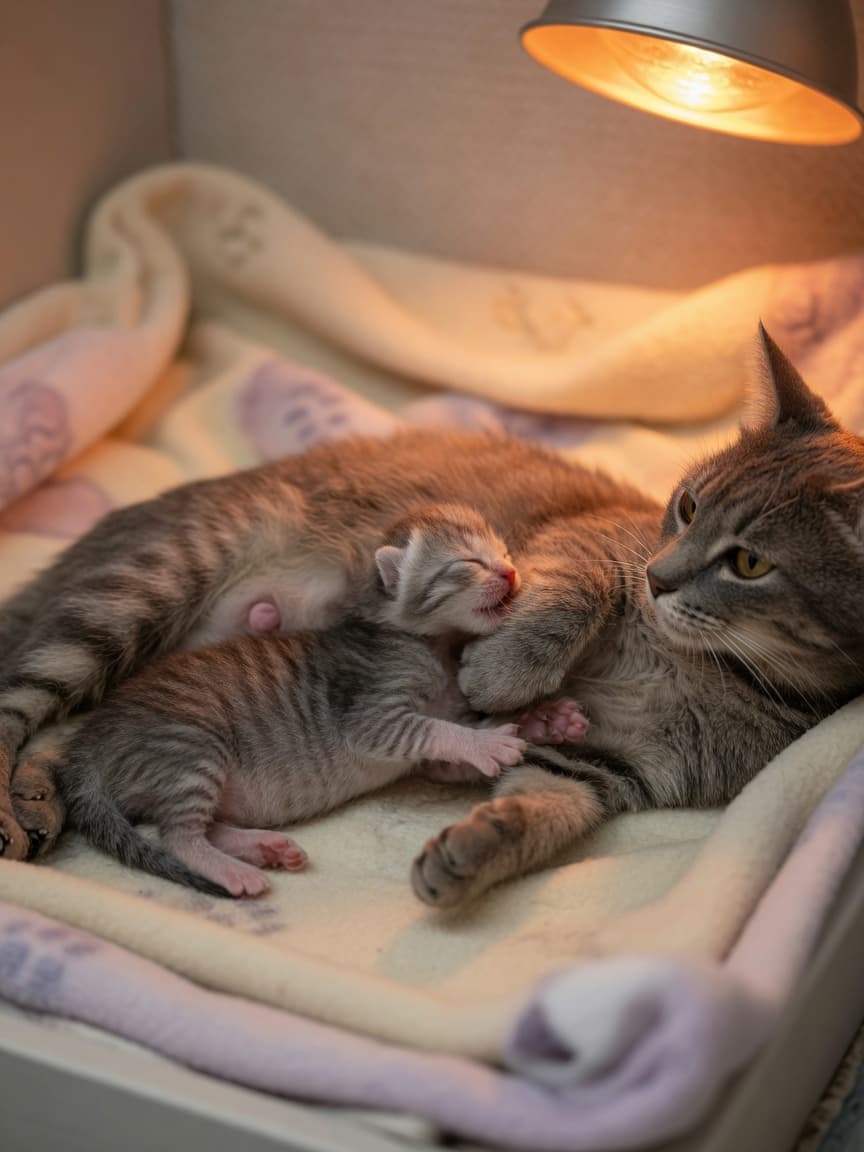
Newborn Kitten Care: Feeding, Warmth & Development Guide
- First hours: Colostrum essential; keep at 32°C
- Eyes open: Days 10–14
- Ears open: Days 10–14
- Walking begins: Around day 21
- Litter box use: Days 21–28
- Orphan feeding frequency: Every 2 hours, 24/7
Newborn kittens are among the most fragile of all domestic animal neonates. Born with their eyes and ears sealed shut, unable to walk or regulate their own temperature, and entirely dependent on their mother for food, warmth, and elimination, they require attentive, knowledgeable care to thrive. Whether you're supporting a nursing queen and her litter or hand-raising orphaned kittens, understanding the developmental milestones and the signs of trouble is essential.
The First Hours: What Must Happen
The first two hours after birth are among the most critical in a kitten's life. Each kitten must receive colostrum — the thick, antibody-rich first milk produced by the queen in the hours after birth. Colostrum contains immunoglobulins (primarily IgG) that provide passive immune protection during the period before the kitten's own immune system matures. The kitten's gut can absorb these large immunoglobulin molecules only during the first 16–24 hours after birth, through a process called gut closure. After this window closes, colostrum is digested like any other protein and the protective effect is lost.
Every kitten in the litter must nurse in this window. In large litters, ensure smaller or weaker kittens have access — larger littermates may dominate the nipples. If a kitten cannot nurse, contact your vet: some clinics maintain a colostrum bank, and supplementing with properly sourced colostrum can be life-saving.
Maintain the whelping area at 32°C (90°F) in the first days. Neonatal kittens cannot shiver and have virtually no capacity for thermogenesis (heat production). Hypothermia is one of the leading causes of neonatal kitten death and sets in rapidly. A heat lamp over one section of the nest — not covering the entire area, so kittens can move away if too warm — works well. The mother's body provides substantial warmth when she is present.
Development Timeline: Weeks 1–4
Days 1–10 (Week 1): Kittens are entirely helpless. Eyes are sealed shut. Ear canals are closed. Movements are limited to crawling in search of warmth and nipples. They nurse almost continuously — every 1–2 hours around the clock. The mother stimulates urination and defecation by licking the anogenital area after each feeding; without this stimulation, kittens cannot eliminate independently. Weigh each kitten daily on a gram scale from birth. Healthy kittens should gain approximately 10–15 grams per day.
Days 10–14 (Week 2): The eyes begin to open. This happens gradually — first a narrow slit, then widening over several days. Initial vision is poor and primarily sensitive to light and large movements. Never attempt to force eyes open; this causes permanent damage to the delicate structures. The ear canals also begin to open in this window. Kittens may react with a startled scramble to sudden loud noises. Nursing continues constantly. Temperature requirements can be reduced slightly to around 27–29°C as kittens begin to huddle together more effectively.
Days 14–21 (Week 3): Vision and hearing sharpen. Walking attempts begin — wobbly, unsteady, and endearing. Kittens begin to interact socially, wrestling and playing with littermates. Teeth emerge (deciduous canines first). This is an important window for socialization: gentle handling from day 14 onward, brief petting sessions, and exposure to normal household sounds significantly improve the kitten's development into a confident, sociable adult cat. Keep handling sessions to 2–3 minutes per kitten initially.
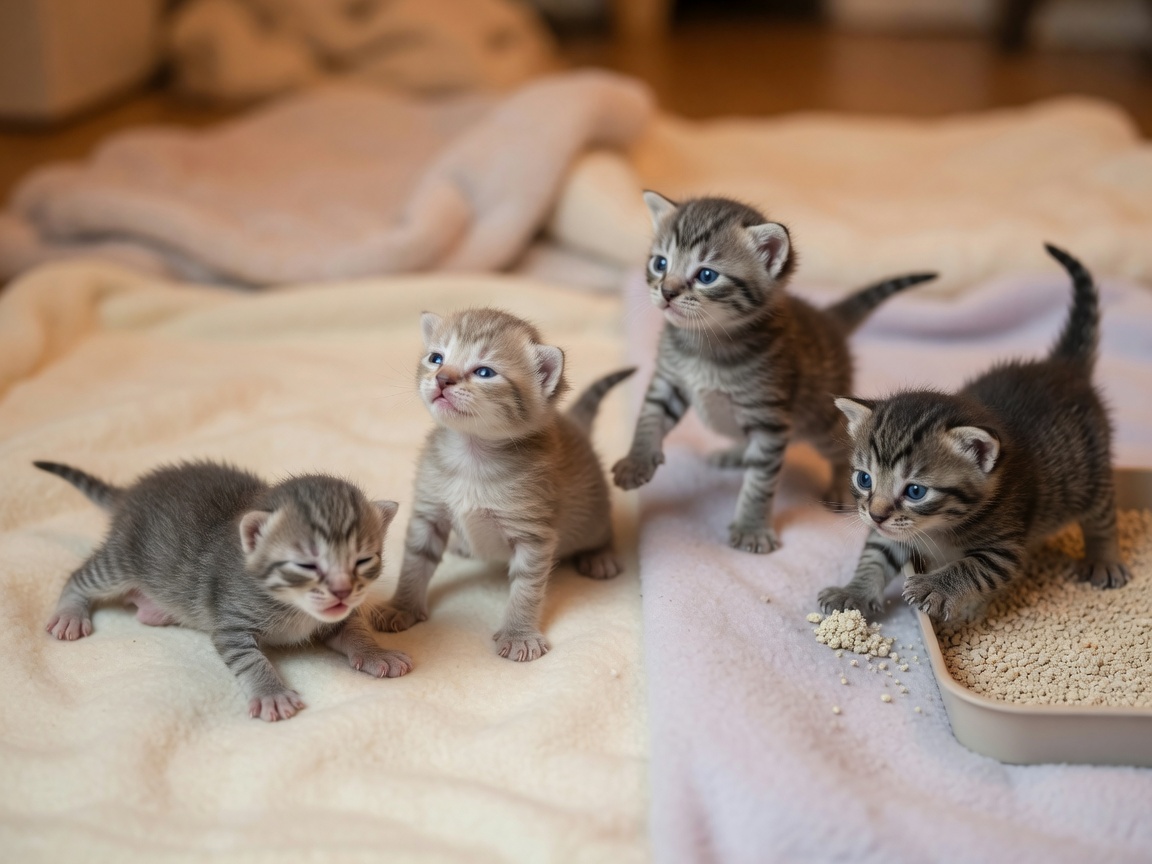
Days 21–28 (Week 4): Kittens are increasingly mobile and curious. Litter box training can begin — place a shallow tray with a small amount of unscented, non-clumping litter in the whelping area. Most kittens take to it naturally once they begin moving around independently. Weaning can begin: offer a thin gruel of kitten milk replacer mixed with high-quality kitten pâté or finely ground kibble in a shallow dish. Kittens explore with all their senses at this age and will step in the food more than eat it initially — this is normal. The queen's nursing will decrease naturally over weeks 4–7.
Orphan Kitten Care: Feeding Without a Mother
Raising orphaned kittens is rewarding but intensely demanding. The two most critical requirements are appropriate nutrition and warmth — and for very young kittens, feeding frequency comparable to what a mother would provide.
What to feed: Use a commercial kitten milk replacer (KMR) formulated to match feline milk's composition. Feline milk is high in protein and fat and low in lactose compared to cow's milk. Cow's milk, goat's milk, and human infant formula are all inappropriate and can cause life-threatening diarrhea. Follow the manufacturer's instructions for mixing and temperature — feed at approximately 38°C (body temperature).
How often: Kittens under 1 week: every 2 hours, including overnight. Week 2: every 2–3 hours. Week 3: every 3–4 hours. Week 4: every 4–5 hours, beginning to introduce gruel alongside bottle feeds.
How to feed: Use a small kitten nursing bottle with a soft, appropriately sized nipple. Position the kitten on its stomach — never on its back — to prevent aspiration. Allow the kitten to suckle at its own pace. Never squeeze formula into the kitten's mouth. If using a syringe, proceed extremely slowly. Aspiration pneumonia from inhaled formula is rapidly fatal.
Stimulate elimination after every single feed using a warm, damp cotton ball in a gentle circular motion on the abdomen and anogenital area. Do this for 30–60 seconds after each meal until the kitten is urinating and defecating on its own (usually by week 3–4).
Fading Kitten Syndrome: Warning Signs
Fading kitten syndrome describes the rapid decline and death of a kitten who initially appears healthy. It accounts for a significant proportion of neonatal kitten mortality. Warning signs include: constant crying (a well-fed kitten sleeps quietly), failure to nurse or being pushed away from the nipple, cold body temperature, pale, blue, or grey gums, rapid weight loss, extreme lethargy or limpness, labored breathing, and abdominal distension. A fading kitten requires immediate veterinary attention — causes include neonatal isoerythrolysis (blood type incompatibility), infection, congenital abnormality, hypothermia, and hypoglycemia. Time matters enormously; do not wait to see if the kitten improves on its own.
Deworming and Health Schedule
Kittens should be dewormed starting at 2 weeks of age, repeated at 4, 6, and 8 weeks, then monthly until 6 months. Roundworms (Toxocara cati) are transmitted through the queen's milk and virtually all kittens are infected. Use only products specifically labeled as safe for kittens of that age — many common dewormers are too strong for neonates. Your vet can recommend appropriate products. First vaccinations are typically given at 8–9 weeks.
Give orphaned or supplemented kittens the nutrition they need. Shop kitten milk replacer on Zooplus →
Key Takeaways
- Every kitten must receive colostrum within the first 16–24 hours — this window cannot be recreated later.
- Maintain 32°C ambient temperature for week 1; neonatal kittens cannot generate their own body heat.
- Eyes and ears open days 10–14; socialization handling should begin around day 14.
- Orphan kittens require feeding every 2 hours and stimulation for elimination after every feed.
- Fading kitten syndrome — constant crying, weight loss, cold temperature, pale gums — is a veterinary emergency.
References
- Lawler DF. (2008). Neonatal and pediatric care of the puppy and kitten. Theriogenology. PMID: 18538835
- Casal ML, Jezyk PF, Giger U. (1996). Transfer of colostral antibodies from queens to their kittens. American Journal of Veterinary Research. PMID: 8712509