
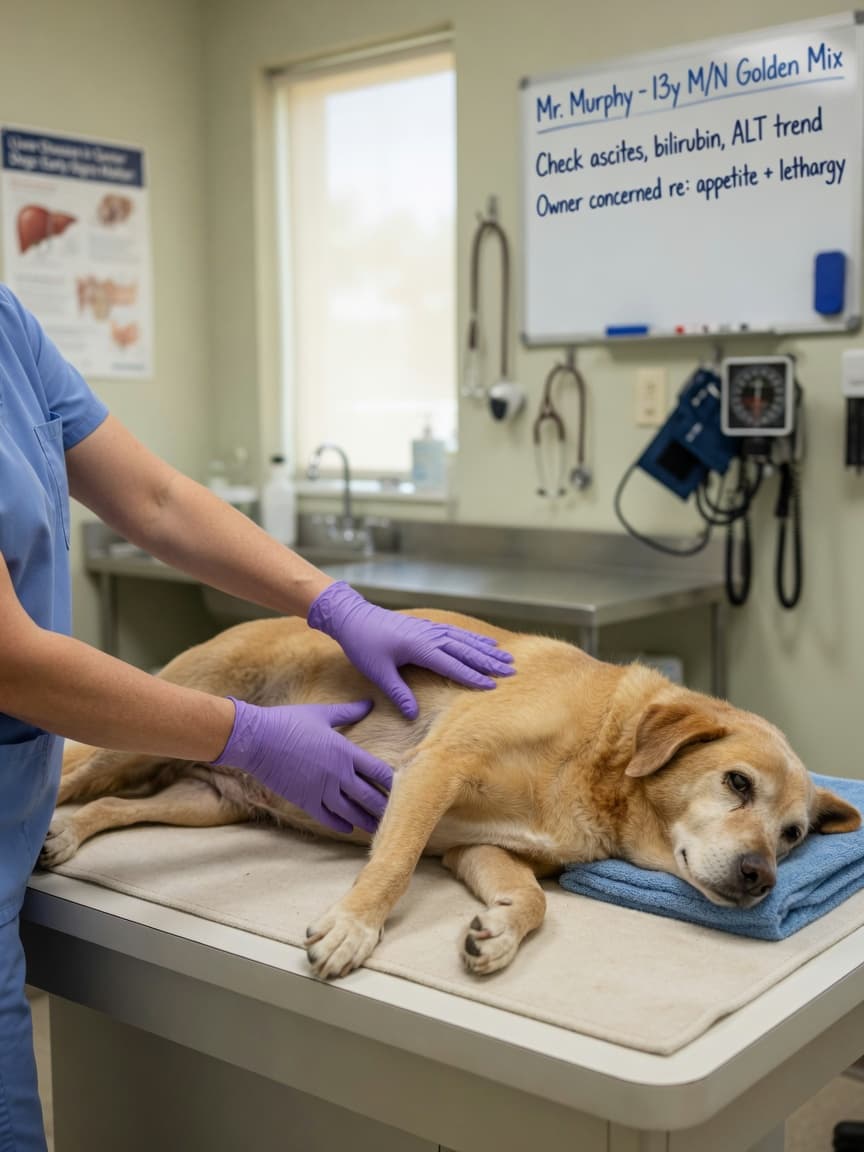
Understanding the Canine Liver
The liver is one of the most hardworking organs in a dog's body. It filters toxins from the blood, produces bile for digestion, metabolises proteins and fats, stores glycogen for energy, and synthesises clotting factors. Because it performs so many functions, liver disease can affect virtually every system in the body, making it both common and complex to manage.
What makes the liver particularly interesting is its remarkable capacity for regeneration. It can lose up to 70 per cent of its functional mass and still compensate — which means clinical signs often do not appear until the disease is already well established. This is why regular blood screening in older dogs or certain breeds is genuinely worthwhile.
Recognising the Signs

Early liver disease can be almost invisible. As the condition progresses, however, a recognisable pattern of symptoms tends to emerge. Knowing what to look for allows owners to act before things deteriorate significantly.
- Lethargy and reduced activity
- Loss of appetite or weight loss
- Increased thirst and urination
- Vomiting and diarrhoea
- Jaundice — a yellow tint to the skin, gums, or whites of the eyes
- Abdominal distension from fluid accumulation (ascites)
- Neurological changes such as confusion, circling, or seizures (hepatic encephalopathy)
Hepatic encephalopathy deserves particular mention. It occurs when the liver can no longer detoxify ammonia produced during protein digestion. Ammonia accumulates in the bloodstream and crosses the blood-brain barrier, causing cognitive disturbances that can appear dramatic and frightening. Dogs may seem disoriented, press their heads against walls, or experience episodes of altered consciousness.
Common Causes of Liver Disease
There is no single cause of canine liver disease. Several distinct conditions can damage liver tissue, and some dogs face multiple contributing factors simultaneously.
Chronic Hepatitis
Chronic hepatitis refers to persistent inflammation of the liver. It may be immune-mediated, infectious, or associated with copper accumulation (covered in a separate article). Over time, repeated inflammation leads to fibrosis — the replacement of functional liver tissue with scar tissue — ultimately resulting in cirrhosis in severe cases.
Toxin Exposure
The liver is the primary organ responsible for processing ingested toxins, which makes it particularly vulnerable. Common culprits include xylitol (found in sugar-free products), certain mushrooms, blue-green algae, some herbal supplements, and long-term use of non-steroidal anti-inflammatory drugs (NSAIDs) without appropriate monitoring.
Infectious Causes
Canine infectious hepatitis, caused by canine adenovirus type 1, was historically a major cause of liver disease but is now largely prevented through vaccination. Leptospirosis remains a relevant infectious threat, particularly in dogs with access to standing water or wildlife.
Breed Predispositions
Certain breeds carry a genetic predisposition to liver problems. Labrador Retrievers, Dobermann Pinschers, Cocker Spaniels, and Bedlington Terriers are among the most commonly affected. In these dogs, proactive monitoring rather than waiting for symptoms is the most sensible approach.
Diagnosis and Monitoring
A liver panel — measuring ALT, ALP, AST, GGT, bilirubin, and bile acids — provides an initial picture of liver health. Elevated enzymes suggest hepatocellular damage or biliary disease, though they do not tell the whole story. Bile acid stimulation tests assess functional capacity more accurately than enzyme levels alone.
Ultrasound imaging allows assessment of liver size, texture, and architecture, and can guide fine-needle aspiration or biopsy. A biopsy, while invasive, is often necessary to determine the specific type of liver disease and direct treatment appropriately.
Dietary Management

Nutrition plays a central role in supporting a dog with liver disease, and the right dietary approach depends on the underlying cause and stage of disease.
Protein
For many years, the standard advice was to restrict protein in dogs with liver disease to reduce ammonia production. Current veterinary thinking is more nuanced. Protein restriction is only appropriate when hepatic encephalopathy is present. Otherwise, adequate high-quality, highly digestible protein is essential to support liver regeneration and prevent muscle wasting. Dairy and plant-based proteins tend to produce less ammonia than red meat, making them preferred sources when restriction is necessary.
Carbohydrates and Energy
Providing sufficient calories from digestible carbohydrates helps prevent the body from breaking down protein for energy, which would increase the ammonia burden. Small, frequent meals are preferable to one or two large ones, particularly in dogs with portosystemic complications.
Fat
Fat does not need to be severely restricted unless the dog has concurrent pancreatitis or bile duct disease. Moderate fat levels help maintain caloric density and palatability, which is important in dogs with reduced appetite.
Key Micronutrients
- Zinc supports liver function and helps reduce copper absorption in dogs with copper-associated hepatopathy
- Vitamin E and other antioxidants help counteract oxidative stress within liver tissue
- Copper should be restricted in breeds prone to copper storage disease
- Sodium restriction may be needed in dogs with ascites
S-adenosylmethionine (SAMe) and milk thistle (silymarin) are commonly used hepatoprotective supplements. While clinical evidence in dogs is still building, both have plausible mechanisms of action and a reasonable safety profile. They should be used as adjuncts rather than replacements for veterinary-prescribed treatment.
Long-Term Outlook
The prognosis depends heavily on what is causing the liver disease, how advanced it is at the time of diagnosis, and how well the dog responds to treatment. Some forms of hepatitis respond well to immunosuppressive therapy. Toxin-induced damage may resolve substantially once the source is removed. Cirrhosis, unfortunately, is not reversible, though progression can often be slowed significantly with appropriate management.
Working closely with your vet — and in complex cases, a specialist in veterinary internal medicine — gives your dog the best possible chance of a good quality of life for as long as possible. Regular monitoring and dietary consistency are your most powerful tools.