
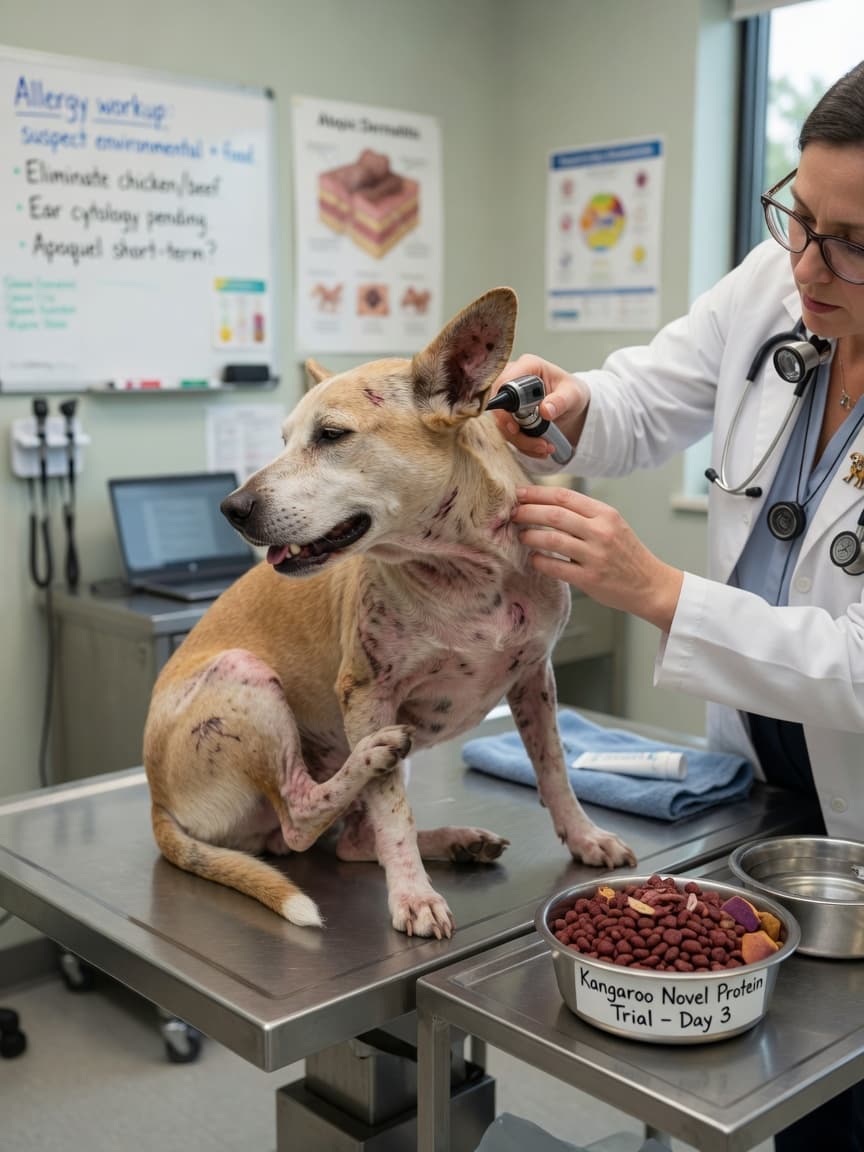
Food Allergy Versus Food Intolerance: What Is the Difference?
These two terms are often used interchangeably, but they describe different biological processes. A true food allergy is immune-mediated, meaning the body's immune system incorrectly identifies a food protein as a threat and mounts a reaction — either via IgE antibodies (similar to classical allergic reactions) or through T-cell responses. Food intolerance, by contrast, does not involve the immune system at all. It results from an inability to digest or process a particular substance — lactase deficiency causing a reaction to dairy products is a classic example.
The distinction matters clinically because the diagnostic approach and management differ. This article focuses on true food allergy, which is among the most under-diagnosed causes of chronic skin and ear problems in dogs in the UK.
The Most Common Food Allergens in Dogs
Food allergies in dogs are almost always directed at protein sources, not carbohydrates. The most frequently implicated ingredients, roughly in order of reported frequency, are:
- Beef
- Dairy products
- Chicken
- Wheat
- Egg
- Soy
- Lamb
It is notable that the most common offenders are also the proteins most widely used in mainstream pet foods. A dog that has eaten chicken-based food its entire life can develop an allergy to chicken, because sensitisation develops through repeated exposure over time, not overnight.
Recognising the Symptoms of Food Allergy

The single most important distinguishing feature of food allergy compared with environmental allergy (atopic dermatitis) is that food allergy causes non-seasonal pruritus. If a dog's itching is present at similar intensity throughout the year — including winter, when pollen counts are negligible — food allergy should be seriously considered.
Other characteristic signs include:
- Recurrent ear infections (otitis externa), particularly those that return rapidly after treatment
- Recurrent bacterial or yeast skin infections
- Itching focused on the face, paws, and groin
- Gastrointestinal signs: vomiting, loose stools, increased frequency of defecation (more than three times daily), or excessive flatulence
Some dogs present primarily with skin signs and no gut involvement; others show mainly digestive symptoms. A proportion show both simultaneously.
Why Blood Tests Do Not Diagnose Food Allergy
Many owners are surprised to learn that commercial IgE food allergy blood panels and skin prick tests — marketed directly to pet owners and sometimes offered by general veterinary practices — are not reliable for diagnosing food allergy in dogs. Studies published in veterinary dermatology literature have consistently shown these tests produce a high rate of false positives and false negatives. They may point towards ingredients that are not actually causing a problem, while missing genuine allergens entirely.
The only scientifically validated method for diagnosing food allergy in dogs is a properly conducted elimination diet trial followed by dietary rechallenge. This approach is endorsed by veterinary dermatology consensus guidelines internationally.
Understanding Elimination Diet Options
An elimination diet works by removing all proteins the dog has previously encountered and replacing them with proteins the immune system has never seen. There are two main approaches:
Hydrolysed Protein Diets
In hydrolysed diets, proteins from a single source are broken down into very small peptide fragments — below the molecular weight threshold at which the immune system can recognise and react to them. Well-known veterinary brands include Royal Canin Hypoallergenic HP, Hill's Prescription Diet z/d, and Purina Pro Plan HA. These diets are complete and balanced, convenient to feed, and remove the risk of cross-contamination that can occur with home-cooked alternatives.
Novel Protein Diets
A novel protein diet uses an animal protein and a carbohydrate source that the individual dog has genuinely never been exposed to before. Common choices for UK dogs include kangaroo, crocodile, venison, and rabbit, paired with a single carbohydrate such as potato or sweet potato. The key is novelty — if a dog has eaten venison treats in the past, venison is no longer a novel protein for that animal.
Home-cooked novel protein diets give maximum control over ingredients and avoid potential trace contamination, but they require careful nutritional balancing to avoid deficiencies over the trial period. A veterinary nutritionist can advise on supplementation.
How to Run a Strict Elimination Trial

The minimum duration for a reliable elimination diet trial is eight to twelve weeks. Many practitioners recommend twelve weeks to capture dogs that respond slowly. During this period, the rules are absolute:
- No treats of any kind unless they contain only the trial diet ingredients
- No flavoured medications — use plain, unflavoured tablets or ask your vet for compounded unflavoured versions
- No dental chews, rawhide, or flavoured toys the dog chews on
- No flavoured toothpaste
- No scraps from the table, no crumbs dropped by children
- If multiple pets are in the household, the dog must not access other pets' food
A single exposure to the offending allergen can invalidate weeks of trial, as even tiny quantities are sufficient to trigger an immune response in a sensitised animal. The strictness required is one of the most challenging aspects of this process, and owner compliance is the factor most likely to determine whether the trial produces a clear result.
Interpreting the Results and Confirming the Diagnosis
If the dog's symptoms improve substantially during the trial — typically a 50 per cent or greater reduction in itching and skin or ear problems — the next step is dietary rechallenge. The dog is returned to its original diet to see whether symptoms return. If they do, usually within one to two weeks, this confirms that a dietary component was responsible for the signs.
Rechallenge is important because improvement during the trial could theoretically coincide with seasonal reduction in environmental allergens, giving a misleading result. Confirmation through rechallenge removes that ambiguity.
Identifying the Specific Trigger
Once food allergy is confirmed, owners have two options. The first is to continue feeding the elimination diet indefinitely, which is simple but limits variety and can be costly with prescription diets. The second is to systematically rechallenge individual ingredients one at a time — typically for two weeks each — to identify which specific proteins cause a reaction. Once the trigger or triggers are known, the owner can select a commercial diet that avoids those ingredients.
It is worth noting that a dog confirmed to have food allergy may also have concurrent atopic dermatitis triggered by environmental allergens. In this scenario, managing the food allergy alone may reduce but not eliminate all signs. Your vet or a veterinary dermatologist can help untangle the contributions of each condition.