ForPetsHealthcare
Nutrition

How Long Does Flea Treatment Take to Work on Dogs and Cats?

By Julia WrenfieldUpdated August 4, 20262 min read
Evidence-based · Sources checked
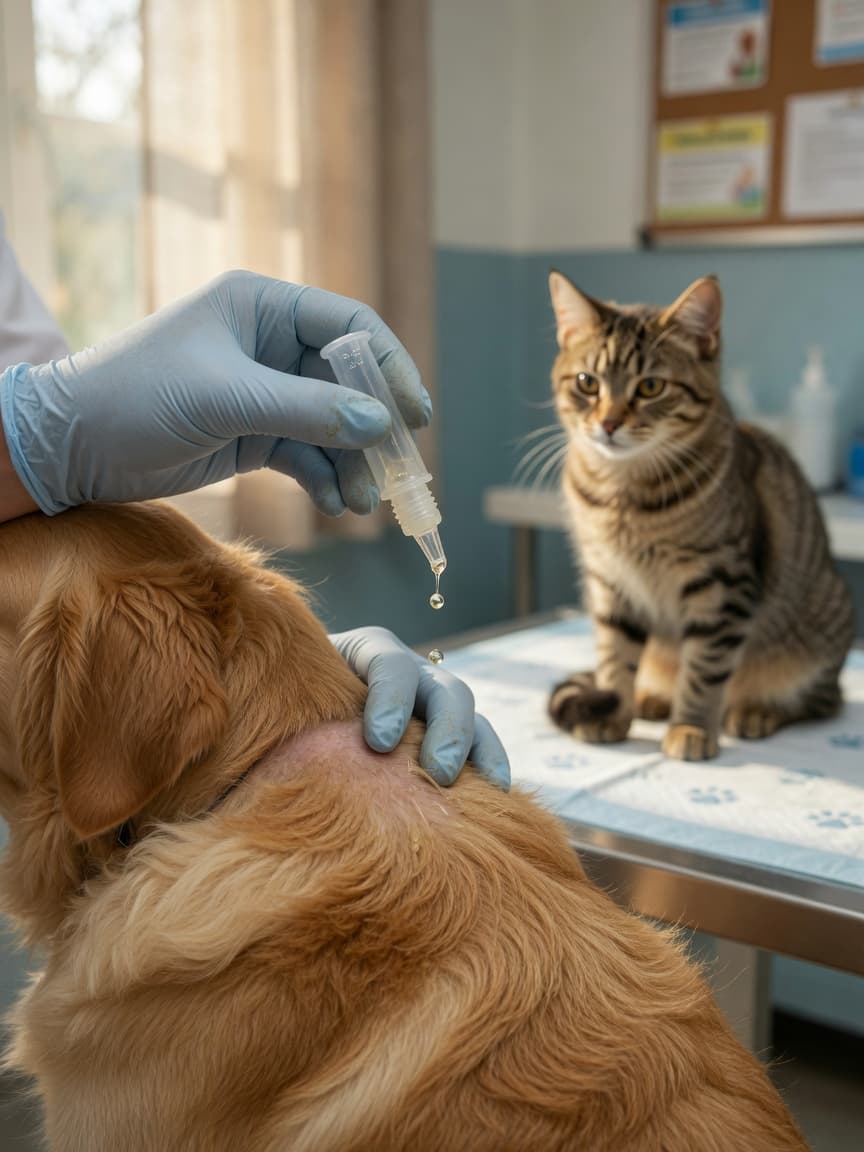
{"en": "Dog being treated for fleas by veterinarian during examination at clinic", "es": "Perro siendo tratado contra las pulgas por veterinario durante examen en cl\u00ednica", "fr": "Chien trait\u00e9 contre les puces par un v\u00e9t\u00e9rinaire lors d'un examen en clinique", "de": "Hund wird von Tierarzt zur Flohbehandlung w\u00e4hrend der Untersuchung in der Klinik untersucht", "nl": "Hond wordt door dierenarts behandeld tegen vlooien tijdens onderzoek in kliniek", "pt": "Cachorro sendo tratado para pulgas por veterin\u00e1rio durante exame em cl\u00ednica", "it": "Cane in trattamento contro le pulci da parte del veterinario durante visita clinica"}

Flea treatment often seems not to be working — but understanding how it works explains why seeing new fleas after treatment is normal.

How Flea Treatments Work

Most modern flea treatments (spot-ons and oral tablets) kill adult fleas by affecting the flea's nervous system when it bites the treated animal. They do not repel fleas — fleas must bite first.

Time to Kill Adult Fleas

  • NexGard, Simparica (oral): kills adult fleas within 2–4 hours
  • Bravecto (oral): kills adult fleas within 2–4 hours
  • Frontline, Advantage (topical): kills adult fleas within 24 hours

Why You Still See Fleas After Treatment

The flea life cycle is the key. Only 5% of a flea infestation lives on the pet — 95% is in the environment as eggs, larvae, and pupae. These stages are not killed by pet treatments. They hatch continuously and jump onto your pet, where they die after biting — but you may see them before they die.

The Full Cycle Takes 3 Months

Breaking a full flea infestation takes approximately 3 months of continuous treatment on all pets in the household, combined with regular vacuuming and washing of bedding. Environmental sprays (containing insect growth regulators) significantly speed this up.

Treating the Home

  • Vacuum thoroughly twice weekly (concentrate on skirting boards and sofa bases)
  • Wash all pet bedding at 60°C weekly
  • Use a household flea spray containing IGR (insect growth regulator)
#how long does flea treatment take to work#forpetshealthcare

Sources & further reading

This article is based on peer-reviewed veterinary research and reputable animal-health sources. Explore the underlying science in our Research Library.

Related articles

Great Dane Bloat (GDV): Causes, Signs & Care

Great Danes are one of the breeds most vulnerable to gastric dilatation-volvulus (GDV, commonly called "bloat"), a life-threatening emergency in which the stomach fills with gas and may twist upon itself. Their deep, narrow chest allows the stomach to swing and rotate more easily than in breeds with…

Read more →

Bulldog Breathing problems (BOAS): Causes, Signs & Care

Bulldogs are prone to breathing problems because their entire skull and airway have been shaped by generations of selective breeding for a flat face, leading to a condition called Brachycephalic Obstructive Airway Syndrome (BOAS). This affects the vast majority of Bulldogs to some degree, from mild …

Read more →

Pug Breathing problems (BOAS): Causes, Signs & Care

Pugs are one of the breeds most affected by Brachycephalic Obstructive Airway Syndrome (BOAS), a condition caused by their short, flattened skull shape which squashes the airway into too little space. This means many Pugs snore, snort and struggle to breathe normally even at rest, and the problem te…

Read more →

Raw Cat Food Guide

Cats are obligate carnivores, which means their biology is fundamentally different from dogs and humans. They cannot survive on plant-based diets and…

Read more →

Prescription Diet Guide Dogs

Prescription or veterinary therapeutic diets are not simply premium foods with a clever label. They are formulated to contain therapeutic levels of…

Read more →

Prescription Diet Guide Cats

Cats have unique nutritional needs that make therapeutic diets more complex than those for dogs. This guide covers prescription foods for CKD, hyperthyroidism, urinary disease, IBD, and diabetes — and why strict dietary compliance is especially critical in cats.

Read more →
Disclaimer:This article is for informational purposes only and does not constitute veterinary advice. Always consult a qualified veterinarian for your pet's health concerns.

Free newsletter

Pet health tips, straight to your inbox

Weekly science-backed advice for dog & cat owners. No spam, unsubscribe anytime.