
Hot Spots on Dogs: What Causes Them and How to Treat Them Fast
If you have ever watched your dog obsessively lick, scratch, or chew at one particular patch of skin until it becomes raw and weeping, you have likely witnessed a hot spot in the making. Hot spots — known medically as acute moist dermatitis — are one of the most common skin complaints in dogs, and they can escalate from mild irritation to a painful, infected lesion within hours. Understanding what drives them and how to respond quickly can save your dog a great deal of discomfort.
What Exactly Is a Hot Spot?
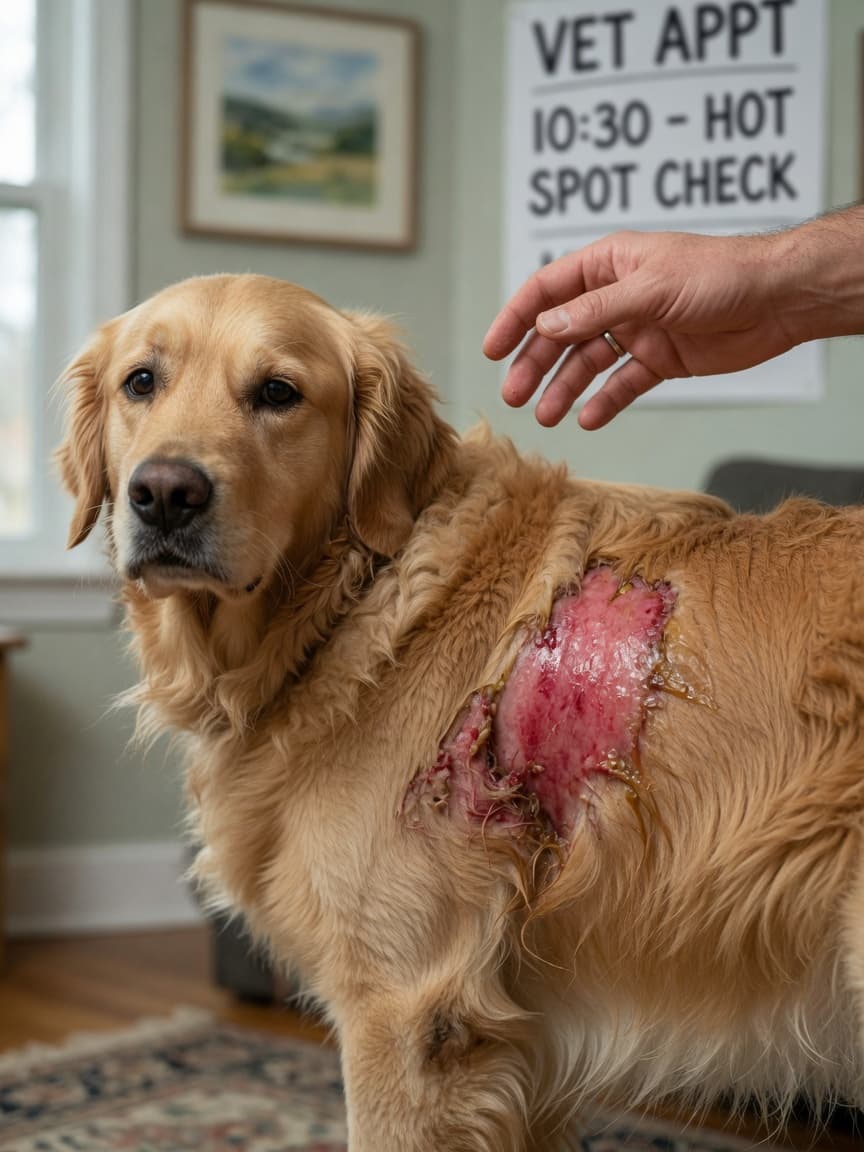
A hot spot is a localised area of inflamed, infected skin that develops when a dog repeatedly traumatises the same spot through licking, scratching, or biting. The moisture created by saliva and wound fluid creates an ideal environment for bacteria — most commonly Staphylococcus pseudintermedius — to colonise and multiply rapidly. The result is a red, moist, often foul-smelling lesion that can spread surprisingly fast if left untreated.
Hot spots can appear almost anywhere on the body, but they are especially common around the neck, ears, flanks, and the base of the tail. They tend to be painful to the touch, and dogs will often cry out or snap if the area is accidentally brushed.
What Causes Hot Spots?
Hot spots are not a condition in themselves — they are a symptom of an underlying trigger. The initial itch or discomfort that starts the cycle of self-trauma can come from a surprisingly wide range of sources.
- Flea bites and flea allergy dermatitis are among the most frequent culprits, as even a single flea bite can cause intense itching in sensitised dogs
- Environmental allergies to pollen, grass, or dust mites can cause widespread itching that focuses on certain areas
- Food sensitivities, particularly to common proteins such as chicken or beef, can manifest as skin irritation
- Ear infections or anal gland problems can cause a dog to scratch near the neck or chew at the base of the tail
- Matted or dirty fur that traps moisture against the skin creates favourable conditions for bacterial growth
- Boredom, stress, or anxiety can lead to compulsive licking that initiates the cycle
Certain breeds are more predisposed to hot spots, including Golden Retrievers, German Shepherds, Labrador Retrievers, and St Bernards. Dogs with thick, dense coats are particularly vulnerable because moisture becomes trapped close to the skin, slowing the natural drying process.
How to Identify a Hot Spot
Hot spots are usually easy to spot once you know what you are looking for. The affected area will appear red and raw, often with matted fur surrounding it. The skin may ooze a clear or yellowish discharge, and in more advanced cases there may be crusting. The patch is typically well-defined, ranging from the size of a small coin to a palm-sized lesion depending on how long it has been developing. You may notice your dog paying unusual attention to a single area before the skin becomes visibly damaged.
Treating Hot Spots at Home
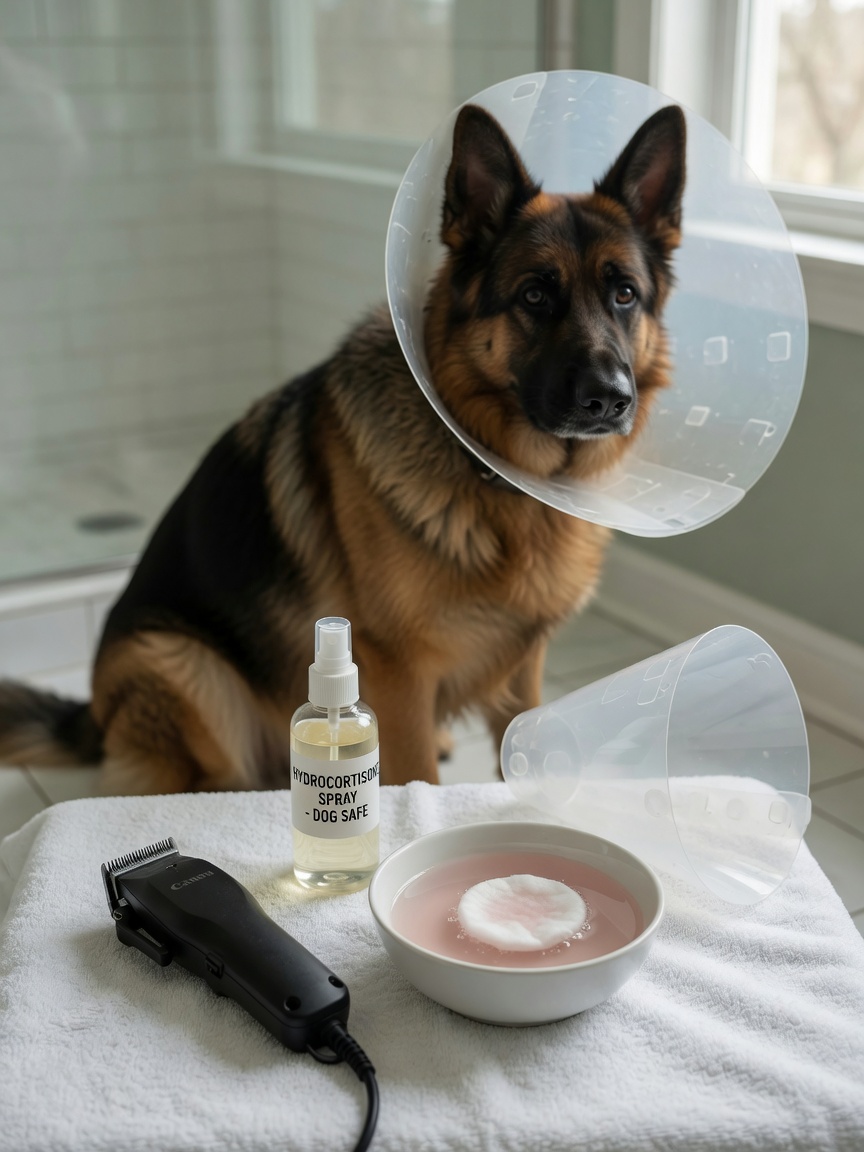
Mild hot spots that are caught early can sometimes be managed at home, though a vet visit is always advisable if you are in any doubt about severity. The first priority is to stop the dog from continuing to traumatise the area, which usually means using an Elizabethan collar.
- Carefully clip the fur around the hot spot to allow air to reach the skin and prevent further moisture retention
- Gently clean the area with a diluted chlorhexidine solution or a mild antiseptic wash recommended for dogs
- Apply a gentle, dog-safe topical antiseptic or hydrocortisone spray to reduce inflammation and bacterial load
- Keep the area dry and exposed to air as much as possible
- Monitor the lesion closely — if it does not begin to improve within 24 to 48 hours, or if it appears to be spreading, veterinary attention is essential
Avoid applying human antiseptics such as hydrogen peroxide or tea tree oil to your dog's skin. These can cause further irritation and are potentially toxic if ingested through licking.
When to See a Vet
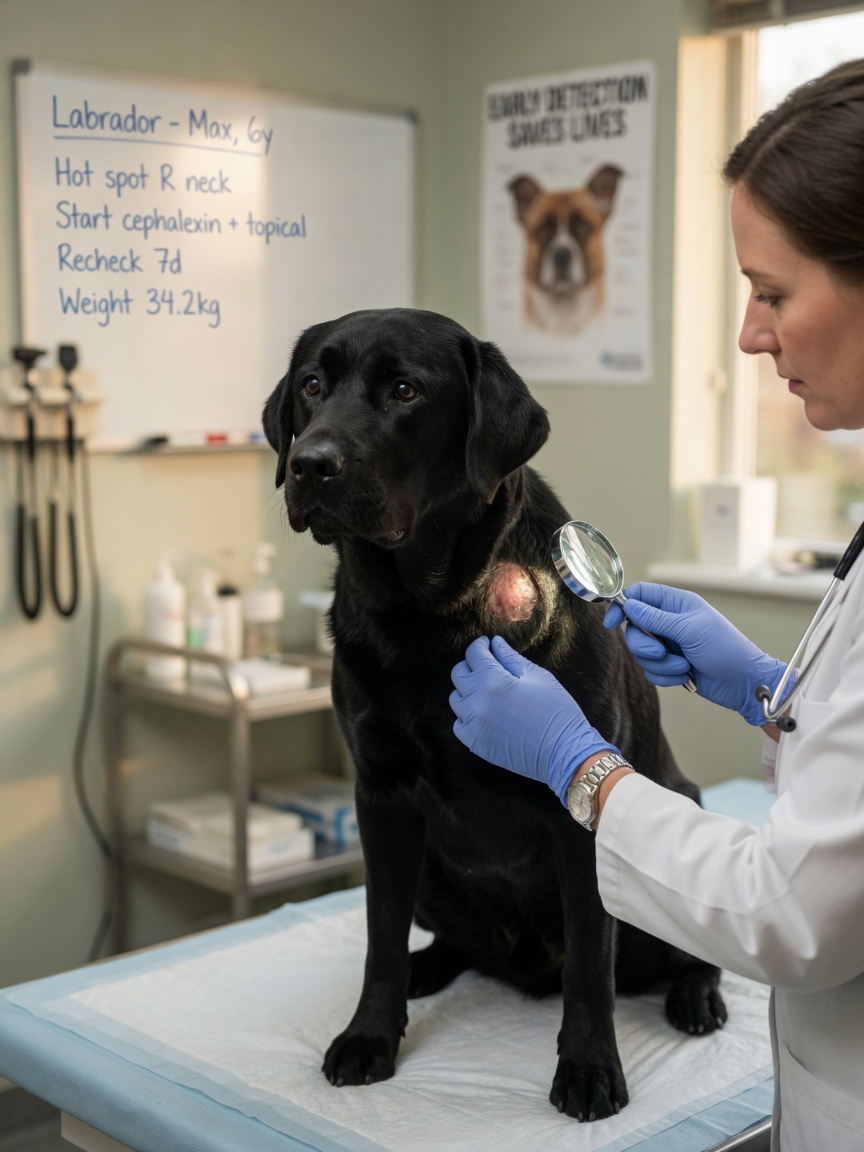
Veterinary treatment is necessary when the hot spot is large, rapidly spreading, visibly infected, or causing the dog significant pain. Your vet will likely clip and clean the area under sedation if the dog is too uncomfortable to allow handling, and may prescribe a short course of antibiotics to address bacterial infection. Corticosteroids are sometimes used to break the itch-scratch cycle quickly, and antihistamines may be recommended depending on the suspected trigger.
Equally important is identifying and addressing whatever caused the hot spot to develop in the first place. Without resolving the underlying trigger — whether that is fleas, allergies, an ear infection, or something else entirely — hot spots are likely to recur.
Preventing Hot Spots from Coming Back
Prevention focuses on managing the root cause and maintaining good skin hygiene. Keeping your dog on a reliable flea prevention programme year-round is essential. Regular grooming, particularly for thick-coated breeds, helps prevent matting and moisture build-up. If allergies are suspected, an elimination diet or allergy testing through your vet can help identify and avoid triggers. Dogs prone to hot spots may also benefit from a skin-supporting diet rich in omega-3 fatty acids, which help maintain the skin barrier and reduce inflammatory responses.
Hot spots can look alarming and develop quickly, but with prompt attention and the right approach to addressing the underlying cause, most dogs recover fully within one to two weeks.