
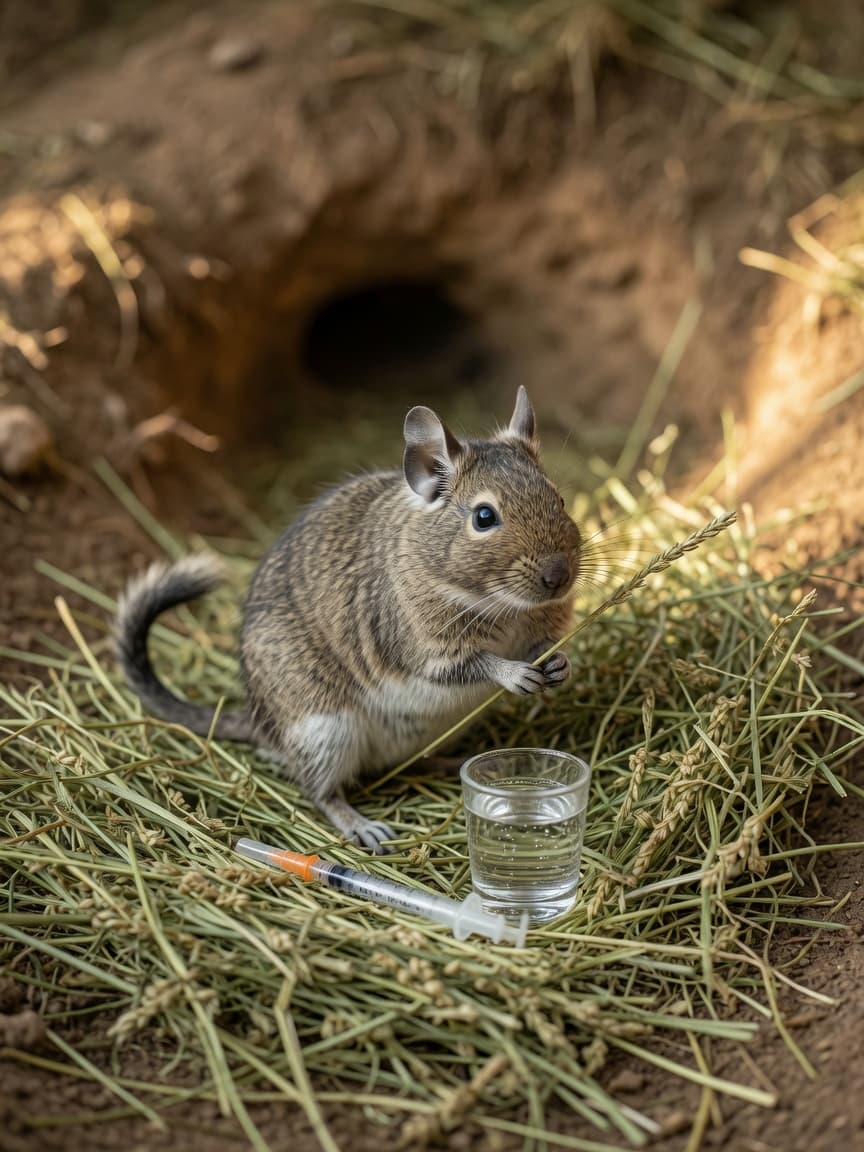
Getting to Know the Degu
The degu (Octodon degus) is a small, sociable rodent native to the arid scrublands of Chile. They are sometimes described as a cross between a rat and a squirrel in appearance, with large eyes, rounded ears, and a tufted tail. In the wild, they live in complex social groups, dig extensive burrow systems, and spend their days foraging for coarse, dry vegetation. In captivity, they can make rewarding and entertaining pets — but they have specific needs that many owners are not warned about at the point of purchase, and the consequences of getting those needs wrong can be severe and rapid.
Two of the most significant health concerns in pet degus — diabetes and dental disease — are both largely diet-driven and largely preventable. Understanding the biology behind these risks is the most useful thing a degu owner can do.
Why Degus Are So Prone to Diabetes
Degus have a particularly unusual metabolic profile. They evolved in an environment where sugar was essentially absent from the diet. Their pancreatic insulin response is limited compared to most other rodents, and their blood glucose regulation is correspondingly fragile. Even small amounts of dietary sugar can overwhelm their ability to maintain normal blood glucose levels, leading to diabetes mellitus.
This is not a theoretical or occasional risk. Research using degus as animal models for type 2 diabetes has been conducted specifically because they develop the condition so readily and predictably in response to dietary sugar. In practical terms, this means that the treats and foods commonly sold for small rodents — dried fruit, yoghurt drops, honey sticks, seed mixes with added sugar — are genuinely dangerous for degus, even in small amounts.
Signs of diabetes in degus include:
- Increased thirst and significantly increased urination
- Weight loss despite a normal or even increased appetite
- Cataracts — clouding of the lens of the eye, which is a particularly well-documented complication of diabetes in degus
- Lethargy and reduced activity levels
- Recurring infections
Cataracts in degus are often the first visible sign that an owner notices, and by the time they appear, diabetes is typically well established. A vet can confirm diabetes through blood and urine glucose testing.
The Right Diet for a Degu
The degu diet should mimic, as closely as possible, the low-sugar, high-fibre diet of their wild counterparts. Hay — specifically good quality grass hay such as timothy — should make up the majority of the diet, available ad libitum at all times. Hay provides fibre that supports gut motility and the extended chewing action necessary for dental health.
Beyond hay, the diet should include:
- A small amount of good quality degu-specific pellets or plain chinchilla pellets — not guinea pig or rabbit pellets, which may contain added sugar
- Fresh herbs such as parsley, coriander, and dandelion leaves in small quantities
- Small amounts of fresh vegetables with low sugar content — leafy greens are appropriate, sweet root vegetables are not
Foods to avoid entirely include fruit of any kind, root vegetables such as carrot and beetroot, commercial treat sticks and yoghurt drops, and any product with added sugar, honey, or syrup in the ingredient list. Seeds and nuts can be offered very occasionally as enrichment but should not form a regular part of the diet due to their high fat and, in some cases, carbohydrate content.
Dental Disease in Degus
Like chinchillas, degus have continuously growing, elodont teeth. All of their teeth — incisors and cheek teeth alike — erupt throughout their lives and require constant wear to remain appropriately sized and aligned. Without adequate dietary fibre, the teeth overgrow, develop sharp spurs on the cheek teeth, and cause the same cycle of pain, reduced eating, and accelerating pathology seen in other herbivorous exotic species.
One feature specific to degus is the normal colour of their incisors. Unlike most rodents, degu incisors are naturally yellow-orange due to a pigment layer on the enamel. This is completely normal and is not a sign of poor dental health. If the incisors appear white, this is actually cause for concern — it may indicate enamel loss or nutritional deficiency.
Signs of dental problems in degus include:
- Weight loss
- Dropping food or appearing to struggle to pick it up
- Excessive salivation or wet fur around the chin
- Eye discharge, as with chinchillas, due to pressure on the tear duct from elongated tooth roots
- Reduced grooming and unkempt coat
The Social Needs of Degus and Their Impact on Health
It would be a disservice to discuss degu health without addressing their social needs, because chronic social isolation is a significant source of stress in this species, and chronic stress has measurable effects on immune function, gut health, and overall disease resistance. Degus are highly social animals that naturally live in groups. A single degu kept alone is not a happy animal, and the subtle, cumulative effects of isolation can contribute to health deterioration over time.
Degus should ideally be kept in same-sex pairs or small groups, introduced at a young age. Cohabiting animals that are bonded spend time grooming each other, playing, and sleeping in contact, and show notably better welfare outcomes than solitary individuals.
Veterinary Care for Degus
Degus need a vet with exotic animal experience — not a general small animal practice that occasionally sees rodents. Annual check-ups are advisable, and any degu that is losing weight, drinking excessively, or showing changes in eating behaviour should be seen promptly. Blood glucose testing is straightforward and can quickly identify diabetes in its earlier stages when dietary management may still meaningfully slow progression.
Diabetes in degus cannot be cured, but with strict dietary management, the removal of all sugar sources, and appropriate veterinary monitoring, affected animals can maintain a reasonable quality of life for some time. The far better outcome, of course, is preventing it entirely through correct feeding from day one.